
FIFA has proposed selling a minority stake in its newly planned commercial arm, triggering immediate and widespread fury across the global football community. Announced on July 28, 2026, the strategy seeks to capitalize on the massive commercial success of the recent men’s World Cup by introducing private equity into the sport’s highest levels.
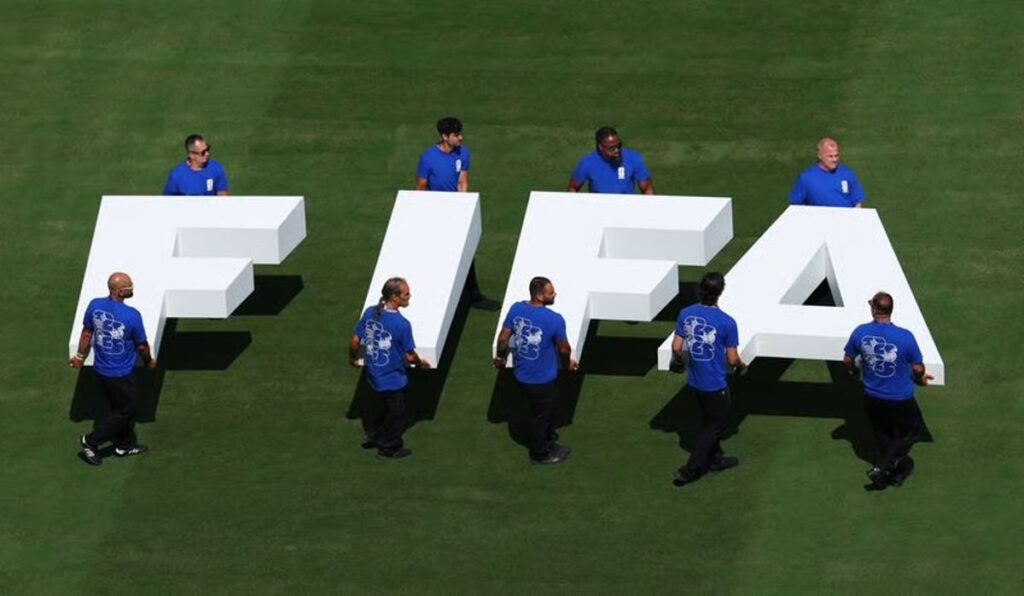
Soccer-FIFA plans to sell stakes in $20 billion subsidiary to run World Cup, angering UEFA
FIFA’s $20 Billion Subsidiary Proposal and the UEFA Backlash
By Echo Wang and Rohith Nair
July 28 (Reuters) – FIFA said on Tuesday it plans to create a $20 billion subsidiary to run the World Cup and its other events and will offer stakes of up to 20% in it to external investors, a move that provoked a furious response from UEFA, who accused world soccer’s governing body of putting the game’s “soul” up for sale.
Details of the FIFA Forward Enterprise (FFE) Plan
Under the plan, FIFA would establish FIFA Forward Enterprise (FFE) to oversee “commercial and event operations.”
FIFA, which just held a 48-team World Cup across the U.S., Canada and Mexico that was the biggest in the tournament’s history, would retain control of the enterprise, but offer minority stakes in it to private investors to raise up to $4.2 billion.
A vehicle founded by Joshua Kushner, the brother of Jared Kushner, U.S. President Donald Trump’s son-in-law, is expected to lead the proposed investor group, FIFA said.
FIFA’s Rationale and Expected Benefits
The proposal deepens the divide between Switzerland-based FIFA and European soccer’s governing body UEFA, with Europe positioning itself as the custodian of the game while FIFA, a not-for-profit organisation, remains focused on broadening access with financial largesse.
FIFA is one of the world’s wealthiest sporting organisations, generating billions of dollars in revenue, largely from broadcasting rights, sponsorship and other commercial deals linked to the World Cup.
But it says this proposal can increase funds it provides to widen access to the sport and strengthen global participation, with all net benefits to be reinvested in the game.
Statements from FIFA Leadership
“Football is the world’s most popular sport and an extraordinary engine of human and social development,” FIFA President Gianni Infantino said in a statement.
“Parts of the game have turned that popularity into remarkable commercial value – and we celebrate that success and want it to continue, because it lifts the whole game.
“Our job is to make sure the rest of football grows with it: FIFA exists to support sustainable, inclusive development in every corner of the world.”
FIFA said it would retain sole control of the subsidiary as well as “exclusive authority” over football governance, competitions, the match calendar and all regulatory and sporting decisions.
Fierce Criticism from UEFA and Other Stakeholders
FIERCE CRITICISM FROM UEFA AND OTHERS
The proposal drew fierce criticism from UEFA, which said the proposal “crosses a line that football’s governing institutions should never cross.”
“UEFA takes it extremely seriously,” it said in a statement. “So should every National Football Association. So should every stakeholder: leagues, clubs, players, supporters, governments and everyone who cares about the future of the game.
“The soul and governance of football are not assets to trade — especially with zero transparency as to who gains financially. None of us are the owners of football. It is not FIFA’s to sell.”
Escalating Tensions Between FIFA and UEFA
Relations have deteriorated between UEFA and FIFA in recent years, and UEFA President Aleksander Ceferin refused to attend the World Cup final following a series of disagreements over disciplinary procedures, refereeing logistics and match operations.
A FIFA spokesperson said the proposal will soon be presented to the 211 member associations and the FIFA Council, which would be the sole final decision-makers on the matter.
Allocation and Use of Raised Capital
FIFA said money from the capital raise would be used to establish an optional program that would allow member associations to access up to $20 million in one-off capital to be used for infrastructure, coaching, national teams, competitions, grassroots football and the women’s game.
That would rise to $24 million by the 2035-2038 cycle.
Infantino, who is up for reelection as head of FIFA next year, said every member association should have the opportunity to seek a fair share of the available funding to shape its own future.
“This is about the democratisation of football worldwide,” he said.
Political and Academic Reactions
Britain’s new Prime Minister Andy Burnham joined critics of the plan, saying on social media that the sport does not belong to investors.
“The World Cup is not a product. It is the greatest competition in world sport, and it was never anyone’s to sell,” Burnham wrote on X. “Dress the deal up however you like. Once you have sold a piece of it, you have sold out.”
Richard Sheehan, a finance professor at the University of Notre Dame who studies the economics of sport, called the proposal a “money grab” from current FIFA leadership.
“From the perspective of a not-for-profit organization, theoretically raising money to make soccer available to everyone, this move is a farce,” said Sheehan.
External Investors and Financial Structure
EXTERNAL INVESTORS
FIFA is working with bankers at JPMorgan to bring in external investors, it said, adding that former Liberty Media CEO Greg Maffei has been involved as a commercial adviser.
Joshua Kushner-founded Thrive Eternal, a new investment strategy launched by venture capital firm Thrive Capital, is set to lead the investor group.
Investor Backgrounds and Roles
A permanent capital vehicle focused on making a small number of long-term investments in franchises and cultural institutions, Thrive Eternal took a minority stake in Major League Baseball’s San Francisco Giants this year. Former Walt Disney CEO Bob Iger serves as an adviser.
Jared Kushner is not a potential investor, a source said.
JP Morgan and Joshua Kushner declined to comment. Maffei didn’t immediately respond to a comment request.
FIFA’s Assurance of Control
“Outside investors will have only a minority stake in FFE and will not play any operational role,” FIFA said. “Equally, they are investing in a subsidiary of FIFA, and not in FIFA itself. For FIFA, nothing changes.”
The Proposal
FIFA plans to spin out its commercial and event operations into a semi-private subsidiary called FIFA Forward Enterprise (FFE).
Uefa and PM criticise Infantino World Cup plan
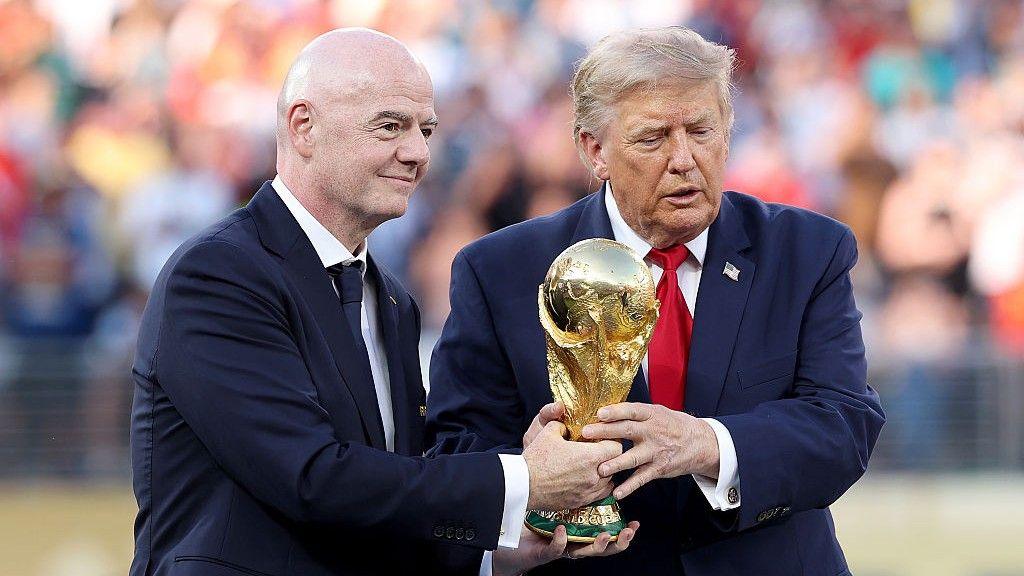
European football’s governing body Uefa and Prime Minister Andy Burnham have criticised proposals from Fifa to seek private investment in its competitions, including the World Cup.
Fifa – the sport’s global governing body – said it intends to expand “football development funding” to more than $10bn (£7.5bn) and invite third-party investment in a new venture.
The story was first reported in the Financial Times and the Times, with the latter claiming the plans could potentially earn Fifa president Gianni Infantino tens of millions of pounds.
In a lengthy statement outlining the proposals, Fifa says it will “invite third parties to make minority, non-controlling investments” in a new subsidiary – Fifa Forward Enterprise (FFE) – to “consolidate” its commercial and event operations.
The plan still needs to be passed by a vote of Fifa’s 211 member nations. But if approval is granted, Fifa says Thrive Eternal is expected to lead the proposed investor group for FFE.
Thrive is an American venture capital firm founded by Joshua Kushner, the brother of US President Donald Trump’s son-in-law Jared.
Fifa sources have told BBC Sport there has been no discussion over Infantino, or anyone else, becoming chief executive of FFE.
In its statement, Fifa did say Infantino and the rest of the organisation “has a duty” to control the development of the project. Fifa has not said precisely what that means, or what the specific nature of Infantino’s involvement will be.
As part of its pitch Fifa says all member associations will be able to access up to $20m (£15m) in “one-off capital” to fund development.
Infantino said every nation should benefit from the riches football creates.
“Parts of the game have turned that popularity into remarkable commercial value – and we celebrate that success and want it to continue, because it lifts the whole game,” he said.
“Our job is to make sure the rest of football grows with it: Fifa exists to support sustainable, inclusive development in every corner of the world.”
However, Uefa has issued a statement criticising the proposals, which it claimed “crosses a line”.
Burnham said going ahead with the idea would mean Fifa had “sold out”.
He wrote on X: “Let me say this very directly. Football does not belong to investors. It belongs to the people who fill the stands and who stand on the touchline week in, week out, rain or shine.
“The World Cup is not a product. It is the greatest competition in world sport, and it was never anyone’s to sell. Dress the deal up however you like. Once you have sold a piece of it, you have sold out.
“Football belongs to the fans. It always has, and it always will.”
The Football Association says it was unaware of Fifa’s plans when they were released.
‘None of us are the owners of football’
Fifa argues its plan, with a dedicated commercial subsidiary, is similar to that used by governing bodies in other sports.
In 2018, Premiership Rugby announced a partnership with private equity and investment advisory firm CVC Capital Partners.
However, Uefa sees Tuesday’s announcement as a step too far – and raises the potential for further expansion of Fifa competitions in order to raise revenue, both in terms of size and frequency, which could threaten its own lucrative competitions.
“This crosses a line that football’s governing institutions should never cross,” Uefa said.
“Uefa takes it extremely seriously. So should every National Football Association. So should every stakeholder who cares about the future of the game.
“The soul and governance of football are not assets to trade – especially with zero transparency as to who gains financially. None of us are the owners of football. It is not Fifa’s to sell.”
Fifa says it would retain control of FFE “and exclusive authority over football governance, competitions, the international match calendar and all regulatory and sporting decisions”.
Football finance expert Kieran Maguire told BBC Sport the proposals are “an opportunity for Fifa to generate even more money” and there are an “awful lot of interested parties in the game who want a slice of the action”.
He added there was likely going to be pressure for a 64-team World Cup and for it to take place every two years if the FFE organisation is set up because it has “got to make money in order to satisfy the shareholders”.
The matter is likely to be a topic of conversation at the next Fifa Council meeting in the autumn and then around the Fifa Intercontinental Cup, featuring Champions League winners Paris St-Germain, in December.
The proposal could be voted on by all 211 members at the Fifa Congress in Morocco in March.
Analysis: As big a deal as European Super League
Quite aside from the unease many will feel at the potential involvement of private equity investors – and someone with close ties to Donald Trump – being at the centre of this, there is also a fight being played out for control of the game.
Fifa’s stated aim of developing the sport worldwide is unsettling for those closer to home.
European Super League: What happens next after collapse of project?
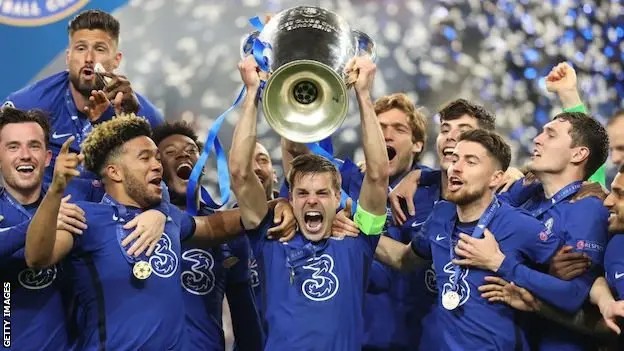
After a season in which clubs have – like the rest of the world – battled with a pandemic, and 12 of them attempted to form a breakaway league, European football has some major hurdles to overcome.
On 8 June, eyes will turn forward as the preliminary-round draw is made for the 2021-22 Champions League.
Three of the Champions League’s most illustrious names – Real Madrid, Barcelona and Juventus – are facing expulsion from the competition and even those who opposed the Super League concept the trio are clinging to accept that football’s future is in peril if the present structure remains.
Here, BBC Sport looks at the differing arguments and why no-one can be entirely certain what happens next.
Real, Barca and Juve out in the cold
Senior Uefa executives and other influential figures on the club scene are unsure of their reasons.
The word from those clubs is that they want to talk. A statement released on their behalf last week in response to being charged by Uefa ended with a warning: “Either we reform football or we will have to watch its inevitable downfall.”
At present, it does not seem as though Uefa is in the mood for a chat.
European football’s governing body says the disciplinary case brought against the three clubs around their Super League involvement is independent – and there is no timescale for a conclusion.
However, as no club from Spain or Italy is due to be involved in European competition until August – in the new European Conference League – it is felt any decision to kick the trio out of the 2021-22 Champions League could be made at quite a late stage of the summer.
More matches involving bigger clubs?
Speaking to a media conference on Friday, new Barcelona president Joan Laporta addressed the issues facing his club, which he admitted was more than 1bn Euros in debt.
“We are not a state,” he said.
“We cannot just pick up the phone and say ‘send us money’. We did a lot of things wrong. Disastrous decisions were taken. I am not saying big clubs are not partially responsible. But a lot of parties are at fault. Certain people are holding some cards in their hands and have an attitude where they don’t think anything will happen.
“We will fight to defend our interests and decisions are made to make football more sustainable.”
The general view among all the Super League clubs is that in order to be more sustainable, football needs to generate more revenue – and that can only come through more matches involving the most popular teams.
They never quite say it in these terms but argue Champions League games involving lesser clubs such as Ludogorets, BATE Borisov and Cluj have no appeal beyond their domestic audience and it is only matches featuring the bigger clubs that do.
The idea would be to generate more money and distribute more.
Those who reject this say the biggest clubs have chosen to pay too much to players and their agents and are responsible for their own financial woes. By creating a Super League, the argument goes, all that would happen is the gap between those clubs and the rest would get wider and interest would reduce.
Wild cards could be scrapped
The new Champions League reforms, agreed from 2024, include two ‘wild-card’ slots for the clubs with the highest co-efficient who qualified for either the Europa League or European Conference League to be moved into Europe’s elite competition.
If it had been in operation this season, as would have been the case virtually every season two clubs from the biggest leagues would have benefitted – Roma and Tottenham.
It has been admitted the system was only agreed owing to intense pressure from the clubs likely to benefit, many of whom joined the Super League anyway and are currently outside the European Clubs’ Association.
Although the actual process of changing the method of accessing the Champions League is complicated, BBC Sport has been told there is unlikely to be any opposition to getting rid of the wild-card slots and those places could increase the number of qualifiers from the ‘Champions Path’ to widen the number of countries involved.
Is a greater spread of clubs the answer?
In the 26-man Belgium squad for Euro 2020, only two play their domestic football in the Belgian league, both for Bruges, champions for the last two seasons and three of the last four.
Poland’s squad contained only four Polish-based players. The clubs where the other 22 play include Brighton, Norwich, Derby, Fortuna Dusseldorf, Chicago Fire and Benevento.
There is a fear in countries outside the top-five leagues that without homegrown international stars playing in the country, fans will get bored of watching a lesser standard of football and eventually not bother at all.
What they want is a wider spread of clubs being able to play in the major competitions, which they feel would stimulate domestic and international interest.
They want to tap into some of the glamour of Chelsea against Manchester City in the Champions League final in Porto on Saturday night, a game and a spectacle which suggested that all was well in the European club scene.
But at the end of a difficult season, it is clear football’s problems are far from over. The issue is if there is a drive to generate more finance through Fifa competitions, that will mean expansion – both in the number of teams and the frequency of both the World Cup and the Club World Cup.
Some also feel the scale of the tournaments will be such they may end up being played in the winter months. It suited PSG, but was new Champions League format a success?
The Champions League campaign has ended with a new winner of the trophy in the shape of Paris St-Germain.
This season represented the competition’s biggest change of format since the group stage was introduced in the 1991-92 season.
Since then, the competition has featured some combination of groups of four teams, playing each other home and away, before a knockout stage (or straight final in 91-92 and 92-93).
This season, the expanded 36-team tournament saw each side play eight different teams – four at home and four away – in one big league phase.
It reached its climax at the end of January before the traditional knockout stages got under way, but was it a success?
PSG would say so after lifting their maiden Champions League trophy in Munich having initially finished 15th in the league phase and needing to progress via a play-off to reach the knockouts proper. ‘It doesn’t matter if you don’t make the top eight’
Former Manchester City defender Nedum Onuoha was complimentary of the new format and believes it has been a success.
“I’ve enjoyed it,” Onuoha told BBC Sport. “There were lots of good games in the group stage and lots of big moments, and not just when the big teams have played each other either.
“The biggest change for me was that teams only played each other once in the league stage. It meant no-one lived or died by that result, and also the energy from the lesser teams was very different to when teams knew they would play each other again in a few weeks’ time.
“Aston Villa beating Bayern Munich was a good example. Bayern did not get a second chance against them, when they probably would not have slipped up again – but they were still able to claw back the points they dropped.”
Eventual champions PSG lost three of their opening five games, before a late resurgence saw them win their next three matches to secure a play-off tie with fellow Ligue 1 side Brest.
After winning that, Luis Enrique’s side met Liverpool, the team who finished top of the league phase, in the last 16.
“While PSG are clearly a top-quality side, their journey shows that finding form at the right time is what matters,” added Onuoha. “They were out of the top 24 until they won their penultimate game, and then got through the play-off stage.
“That’s another thing I like about the format, because PSG have shown that in the future, it doesn’t matter if you don’t make the top eight.”
Journalist Nicky Bandini made a fine point about the new format benefitting Luis Enrique’s side.
“Without this format, we would maybe not have seen this PSG team that has developed during the season because they could have gone out,” said Bandini. “This way we get to see them progress, and it feels like a more entertaining journey.
“Always so much in the Champions League has been about coming good at the right time – it has always been about what’s your form like in the spring rather than your form at the start of the tournament.
“But I do think with the extra games this year, and with the very specific journey we have seen PSG go on, you really have been able to observe this development in real time.”
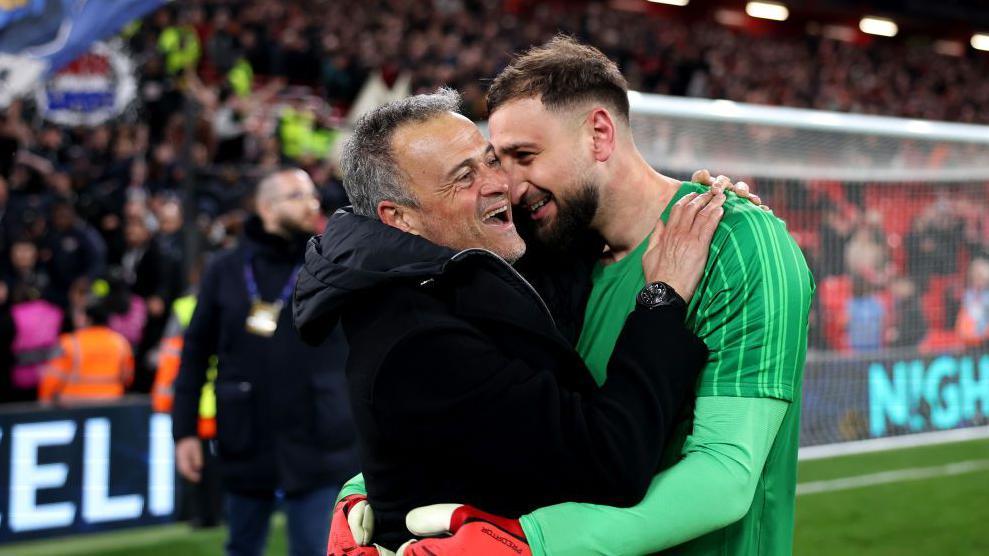
Aside from Liverpool’s early exit, the seeding system seemed to work with Barcelona (second), Arsenal (third) and Inter (fourth) all making at least the semi-finals.
For Inter, a fourth-placed finish meant they were faced with a favourable tie with Feyenoord in the last 16 before taking on Bayern Munich and Barcelona in the last eight and semi-finals.
More excitement and jeopardy?
Unlike previous editions, where many teams had already secured qualification or elimination before the final round, this year’s league phase delivered a far more unpredictable, thrilling, and emotionally charged conclusion.
Going into the final group games last season, 13 teams had already secured qualification for the last 16.
But this term, only Liverpool and Barcelona were guaranteed a place in the last 16 – gained by finishing in the top eight places in the league.
So with 27 teams still having something on the line an exciting finale to the league phase was anticipated.
The league phase featured rematches of four of the last five Champions League finals with Arsenal midfielder Declan Rice saying: “Usually, you find these games in the quarter-finals or semi-finals.”
Manchester City were the big story of the league phase with three points needed on the final league phase game to book their spot in a play-off – where they were beaten by Real Madrid in a thrilling contest.
By creating a format where teams played eight different opponents in a league stage that culminated with 64 goals in the final 18 matches, Uefa decision-makers will perhaps feel they have countered suggestions that the previous group stage could be repetitive at times, with big names always progressing.
‘Every game counts’ or does it?
Uefa claimed the new format would ensure every match has the potential to significantly impact a team’s final standing. “Every game counts” was the precise wording used.
On one hand, only two games on matchday eight were true dead rubbers – Young Boys (36th) v Crvena zvezda (32nd) and Sturm Graz (33rd) v RB Leipzig (30th). The other teams all had something to play for, even if that meant just fighting for position. If that is taken in isolation, that is a clear selling point for this latest format.
On the other hand, nine teams had already been eliminated going into the final matchday, with Shakhtar Donetsk also practically out, needing to beat Borussia Dortmund and benefit from an improbable five-goal swing to qualify.
With 24 of the 36 teams either qualifying for the last 16 straight from the league phase or into a play-off, genuine jeopardy was at a minimum. Manchester City made it through despite a run that saw them lose three out of four games. And the basic reality is that while $20m is not a significant sum in the English game, for many countries globally, it is huge – and will be supported.
However, it still remains to be seen what the respective stakeholders – associations, leagues, clubs and players – make of the plan. The Valuation: FIFA values the new commercial entity at $20 billion.
The Stake: The governing body is looking to sell up to a 20% minority, non-controlling stake.
The Funding Goal: FIFA aims to raise $4.2 billion from long-term investors.
The Advisers: Financial giant JPMorgan is advising on the deal, alongside former Liberty Media CEO Greg Maffei.
The Lead Investors: The investment group is expected to be led by Thrive Eternal, a permanent capital vehicle founded by Joshua Kushner (brother of Donald Trump’s son-in-law Jared Kushner), with former Disney CEO Bob Iger serving as an adviser.
The Backlash
The announcement has drawn fierce, immediate resistance from football governing bodies, politicians, and fan groups. Critics have gone so far as to label the move a “nuclear bomb” for football that is potentially worse than the failed European Super League. FIFA hit by furious backlash over plans to sell stake in competitions furious backlash on Wednesday to FIFA’s controversial plans to sell a stake in the business operations of the World Cup and its other competitions through the creation of a private subsidiary.
World football’s governing body had said Tuesday it would retain a majority share in FIFA Forward Enterprise (FFE) but hoped to raise $4.2 billion later this year by “carefully selecting long-term investors who will purchase minority, non-controlling interests”.
“In total for the upcoming cycle starting as of January 1, 2027, each member association will have the possibility of access up to $40 million per member association under this proposal,” said Infantino.
The Times — which broke the original story on Tuesday — said sources opposed to the plan had labelled it “pure bribery”. UEFA had issued a blunt statement regarding the plan and was due to hold an emergency meeting later on Wednesday according to sports minister. “Many in European football see FIFA’s plans as an outright attack on football. I share this view. A line has been crossed here,” Hans-Joachim Watzke, a vice-president of UEFA’s executive committee, told Kicker.
The Times reported Infantino, 56, stood to profit from the scheme by becoming commissioner of the FFE after his expected next term expires in 2031. FIFA denied that this had been discussed.
The article also said discussion had started with financial advisors and potential investors.
Those include Thrive capital, an investment company founded and led by Joshua Kushner, brother of US President Donald Trump’s son-in-law Jared, as well as an arm of JP Morgan Chase, the US bank that attempted to finance the failed breakaway European Super League. UEFA, which has regularly criticised Infantino, said the plan “crosses a line”.
“The soul and governance of football are not assets to trade — especially with zero transparency as to who gains financially. None of us are the owners of football. It is not FIFA’s to sell.”
The European Union made no bones about their disdain for the plan.
“Hands off our game,” Glenn Micallef, the EU commissioner for Sport, posted on X.
CONCACAF, which governs North and Central American football, said it was “deeply concerned by the lack of due process”.
The Asian Football Confederation said it was “disappointed” it had not been consulted. The plan would still have to be approved by the 38-member FIFA council and the majority of its 211 member associations (MAs). FIFA said it intends to present the plans to the council soon.
– ‘Further expanded’ –
FIFA said in its statement that it “would retain sole control of FFE and exclusive authority over football governance, competitions, match calendar, and all regulatory and sporting decisions”.
It said it believed FFE would achieve an “initial equity valuation of $20bn”.
FIFA said each of its MAs would be given the chance to take a one-off stake of $20mn in FFE.
That represents only 0.1 percent of the total, but would be a significant sum for the leaderships of FIFA’s poorer or smaller members. UK Prime Minister and avid football fan Andy Burnham decried the plan.
“Football does not belong to investors. It belongs to the people who fill the stands and who stand on the touchline week in, week out, rain or shine,” he wrote on social media.
In June, ahead of the World Cup, FIFA, which folds competition income into revenue for the whole year, anticipated record revenues exceeding seven billion euros ($8bn) for 2026.
It was the first World Cup with 48 teams and there is talk of further expanding it to 64.
The Times quoted an unnamed “senior football figure” calling the plan “potentially much worse than the European Super League”, as it would have an impact on all levels of football across the globe. In 2019, a FIFA stakeholders’ committee rejected an Infantino-backed plan for a $25bn private investment in an expanded Club World Cup. Reported backers included SoftBank of sovereign wealth fund.
FIFA did expand that competition from seven teams to 32 clubs in 2025.
The Times speculated that the creation of FFE could have an impact on the World Cup and the Club World Cup.
“It could lead to pressure for both events to be further expanded or played more regularly than the present once every four years,” it wrote. UEFA lashes out at FIFA’s Infantino over plans to sell World Cup stakes to private investors, arguing it would have “devastating” impact on football
UEFA’s Furious Response: European football’s governing body flatly rejected the proposal, stating that it “crosses a line”. FIFA Considers Selling World Cup Stakes to Private Investors: Global Uproar and UEFA’s Outrage
FIFA Explores Stake Sale in New $20 Billion Entity
The soccer body looks to capitalize on the success of the World Cup
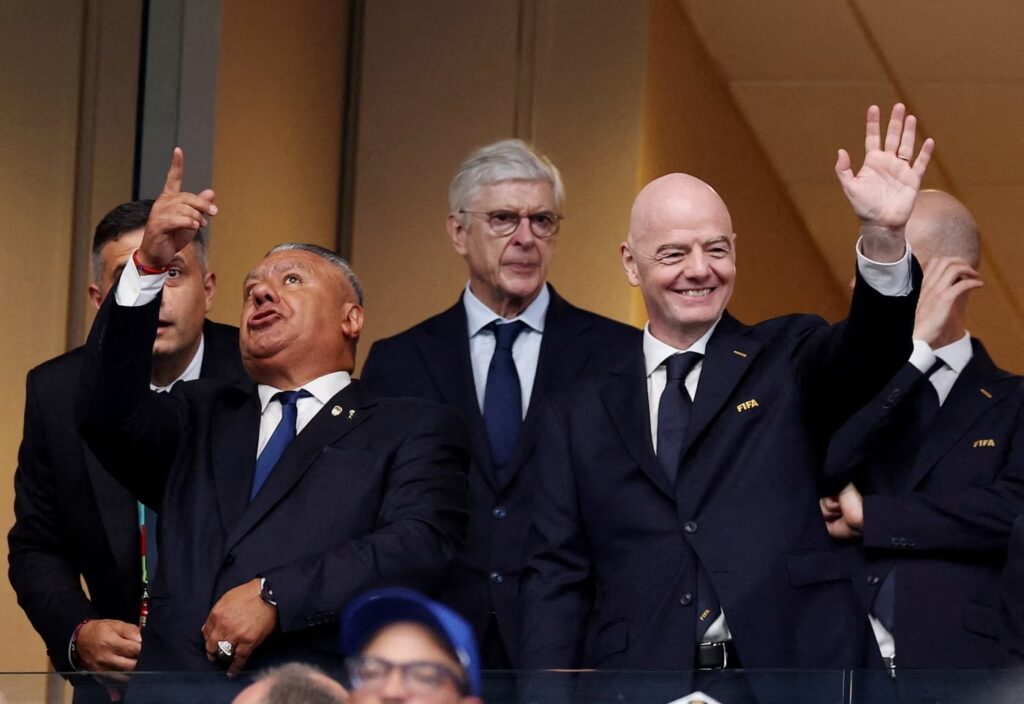
FIFA, soccer’s highest governing body, is exploring raising more than $4 billion by selling a stake in a new commercial venture.
The venture would be valued at around $20 billion and house the group’s broadcast rights, sponsorship, ticketing and licensing businesses across men’s, women’s and youth soccer, FIFA said Tuesday.
Political Resistance: Lawmakers have stepped in, with newly elected British Prime Minister Keir Starmer and Greater Manchester Mayor Andy Burnham heavily criticizing the plans, emphasizing that the World Cup is a sporting institution, not a corporate product.
Boycott Threats: Prominent European federations are reportedly discussing sweeping boycotts of future tournaments if FIFA president Gianni Infantino pushes the privatization plan forward. World Cup Stars Are Being Urged To ‘Boycott’ 2030 Tournament With the 2026 World Cup in the books, all eyes are looking ahead to the 2030 tournament, which will be taking place in Portugal, Spain and Morocco.
But ahead of the 2030 tournament, FIFA President Gianni Infantino is reportedly considering a drastic move. The FIFA President is reportedly pushing to market a stake in the World Cup to private investors, which could earn him millions. The news, reveals that a new company would oversee top competitions including the World Cup and Club World Cup. Joshua Kushner is reportedly among those being considered for investment. President Trump has reportedly been broached with the idea, too. Infantino could reportedly earn tens of millions of dollars from the deal, if it goes through.
UEFA is among those not happy.
“This crosses a line that football’s governing institutions should never cross. UEFA takes it extremely seriously. So should every National Football Association. So should every stakeholder: leagues, clubs, players, supporters, governments and everyone who cares about the future of the game,” UEFA said in a statement. “The soul and governance of football are not assets to trade – especially with zero transparency as to who gains financially. None of us are the owners of football. It is not FIFA’s to sell.”
Soccer stars urged to push back on Infantino’s plan “I know this never happens outside of the movies but what if the best players in the world simply said: ‘(Expletive) you. We refuse to play under this scenario.’”
The Athletic’s top soccer reporter, Adam Crafton, is also speaking out. The 2026 World Cup was a huge success, with everyone surrounding the tournament making a ton of money, but at a certain point, a line has to be drawn.
It sounds like that line could be drawn in response to Infantino’s alleged plan.
Fan Outrage: Supporters are deeply frustrated, as this proposal closely follows a tournament marred by hyper-commercialization, record-high dynamic ticket pricing, and controversial monetization strategies like selling the final pitch’s grass. Critics argue that private equity will inevitably force more match congestion, tournament expansions, or biennial World Cups to satisfy investor bottom lines. FIFA, soccer’s highest governing body, is exploring raising more than $4 billion by selling a stake in a new commercial venture.
The venture would be valued at around $20 billion and house the group’s broadcast rights, sponsorship, ticketing and licensing businesses across men’s, women’s and youth soccer, FIFA said Tuesday. It said is working with investment bankers at JPMorgan and advisers including OpenEconomics.
The new venture would allow FIFA to cash in on the surging popularity and revenue generate by organizing the world’s most watched sporting event, the World Cup. The organization said the proceeds would be distributed as funding for member organizations.
Joshua Kushner’s investment firm Thrive Capital is expected to lead the proposed investor group through its Thrive Eternal holding company, FIFA said.
FIFA doesn’t have private owners and has been led by President Gianni Infantino since 2016. He is running for re-election next year. The new commercial venture is still subject to approval by a majority of FIFA’s 211 member associations.
The reaction from UEFA, the governing body of European soccer—or football—was immediate.
“This crosses a line that football’s governing institutions should never cross,” the organization said. “The soul and governance of football are not assets to trade—especially with zero transparency as to who gains financially. None of us are the owners of football. It is not FIFA’s to sell.”
FIFA’s Justification
Gianni Infantino has defended the plan by calling it a path toward the “democratization of football worldwide.” FIFA promises that the $4.2 billion windfall will expand global development funding to over $10 billion, directly benefiting smaller federations in Africa, Asia, and South America that rely heavily on FIFA distributions. The plan has already secured backing from the Confederation of African Football (CAF). To take effect, the deal still requires a majority vote from FIFA’s 211 member nations.
If you would like to explore this developing story further, please let me know if I can:
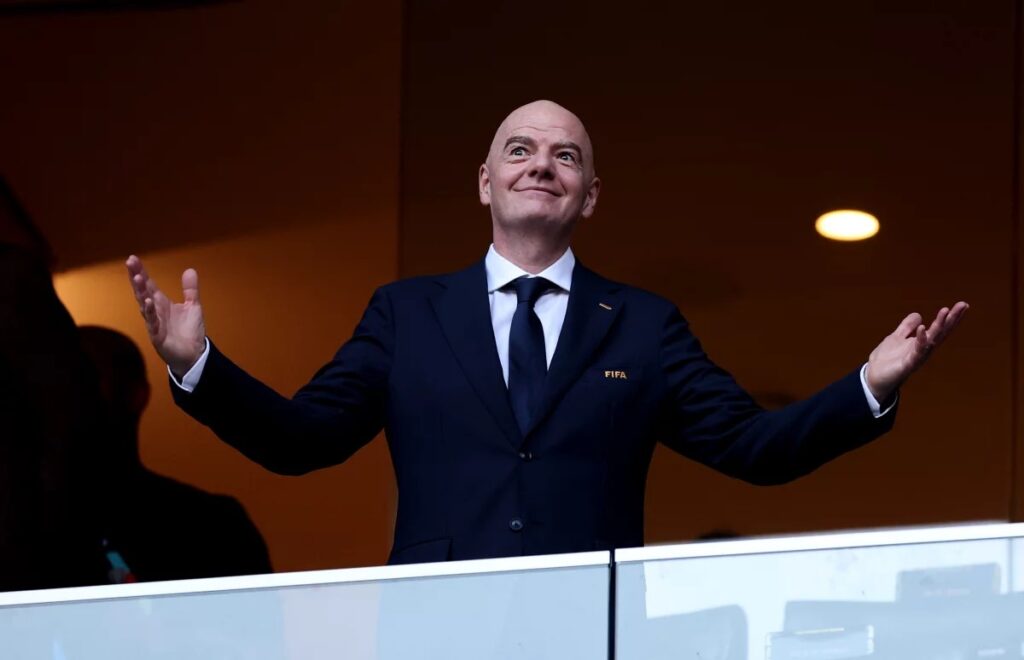
Outline the conflicts of interest critics are highlighting regarding Infantino’s potential future role in the company. FIFA has a new plan to raise billions of dollars: Selling stakes in the World Cup FIFA President Gianni Infantino attends a World Cup match between Netherlands and Morocco at Monterrey Stadium, in Guadalupe, Mexico, on June 29, 2026. Just days after staging the most lucrative World Cup in history, FIFA has a new — and instantly controversial — plan to raise more money: selling stakes in its marquee event to private investors for billions of dollars. It’s a complicated but potentially lucrative plan, one that comes as FIFA is still facing strong criticism for jacking up ticket prices for the 2026 World Cup across North America. FIFA is already set to bring in at least $13 billion from the past four-year cycle, the bulk of it from its marquee men’s tournament. FIFA intends to expand football development funding to over USD 10 billion subject to approval by FIFA Member Associations
- If approved, football development in every corner of the world would benefit immediately from increased funding available to all 211 FIFA Member Associations (MAs): (i) An optional USD 20 million per MA in exceptional and immediate funding for special projects from the new FIFA Fast Forward Programme (FFFP), (ii) USD 20 million per MA in Forward funding for 2027-2030 (currently budgeted USD 8 million), (iii) USD 22 million per MA in Forward funding for 2031-2034, and (iv) USD 24 million per MA in Forward funding for 2035-2038
- This would be achieved via FIFA Forward Enterprise (FFE), a new FIFA-owned and controlled subsidiary consolidating FIFA’s commercial and event operations; FIFA would retain sole control of FFE and exclusive authority over football governance, competitions, match calendar, and all regulatory and sporting decisions
- FFE would raise up to USD 4.2 billion later this year to fund FFFP, based on an initial equity valuation of USD 20 billion by carefully selecting long-term investors who will purchase minority, non-controlling interests in FFE. All net benefits of FFE will be reinvested back into football worldwide
- In full respect of FIFA’s democratic and governance principles, the launch of this new structure is subject to the support of a majority of MAs and the relevant approvals of the FIFA Council
In accordance with its mandate, the FIFA administration is exploring the concept of bringing together FIFA’s commercial rights – spanning broadcast, sponsorship, ticketing, and licensing – with the operational delivery of FIFA tournaments through the creation of FIFA Forward Enterprise (FFE). A consultation process has begun following the receipt of a proposal that aims to unlock the full potential of FIFA’s broadcast rights and sponsorships across all of its tournament portfolio in men’s, women’s and youth football.
Central to this would be a repositioning of FIFA Forward, FIFA’s flagship development programme, which aims to increase funding per FIFA Member Association (MA) from USD 8 million to USD 20 million for the 2027-30 cycle and grow steadily thereafter cycle-on-cycle. This funding would support infrastructure, coaching, national teams, competitions, grassroots football and the women’s game.
Detail the specific commercial rights (broadcasting, streaming, sponsorships) being handed to FFE.
Break down how the voting power stacks up among the 211 member associations. The process follows an address by FIFA President Gianni Infantino to the FIFA Council and FIFA Member Associations on the eve of the “Football is the world’s most popular sport and an extraordinary engine of human and social development,” said FIFA President Gianni Infantino. “Parts of the game have turned that popularity into remarkable commercial value – and we celebrate that success and want it to continue, because it lifts the whole game. Our job is to make sure the rest of football grows with it: FIFA exists to support sustainable, inclusive development in every corner of the world.
“As its global governing body, FIFA is responsible for making sure the game reaches every corner of the world, and that the value it creates supports federations and communities everywhere. Our next stage of growth needs a structure built for it, one where the commercial side of the game operates as a focused, dedicated business, with its value shared more and better all around the world. Every FIFA Member Association should have an opportunity to seek a fair share of the available funding to shape its own future, deciding for itself rather than relying on others. This is about the democratisation of football worldwide.
“We intend to invest heavily even in the smallest or most remote parts of the footballing world, places that are too often passed over. Every FIFA Member Association, whatever its size, resources, or geographic location will have a voice and the opportunity to determine its own course. Football has become a truly global game and so the benefits must be felt globally.” A “step change” for global football development and the way we share the success of the FIFA World Cup™ with our member associations, but also one of the most prominent sports development programmes
FIFA Forward is built to provide 360-degree, tailor-made support for football development in each of our member associations and the six confederations.
Following the successful implementation of two editions of the FIFA Forward Development Programme, “FIFA Forward 1.0” and “FIFA Forward 2.0”, “FIFA Forward 3.0” launched in January 2023, providing a more comprehensive funding and support of football development projects across the world than ever before. Many major sporting organisations, including continental and national football governing bodies and leagues, have restructured their commercial operations in similar ways in recent years, in pursuit of the same long-term goal – sustainable growth that can be reinvested in the sport itself.
Together with other existing FIFA programmes, these investments could bring FIFA’s total planned development funding to more than USD 10 billion over the next four years, marking the largest such commitment ever made by any sports organisation. It is designed to widen access to the game, strengthen football infrastructure and opportunity worldwide, and ensure that every MA shares in the game’s growth. FIFA will utilise this investment equally across every country, no matter its size or wealth or geographical location, for the benefit of all. The process follows the conclusion of the most successful tournament in football’s history. The energy generated across the tournament is precisely what this consultation process has been designed to sustain and build upon. This energy translated into extraordinary numbers – almost 16 million fans attended in the stadiums and fan festivals, and billions watched around the world via new channels and innovative forms of content.
Reinvesting football’s growth in every MA
As part of FFE, FIFA would establish the FIFA Fast Forward Programme (FFFP), an optional mechanism that would allow MAs to unlock additional development funding. This would unlock new opportunities for projects such as stadiums and national training centres, and other long-term infrastructure that may otherwise sit beyond the reach of a single development cycle.
FIFA would offer each of the 211 MAs the opportunity to participate in FFFP to access up to USD 20 million in one-off capital. Participation would be entirely voluntary, and no MA would be required to participate.
The additional funding would be financed through FFE’s planned initial capital raise of up to USD 4.2 billion. This would be based on an implied valuation of USD 20 billion. Any net benefits of FFE would be fully reinvested back into football.
Long-term investment, with FIFA retaining full control
In a similar way to other sports governing bodies with dedicated commercial subsidiaries, FIFA will invite third parties to make minority, non-controlling investments in FFE.
Any such investors would be selected against clear long-term, governance, and strategic criteria. They would represent a geographically diversified group that reflects the global nature of the game, acting as minority, long-term partners that could contribute capital and commercial expertise in support of FIFA’s mission to grow the global game. FIFA would retain sole control of FFE via majority board representation and exclusive authority over football governance, competitions, the international match calendar and all regulatory and sporting decisions.
While FIFA regularly creates subsidiaries for specific ventures unilaterally, FIFA is now engaging the MAs and the FIFA Council in this instance given its strategic importance. In keeping with the democratic processes of FIFA, the FIFA administration will launch the new structure only if a majority of the MAs decide to support it, as well as approval of the required regulatory updates by the FIFA Council.
Subject to these final agreements and required approvals, Thrive Eternal, a permanent capital holding company, is expected to lead the proposed investor group for FFE. Greg Maffei, CEO of BANN Ventures and formerly President and CEO of Liberty Media during its acquisition and ownership of Formula One, has been a key commercial adviser and will remain involved in the establishment of FFE in this next phase.
As part of this process, J.P. Morgan has been engaged to work alongside FIFA, while other advisers such as OpenEconomics are engaging with prospective long-term investors. The process is focused on assembling a geographically diversified investor group that reflects the global nature of FIFA and the game; expressions of interest to date include investors from across every major region of the world: Europe, the Americas, Asia and Africa.
The FIFA President and the FIFA administration have a duty to control the development of this project. Outside investors will have only a minority stake in FFE and will not play any operational role. Equally, they are investing in a subsidiary of FIFA, and not in FIFA itself. For FIFA, nothing changes. This new company, FIFA Forward Enterprise, would handle all commercial decisions, such as deciding on broadcasting and commercial rights to the World Cup and other FIFA tournaments. FIFA though would retain its role as the main governing body, so it would still be in charge of all sporting decisions. But in an unprecedented move, the soccer body said it plans to actively seek minority investors for this new commercial venture, effectively selling partial stakes in the World Cup and other tournaments to private investors as part of a plan to raise up to $4.2 billion.
To find these new investments, FIFA plans to partner with Thrive Eternal, a firm that describes itself as a “permanent capital holding company,” effectively meaning it owns stakes or companies and holds those investments for an indefinite period. It’s run by Joshua Kushner, a brother of Jared Kushner, President Trump’s son-in-law. FIFA added J.P. Morgan had been hired as an adviser.
FIFA, though, promised to share a big chunk of the money raised across its 211 member associations.
“Football is the world’s most popular sport and an extraordinary engine of human and social development,” FIFA President Gianni Infantino said in the statement. “Parts of the game have turned that popularity into remarkable commercial value – and we celebrate that success and want it to continue, because it lifts the whole game. Our job is to make sure the rest of football grows with it: FIFA exists to support sustainable, inclusive development in every corner of the world.” Plan is met with fury
Although FIFA would need its member associations to approve the plan, the decision was sharply criticized by UEFA, the body representing football associations in Europe.
“This crosses a line that football’s governing institutions should never cross,” UEFA said in its own statement.
“The soul and governance of football are not assets to trade — especially with zero transparency as to who gains financially,” it added. “None of us are the owners of football. It is not FIFA’s to sell.”
FIFA did not immediately respond to a request for comment on UEFA’s statement.

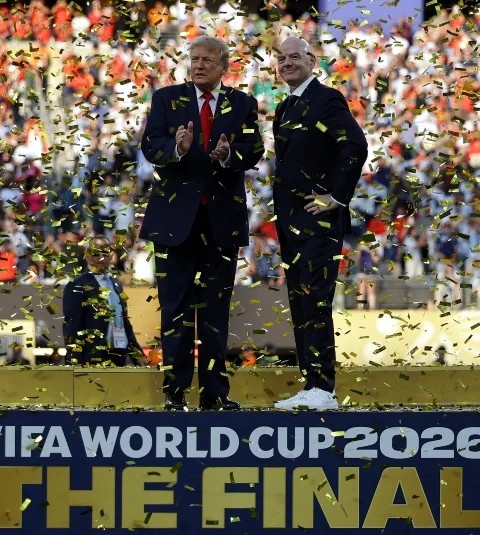
Spain lifts the World Cup trophy after prevailing over Argentina in the final of the FIFA World Cup final held at New York New Jersey Stadium in East Rutherford, N.J., on July 19, 2026.
