
Section 10(1) in The Essential Commodities Act, 1955
(1)If the person contravening an order made under section 3 is a company, every person who, at the time the contravention was committed, was in charge of, and was responsible to, the company for the conduct of the business of the company as well as the company, shall be deemed to be guilty of the contravention and shall be liable to be proceeded against and punished accordingly:Provided that nothing contained in this sub-section shall render any such person liable to any punishment if he proves that the contravention took place without his knowledge or that he exercised all due diligence to prevent such contravention.
Section 10(2) in The Essential Commodities Act, 1955
(2)Notwithstanding anything contained in sub-section (1), where an offence under this Act has been committed by a company and it is proved that the offence has been committed with the consent or connivance of, or is attributable to any neglect on the part of any director, manager, secretary or other officer of the company, such director, manager, secretary or other officer shall also be deemed to be guilty of that offence and shall be liable to be proceeded against and punished accordingly.Explanation.—For the purposes of this section,—
Section 10(2)(a) in The Essential Commodities Act, 1955
(a)“company” means any body corporate, and includes a firm or other association of individuals; and
Section 10(2)(b) in The Essential Commodities Act, 1955
(b)“director” in relation to a firm means a partner in the firm.
The Essential Services Maintenance Act (ESMA) is an Indian law enacted by Parliament (historically 1968/1981) that allows the government to prohibit strikes and ensure the uninterrupted supply of goods and services deemed essential to daily life, such as energy, water, and transport.
What is Essential Services Maintenance Act (ESMA)?
Essential Services Maintenance Act is an act of the Indian Parliament enacted in 1968 to assure the supply of certain services that, if impeded, would harm people’s daily lives.

About Essential Services Maintenance Act (ESMA)
It is an act of the Indian Parliament enacted in 1968 to assure the supply of certain services that, if impeded, would harm people’s daily lives.
It is enforced to prohibit striking employees from refusing to work in certain essential services. Employees cannot cite bandhs or a curfew as an excuse not to report to work.
Which services fall under this category?
Services relating to public conservation, sanitation, water supply, hospitals, or national defence are essential.
Any establishment involved in producing, delivering, or distributing petroleum, coal, electricity, steel, or fertiliser also gets classified as providing essential services. Aside from that, any banking-related service may be subject to ESMA.
This statute also applies to communication and transportation services and any government initiative relating to the acquisition and distribution of food grains.
State governments, acting alone or collaborating with other state governments, can enforce their respective acts in specified territories.
Each state has its own ESMA, with provisions that differ slightly from the federal statute.
As a result, if the nature of the strike disturbs only one or more states, the states can initiate it.
The Act also allows states to choose the essential services on which to enforce ESMA.
In a nationwide interruption, particularly involving railways, the central government may activate the ESMA.
What actions can be taken against the employees?
Persons who commence the strike as well as those who instigate it are liable to disciplinary action, which may include dismissal.
As the strike becomes illegal after ESMA is invoked, legal action can also be taken against these employees.
Any police officer is empowered to arrest the striking person without a warrant.
Persons participating in or instigating the strike are punishable with imprisonment, which may extend to one year, or with fine, or with both.
Q1) What is the Essential Commodity Act?
Essential Commodities Act grants the government authority over the production, supply, and distribution of specific goods. The legislation ensures that supplies are maintained and/or increased and distributed fairly and at a reasonable price. The act is also meant to combat unethical business activities such as hoarding and black-marketing.
- Core Purpose: To prevent disruptions in essential services, ensuring supply chain continuity during crises or shortages.
- Action Taken: When ESMA is invoked, it makes strikes or refusal to work illegal for employees in the designated sector.
- Penalties: Employees defying this order can face disciplinary action, dismissal, and imprisonment or fines.
In the current context, this legal tool compels energy companies to prioritize national domestic gas needs over commercial, industrial, or export interests due to supply disruption concerns, says Instagram.
New Delhi: Amid rising tensions in the US-Iran war, the central government has implemented the Essential Services Maintenance Act (ESMA), 1968, across the country. Its purpose is to ensure uninterrupted domestic gas supply across the country. Based on reports from early March 2026, the Government of India has taken emergency measures to ensure energy security amid the escalating conflict in West Asia (often referred to in reports as the US-Iran-Israel conflict).
India has invoked the Essential Commodities Act, 1955 to safeguard LPG and natural gas supplies amid fears of energy disruptions due to the West Asia war. Refiners have been ordered to maximise LPG output, while OMCs must prioritise domestic consumers
The Government of India has invoked the Essential Commodities Act (ECA), 1955, effective March 2026, to address potential energy supply disruptions caused by raging war in West Asia after Israel and the US attacked Iran on Feb 28. The Ministry of Petroleum and Natural Gas has issued specific directives to regulate the production and distribution of Liquefied Petroleum Gas (LPG) and natural gas to ensure their availability for domestic and critical sectors. This simply means the oil refining companies have been ordered to maximise production of LPG and make it available to domestic consumers only. The order invokes clauses 3 and 5 of the ECA which also sets supply limits for Oil Marketing Companies (OMCs).
What is Essential Commodities Act (ECA)?
The Essential Commodities Act (ECA), 1955 is a central legislation designed to ensure the delivery of specific goods whose supply, if obstructed by hoarding or black marketing or any other external factor. In 2020, the Indian Parliament amended the Act, restricting the Centre’s authority to regulate cereals, pulses, potatoes, onions, edible oilseeds and oils only during situations like war, famine, or severe natural calamities.The Act empowers the government to regulate the production, supply, distribution, and pricing of these commodities to ensure they are available to consumers at fair prices in crucial times as well. The Central Government can add or remove items from the “Schedule” of the Act based on public interest. Since 2020, the Centre has invoked the ECA five times citing the need to control food prices and safeguard domestic supply. As the Act has been invoked now, all oil refining companies must maximise production of LPG using available propane and butane streams. Refiners are prohibited from diverting propane or butane for manufacturing petrochemical products or other downstream derivatives. Public sector OMCs — IOCL, HPCL, and BPCL— must supply the procured LPG exclusively to domestic households. A new Natural Gas (Supply Regulation) Order, 2026 prioritises gas allocation to domestic PNG, CNG, and fertiliser plants. To prevent hoarding, government has mandated a 25-days window for fresh cylinder bookings.
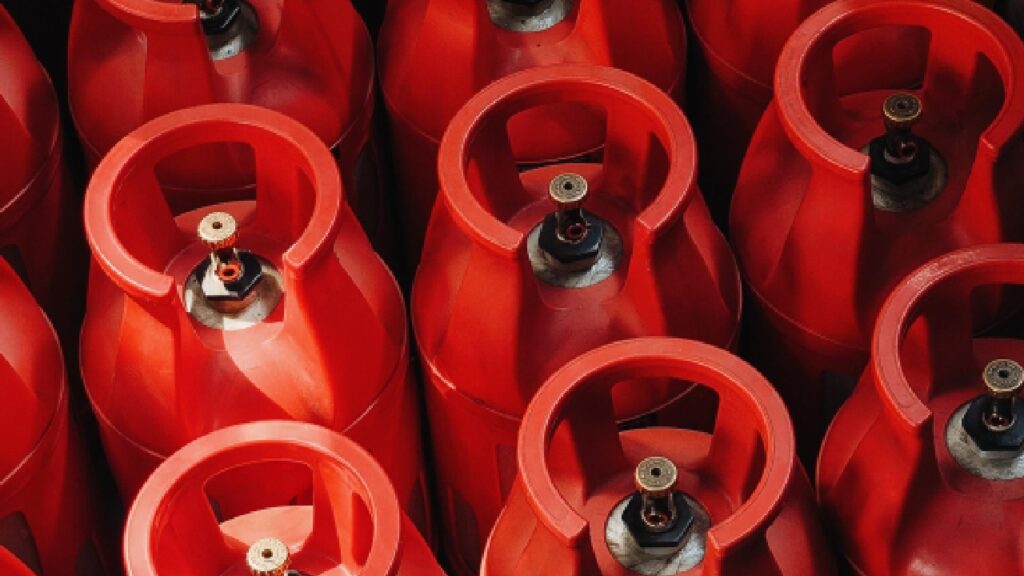
The Iran war is now spreading far and wide. Its impact on the geoeconomy is now visible here in India. India imports almost 80 per cent of its gas, most of which passes through the Strait of Hormuz. With billows of barrels stuck as Iran decides to choke the oil artery of the world, the Indian kitchen is starting to face the heat. Though the crisis may not be here yet, one can see it coming should the war prolong for a month or more. With reports of LPG supply being restricted, if not completely cut, in Mumbai and Bengaluru, the fear of uncertainty is gripping people. Reportedly, even in Delhi the online gas booking lines are not working, adding to the panic. Meanwhile, the Government has invoked ESMA, a right move, to ration supply, and strict action against hoarding is a move in the right direction. India may not officially be facing a gas shortage as yet, but the warning signs of a brewing LPG crisis are everywhere. India’s deep dependence on imported liquefied petroleum gas (LPG) is beginning to expose a critical vulnerability. The government’s decision to invoke the Essential Services Maintenance Act (ESMA) to ensure uninterrupted distribution reflects the seriousness of the situation.
For India, the implications of stalled supply are severe. About 50-60 per cent of India’s crude oil imports pass through the Strait of Hormuz, making it one of the country’s most critical energy supply routes. The dependence is even higher for liquefied petroleum gas (LPG), with around 80-85 per cent of India’s LPG imports transiting through this narrow maritime corridor. India is the world’s second-largest LPG importer after China. Most of India’s oil and natural gas supplies come from Gulf nations such as Qatar, Saudi Arabia, the UAE, and Kuwait.
The most immediate impact is being felt by small businesses and the hospitality sector. If the disruption continues, temporary shutdowns could become unavoidable, adding to the losses to the economy and distress to workers who might be laid off. Reports from cities like Bengaluru and Delhi suggest that the grey market is booming, and LPG is being sold at much higher rates than its original price.
Recognising the potential fallout, the government has moved to prioritise domestic consumers and essential services. The gap between LPG cylinder bookings for households has been increased from 21 to 25 days to manage distribution.
Invoking ESMA can only offer temporary relief. The crisis highlights a deeper structural issue – India’s overwhelming dependence on imported cooking gas and its concentration of supply routes. Strategic reserves for LPG remain limited, with analysts estimating that existing stocks may cover only two to three weeks of demand. It is a wake-up call. Diversifying energy supply routes, expanding LPG storage infrastructure, and accelerating the shift to alternative cooking fuels such as piped natural gas, electric induction, and biofuels must be prioritised. The push towards renewable energy must also extend to household and commercial cooking. Every crisis offers a lesson: energy is a pillar of nation-building. Without energy self-sufficiency, no country can truly claim power and will remain vulnerable to external pressures. The situation is being closely monitored by the Ministry of Petroleum and Natural Gas, and the measures are intended to keep the supply chain running smoothly during the international conflict.
Inter-Ministerial Briefing on recent Developments in West Asia
Indian Refineries operating at high-capacity utilisation
Retail outlets functional with adequate stocks
50 lakh Cylinders being delivered every day
Domestic LPG production increases by 28%
Port operations across India remain stable
Government takes coordinated measures across infrastructure, financial facilitation, energy security monitoring, and vessel safety operations
Missions in regular touch with Indian community members helping them with information for commercial flight options and visas
Citizens urged to avoid panic booking of LPG Cylinders
Appeal to citizens to beware of misinformation and rumors
Senior officers from the Ministry of Petroleum and Natural Gas, Ministry of External Affairs, Ministry of Ports, Shipping and Waterways, and Ministry of Information and Broadcasting briefed the media about the latest updates regarding steps taken by the Government of India in response to the ongoing situation in West Asia at National media. The inter- ministerial briefing included updates about the fuel supply situation; preparedness of the Government of India to ensure uninterrupted energy supplies, maritime safety, welfare of Indian Nationals abroad. Ministry of I&B officials appealed to the citizens to not indulge in panic booking and not believe fake narratives and rumours.
Energy Supply and Fuel Availability:
The Ministry of Petroleum and Natural Gas assured that all steps are being taken by the Government of India to ensure uninterrupted energy supplies and that 50 lakh cylinders are delivered every day.
Crude and Refineries–
- It is 13th day of war and first time in recorded history, the Strait of Hormuz has been effectively closed to commercial shipping. Crude is sourced from more than 40 countries and 70% of our crude is now coming from routes other than Strait Hormuz. It was also informed that our daily consumption is 5.5 million barrels and that India is the 4th largest refiner in the world with 22 refineries in the country. Further, Refineries are operating at high-capacity utilisation; in several cases, they are exceeding 100 per cent.
- India’s large refining capacity is allowing us a much more comfortable position in terms of Petroleum product availability and sustain the crisis.
- We have a vast network of Retail Outlets. There are around 1 lakh retail outlets. All the retail outlets are functional with adequate stocks.
Natural Gas-
- For the supply of Natural Gas that has been affected due to force majeure conditions the procurement through alternative routes and suppliers is underway to offset this disruption. To manage this situation effectively, the Government has issued a Natural Gas Control Order on 9 March 2026 under the Essential Commodities Act to prioritise the supply.
LPG supply-
- This is war situation where India imports about 60 % of our LPG consumption and about 90 % of it comes through the Strait of Hormuz which is closed. The global situation is challenging. Govt has taken many steps to maintain demand supply balance.
- Enhanced production of LPG by the refineries-The LPG Control Order issued on 9th March 2026 directed all refineries to maximise LPG yields and channel the entire output of C3 and C4 hydrocarbon streams, comprising propane, butane, propylene, and butene, exclusively to the three Oil Marketing Companies for domestic cooking gas. Hence, in the last 5 days, LPG production has been increased by 28 per cent through refinery directives. Further procurement is actively underway.
- We have more than 25000 distributors all over the country Stock situation is closely reported. No dry out has been reported. More than 50 lakh cylinders are delivered every day. There is many fold increase in booking due to panic. We urge citizens to avoid panic booking, cooperate with authorities, and conserve fuel where possible during this period of global uncertainty.
- For non-domestic LPG, priority is being given to essential sectors such as hospitals and educational institutions. A three-member committee of Executive Directors from IOCL, HPCL and BPCL has been constituted to review allocations to restaurants, hotels and other commercial users. The committee is consulting with state authorities and industry bodies to finalise a plan to ensure that available LPG is distributed in a fair and transparent manner. In a major decision, 20% of the average monthly Commercial LPG requirement will be allocated from today by OMCs, in coordination with the State Governments so that there is no hoarding or black marketing.
- OMCs are approaching all state/UTs for delivery of commercial cylinders. Discussions with Chief Secretary Delhi have happened today for delivery of commercial cylinders.
- Alternate fuel options are being activated to ease pressure on LPG and gas channels. Kerosene is being made available through retail outlets and PDS channels, and fuel oil is being made available for industrial and commercial consumers. The MoEFCC has advised State Pollution Control Boards to permit, for the duration of this crisis period, the use of biomass, RDF pellets, and Kerosene/coal as alternate fuels for the hospitality and restaurant segment for 1 month, which would enable a wider range of establishments to switch and free up LPG for priority consumers.
- Yesterday ministry of coal has issued orders to allot higher quantities of coal to state nominated agencies and allocated these to small, medium and other consumers.
- An additional quantity of over 48000 KLs has been allocated to all states/UTs , over and above, more than 1 lakh KLs for one quarter, already allocated for use as cooking fuel.
Maritime Safety and Shipping Operations
Ministry of Ports, Shipping and Waterways shared the latest updates with the media about the maritime situation in the Persian Gulf region and the steps being taken by the Ministry to safeguard safety and welfare of Indian seafarers and protecting India’s maritime interests. It was informed that-
- The number of Indian-flagged vessels operating in the Persian Gulf region, remains unchanged at 28, of which 24 vessels are located west of the Strait of Hormuz, carrying 677 Indian seafarers, and 4 vessels are on the east of the Strait with 101 Indian seafarers onboard. All Indian vessels and crew are being actively monitored for their safety and security.
- Authorities, ship managers, and Recruitment agencies are closely coordinating with Indian embassies and local authorities to ensure safety, and render medical assistance.
- Advisories issued on precautionary measures to safeguard Indian seafarers, Indian-flagged vessels and maritime trade operations issued by DG Shipping on 28 February 2026, remain in force.
- Overall port operations across India remain stable. A Standard Operating Procedure has been issued for all Major Ports/ State Maritime Boards to proactively facilitate shipping lines and exporters through stakeholder coordination and time-bound grievance redressal. A nodal officer as a Single Point of Contact has been appointed by all Major Ports.
- Major ports have been directed to provide priority berthing for LPG vessels.
- Ports have implemented facilitation measures such as permitting storage of affected Middle East-bound cargo as transshipment cargo, allotting additional storage space, enabling ad-hoc vessel berthing, prioritising handling of perishable and returning export cargo, expediting “Back to Town” movement in coordination with Customs, and enhancing bunkering support wherever feasible.
- Major ports have been advised to coordinate with agencies like Customs and DGFT, consider relief in port charges, and submit daily action-taken reports to the Ministry to ensure seamless logistics support during the crisis period.
- Government has taken coordinated measures across infrastructure, financial facilitation, energy security monitoring, and vessel safety operations.
- Dedicated 24-hour control room is operational both in the Ministry (28 February 2026) and the Directorate General of Shipping. The Directorate is also maintaining constant contact with ship owners, operators, and the families of seafarers to provide timely updates and necessary assistance.
- There have been maritime incidents involving Indian crew on Foreign flag vessels. On these vessels, there were 78 Indian Seafarers. Of these, 70 escaped unhurt and 04 sustained injuries but are stable. Unfortunately, there have been 03 casualties and 01 seafarer is missing.
- Ministry of Ports, Shipping and Waterways continues to closely monitor the prevailing maritime situation in the Persian Gulf region and has strengthened monitoring and preparedness measures in view of the evolving maritime situation in that region.
- Regular interaction with industry and stakeholders is being maintained to provide all assistance.
- Government remains fully committed to ensuring the safety and welfare of Indian seafarers and protecting India’s maritime interests.
Safety of Indian Nationals in the Region
The Ministry of External Affairs provided an update on the safety and welfare of Indians in GCC and Iran. It was shared that-
- Our Missions in regular touch with Indian community members and helping them with information for commercial flight options. In some cases, they are also helping with visas.
- Embassy is helping Indian nationals who wish to return via Armenia and Azerbaijan on commercial flights. Embassy facilitating with visas and land-border crossings.
- We have lost three Indian nationals in the ongoing conflict. We also have an Indian national who is reported missing.
- All the four Indian nationals were part of crew on board merchant ships plying in the area.
- Our Embassies in Oman and Iraq and our Consulate in Dubai are working with local authorities to have their mortal remains transported back to India at the earliest.
- It was further added that this is also the reason why India strongly condemns the attacks on Merchant ships from any quarters.
- The latest casualty happened on board Safesea Vishnu, a Marshal Island flagged vessel. This happened close to Iraq.
- Altogether there were 28 crew members on the ship, including 16 Indian nationals. One of them has unfortunately died. We convey our condolences. All other 15 nationals have been rescued and are presently in Basra. Our Embassy is in touch with them and offering all possible assistance.
- Over two dozen Indians have been injured in the conflict so far. Several of them have recuperated and returned home after their treatment. Few of them remain in hospital.
Appeal to Citizens through Media:
The Ministry of Information and Broadcasting:
- Appealed to all citizens through media that there should not be any panic booking of cylinders and all steps are being taken to ensure that uninterrupted supply is maintained.
- Highlighted the role District level monitoring Committees and the State Governments to do the needful and monitor the distribution of LPG cylinders at the ground level.
- Appealed to social media users to not spread misinformation and rumours and post only credible and verified content.
- Appealed to tv channels to avoid playing the same visuals again and again since it is an evolving situation, channels were requested to play the visuals with date and time stamped so that the citizens are correctly informed about when the issue from the ground happened.
- States and Union Territories were advised to take strict measures against hoarding of essential commodities and ensure uninterrupted availability of essential supplies.
