
IT services major Cognizant said it plans to hire between 24,000 and 25,000 fresh graduates in 2026, marking about a 20% increase over its hiring in 2025, as the company expands its entry-level workforce amid growing adoption of AI. Candidates from the 2026 graduating batch with a three-year full-time degree (BCA, BSc, BA, BCom, BBA, BVoc, BMS, etc.) are invited to apply. At Cognizant, you can be part of groundbreaking solutions. “We hired close to 20,000 school graduates in 2025. For next year, we plan to increase this by about 20%. So we would be very happy to land around 24,000 to 25,000 for 2026,” Dalal said. Cognizant has announced plans to recruit approximately 24,000 to 25,000 freshers in 2026, marking a 20% increase over its 2025 intake of roughly 20,000 graduates. IT hiring increased significantly in 2025, especially in India, with reports showing a 16% rise in job demand (reaching 1.8 million roles) driven by emerging digital skills in AI, cloud, and cybersecurity, although the market shifted towards mid-career professionals and specialized roles, with a continued focus on capability-led growth into 2026. While overall growth was strong, some reports note tougher conditions for entry-level/fresher roles compared to previous years, with high demand for specialized skills. India sees 16% growth in IT hiring in 2025: Report India’s IT sector showed signs of recovery in 2025, with total job demand touching 1.8 million roles, marking a 16 per cent increase over the previous year and highlighting renewed momentum in hiring across the industry, a report said on Monday.
India’s IT hiring environment showed improvement with total IT job demand reaching 1.8 million roles in 2025, a 16 per cent rise over the previous year, according to the IT Workforce Trends in India 2025 report by workforce and talent solutions provider Quess Corp.
According to the report, Global Capability Centres increased their contribution to India’s IT hiring market, accounting for about 27 per cent of total demand in 2025, up from around 15 per cent in 2024. Product and SaaS firms also expanded hiring selectively, while IT services and consulting recorded modest growth, it said. Startup hiring declined to low single-digit levels amid funding moderation, it stated.
Key Trends in 2025 IT Hiring:
- Increased Demand: India’s IT job demand grew by 16% in 2025, signaling a strong recovery and renewed momentum.
India’s IT job market continued its upward momentum in 2025 as companies ramped up hiring for advanced technology roles and expanded their global capability operations.
The ‘IT Workforce Trends in India 2025’ report by Quess Corp highlighted a notable shift towards digital-first skills, reflecting the sector’s transition to next-generation capabilities.
Emerging Skills and GCC-Led Growth
According to the report, total IT job demand reached 1.8 million roles in 2025, marking a 16% rise over the previous year. More than half of all hires were focused on emerging digital skills, while legacy technology roles dropped to under 10% of overall demand.
Global capability centres accounted for roughly 27% of total hiring, up from 15% in 2024, underscoring their growing strategic importance.
Product and SaaS companies also contributed to the expansion, though traditional IT services firms and consultancies showed only moderate growth. In contrast, startup hiring dipped to low single digits amid tighter funding conditions.
Hiring Patterns and Skill Premiums
The report revealed that companies increasingly favoured mid-career professionals, who made up 65% of total hiring in 2025, up from 50% a year earlier. Entry-level hiring, by comparison, fell to 15%, reflecting the preference for productivity-ready talent.
Roles in AI/ML, cloud engineering, DevOps, and cybersecurity saw the steepest rise in demand, with salaries for next-generation positions including Generative AI specialists, MLOps engineers, and cyber threat analysts rising by 10% to 40%.
Hiring remained concentrated in Tier-1 cities, accounting for nearly 90% of total demand. The average hiring cycle extended to 45-60 days, while niche roles in AI and cybersecurity often took 75-90 days to fill, indicating intense competition for skilled professionals.
Outlook for 2026
The report projected sustained hiring momentum through 2026, driven by digital transformation projects, AI adoption, and regional expansion beyond major metros.
The reports says that a continued premium demand for cloud, cybersecurity, and AI governance expertise as companies refine their technology strategies in the coming year.
Conclusion
India’s IT employment landscape is undergoing a structural transformation, shifting from traditional software roles to specialised, innovation-led positions. With GCCs, AI-driven capabilities and skilled mid-career professionals at the forefront, 2026 is expected to reinforce India’s position as a global technology talent hub.
Disclaimer: This blog has been written exclusively for educational purposes. The securities mentioned are only examples and not recommendations. This does not constitute a personal recommendation/investment advice. It does not aim to influence any individual or entity to make investment decisions. Recipients should conduct their own research and assessments to form an independent opinion about investment decisions.
Investments in the securities market are subject to market risks, read all the related documents carefully before investing.
Focus on Digital Skills:
The majority of hires targeted emerging digital skills, with legacy roles declining.
High Demand for Specialists:
Strong interest in Artificial Intelligence (AI), Machine Learning (ML), Cloud, and Cybersecurity roles.
2025 Forecast: India sees 16% growth in IT hiring in 2025: Report According to the report, Global Capability Centres increased their contribution to India’s IT hiring market, accounting for about 27% of total demand in 2025, up from around 15% in 2024 India’s IT sector showed signs of recovery in 2025, with total job demand touching 1.8 million roles, marking a 16 per cent increase over the previous year and highlighting renewed momentum in hiring across the industry, a report said on Monday.
India’s IT hiring environment showed improvement with total IT job demand reaching 1.8 million roles in 2025, a 16 per cent rise over the previous year, according to the IT Workforce Trends in India 2025 report by workforce and talent solutions provider Quess Corp.

India’s IT sector showed signs of recovery in 2025, with total job demand touching 1.8 million roles, marking a 16 per cent increase over the previous year and highlighting renewed momentum in hiring across the industry, a report said on Monday.
India’s IT hiring environment showed improvement with total IT job demand reaching 1.8 million roles in 2025, a 16 per cent rise over the previous year, according to the IT Workforce Trends in India 2025 report by workforce and talent solutions provider Quess Corp. According to the report, Global Capability Centres increased their contribution to India’s IT hiring market, accounting for about 27 per cent of total demand in 2025, up from around 15 per cent in 2024.
Product and SaaS firms also expanded hiring selectively, while IT services and consulting recorded modest growth, it said.
Startup hiring declined to low single-digit levels amid funding moderation, it stated. Overall, hiring demand remained strongly tilted towards productivity-ready talent, with mid-career professionals (4-10 years of experience) making up 65 per cent of total hiring, compared to 50 per cent in 2024, said the report.
Entry-level hiring accounted for 15 per cent of total demand, it added.
The IT Workforce Trends in India 2025 report by Quess Corp is based on secondary sources.
It further revealed that contract roles accounted for around 10-11 per cent of total IT hiring in 2025, compared to approximately 8 per cent in 2024, according to the report.
The findings showed a gradual increase in the share of contract hiring within overall IT demand during the year, it added.
“The report shows an improvement in India’s IT hiring activity in 2025, with job demand reaching 1.8 million roles and a larger share of hiring coming from GCCs and product-led organisations. Much of the hiring during the year was driven by mid-career professionals, reflecting where demand is strongest across the technology workforce today,” Quess Corp CEO of IT Staffing Kapil Joshi said.
AI, cloud and cybersecurity skills saw particularly strong interest, pointing to the increasing complexity of roles being built in India, he said.
“Overall, this suggests a technology hiring market that is moving steadily up the value curve. This momentum offers a positive base as hiring conversations carry into 2026.” Joshi added.
Looking ahead, the report indicated a continued momentum in IT hiring through 2026, led by specialised digital roles and steady expansion beyond tier II cities.
Demand is expected to remain concentrated around AI, cloud, cybersecurity and data-led roles, with BFSI, SaaS, telecom and manufacturing among the key hiring sectors, it said.
Overall, hiring activity is likely to remain focused on capability-led growth rather than volume expansion, added the report.
Mid-Career Focus:
Hiring was largely driven by mid-career professionals, indicating a move up the value curve, according to Quess Corp’s IT Staffing CEO.
Role of GCCs: Global Capability Centers (GCCs) significantly increased their contribution to IT hiring.
Sector Growth: BFSI (Banking, Financial Services, and Insurance), SaaS, Telecom, and Manufacturing were key sectors.
For Entry-Level/Freshers:
- While overall hiring increased, some data suggests a tougher market for new graduates, with higher application numbers and potentially fewer offers compared to past years, despite demand for fresh talent in specialized areas.
Class of 2025 says they see the effects of a tough job market
Young workers have been particularly exposed to the changes brought by artificial intelligence tools, some research has indicated.
Selected Highlights
NACE’s annual student survey provides important insights into and evidence about the
expectations and experiences of college students. These can inform the strategies and
goals of career services and early talent recruiting professionals as well as those focused
on the development of a successful workforce. Based on responses from students
nationwide, NACE’s 2025 Student Survey Report provides a snapshot into the universe of
the 2025 college student and offers insights into trends affecting career development and
employment.
In particular, there are four big takeaways—related to the nature of the job market, use of AI,
the role of skills and skills-based hiring, and the prevalence of experiential learning—elicited
through the responses.
The Class of 2025 faced a tough job market and behaved accordingly. Compared to their
Class of 2024 counterparts:
They were more likely to say they were unsure about their post graduation plans.
They started their job searches earlier and submitted more job applications.
They received fewer job offers on average (0.78) and accepted those offers at a higher
rate (86.7%). Contrary to popular belief, AI is not widely used in the job search—by students or
employers.
84% of the Class of 2025 took part in an internship, co-op, or other experiential
learning program.
Less than one-third of students said they used AI in their job search.
In a separate NACE survey, fewer than 22% of employers said they were using AI in
their recruiting efforts.
Students appear to be unfamiliar with the concept of skills-based hiring, despite being
asked to demonstrate their skills and working to develop them.
Fewer than 40% of graduating seniors said they were familiar with the term “skills-
based hiring,” but nearly 46% said they were asked to demonstrate their skills through
an assessment as part of the job application or interview.
Beyond the classroom, students embrace hands-on skills development through
experiential learning.
Implications
- The data show that students who take part in experiential learning have an advantage
in the job market. Career services professionals can share this with students as well as
with faculty and staff to build support for experiential learning. - Students need clear communication from career services and employers about the
types of skills that are prized in hew hires and interns and how to develop those skills. - Students need guidance on how to best use AI in the job search. They were especially
concerned about the ethical implications.
Applying NACE’s Principles for Ethical Professional Practice to AI

By the Principles for Ethical Professional Practice Committee
Introduction
Artificial intelligence (AI) and data-driven technologies have been integral to career services and recruitment for years. However, since the introduction of highly accessible AI tools in November 2022, their adoption has surged, generating both excitement and concern about their implications for the profession, the job market, and society at large. As AI evolves, it presents new opportunities and challenges spanning technical, legal, social, and economic dimensions. This resource focuses on ethical dimensions.
This resource is built on the premise that career services and recruiting professionals, alongside students and service providers, will continue to expand their use of AI-powered tools, even as some call for a pause in their development. NACE does not endorse specific AI tools or prescribe when they should be used in the profession. Rather, this document assumes that members have the agency to decide whether to use AI, have considered the inherent biases of these tools, and have ultimately chosen to proceed with their use. With a forward-thinking approach, the objective is to create a resource that provides an ethical framework for assessing AI’s role in our field rather than focusing on specific tools that may evolve or become obsolete.
Given the increasing integration of AI in career services and recruiting, it is essential to approach its use thoughtfully and responsibly. Principles for Ethical Professional Practice Preamble
The dedicated individuals who make up the membership of the National Association of Colleges and Employers (NACE) are involved in an important process—helping students choose, prepare for, and attain personally rewarding careers.
NACE’s Principles for Ethical Professional Practice are designed to provide everyone involved in the career development and employment process with two basic precepts on which to base their efforts: maintain a recruitment process that is fair and equitable; support informed and responsible decision making by candidates.
The environment in which we all work is subject to continuous and rapid change, with advances in technology, increased competition, diversifying constituencies, and differences among generations. Therefore, the Principles are intended to serve as an enduring framework within which those involved in the career development and employment processes operate and as a foundation upon which professionalism and ethical behavior are promoted. NACE members are expected to use the Principles to guide processes, decisions, and outcomes.
The Principles for Ethical Professional Practice Committee is in place to provide leadership in the ethics area and facilitate the ongoing dialogue on ethics-related issues. The committee also provides advisory opinions to members on the application of the Principles, acts as an informational clearinghouse for various ethical issues, and periodically reviews and recommends changes to the Principles.
Principles
1. Practice reasonable, responsible, and transparent behavior …
… that consciously avoids harmful actions by embodying high ethical standards.
… by clearly articulating and widely disseminating your organization’s policies and guidelines.
… that guarantees equitable services for all constituencies.
… that is commensurate with professional association standards and principles.
… when resolving differences and addressing concerns.
… by nurturing sustainable relationships that are respectful and transcend transactions.
2. Act without bias …
… when advising, servicing, interviewing, or making employment decisions.
… when defining what constitutes employment.
3. Ensure equitable access …
… without stipulation or exception relative to contributions of financial support, gifts, affiliation, or in-kind services.
… in the provision of services and opportunities without discriminating on the basis of race, gender, gender identity, ethnicity, sexual orientation, religion, national origin, disability, age, economic status, or veteran status.
… by proactively addressing opportunity and access.
4. Comply with laws …
… associated with local, state, and federal entities, including but not limited to EEO compliance, immigration, and affirmative action.
… in a timely and appropriate way if complaints of non-compliance occur.
… and respond to complaints of non-compliance in a timely and prudent manner.
5. Protect confidentiality of …
… all personal information related to candidates and their interviews, and their engagement with services, programs, and resources.
… student information related to professional plans. Requesting an Advisory Opinion/Problem-Solving Procedures
A NACE member/regional association may request an advisory opinion regarding an interpretation of the NACE Principles at any time. The advisory opinion will apply to the situation as explained and will not be considered precedent for a subsequent complaint brought to NACE.
- The member/association will prepare a written statement detailing the conduct in question. Statements will include the Principles to be interpreted relative to the conduct in question.
- The information will be reviewed by the NACE Principles for Ethical Professional Practice Committee and a response given to the member/association.
Questionable practices or problems involving recruiters and career services practitioners should be resolved between the parties as quickly as possible. NACE recommends the following:
Refer unresolved concerns to the supervisors of the involved individuals or other appropriate officials.
Discuss the incident with all parties involved in the situation. Determine the specifics of the problem.
Attempt to resolve the incident among the affected parties.
This guide applies these principles to AI use in career services and recruitment, providing actionable recommendations to ensure responsible implementation.
Ethical Application of AI in Career Services and Recruiting
Each of NACE’s five principles applies to the ethical use of AI in career services and recruitment. Below, we provide examples of how these principles can be effectively used. While this is not an exhaustive list, we encourage institutions and organizations to adopt these guidelines as appropriate.
1. Practice Reasonable, Responsible, and Transparent Behavior
- Inform students and candidates about AI usage: Clearly communicate how AI is used in career services and recruitment. Provide details on the tools used, their purpose, and their impact on decision-making.
- Publish an AI policy document: Develop a policy outlining AI tools’ effectiveness, best practices, and appropriate use cases.
- Encourage student and candidate feedback: Create channels for students and candidates to share their experiences with AI tools. Use this feedback to refine practices, address concerns, and improve fairness.
2. Act Without Bias
- Select vendors committed to using diverse and representative data sets: Verify that they have processes to minimize bias. Perform regular bias audits: Conduct systematic reviews of AI systems and data sets to detect and mitigate biases. Monitor candidate pools and AI-generated feedback to identify disparities across groups.
- Implement feedback mechanisms: Establish structured feedback loops to capture and address bias-related issues. Continuously improve AI-driven recommendations based on user input.
- Consult external experts: Periodically engage with diversity, equity, and inclusion specialists to evaluate AI systems and recommend improvements, as resources are available or as appropriate.
3. Ensure Equitable Access
- Promote AI tools widely: Ensure all students and candidates are aware of available AI tools. If tools have premium versions, consider collaborating with campus offices like IT or libraries to provide access regardless of financial constraints.
- Select accessible AI tools: Choose AI solutions that meet accessibility standards to support students with disabilities and ensure inclusivity.
4. Comply With Laws
- Adhere to student privacy laws: Ensure AI tools comply with FERPA and other relevant regulations to safeguard student data.
- Require vendor compliance documentation: Obtain documentation from AI vendors certifying their adherence to local, state, and federal laws regarding data protection and employment practices.
5. Protect Confidentiality
- Ensure proper data handling: Implement data security measures, particularly when using cloud-based or third-party AI solutions.
- Require vendor security measures: Verify that vendors employ robust encryption and security protocols. Consider prohibiting unauthorized data sharing with third parties.
- Inform students and candidates: Clearly communicate data usage policies. For instance, consider providing a disclaimer such as: “Your data will only be shared with employers upon your explicit request during job application processes.”
- Develop incident response plans: Create protocols for addressing potential data breaches involving AI systems, including notification procedures and remediation steps
Advisory Opinion: Managing Data Security With Technology Providers By the Principles for Ethical Professional Practice Committee
Students, alumni, and employers expect that career centers will provide efficient and effective ways for them to connect within the virtual environment. To use these systems, users may be required to provide a certain amount of personal information. Users may also believe that their career centers have a degree of control over the technology provider platforms and, therefore, trust that the online platform is secure and safe for them to use.
For career centers, the related ethical considerations are:
- Principle 1: Practice reasonable, responsible, and transparent behavior.
- Principle 4: Comply with laws associated with local, state, and federal entities, including, but not limited to, EEO compliance, immigration, and affirmative action.
- Principle 5: Protect confidentiality.
There are two main areas of concern for career development professionals—1) the security of the user’s personal information and 2) the use of that same information by technology providers (or, depending on the situation, the higher education institution itself). Both of these concerns are developing areas, and the recommendations will likely continue to evolve along with the related societal discussion.
The security of personal information is a concern for users, who are typically students and alumni of the institution. User data could be compromised through malicious hacking or unintentionally through data disclosure without authorization. Stolen personal data can lead to a variety of negative outcomes for victims, including identity theft. Consequently, it is imperative for educational institutions, technology providers, and employers to know how to safeguard student data that are stored internally or through a third party, to carefully consider what data and information they are collecting, and to clearly communicate how the information will be used and to whom it will be disclosed. when handling and maintaining student personal data and information, particularly as technology systems become more complex and integrated. Both technology providers and career centers must ensure that they have established policies and procedures to protect data while balancing the ability of students and employers to connect.
Key Considerations for Students: Sharing Personal Information With Technology Providers
Many technology providers and third parties collect students‘ personal information online to customize their services to fit the students’ needs and interests and to determine their consumer demographics. In some cases, this could involve reselling that information to others. Consequently, students should be aware of the potential risks regarding the security and use of their data by technology providers.
Ideally, students should read a technology provider’s privacy policy carefully before providing or agreeing to provide any personal information to ensure that the technology provider is providing the security and privacy protections that students should expect. It is also best for students to stay up-to-date on providers’ privacy policies, as they are subject to change. It is important for students to understand that they are responsible for the data they disclose to a technology provider. Students should not agree to anything in writing without reviewing the same with legal counsel or career center staff.
Here are a few questions that students should consider in reviewing a privacy policy before deciding what type of information to provide:
Does the technology provider state clearly whether it sells personal information, and, if it does, for what purposes and to which third parties?
Is the technology provider well known in the market? How long has it been in existence? The legitimacy of a technology provider is often measured according to its longevity, so students will want to consider if the technology provider has endured the test of time.
How will the technology provider ensure the security of the student’s personal information? How are personal data processed and stored, and for how long?
Does the platform have security features and a dedicated security team?
How is the technology provider using the student’s data? How often and how much of the personal information is being shared and with what other parties? (For example: What can employers see? What is visible to other users?) How is the technology provider using the information to improve the system?
All legitimate technology providers and businesses should have a privacy policy easily accessible to users. If a technology provider does not have an easily accessible privacy policy online for review, then it may not be a safe technology provider with which to share personal information.
Students are also strongly encouraged to consult their school’s IT department and career center about any technology provider’s privacy policy, as well as review their institution’s security tips and best practices. Graduates were more likely to accept those offers, however, even amid uncertainty; 86.7% of those offered a job had accepted in 2025, compared to 81.2% of 2024 graduates. AI is having ‘a significant and disproportionate’ effect on young workers’ job prospects, study finds
Employment declines “are concentrated in occupations where AI is more likely to automate, rather than augment, human labor,” Stanford researchers said.

A headset hangs on a cubical wall after the last telemarketing shift at Spectrum Marketing Services, Inc. on Sept. 26, 2003, in Philadelphia, Pa. Employment for the youngest workers filling roles as software engineers and customer service agents — two occupations considered highly exposed to generative AI — dropped “considerably” after 2022, researchers found. Canaries in the Coal Mine? Six Facts about the Recent Employment Effects of Artificial Intelligence This paper examines changes in the labor market for occupations exposed to generative artificial intelligence using high-frequency administrative data from the largest payroll software provider in the United States.
We present six facts that characterize these shifts. We find that since the widespread adoption of generative AI, early-career workers (ages 22-25) in the most AI-exposed occupations have experienced a 16 percent relative decline in employment even after controlling for firm-level shocks. In contrast, employment for workers in less exposed fields and more experienced workers in the same occupations has remained stable or continued to grow.
We also find that adjustments occur primarily through employment rather than compensation. Furthermore, employment declines are concentrated in occupations where AI is more likely to automate, rather than augment, human labor. Our results are robust to alternative explanations, such as excluding technology-related firms and excluding occupations amenable to remote work. These six facts provide early, large-scale evidence consistent with the hypothesis that the AI revolution is beginning to have a significant and disproportionate impact on entry-level workers in the American labor market. However, AI didn’t appear to touch workers with more experience or those in less exposed fields; their employment remained stable or grew from late 2022 through July 2025, according to the research, published Tuesday.
The findings show that “the AI revolution is beginning to have a significant and disproportionate impact on entry-level workers in the American labor market,” researchers said.
Dive Insight:
While many have hypothesized about the effects widespread AI adoption would have on workers, “empirical evidence has struggled to keep pace with technological advancement, leaving many fundamental questions unanswered,” the researchers said.
The report used payroll records from ADP, a massive payroll software provider, to sample information for millions of workers across tens of thousands of firms to demonstrate AI’s effect on job opportunities.
The researchers also found that “employment declines are concentrated in occupations where AI is more likely to automate, rather than augment, human labor.”
Employment for the youngest workers filling roles as software engineers and customer service agents — two occupations considered highly exposed to generative AI — dropped “considerably” after 2022, while other age groups saw employment growth, the report found. For software engineers aged 22-25, employment fell nearly 20% by July 2025 from a high in late 2022.
To fend off the AI tsunami’s fallout, some younger workers said they’ve turned to blue-color work, career website Zety recently reported. Anxiety about AI drives Gen Z career pivot to blue-collar work, survey finds “I call this shift the ‘AIxiety Pivot’ — a growing movement of professionals who are proactively changing course because of AI-related fears and instability,” a career expert at Zety said.
Gen Z jobs are evolving fast as this generation enters the workforce during a time of profound disruption and uncertainty. With AI advancing rapidly and college degrees losing their perceived value, young professionals are reevaluating what a “safe” career looks like. As traditional pipelines feel less secure, many are actively rerouting their careers by switching industries, upskilling, and turning to trade work, thus solidifying their role as the Reroute Generation. The workplace is undergoing a seismic transformation, with technological advancements, shifting employee expectations, and evolving hiring practices reshaping the professional landscape. Zety’s 2025 Future of Work Report dives into the trends that will likely define the coming year, drawing insights from employees, HR professionals and recruiters.
Key findings of the 2025 Future of Work Report:
- AI upskilling efforts: 95% of employees reported that they are currently participating in training or taking other steps to improve their AI skills.
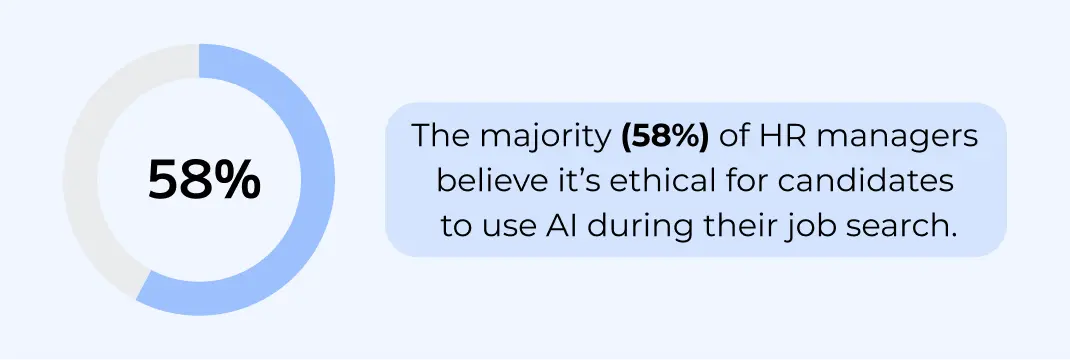
- AI tools shaping job searches: 58% of HR managers believe it’s ethical for candidates to use AI during their job search while 42% disagree.
- Lack of harassment reporting persists: 38% of employees wouldn’t report being a victim of sexual harassment to HR – 44% of women wouldn’t report this compared to 32% of men.
- Cover letters remain crucial: 87% of recruiters consider cover letters an essential factor when deciding who to interview.
AI’s Impact on Job Security
Despite a number of AI-related job losses, employees recognize the importance of AI training and upskilling as we head into 2025.
A new Zety poll found that workers are racing to adopt AI technology in the workplace and improve their skills amid a surprising number of AI-related job losses.
Key findings of Zety’s AI in the Workplace Survey include:
- 71% of those surveyed currently use AI at work.
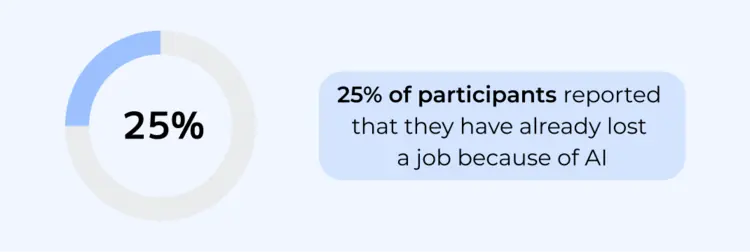
- 25% of people surveyed say they have lost a job thanks to AI.
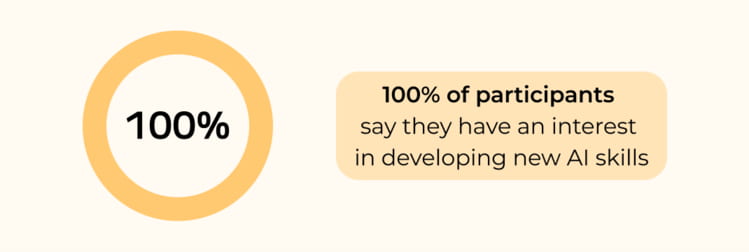
- 100% of respondents reported an interest in improving their AI skills.
- 95% reported that they are currently participating in training or taking other steps to improve their AI skills.
- The majority of participants (60%) reported that they began using AI in 2023; another 26% just started using AI this year (2024).
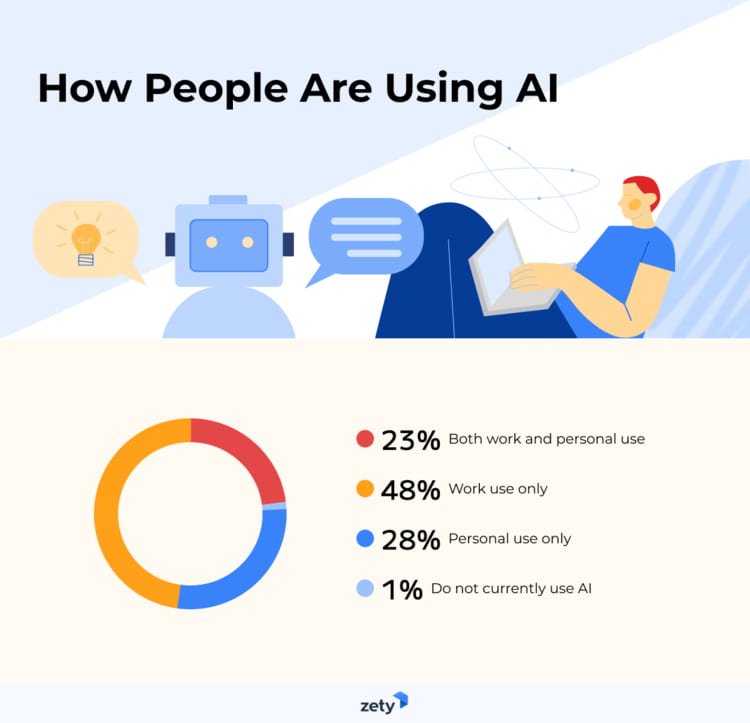
Between March 11-12, Zety polled 1,150 people across the U.S. on their use of AI in the workplace. The AI in the Workplace Survey found that a large percentage (71%) of the workforce has already begun using AI in some capacity. A significant number of those surveyed are using the technology exclusively for work purposes, but personal use was also common among participants.
AI Adoption Rates Among Participants
- 23% use AI for both work and personal use
- 48% use AI, like ChatGPT, at work
- 28% use AI only for personal use
- Only 1% of those surveyed said they do not use AI
Job Loss Fears Realized
For years, workers have worried that AI use in the workplace will displace some workers. The AI in the Workplace Survey found that those fears are alive and well. Eighty-nine percent of respondents confirmed that they worry they could lose their jobs due to the integration of AI tools in the workplace.
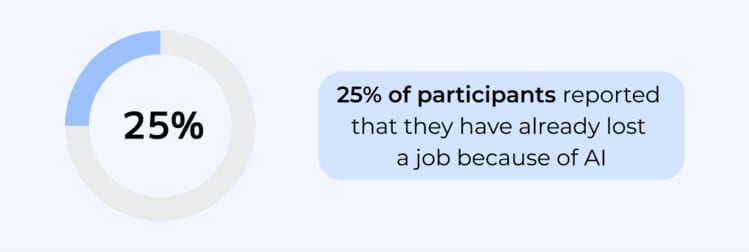
These fears aren’t unfounded. A quarter of respondents reported that they have already experienced a job loss directly related to AI. The survey results suggest that younger workers, who are more likely to be in entry-level positions, have been most impacted by AI-related job losses.
AI-related Job Loss
- Overall, 25% of participants reported that they have already lost their jobs because of AI
- 43% of people 25 or younger in the study say that they have already lost a job because of AI
- 27% of people between the ages of 26-40 have lost a job because of AI
- 19% of people over the age of 41 reported losing a job because of AI
A Race To Stay Relevant
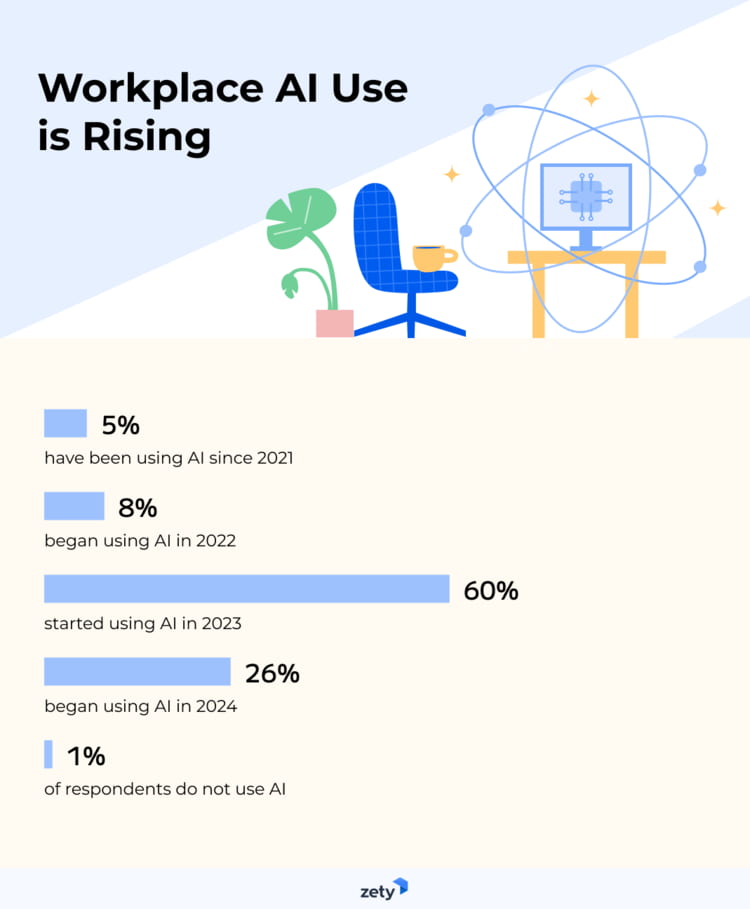
The study found that the use of AI is new to the work landscape, with most users having a year or less of experience with the tools. However, use of the technology is gaining in popularity. The majority of those polled began adopting AI in 2023 and 2024. A smaller number of respondents said that they were using AI prior to 2023.
AI Usage in the Workplace: 2021 – Present
- Only 5% of those surveyed have been using AI since 2021
- 8% began using AI in 2022
- The majority of respondents (60%) started using AI in 2023
- 26% did not begin using AI until 2024
- Only 1% of respondents do not use AI yet
Despite – or possibly because of – AI-related job losses, workers are highly motivated to improve their skill set and integrate AI into their work functions.
While most participants have a year or less of experience using AI tools, the study shows that employees are making an effort to stay ahead of the curve by improving their skills. When asked if they are going through a training program or taking other steps to develop or expand AI skills, most (95%) said “yes.”
The survey found that interest in upskilling was universal, with 100% of participants indicating that they hope to elevate their skills and understanding of AI technology in the future.
Interest in Developing New AI Skills
- 53% of participants are very interested in developing new AI skills
- 47% said they are at least somewhat interested in developing new AI skills
- Not a single person surveyed (0%) reported no interest in developing AI skills
Key Takeaways
AI tools are poised to revolutionize the way work is done. Adoption of the technology is rapidly increasing, with scores of workers learning how to use AI in 2023 and 2024.
Despite – or possibly because of – significant job losses related to AI, workers are rising to the challenge and many are in the process of learning new skills. Across the board, users showed an enthusiasm for improving their AI skills.
Becoming familiar with AI tools, developing technical skills and identifying opportunities to begin working with AI in the workplace are critical steps to coming out on top as AI begins to have a profound effect on the workplace. A wave of change is on its way and it’s clear that learning, training and adapting is the smartest path forward. 43% of people 25 or younger (most likely to be in an entry-level position) have lost a job due to AI.
27% of people between the ages of 26-40 have lost a job due to AI.
19% of people over the age of 41 have lost a job due to AI.
With the rapid integration of AI across industries, the workforce is not only adapting but also preparing to navigate an increasingly AI-driven job market. When asked about AI use and interest in upskilling:
- 71% say they utilize AI at work.
- All respondents (100%) reported an interest in improving their AI skills.
- 95% are currently participating in training or taking other steps to improve their AI skills.
The push for AI literacy and skill development is only expected to grow in the coming year. These trends suggest a workforce entering 2025 equipped with stronger AI expertise and a readiness to adapt to technological disruptions.
Job seekers have long sought out ways to make the job search quicker, easier and more effective. Today, AI tools have become a go-to for applicants who want to alleviate the stress of resume and cover letter writing. It’s a trend that might be here to stay.
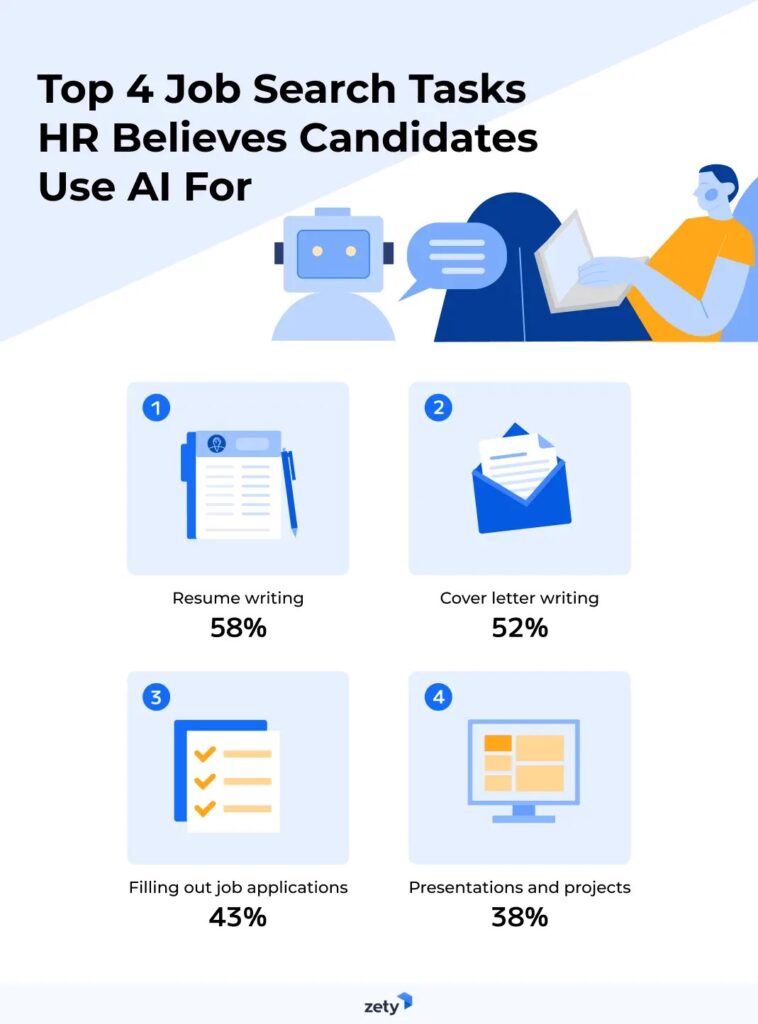
The results found that 36% of HR managers believe most job seekers use artificial intelligence to enhance—or even create—their application materials. HR professionals feel applicants are using this technology across all areas of the application process, most often for:
- Resume writing (58%)
- Cover letter writing (52%)
- Filling out job applications (43%)
- Presentations and projects (38%)
- Skills testing (34%)
- Writing email correspondences (33%)
HR’s Opinion on AI Use
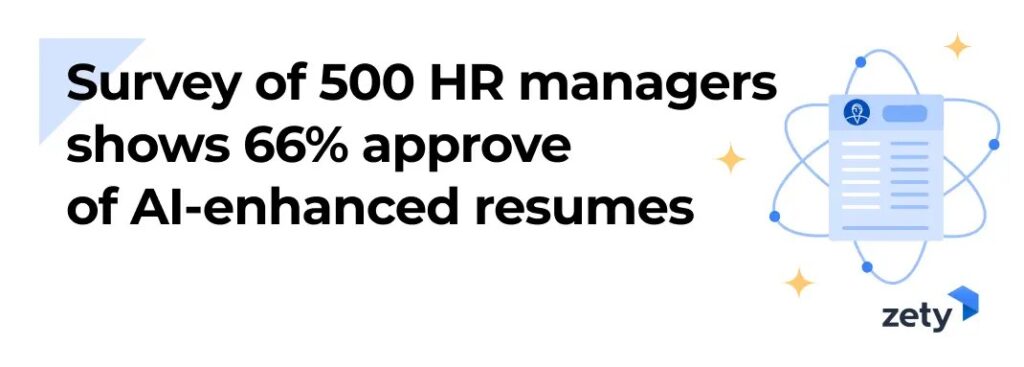
In today’s rapidly evolving job market, integrating artificial intelligence in the application process is gaining significant traction. According to Zety’s study, the majority of HR professionals approve of candidates leveraging AI for essential job search tasks, including:
- Resume creation (66%)
- Cover letter writing (66%)
- Applying to jobs (59%)
However, opinions on the ethics of using AI remain divided. While 58% of HR managers believe it’s ethical for candidates to utilize AI during their job search, 42% still consider it unethical.
Additionally, 62% of HR managers say their organizations actively work to identify AI-generated content in application materials, and 38% admit their companies don’t make such efforts. This highlights the differing policies and strategies businesses are adopting as they navigate working alongside AI tools.
AI’s Impact on the Interview Process
As AI technology continues to shape recruitment, its influence extends into the interview process, impacting how candidates are assessed and decisions are made. While AI offers significant opportunities, it also presents potential risks.
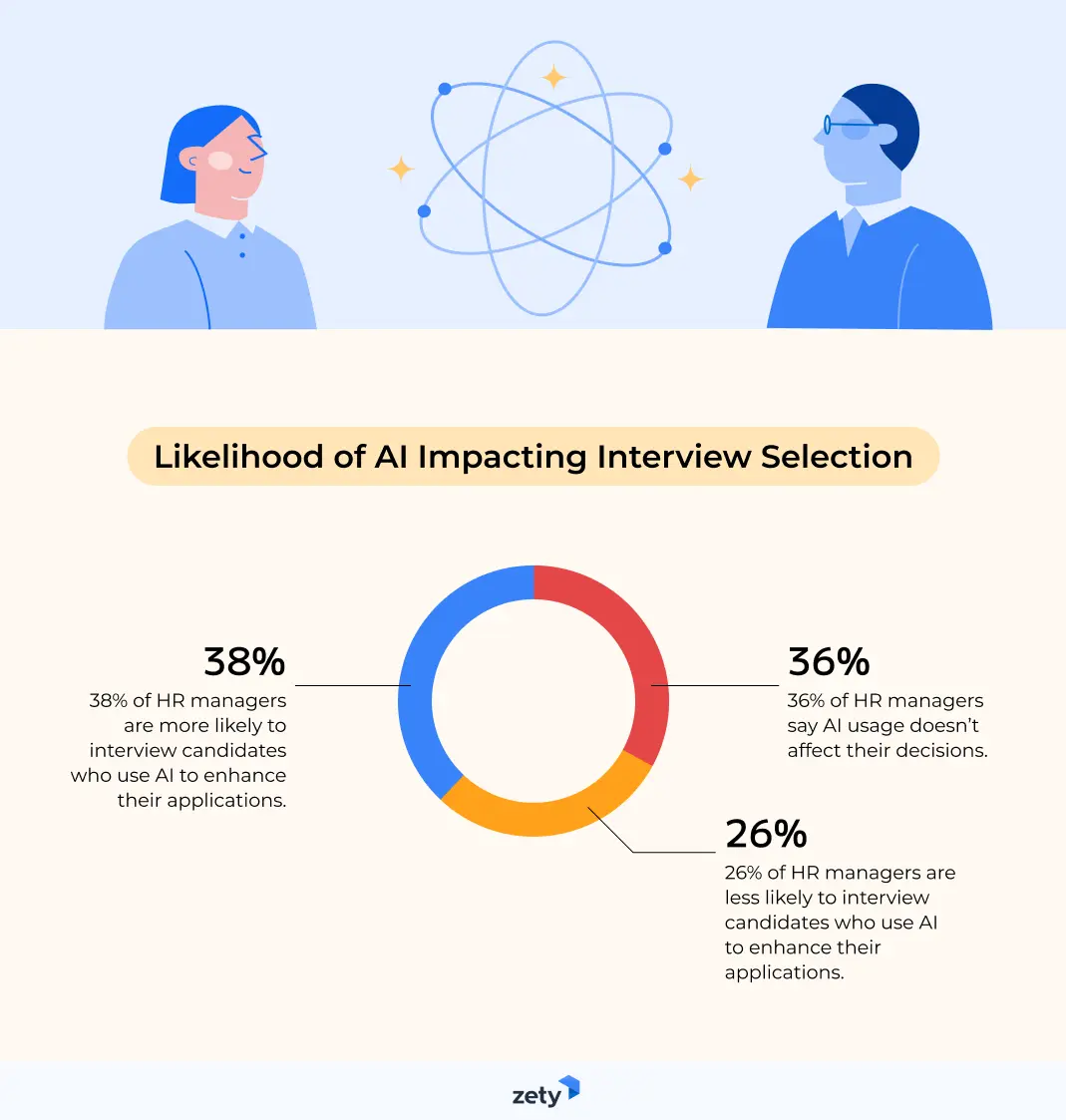
Key insights from HR professionals:
- 38% are more likely to interview candidates who use AI to enhance their applications.
- 36% say AI usage doesn’t affect their decisions, indicating a neutral stance.
- 26% are less likely to interview candidates who rely heavily on AI.
Concerns About AI in Skills Testing
Once a candidate lands the job interview, many companies will require a skills assessment, and 34% of HR managers believe job seekers use AI to complete these assessments. While there is general support for AI use in tasks like resume and cover letter writing, HR’s concerns intensify when considering AI’s impact on skills testing:
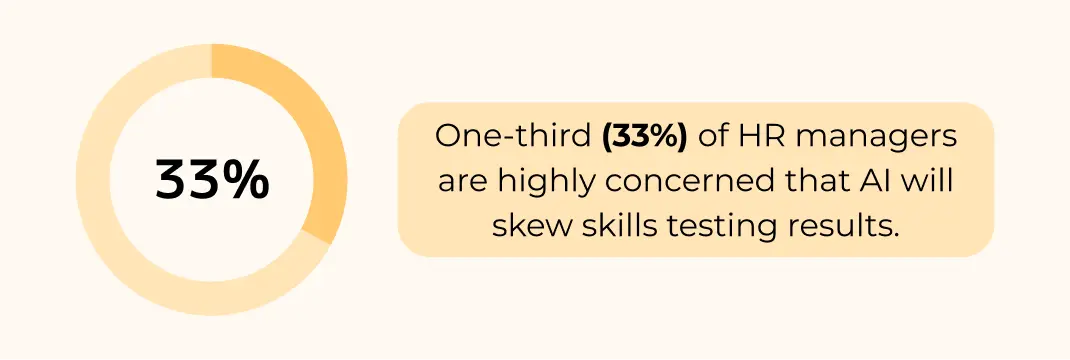
- 38% of HR managers are somewhat concerned that AI will skew skills testing results.
- 33% of HR managers are highly concerned that AI will skew skills testing results.
- 29% of HR managers are not at all concerned that the use of AI will skew testing results.
While HR managers recognize the value that AI brings to the process of writing job application materials, organizations are focused on detecting AI-generated materials, especially when they are being used in skills testing. As AI evolves, both applicants and employers must navigate the use of these tools with transparency. While AI can enhance resume and cover letter writing efficiency, job seekers should strive to accurately represent their skills and experience to ensure they are a good fit for the role.
