
Shivaji Jayanti, also known as Shiv Jayanti, is the birth anniversary of the legendary Maratha warrior-king Chhatrapati Shivaji Maharaj. It is celebrated with immense pride and fervor, particularly in Maharashtra and by Marathi communities worldwide. Shivaji Maharaj Jayanti, observed annually on February 19, celebrates the birth anniversary of Chhatrapati Shivaji Maharaj,
He was the founder of the Maratha Empire that symbolized courage and visionary leadership. Born in 1630 in Maharashtra at Shivneri Fort, Shivaji Maharaj has left a legacy that inspires the generation with his outstanding governance and strategic brilliance.
This day is way more than just a historical commemoration, it celebrates the enduring values of resilience, patriotism, and self-rule that he preached.
The Legacy of Chhatrapati Shivaji Maharaj
Chhatrapati Shivaji Maharaj left a lasting legacy that exemplifies innovative leadership, unparalleled courage, and a deep commitment to equality and justice.
With the founding of the Maratha Empire, Shivaji Maharaj created a kingdom that laid the foundation for self-governance and cultural pride along with resisting oppression in the Deccan area.
His administrative rules were way ahead of its time and emphasized decentralization, accountability, and the welfare of his people.
He established a rule that everyone should respect religious diversity, demonstrating his vision of an inclusive society where every faith could coexist peacefully.
This approach garnered him admiration across communities and further strengthened his legacy as a just and fair ruler.
Shivaji’s innovative use of guerrilla warfare, his ability to inspire loyalty among troops, and his fortification strategy among in the military sector still remain leading indicators in the art of battle.
His remarkable victory in wars like the Battle of Pratapgarh reflects his outstanding tactician skills and his determination to protect the sovereignty of his kingdom.
Apart from his military and political achievements, Shivaji Maharaj continues to be honored for his passionate patriotism and the principles of Hindavi Swarajya (self-rule).
His hard work and determination to uplift people, build a self-reliant kingdom, and defend their dignity to resonate deeply in modern India that inspired leaders and citizens alike.
The longstanding appreciation for Shivaji Maharaj is reflected in the uncountable statues, institutions, and events dedicated to his legacy.
History and Origin of Shivaji Jayanti
The origin story of Shivaji Jayanti has a rich history that is deeply rooted in India’s socio-political chapters of reform movements and its struggle for independence.
The first ever Shivaji Jayanti celebration was initiated by Mahatma Jyotirao Phule in 1870. Phule was a renowned social reformer who admired and looked up to Shivaji for his commitment to justice and his role in uplifting the oppressed.
The first celebration was held in Pune, Maharashtra, that played a crucial role in rediscovering Shivaji’s tomb in Raigad.
This discovery sparked admiration for Shivaji’s legacy, inspiring Phule to highlight his principles of equality and fair governance.
Another popular leader in India’s freedom movement, Bal Gangadhar Tilak, escalated Shivaji Jayanti further by recognizing Shivaji as an icon of patriotism and resistance.
He used the date to inspire courage and unity among Indians during the British rule by organizing grand public events to shed light on Shivaji’s achievements, turning the day into a symbolic of cultural pride and political defiance.
Shivaji Jayanti Celebrations
Shivaji Jayanti is celebrated with grandiose and zeal in Maharashtra and Marathi communities across the globe.
Huge parades, cultural events and heartwarming tributes to honor his legacy. The Shivaji statues are decorated with flowers, and ceremonies take place at sites like Shivneri Fort and Raigad Fort.
Schools, colleges and educational institutions host programs like dance performances, musicals, debates, plays, to inspire everyone.
Traditional songs, dances, and feasts are arranged in more rural areas to embody the festive spirit.
Many people also take part in social activities like helping the poor by donating food, clothes, or money, showing Shivaji’s care for his people.
This day is a heartfelt way to honor the great leader who made a lasting mark on Indian history.
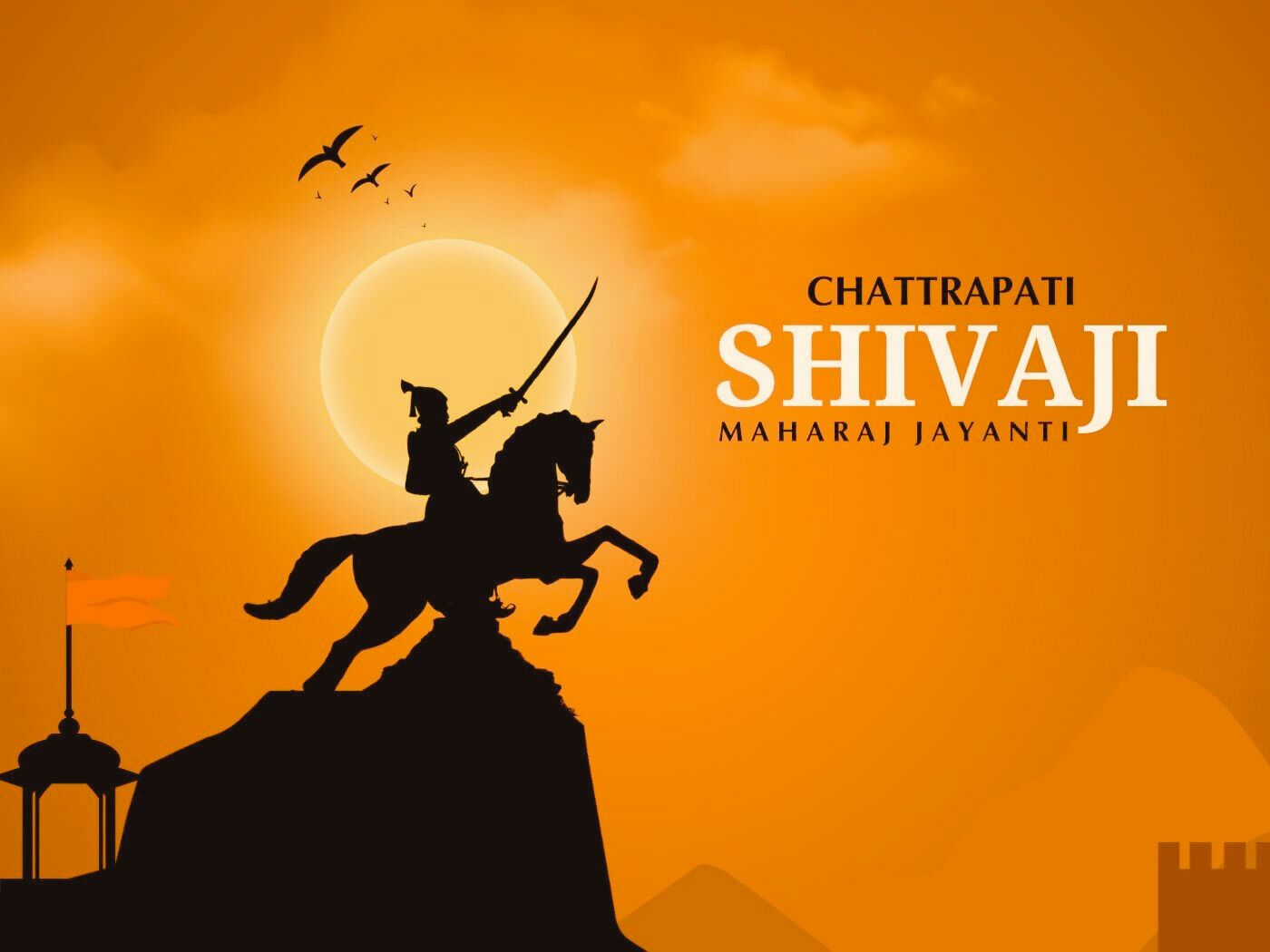
Core Celebrations
- Grand Processions: Major cities and villages host massive rallies featuring portraits and statues of Shivaji Maharaj mounted on decorated vehicles. Participants often dress in traditional Maratha attire, accompanied by dhol-tasha (drum) troupes and saffron flags.
Shivneri Fort Junnar
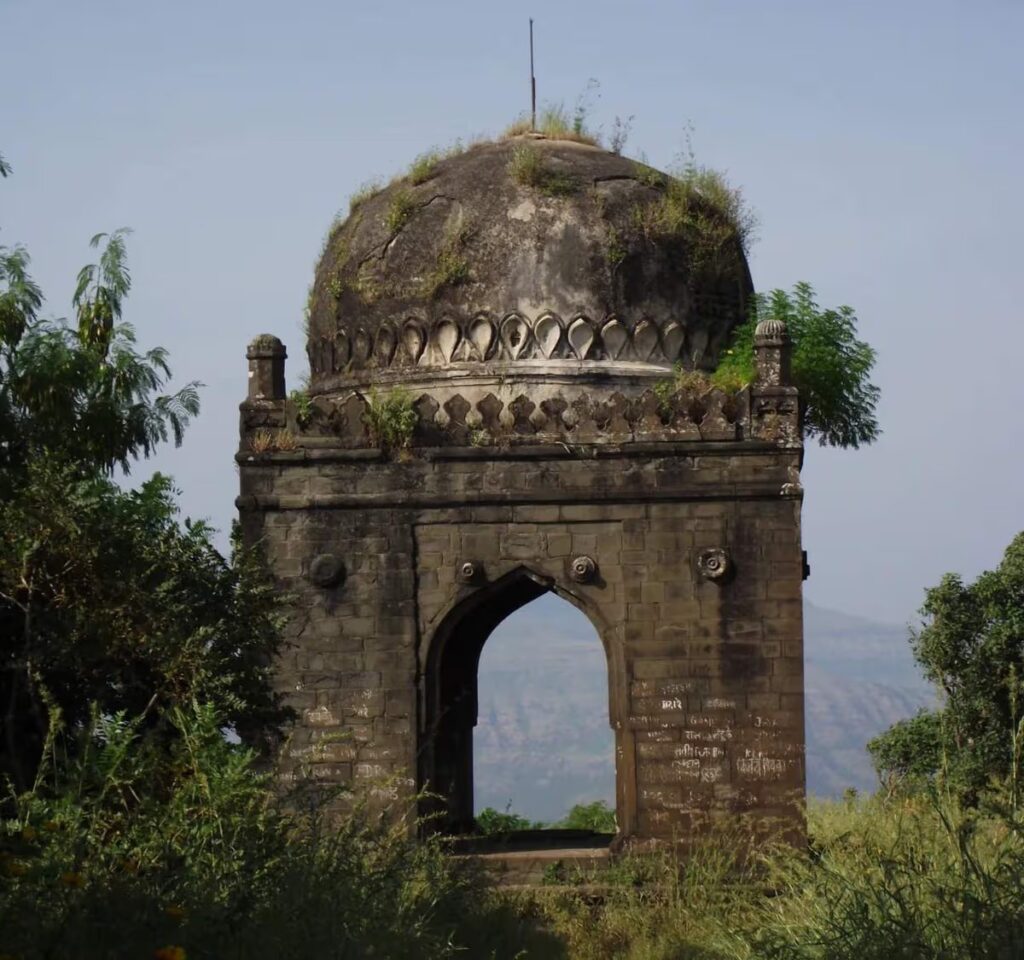
The imposing basalt ramparts of Shivneri Fort, rising dramatically from the Deccan plateau, held me captivated from the moment I arrived in Junnar. Having spent years immersed in the granite wonders of South Indian temple architecture, I was eager to experience this different, yet equally compelling, facet of India’s heritage. The fort, a formidable military stronghold for centuries, offered a fascinating glimpse into a world shaped by strategic necessities rather than the spiritual aspirations that drove the Dravidian temple builders.
The ascent to the fort itself was an experience. The winding path, carved into the rock, felt like a journey back in time. Unlike the elaborate gopurams and mandapas I was accustomed to, the entrance to Shivneri was a study in practicality. The fortifications, though lacking the ornate carvings of southern temples, possessed a raw beauty, their strength evident in the sheer thickness of the walls and the clever placement of bastions. The strategically positioned ‘Shivai Devi’ and ‘Maha Darwaja’ gates, with their sturdy wooden doors reinforced with iron, spoke volumes about the fort’s defensive history.
Within the fort walls, a different world unfolded. The rugged terrain enclosed a surprisingly self-sufficient community. Water tanks, carved meticulously into the rock, showcased impressive water management techniques, a stark contrast to the temple tanks of the south, which often served ritualistic purposes as well. The ‘Badami Talav,’ with its intricate stepped sides, was a particularly striking example. The granaries, built to withstand sieges, were another testament to the fort’s pragmatic design.
The architectural style within the fort was a blend of various influences. While the overall structure was dictated by military needs, glimpses of later architectural embellishments were visible, particularly in the residential areas. The ‘Shivai Mata Mandir,’ where Chhatrapati Shivaji Maharaj was born, held a special significance. While simpler than the grand temples of the south, it possessed a quiet dignity, its stone construction echoing the fort’s overall aesthetic. The carvings on the pillars and lintels, though less intricate than the temple sculptures I was familiar with, displayed a distinct local style.
One of the most striking features of Shivneri Fort was its integration with the natural landscape. The architects had skillfully utilized the natural contours of the hill, incorporating the rock formations into the fort’s defenses. This symbiotic relationship between architecture and nature was a recurring theme, reminding me of the hilltop temples of South India, where the natural surroundings often played a crucial role in the temple’s design and symbolism.
Exploring the ‘Ambarkhana,’ the grain storage, and the ‘Kalyan Buruj,’ I couldn’t help but compare the ingenuity of the Maratha military architects with the temple builders of the south. While the latter focused on creating spaces that inspired awe and devotion, the former prioritized functionality and defense. The lack of elaborate ornamentation at Shivneri, however, did not diminish its architectural merit. The fort’s strength lay in its simplicity and its seamless integration with the landscape.
My visit to Shivneri Fort was a powerful reminder that architectural brilliance can manifest in diverse forms. While my heart remains deeply connected to the ornate temples of South India, the stark beauty and strategic ingenuity of Shivneri Fort offered a valuable new perspective on India’s rich architectural heritage. The echoes of history resonated within those basalt walls, narrating tales of resilience, strategy, and a deep connection to the land. It was an experience that broadened my understanding of Indian architecture and left me with a profound appreciation for the diverse expressions of human ingenuity.
Historical Context
The rugged contours of Shivneri Fort, perched atop a hill near Junnar, bear witness to centuries of history, predating even the Maratha period with which it is popularly associated. While Shahaji Bhosale, father of Chhatrapati Shivaji Maharaj, is often credited with fortifying and expanding the structure in the 17th century, the fort’s origins stretch back much further. Inscriptions and archaeological evidence point to its existence during the Yadava dynasty’s reign in the 12th century, possibly even earlier under the Mauryan Empire. Its strategic location commanding the trade routes between the Deccan plateau and the Konkan coast made it a coveted prize for successive rulers.
The Yadavas, who ruled vast swathes of the Deccan, likely recognized Shivneri’s defensive advantages and incorporated it into their network of fortifications. The fort’s natural defenses, steep cliffs and a single narrow access point, made it a formidable stronghold. However, the Yadava dynasty crumbled under the onslaught of the Delhi Sultanate at the turn of the 14th century, and Shivneri, along with other regional strongholds, fell under the control of the Tughlaqs.
The subsequent centuries saw a tumultuous period with shifting alliances and power struggles. The Bahmani Sultanate, which broke away from the Delhi Sultanate, gained control of the region, further fragmenting into five Deccan Sultanates by the late 15th and early 16th centuries. Shivneri likely changed hands multiple times during this period, witnessing the ebb and flow of power between the Nizam Shahi dynasty of Ahmednagar, the Adil Shahi dynasty of Bijapur, and the Mughals who were gradually expanding their influence southward.
It is within this context of political instability and constant warfare that Shahaji Bhosale enters the historical narrative. A Maratha general serving various Deccan Sultanates, Shahaji recognized the strategic importance of Shivneri. While the exact extent of his construction work remains debated, it is clear that he invested in strengthening the fort’s defenses and infrastructure during his period of influence in the mid-17th century. This was a period of intense rivalry between the Deccan Sultanates and the Mughals, and control of forts like Shivneri was crucial for maintaining regional power. Shahaji’s efforts likely involved reinforcing existing walls, constructing new bastions and gates, and improving water storage facilities within the fort, essential for withstanding prolonged sieges.
The most significant event associated with Shivneri Fort during the Maratha period is undoubtedly the birth of Chhatrapati Shivaji Maharaj in 1630. His mother, Jijabai, took refuge within the fort’s walls, a testament to its perceived security even amidst the prevailing political turmoil. Jijabai’s influence on Shivaji’s upbringing, instilling in him a strong sense of Maratha identity and a vision for an independent kingdom, is deeply intertwined with the fort’s history. Shivneri, therefore, holds not just strategic value but also immense symbolic significance for the Maratha people, representing the birthplace of their iconic leader.
Following Shivaji’s rise to prominence and the establishment of the Maratha empire, Shivneri remained a vital part of their territory. It served as a crucial military outpost, protecting the trade routes and providing a secure base for operations against both the Deccan Sultanates and the Mughals. The fort’s architecture reflects this military focus, with its strategically placed ramparts, bastions, and hidden escape routes, demonstrating a blend of pre-existing structures and modifications implemented during the Maratha period.
The architectural style of Shivneri, while predominantly functional and defensive, also bears subtle influences of the Deccan architectural traditions. The use of locally available basalt rock, the construction techniques employed in the ramparts and gateways, and the design of the water cisterns all point to a continuity of building practices prevalent in the region. While not as ornate as some of the later Maratha palaces and temples, Shivneri’s architecture reflects a pragmatic approach to fortification, prioritizing strength and strategic advantage. The fort stands as a testament to the ingenuity of its builders, adapting to the challenging terrain and utilizing local resources to create an impregnable stronghold. Its enduring presence serves as a powerful reminder of the complex history of the Deccan, the rise of the Maratha empire, and the enduring legacy of Chhatrapati Shivaji Maharaj.
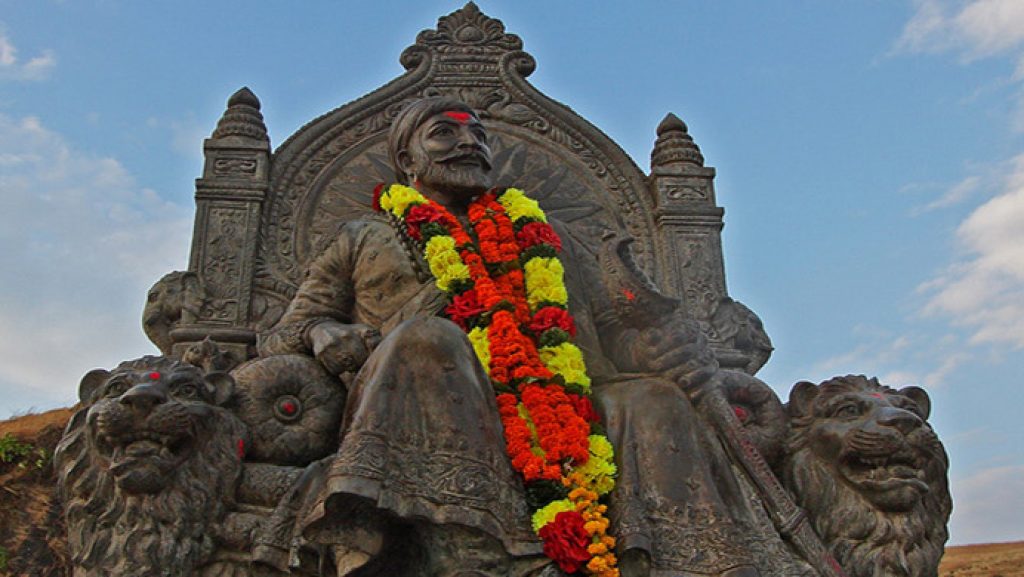
- Raigad Fort :Raigad is a hill fort situated at about 25 Km from Mahad in the Raigad district. Chhatrapati Shivaji renovated this fort and made it his capital in 1674 AD. The rope-way facility is available at Raigad Fort, to reach at the fort from ground in few minutes.The fort also overlooks an artificial lake known as the ‘Ganga Sagar Lake’. The only main pathway to the fort passes through the “Maha Darwaja” (Huge Door). The King’s durbar inside the Raigad Fort has a replica of the original throne that faces the main doorway called the Nagarkhana Darwaja. This enclosure had been acoustically designed to aid hearing from the doorway to the throne. The fort has a famous bastion called “Hirakani Buruj” (Hirkani Bastion) constructed over a huge steep cliff.
- Murud-Janjira Fort :Murud-Janjira Fort is situated at Arabian Sea coast near the port town of Murud. Janjira is considered one of the strongest marine forts in India. The fort is approached by sailboats from Rajapuri jetty. The main gate of the fort faces Rajapuri on the shore. It has a small postern gate towards the open sea for escape. There are many cannons of native and European make on the bastions of the fort. Now in ruins, the fort in its heyday was a full-fledged living fort with all the necessary facilities, e.g., palaces, quarters for officers, mosque, two small natural fresh water lakes, etc. The palace of the Nawabs of Janjira at Murud is still in good shape.A special attraction of this fort are 3 gigantic cannons named Kalalbangdi, Chavri and Landa Kasam. These cannons were said to be feared for their shooting range. Another gate to the west is sea-facing, called ‘Darya Darwaza’.
- Kolaba Fort: Kolaba Fort was one of the chief naval stations of Maratha empire. Kolaba Fort has two main entrances, one on the sea side and the other towards Alibag. An interesting feature of this fort is that it has freshwater wells in its premises even though it is a seaside fort. In 1713, under a treaty with Peshwa Balaji Vishwanath, Kolaba along with several other forts was given over to Kanhoji Angre. He used it as his main base from which to launch raids on British ships.
- Sudhagad Fort :Sudhagad / Bhorapgad is a hill fort situated in Maharashtra, India. It lies about 50 kilometres west of Pune, 25 kilometres south of Lonavla and 10 kilometres east of Pali in Raigad District. Sudhagad Fort is also known as Bhorapgad Fort. Shivaji Maharaj changed the name of Bhorapgad to Sudhagad. Near Sudhagad there are Thaanale and Khadsambale caves.
Sudhagad Fort’s plateau has three parts. First part is western plateau in front of old palace. Ruins of buildings can be seen here as the terrain is flat and there is also a pond and a big tank. Second part consists of temple of Bhorai Devi and area upto Takmak Tok point. There are ruins of four big warehouses. And the third part is eastern area. Here, there is big bastion and one can find the ruins in nearby sprawling jungle.
A Complete Guide to Torna Fort Trek
Torna Fort is the highest hill-fort in the Pune District. Situated at an altitude of 4,603 ft from sea level, it stands out among other forts in the western ghats of Maharashtra.
Because of the massive size of the fort, it is also called Prachandagad. This name is derived from Marathi which means Prachanda – massive and gad – a fort.
Torna fort was the first fort captured by Chhatrapati Shivaji Maharaj in 1646 when he was 16 years old. This is where the core of the Maratha empire was built. It has a great history as it has gone under many rulers.
In the 17th Century, the Mughal empire shortly gained control of the fort after Shivaji’s son Sambhaji got killed. The fort was renamed later by Aurangazeb (6th Mughal Emperor) as Futulgaib in recognition of the difficult battle of the Torna fort between Mughals and Marathas.
Trek to the Torna fort unfolds many exciting things. You trek along the beautiful flower beds, on the top, there are temples, water cisterns, Balekilla, 2 magnificent Machis, Zunjar Machi, and Budhla Machi, and a ridge connecting to Rajgad fort.
As stated by James Douglas “If Sinhagad is a Lion’s cave then Torna is an eagle’s nest, this fort truly stands for what his words.
➤ Table Of Contents
Just like you, we love trekking! And this is a trek we’ve documented in great detail to help you do it on your own. Drop-in comments at the end of the page if you need any help! You will get all the information required to do the Torna Fort Trek on your own.
To navigate through the documentation easily, use this section of the Table of Contents
- Highlights
- Trail Information
- GPX File Of The Torna Fort Trek
- Best Time To Do Torna Fort Trek
- How To Reach Torna Fort Trek
- Is Torna Fort Trek Difficult
- How To Get Fit For The Torna Fort Trek
- Things To Take On Torna Fort Trek
- Frequently Asked Questions About The Torna Fort Trek
- Nearby Places To Visit After The Torna Fort Trek
➤ Highlights from Torna Fort Trek
1. Colourful flower beds on the trail
If you are doing the Torna Fort trek post-monsoon, you can see the trail full of Karvi, Bristly Smithia(Local language: Micky-mouse flower), Raan terda, Sonki, and many other wildflowers. As you get closer to the fort, you can see the entire trail filled with colourful flowers.
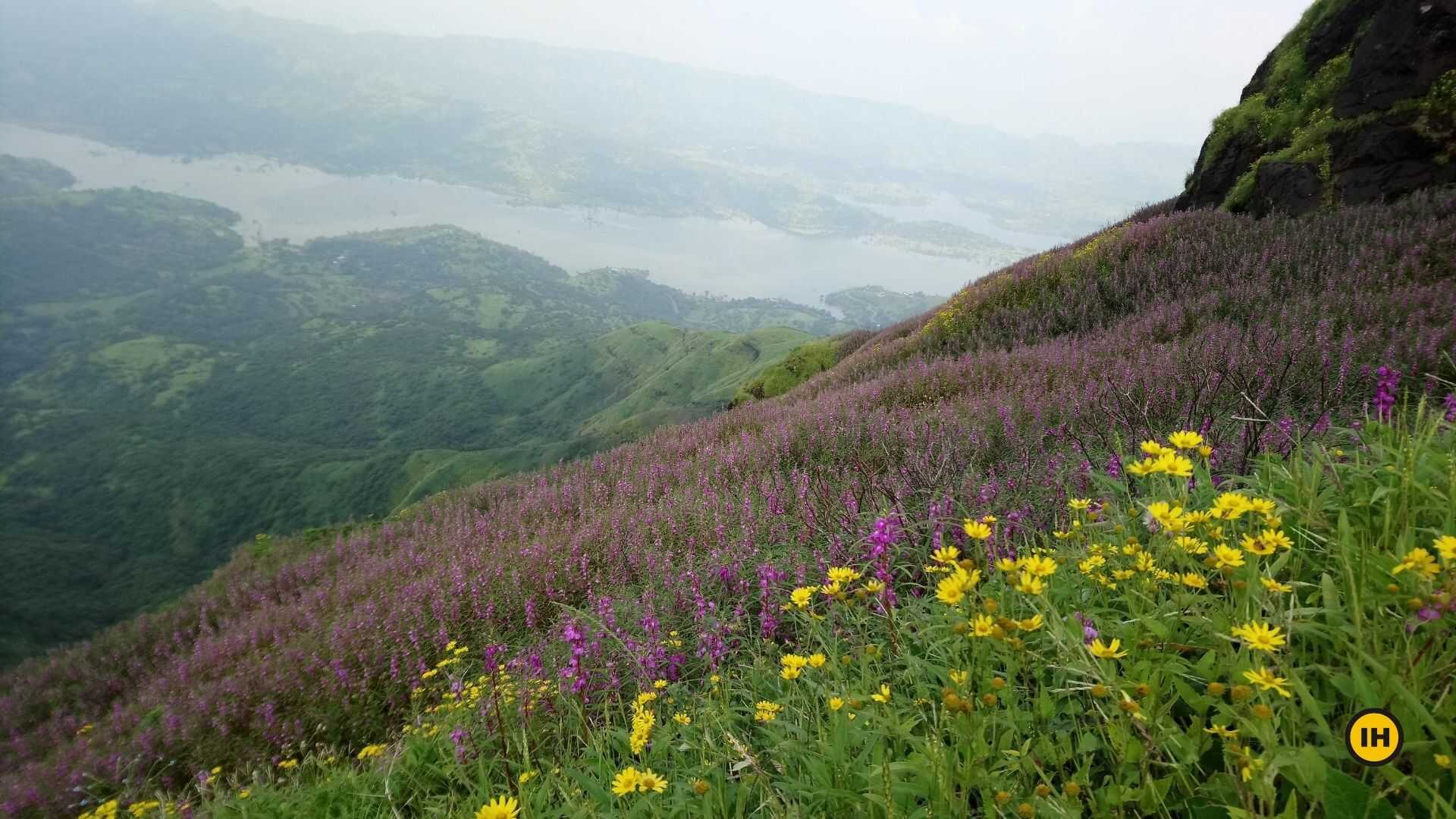
Colorful flowers, seen on the Torna Fort Trek. PIcture by Nitesh Kumar
2. The huge Budhla Machi on the fort
Budhla machi on the Torna fort has a unique structure. Budhla in Marathi means vessel. And the shape of the machi is similar to an oil container kept upside down. Hence the name.
It is believed that one of the reasons to call this fort as Prachandagad is the massive structure of this Budhla machi.
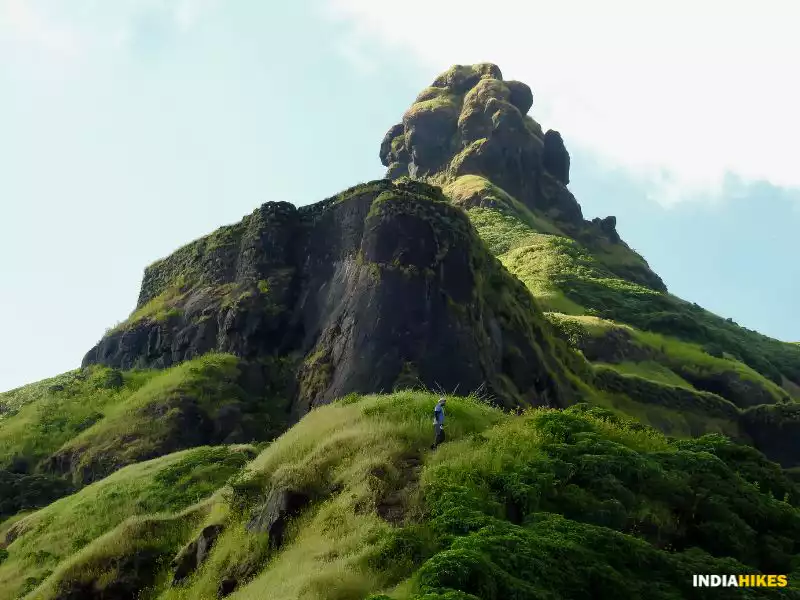
The massive structure of the Budhla machi. This is just before the ladder trail. Picture by Suhas Paranjpe
3. Spectacular view from the fort
The view from the fort is spectacular. You can see many famous forts like Raigad, Lingana, Rajgad, Purandar fort, Sinhagad, Raireshwar, Pratapgad, Madu – Makrandgad, Mahabaleshwar mountain range, Mangalgad, Kavlya Fort, Mohangad, and Rohida Fort.
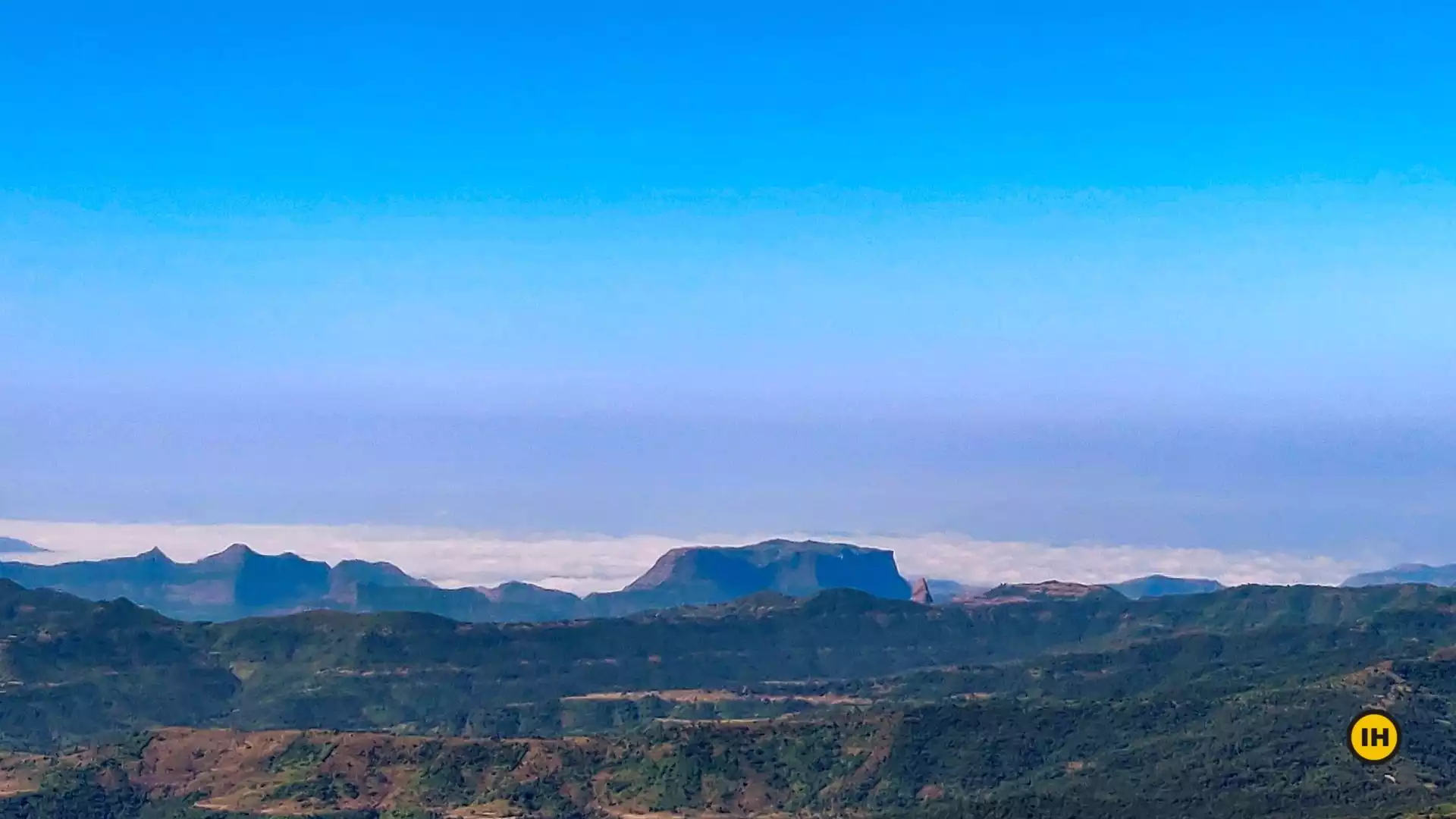
View of the Konkan region from the top. Picture by Prabhuraj Kore
➤ Trail Information
The trek to the Torna fort has many things to offer including the exploration on the top. The trail can be divided into 3 sections. All these 3 sections extend surprises at every step.
Three sections can be divided as:
- From Velhe village to the Plateau: 20 minutes
- The Plateau to the Entrance of Torna Fort: 2 hours 15 minutes
- Historical places on the Torna Fort: 3 to 4 hours
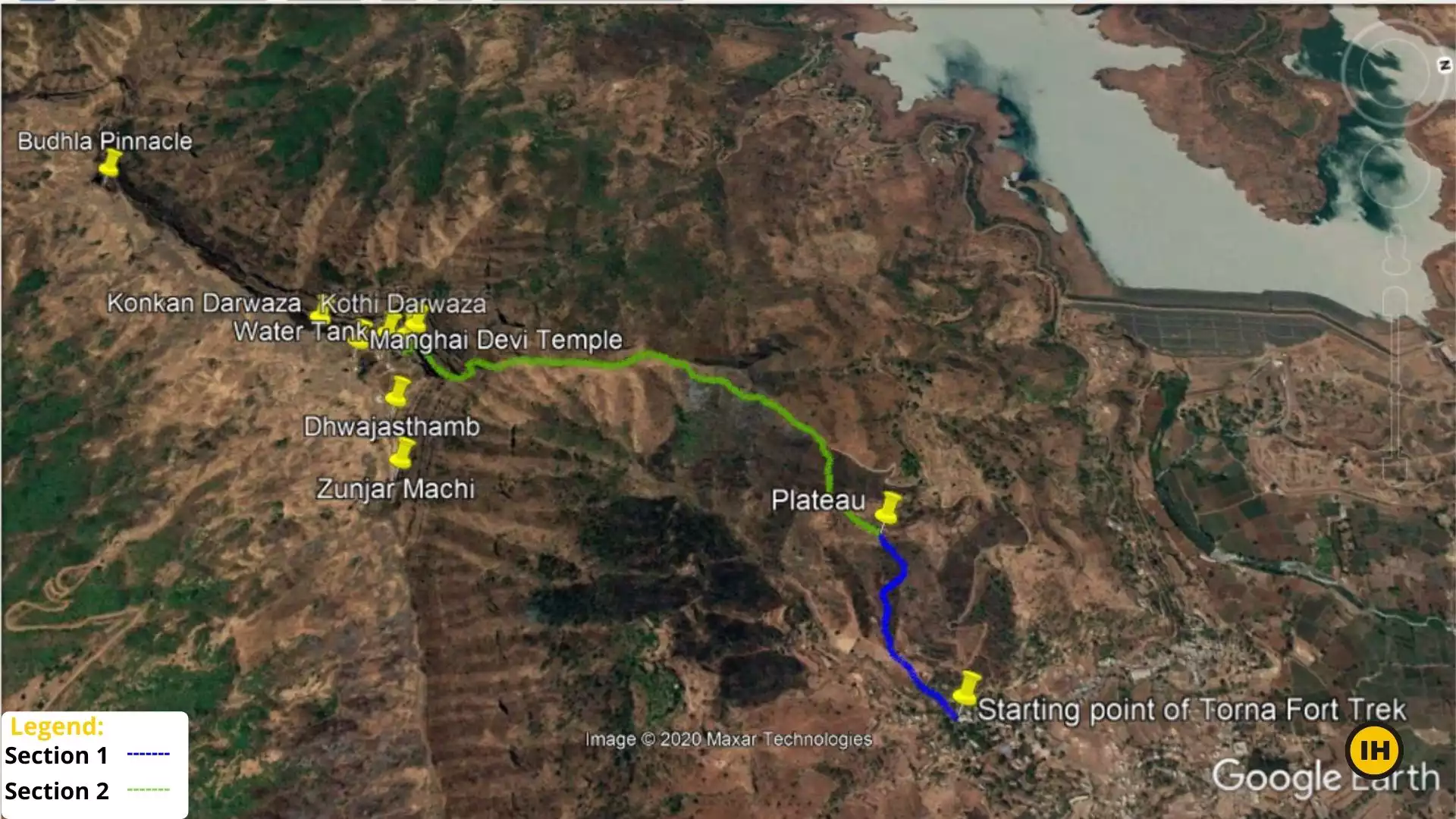
Trail Map of Torna Fort Trek. Source: Google Earth. Picture Courtesy Nayana Jambhe
Trek Distance: 1 km
Trek Duration: 20 minutes
GPS coordinates of Velhe village: 18°17’28.22″N, 73°38’12.88″E
GPS coordinates of the Plateau: 18°17’24.88″N, 73°37’52.14″E
The trek to the Torna fort starts from the road next to the Velhe Police station. The magnificent fort can be seen from the village itself. It stands behind the village as a guard taking care of the villagers!!
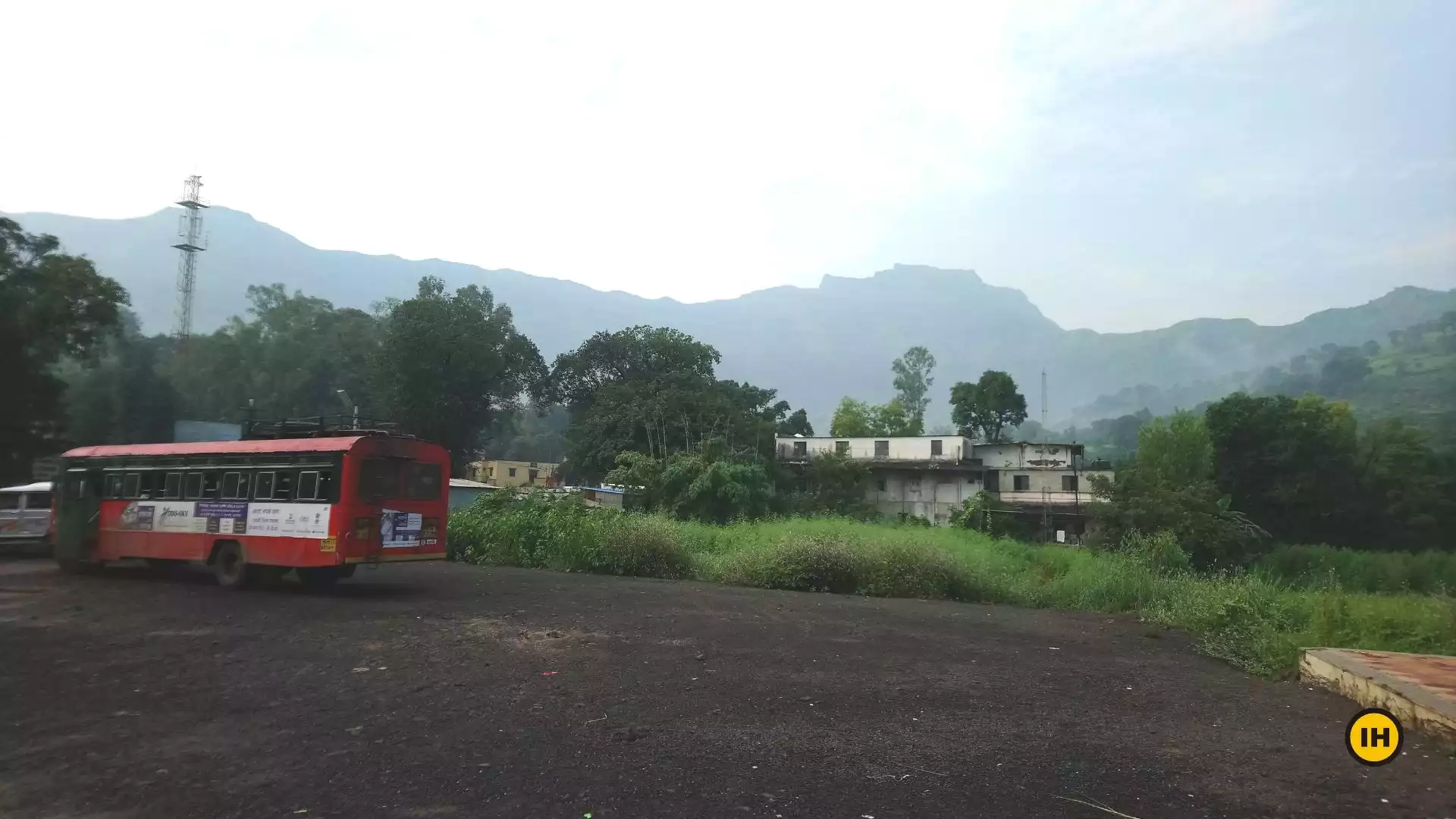
Torna fort as seen from the Velhe village. Picture by Nitesh Kumar
The initial trail from the police station has a tar road. Continue on the same road until you reach a small bridge. After 5 minutes of a walk from here, you see a trail on your left moving towards the direction of the fort. This is where the actual trek begins.
| Note: If you follow the cement road on your right, it directly takes you to the plateau where one can park the two-wheeler. This is recommended only if you are trekking in summer. The trekking trail from starting point to the plateau is a beautiful trail with many colorful flowers and small water streams. One has to trek through this setting.
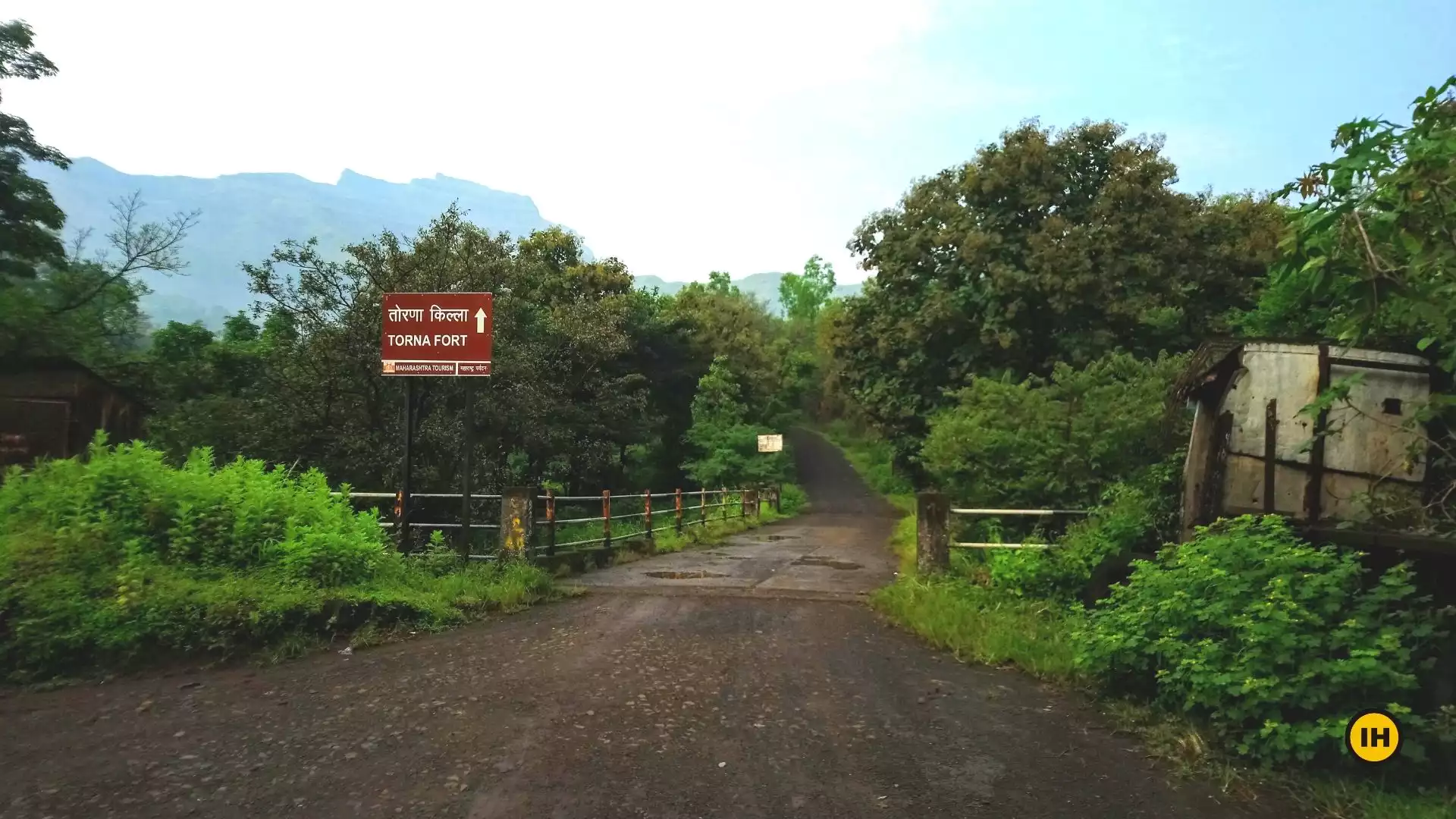
The small bridge you see after the police station. Picture by Nitesh Kumar
The trail from here is straightforward. There is a trail marked all the way up to the plateau. There are also direction signs on the rocks in between. So the chance of getting lost is very less.
The trail is a mix of mud and loose rocks. It can be slippery during the monsoon season.
| Tip: Wear proper trekking shoes. Carry a pair of trekking poles as well. These two trekking gears will help you while trekking.
Trekking Shoes Guide: How To Choose, Types, Budget, Maintenance complete a trek as much as your willpower. While it’s a must to work on mental and physical strength every time you plan a trek, a robust pair of shoes can work wonders on every trek. All you have to do is do a little maintenance after choosing the right pair for all your trekking needs.
Different shoes are suitable for different kinds of treks. Does that mean snow trekking shoes can only be used on snow? Not really. The best trekking shoes are versatile. They work well in all kinds of weather conditions.
This brings us to the next question: which are the best trekking shoes for men and women in India? And how do you make this choice?
Many trekkers write to us asking about what trekking boots to buy. And because this is a crucial choice, we have put together a complete guide that covers all topics, right from how to buy trekking shoes, the best mountain trekking shoes available in India and how to maintain them.
So, if you’re looking for information on trekking shoes, search no more. This guide contains everything you need to know about how to choose the best.
How To Choose The Best Trekking Shoes in India
There is no dearth of options in the trekking shoes for women or trekking boots for men sections of a Decathlon, Woodland, or any other sports store. If you choose to shop online, the options are infinite. However, a plethora of options can sometimes lead to confusion.
Don’t worry. We are here to help. Below are five factors that will help you choose the right pair of trekking shoes.
1. Check for good grip in the trekking shoe
The best way to recognise a trekking shoe with good grip is to look at the grooves. They will be deep. A shoe with good grip will have mud, slush and dirt getting stuck in its grooves. That’s a sign of deep grooves that are gripping the mud. Make sure your shoes have deep grooves and good grip.
2. Look for softness and flexibility in the shoe sole
You will be walking on different kinds of terrain, and your shoes need to adapt to it. A soft and flexible sole is great at doing this. But how do you check for that?
Take a hard, metallic object, say a key, and just tap on the sole. Listen to the noise it makes. A soft sole makes a dull sound. If you hear a sharp sound, know that it’s too hard, and such a sole will not work on a trek.
3. Go for ankle support in the trekking shoe
Trekking Shoes vs Sports Shoes — Which To Choose For Your Trek Are you wondering if you can make do with your sports shoes for your trek? If so, you have found the right article. Here, we will be comparing trekking shoes with sports shoes. And by the end of the article, you’ll know which shoes you need for your trek.
I will be looking at the Trek 100 series by Quechua (trekking shoes) and running shoes by Kalenji, both from Decathlon. I’m going to be comparing these two shoes to give you an idea of which shoes are fit for which kind of trek.
If you take a quick glance at these shoes, you can see that the trekking shoes look a lot sturdier. They look heavier and seem able to protect your feet. They’re more durable too. These running shoes look as if they are specifically meant for running and not for very rough usage. But we’ll get into more details about these shoes to understand them better.
Here’s a quick gist before we dive deeper –

play video

➤ Grip
Trekking Shows – Excellent Grip
When it comes to grip, the Trek 100 series has deep grooves on the outside of the sole. These are meant to give you a good grip on different surfaces. When you’re on a trek, you’re likely to be walking on loose mud, loose soil, boulders and even snow or ice. So that is when the grooves come in handy. There is a lot of detailing on the sole as well. This, too, is specifically meant for that grip you need in rough terrains.

Running Shoes – Flat Soles
On the running shoes, on the other hand, the sole exterior does not have very deep grooves – it’s a lot flatter. These are actually meant for flatter terrain where you’re running on tar roads, cement or maybe mud roads. Rough usage is not their cup of tea. So look at the grip of the shoes before buying them – it is very important for your trek.
➤ Ankle Support
Trekking Shoes – Avoids Ankle Twists in Rough Terrains
Trek 100 shoes have very good ankle support. It covers almost the entire ankle, which restrains the ankle’s movement. It does not allow your ankle to twist, even when you’re ascending or descending on uneven terrain. This is extremely important, because a twisted ankle can put an end to your trek!

Running Shoes – Flexible, No Ankle Support
Running shoes, on the other hand, do not have any ankle support. The top-most part of the shoe ends just below your ankles. This is because these shoes are meant to give you more flexibility while running or walking. With this, you have the free ankle movement needed to perform that action.
However, this means that the running shoes are not going to protect your ankles from twists or sprains.
➤ Sole – Thickness and Hardness
Trekking Shoes – Thick and Hard Enough
If you look at the Trek 100 shoes, you’ll see that the sole is pretty thick. We require this kind of thickness for a long Himalayan trek as it has padding for insulation.
But, also take into consideration how hard the sole is. For your trek, you don’t want shoes which are so hard that, as a result, they are too rigid to move with your feet. You also don’t want the sole to be so soft that it actually collapses with the body and backpack weight it is carrying everyday.
To check this, you can just take something like a key, tap the sole and listen for the noise. The sound should not be too shallow. As an estimate, if you tap the sole of football studs, a very shallow sound emerges. That is not what we are looking for in trekking shoes.

Running Shoes – Flexible and Cushioned
On the other hand, you’ll see that the sole of the running shoes is not as sturdy or thick. However, it is very flexible and cushioned.
If you listen to the sound by tapping the running shoe soles, you will see that the sound is a lot more diminished. This is because of the extra cushioning.
Since it’s not that hard, it’s not meant to take your body weight, especially if you’re carrying a backpack among other things, for multiple days in a row. In fact, if you trek with running shoes you’ll find the soles becoming a lot flatter in just a period of two to three days.

➤ Water Resistance
Trekking Shoes – Keep Feet Dry
Water resistance is extremely important on a Himalayan trek because you could be trekking in rain, snow or even crossing boulders over streams. These Trek 100 shoes have a water resistant coating on top and a waterproof membrane inside.
These will last you many hours while you’re trekking in snow, or in rain, and won’t let your feet get wet or cold.
Running Shoes – Zero Water Resistance
The running shoes, on the other hand, do not have water resistant coating or any kind of water resistant membrane at all. So in case you step in a puddle or a pothole, they are going to get wet – and that’s not helpful on a trek.
So look out for these four points. They are very important for your trek, especially a long Himalayan trek.
However, there are certain issues with the trekking shoes we can’t forget.
https://youtube.com/watch?v=YR2wcjLAVlk%3Ffeature%3Doembed%26enablejsapi%3D1%26origin%3Dhttps%253A%252F%252Findiahikes.com
➤ Few Things to Keep in Mind about Trekking Shoes.
Heavier
The trekking shoes are a lot heavier than the running shoes. A shoe from the Trek 100 series, for example, weighs around 500 grams – and that is just one of the pair. Together, they weigh around 1 kg.. Nonetheless, you get used to them after a couple of days’ usage. This weight is needed on a long Himalayan trek, to carry body weight and the weight of the backpack.
Longer Break-In Period
Trekking shoes have a longer break-in period. It’s not as easy to just slip them on and use them, like it is for running shoes. You can start using running shoes immediately after their purchase. But it is not possible to do a trek with trekking shoes the same day you buy them. You need at least two weeks to break into these shoes.
Since trekking shoes are a lot sturdier, they take time to conform to the shape of your feet and their movements. So make sure you buy your trekking shoes at least about 2 week before your trek begins.
➤ When Are Running Shoes a Good Choice?
Other than the above mentioned points, think about what your trek consists of. Is it a one or two day hike with neatly laid out trails without difficult terrain? In that case, your running shoes are good enough. This is especially true for non-Himalayan treks, such as in the Sahyadris or the Eastern ghats.
However, on a long Himalayan trek, you’re likely to be trekking for six, seven days on different kinds of terrains and in different gradients. There, you definitely need a pair of trekking shoes to take care of your feet.
So, make sure you invest accordingly and make the right decision.
If you need help with anything, just drop in a comment and we will help you out.
You will be climbing up and down, and your ankle is prone to twisting at unusual angles. And that’s when your trek can end. And you don’t really want that to happen. To prevent this, you need good ankle support and make sure your trekking shoes provide good ankle support.
4. Choose the right fit
Always test the shoes for the right fit and prefer the most breathable hiking shoes. Ideally, you should buy trekking shoes one size larger than your normal size. Without the extra space, you’d develop shoe bites due to the constant rubbing of the toe against the shoe wall.
A shoe that is a size larger than your normal size will protect you from shoe bites and give your feet enough space to breathe.
5. Water resistance is crucial
12 Best Monsoon Treks in Maharashtra That You Should Do In 2023. Ask any trekker what are some of the most memorable moments of a trek and listening to a roar of a waterfall or dipping your feet in a cold stream will definitely feature in the list. And though on a Himalayan trek one might not dare (or is inadvisable) to stand under a waterfall or wet their feet in a glacial stream, but on a trek in the Western Ghats of India these are absolute ‘must-dos’. But trekking in the Sahyadris during the rains is a different experience altogether. A magic unfolds in the forts and mountains along the Western Ghats. Monsoon is the best season to trek in Maharashtra.
The entire surroundings turn lush green. Streams criss-cross the trails. Seasonal waterfalls cascade down the mountain face in a full roar. Flowers of all shapes, colours and sizes bloom in the wild . While the lakes are filled with cool and clear water.
Trekking in Sahyadris during the rains is all about enjoying the magic of the rains to their fullest.
So here we are with a list of the best monsoon treks in Maharashtra. With the southwest monsoons approaching this part of the world soon, they make for some of the best weekend treks from Mumbai or Pune.
1. Bhimashankar Trek
The trail to Bhimashankar is an all-time favourite amongst trekkers and more so during the monsoons. It takes you right into the heart of Bhimashankar Wildlife sanctuary. While in the jungle, you’ll have a variety of birds, langurs and spotted dear for company. If you’re lucky, you might even get to spot a ‘shekru’ or the Malabar Giant Squirrel.
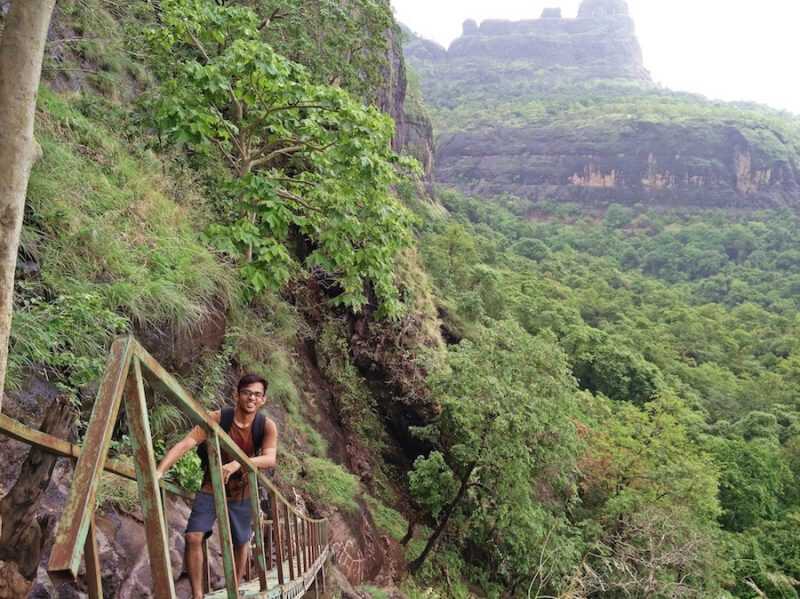
Enroute Bhimashankar. Picture by Apoorva Karlekat
If you’re a first-timer trekking on your own or with bunch of friends who are not very experienced as well, we’d suggest you avoid the more challenging Shidi Ghat route and take the Ganesh Ghat route instead.
Difficulty: Easy or Moderate depending on the route
Trail Type: Well defined through fields, forests, rocks and ladders .
Basecamp: Khandas village. Private autos and jeeps are available at Karjat or Neral railway station to take you to Khandas
The Complete Guide to Bhimashankar Trek
The Bhimashankar trek is a nature lover’s delight. While monsoon is the best time to do this trek, it can also be done in other seasons. The route is scenic and thrilling. Those accustomed to trekking can hike the Bhimashankar via the Shidi Ghat route. While for beginners, we recommend the Ganesh Ghat route, which offers splendid views and is easier.
While in the jungle, you’ll have a variety of birds, langurs, and spotted deer for company. If
you’re lucky, you might even get to spot a ‘Shekar’ or the Malabar Giant Squirrel. Trail Information
- Altitude: 3,050 ft
- Time took: 3.5 hours via Shidi ghat (ladder); 4 hours via Ganesh ghat. 2 hours to descend.
- Trek gradient: moderate-difficult
- Water sources: None. Cary 2-3 litres of water. In monsoon, you can refill your water bottles from seasonal streams.
Khandas is the base village for the Bhimashankar trek. About 500 m after crossing Khandas village, you will come across a small bridge at a T-junction. The road to the left leads to Shidi Ghat while the one to the right leads to the Ganesh Ghat walkway.
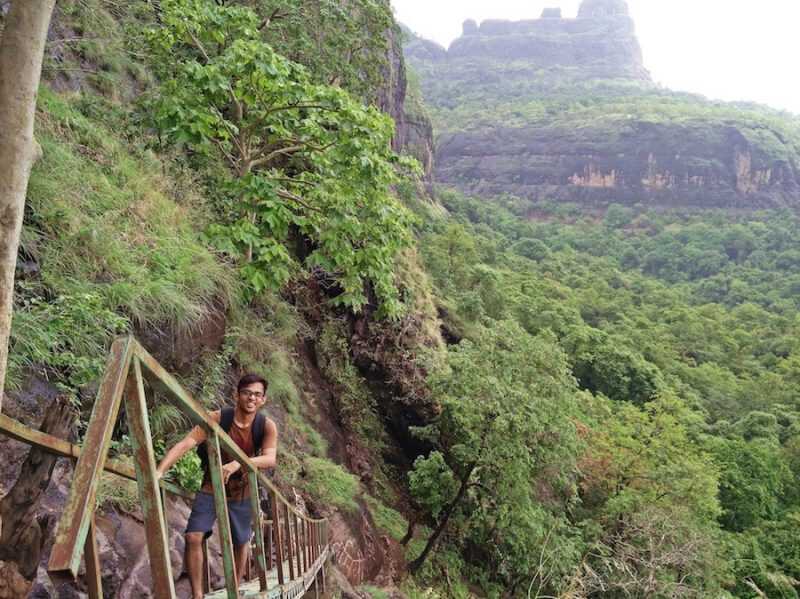
First ladder on the Shidi Ghat route. PC: Apoorva Karlekar
Ascent via Shidi Ghat:
The initial 20 minutes after the T-junction is an easy walk. You reach a stream in about 20 minutes. Once you cross the stream, the trail ascends for about 40 minutes, till you reach the first ladder. Once you climb the first ladder, you quickly reach the next one. There is a cave after the second ladder where you can relax for a while. This spot offers excellent views of the valley below.
Soon after you cross ladder 3, there is a patch with huge rocks. You need to be extremely careful while traversing this section. Although not mandatory, a rope will be helpful here.
Immediately after this section, the trail joins the one that comes from Ganesh ghat. This is the halfway mark. There are a few huts where locals sell refreshments.
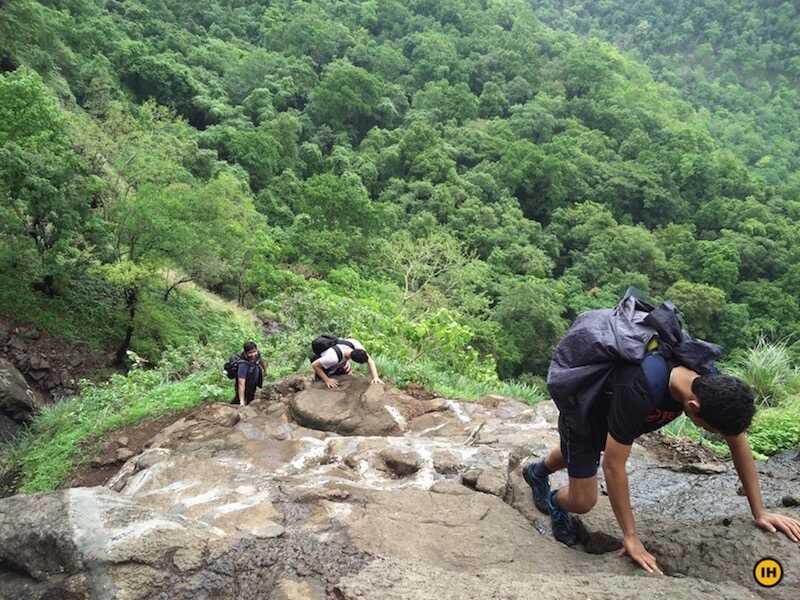
Rocky patch before the trail meets the route from Ganesh Ghat. PC: Apoorva Karlekar
Ascent via Ganesh Ghat:
The trail passes through dense vegetation for the initial one hour after the t-junction. This is a gradual ascent. After an hour, the trail opens out into a meadow. After 30 minutes of ascending through the meadow, it again enters a thick forest. This eventually meets the Shidi Ghat route.
The trail, after the two routes meet, is a steep climb through a thick forest.
