
That is a popular and profound philosophical truth. It perfectly highlights the reality that wealth, success, and opportunities do not randomly fall into our laps. Instead, value must be created first before the money will follow. Money Will Come To You When You Are Doing The Right Thing from our local Chinese restaurant, Money will come to you when you are doing the right thing fitting fortune to receive at this moment in my life.

But what is the right thing? Does this mean that when I am living right — being kind, generous, patient, fair, etc — that money will come? I know lots of people who have lived good, honest, upright lives and have no monetary gains to show for it. Even I would suggest that the best people I know have nothing monetary to show for it.
Yet, I can also think of a gentleman who lived by those principles and succeeded beyond what anyone thought was reasonable. Many in this town say that he was blessed because he lived a virtuous life.
More accurately, money will come to you when you are doing the right things, as in the things that bring in money. This is, of course, painfully obvious, and yet it seems that many people miss it entirely.
Far too many people waste their time complaining that they aren’t making money, as though they are owed compensation for their efforts, simply because they exerted some effort.
If you aren’t making money, whose fault is that? It isn’t the fault of the people who don’t want to buy what you are offering — they are under no obligation to purchase something just because someone is selling it.
If the platform you are on isn’t bringing you money, either find a platform that better fits what you are doing or change what you are doing to fit the platform. Either way, this is your responsibility.
Here is how you can break down and apply this principle in your daily life:
- Add Value First: Money is an energy that flows to where value is added. If you want to attract financial rewards, you must first provide a product, service, or skill that helps or satisfies others.
- Shift Your Perspective: Instead of waiting for the capital to get started, take action with what you currently have. Showing up and doing the work is what draws the resources to you.
- Focus on Problem-Solving: The amount of money you make is generally tied to how big of a problem you can solve for the market. Focus on building highly useful skills rather than just chasing the currency.
Getting rich might seem like a daunting task, especially if you feel like you have nothing to start with. But as Leila Hormozi outlines, it’s all about understanding the rules of money and applying them in your life. Here are the ten fundamental rules that can help you on your journey to wealth.
Intelligence Isn’t Everything 💡
First off, you don’t need to be the smartest person in the room to get rich. Leila shares her experience from a 2016 meetup where she realized that some seemingly ordinary people were making significant money, simply because they understood the rules of the game. This realization led her to understand that making money is not about having a high IQ but about making smart choices and being willing to work hard.
Indian YouTuber (likely Rahul Malodia or a similar business/finance influencer) discussing passive income strategies. The text highlights “Youtubing” as the first of seven digital ideas to build wealth in India.
Key Details from the Image:
- Subject: A list of 7 Passive Income Ideas specifically for the Indian market.
- First Idea: Youtubing, categorized under “Digital Methods.”
- Context of “45 Crore”: This likely refers to the estimated annual earnings or net worth of top Indian creators, or a total market payout figure (similar to reports that YouTube paid Indian creators over ₹21,000 crore in recent years).
- Visual Elements: The presenter is wearing a black blazer over a white t-shirt, a common style for educational creators like Rahul Malodia or Ankur Warikoo.
Top Passive Income Ideas in India (2025-2026):
Beyond YouTube monetization, popular digital methods mentioned in similar expert lists include:
- Affiliate Marketing: Earning commissions by promoting products.
- Selling Digital Products: Creating and selling ebooks or online courses.
- Dividend Stocks & REITs: Investing in the Indian stock market for regular payouts.
- Blogging & SEO: Generating revenue through ads and sponsorships on a niche website.
- Print-on-Demand: Designing custom merchandise without holding inventory
Content creators diversify their income by combining direct platform monetization (ad revenue) with community-driven sales (memberships, merchandise) and performance-based marketing (affiliates, brand deals). This strategy builds resilient, scalable revenue that protects creators from platform algorithm changes. Creator Business Models & Revenue: Top Monetization Strategies The creator economy is booming, with a market projected to hit $1.346 trillion by 2033. Yet, understanding the best monetization strategies is key to sustainable success. Are you ready to maximize your creator income streams?
Understanding the Creator Business Model Landscape
Creator business models have evolved dramatically over the past decade, transforming passionate hobbyists into full-fledged entrepreneurs. At the core, these models revolve around diversified revenue streams that help creators monetize their skills, personalities, and content. Traditionally, revenue came mainly from ad revenue and sponsorships, but now creators leverage platforms like YouTube, TikTok, and Instagram to generate income from multiple channels. The YouTube Partner Program exemplifies how platform-based revenue sharing can be lucrative, with creators earning a significant share from ad revenue. Platforms like Teachable and Kajabi have empowered creators to develop and sell online courses, creating scalable income opportunities. Diversification is vital—relying solely on ad revenue or sponsorships is risky, especially with algorithm changes and policy shifts. Instead, creators today build a portfolio of revenue streams, including merchandise, digital products, patronage, and affiliate links, ensuring stability and growth.
The creator economy was valued at $205.25 billion in 2024 and is projected to reach $1.346 trillion by 2033, growing at a CAGR of 23.3%. Industry trends show increasing brand investments, with a 143% rise since 2021, as brands recognize the power of creator-led marketing. This growth underscores the importance of understanding various business models and how they can be combined for maximum impact.
How Content Creators Make Money
Creators monetize their content through multiple revenue streams, each suited to different content types and audiences. From ad revenue to direct patronage, understanding these methods helps creators craft sustainable businesses.
Ad Revenue / Ads
Platform-based monetization remains a primary income source. YouTube’s ad revenue sharing, for example, has paid over $70 billion to creators in just the past three years. TikTok and Instagram also offer ad revenue opportunities, though they are often supplemented by brand deals. The projected ad spend for creator-focused advertising will reach $37 billion in 2025, highlighting how brands are investing heavily in influencer marketing. Revenue sharing models vary, but typically creators receive a percentage of ad income based on views and engagement. Successful creators optimize their content for platform algorithms and use platform tools to maximize ad revenue.
Sponsored Content & Brand Deals
Brands increasingly recognize that creator authenticity drives better engagement and conversions. As a result, enterprise-level creator marketing spend now exceeds $1.7 million annually per company. Platforms like YouTube and TikTok are top choices for brand partnerships, offering creators the opportunity to showcase products through sponsored videos, live streams, and social media posts. Top creators often negotiate long-term brand deals, which provide stable income over one-off sponsorships. Building genuine connections with audiences boosts sponsorship rates and campaign effectiveness. Successful brand deals often involve integrating products seamlessly, leveraging affiliate links for additional commissions, and creating authentic content that resonates with followers.
Subscription Models & Membership Platforms
Direct monetization through subscriptions has gained popularity, especially with platforms like Patreon, Substack, and Kajabi. These allow creators to cultivate a loyal community willing to pay for exclusive content or early access. By March 2025, Substack reported over 5 million paid subscriptions, demonstrating strong demand. Top creators can generate over $94,700 annually through subscriptions, especially when they diversify with digital products and personalized offerings. Membership platforms enable ongoing patronage, providing predictable revenue streams and fostering deeper engagement with fans.
Affiliate Marketing & Product Sales
Affiliate marketing remains a cornerstone of creator revenue. By leveraging affiliate links like Amazon Associates or ShareASale, creators earn commissions on sales driven by their content. LTK, formerly Like to Know It, facilitated over $5 billion in retail sales annually, with many creators earning substantial commissions. Content recommendations for products, services, or tools can generate significant passive income, especially when combined with high-converting affiliate links. Creators often pair affiliate marketing with merchandise sales, which can include branded apparel, accessories, or digital downloads, further boosting revenue.
Digital Products & Online Courses
Developing and selling digital products like online courses, templates, guides, and e-books is a highly scalable income strategy. Platforms such as Teachable and Kajabi have made it easier for creators to launch and manage courses. Many successful creators diversify their income with educational content, resulting in over $67,000 in annual revenue. These digital products not only generate passive income but also establish creators as authorities in their niche, attracting new followers and opportunities. Combining these offerings with community access or coaching services can exponentially increase earnings.

Creator Income Streams: Diversification Strategies
Relying on a single revenue stream leaves creators vulnerable to platform changes and market fluctuations. Diversification is key to building a resilient creator business. By combining ad revenue, sponsorships, subscriptions, affiliate links, and merchandise, creators can stabilize income and unlock new growth avenues. Many successful creators also explore patronage through platforms like Patreon, which provides steady support from dedicated fans. Building owned channels—such as email lists, websites, or dedicated platforms—gives creators more control over their revenue streams and reduces dependency on social media algorithms. For example, creating a comprehensive online course portfolio can generate scalable income while maintaining engagement through digital products and community support.
To start diversifying effectively, creators should analyze their audience preferences, experiment with different monetization methods, and leverage platform tools to optimize each revenue stream. Regularly reviewing analytics helps identify the most profitable channels and informs strategic decisions.
Platforms Enabling Creator Monetization & Revenue Sharing
Platform selection significantly impacts a creator’s earning potential. YouTube and TikTok dominate in brand ROI, with YouTube alone paying over $70 billion in three years. These platforms offer native tools for content monetization, including ad revenue sharing, brand partnerships, and live stream monetization. Emerging platforms like Shopify and ShareASale expand monetization options beyond traditional social networks, enabling creators to launch online stores, affiliate programs, and product collaborations. AI tools integrated into these platforms—used by 86% of creators—streamline content creation, editing, and analytics, making it easier to optimize revenue streams.
Innovations such as live shopping, short-form video monetization, and direct-to-consumer storefronts are opening new avenues for creators. For example, MrBeast has leveraged multiple streams—ad revenue, brand deals, and merchandise—to build a scalable income ecosystem. Exploring these tools and platforms can unlock additional income and future-proof a creator’s business.
Key Success Factors & Best Practices in Creator Monetization
Building authentic audience relationships is fundamental. Genuine engagement drives higher sponsorship rates and fosters long-term brand loyalty. Creators like Ryan Kaji have built personal brands that command premium sponsorships and merchandise sales, illustrating the power of authenticity. Leveraging AI and platform tools enhances content efficiency and effectiveness, allowing creators to focus on growth and innovation. Automation and analytics help refine monetization strategies, ensuring maximum revenue from each content piece.
Monetization success also depends on navigating industry challenges like income volatility. Creators should diversify their income sources and build owned channels, such as email lists or personal websites, to reduce dependency on platform algorithms. Investing in business skills—contracts, taxes, negotiation—is crucial as the creator economy matures. Many creators now work with management agencies or use creator management platforms to professionalize their operations.
Passive income streams, such as online courses and digital products, provide stability and scalability. Creators who consistently adapt to industry trends—like AI integration—stay ahead of the curve. The key is to combine multiple revenue streams and maintain authentic content that resonates with audiences over time.

Examples of Successful Creator Business Models
Case Study 1: YouTube Creators. Many top YouTubers generate revenue from ad sharing via the YouTube Partner Program, supplemented by brand deals, merchandise, and memberships. For example, creators like MrBeast have built multi-million dollar businesses with scalable income sources, earning six figures annually or more. Their success hinges on engaging content, strategic brand partnerships, and diversified revenue streams. Starting a publishing business can feel overwhelming, especially when you’re not sure where to begin. Having a clear plan makes things easier and keeps you on track. Stick with me, and I’ll show you a simple way to build your publishing business plan that covers all the key parts without the headache.
If you keep reading, you’ll learn how to outline your main ideas, clearly explain your goals, and develop strategies to stand out in the market. We’ll go through each step step-by-step, making the process straightforward and manageable, even if you’re new to it.
In the end, you’ll have a strong, easy-to-follow plan that helps turn your publishing dreams into reality—all without feeling lost or overwhelmed.
Key Takeaways
Key Takeaways
Gathering feedback from readers allows you to improve your books and marketing, making your business more successful over time.
Creating a clear publishing business plan helps organize your ideas, define goals, and develop strategies—making starting and growing your business easier.
A good plan covers essential parts like market analysis, target audience, product types, marketing, operations, and finances, giving you a roadmap to follow.
Staying updated with industry data and trends helps you make smart decisions and keeps your business competitive in a growing market.
Building a strong brand identity and setting a publishing schedule ensures consistent quality and timely releases that attract and retain readers.
Deciding on distribution channels early, such as Amazon or your own website, maximizes your book’s reach and sales potential.
What is a Publishing Business Plan?
A publishing business plan is a clear roadmap that outlines how your publishing company will operate, grow, and succeed. It covers key areas like target markets, product types, marketing strategies, and financial goals. Think of it as your personal guide to turning your passion for books or digital content into a thriving business.
Writing a solid plan is not just for investors; it helps you stay focused and organized. According to recent industry data, the global book publishing market is set to hit around USD 103.7 billion in 2025, showing just how competitive and promising this field is. Having a detailed plan can give you a competitive edge in this growing space.
Key parts of a publishing business plan include:
- Executive summary
- Business description
- Market analysis
- Products and services
- Marketing and sales strategies
- Operational plan
- Financial projections
Why Do You Need a Publishing Business Plan?
Without a plan, it’s easy for your publishing venture to drift aimlessly or get overwhelmed by the competition. A business plan helps you clarify your goals, identify your target audience, and lay out a step-by-step approach to reach your milestones.
Given that revenues across all publishing categories reached a plan ensures you’re strategic rather than reactive. It guides decisions on what types of books or digital content to focus on, based on current trends like the 19.8% surge in hardback book sales.
Plus, a strong plan provides the confidence needed to attract stakeholders or secure funding. Investors want to see that you understand your market and have a clear path to profitability.
What Are the Main Parts of a Publishing Business Plan?
A well-crafted publishing business plan typically includes several key sections that work together to tell the story of your business. Here’s what to focus on:
- Executive summary: A brief overview of your company’s mission and goals. Make it compelling — this is your elevator pitch.
- Business description: Details about your publishing niche, whether it’s fiction, educational content, or digital magazines. Explain what makes your approach unique.
- Market analysis: Insights into current trends, target audience demographics, and your main competitors. For example, recent data shows that consumer book revenues increased 4.4% year-over-year in March 2025, highlighting growth opportunities.

Step 13: Stay Updated with Industry Trends and Data
Keeping an eye on the latest industry statistics helps you adjust your plan based on current market realities. Winter Writing Prompts: Creative Ideas for All Ages Winter can be a tough time for writers. The cold weather and shorter days often leave us feeling uninspired, making it hard to tap into our creative side. If you’re struggling to put pen to paper this season, you’re not alone. Writing Prompts for Character Development: Tips and Ideas Creating memorable characters can feel overwhelming, right? We’ve all been there, staring at a blank page, unsure how to breathe life into our fictional friends. It’s tough to figure out the intricacies that make a character relatable or intriguing, especially when you want them to feel real.
But don’t worry! If you stick around, I promise we’ll dive into some fantastic writing prompts that will help you develop your characters like a pro. These prompts will not only spark your creativity but also guide you to flesh out those vital details that make your characters jump off the page.
From defining their quirks to exploring their emotional depths, we’ll cover various aspects that breathe authenticity into your creations. So, grab your favorite cup of coffee, and let’s embark on this character-building adventure together!
Key Takeaways
- Writing prompts can help overcome writer’s block and spark character creativity.
- Identify and list your character’s personality traits to understand their actions better.
- Mapping out relationships reveals your character’s deeper nature and influences their development.
- Exploring daily routines uncovers habits and lifestyle choices that shape your character.
- Understand your character’s emotions to make them relatable and drive their actions.
- Creating unique challenges highlights character growth and reveals inner strengths.
- Defining physical appearance and meaningful belongings adds depth and insight into your character’s story.
- Utilizing a variety of writing prompts keeps ideas fresh and enhances storytelling.

Writing Prompts for Character Development
Character development can make or break your story, and using writing prompts is a great way to flesh out your characters.
Consider using creative challenges to spark your imagination. For example, try asking your character what they would do if they found a lost treasure on the street.
This kind of scenario helps you explore your character’s values and drives, giving you a deeper understanding of who they are. Plus, prompts can help you overcome writer’s block by providing a fresh perspective. Winter Writing Prompts: Creative Ideas for All Ages Winter can be a tough time for writers. The cold weather and shorter days often leave us feeling uninspired, making it hard to tap into our creative side. If you’re struggling to put pen to paper this season, you’re not alone.
Identify Your Character’s Personality Traits
Your character’s personality traits shape their actions and reactions throughout your narrative.
Take time to list out key traits, like whether they are optimistic or pessimistic, introverted or extroverted.
Think about how these traits impact their choices and relationships with others. For instance, an optimistic character might approach challenges with a can-do attitude, while a pessimistic person might expect failure.
Creating a simple personality chart can help visualize this. Write down traits and next to each one, include an example of how that trait influences their behavior.
Understand Your Character’s Relationships
The relationships your character has can greatly enrich your plot and reveal their true nature.
Start by mapping out key relationships, such as friends, family, or love interests. Ask yourself, how do these relationships affect your character’s development?
For instance, a character with a supportive friend might feel empowered to take risks, while someone with a toxic relationship could struggle with self-doubt.
You can also explore how different character dynamics play out, which can lead to interesting conflicts and resolutions.
If you’re looking for fresh takes on relationship dynamics, consider prompts that push boundaries, like “What would your character do if their best friend started dating their ex?”

Explore Your Character’s Daily Life
Understanding your character’s daily routines can provide insight into their habits and lifestyle.
Begin by considering their morning rituals. Do they wake up with a jolt or prefer to hit the snooze button multiple times?
Each habit reveals something essential about their personality.
Think about their job or studies. What do they do for a living, and how does it influence their character?
If they dislike their job, it might add to their sense of frustration, while a fulfilling career could contribute positively to their self-esteem.
By writing about a day in the life of your character, you’ll uncover layers that drive their decisions and reactions.
There are plenty of creative resources to help with character exploration.
Delve into Your Character’s Emotions
Emotions are at the heart of character development. Understanding how your character feels can guide their actions.
Try to pinpoint their primary emotional drivers: Are they motivated by love, fear, anger, or joy?
Utilizing writing prompts focused on emotional situations can help. For instance, “How would your character react if they lost something precious?”
Explore their reactions in various scenarios. How do they cope with sadness or express joy?
This exploration enhances relatability and helps readers connect with your character’s journey.
You can also explore emotional intelligence and how it influences their relationships and decisions.
Create Unique Challenges for Your Character
Every engaging story needs conflict or challenges. These obstacles help highlight your character’s personality and growth.
Think about what kind of conflicts would be most fitting for your character. Would they face external challenges, like a societal issue, or internal conflicts, like self-doubt?
Using specific prompts can give you great ideas. For example, “What happens when your character is forced to face their biggest fear?”
These scenarios will force your character to react and adapt, showcasing their development. Reflecting on their responses will enhance the narrative.
Challenges push characters to evolve in ways that add depth to their personality.
Define Your Character’s Physical Appearance and Belongings
Your character’s physical appearance can greatly influence how they’re perceived by others.
Start with the basics: height, hair color, and style. But don’t stop there; think about posture, facial expressions, and clothing styles.
Each of these elements can reflect their personality or current emotional state.
Next, consider what possessions your character holds dear. This could range from a well-worn book to a family heirloom.
The items they cherish can tell readers a lot about their backstory, dreams, and fears.
Writing prompts that focus on physical attributes, like “Describe your character’s favorite outfit and why it’s meaningful,” can spark creativity.
Use Writing Prompts to Enhance Storytelling
Writing prompts can help writers steer their narratives in fresh and unexpected directions. Character Writing Prompts: Unlock Creativity and Enhance Storytelling If you’re struggling to develop interesting characters for your stories, you’re definitely not alone. Many writers face the daunting task of bringing unique personalities to life, often feeling stuck in a creative rut. It’s frustrating when all you want is to dive into your narrative, but your characters appear flat or uninspired.
But don’t worry! By sticking around, you’re about to uncover a treasure trove of character writing prompts. They’re not only fun but also a fantastic way to add depth and dimension to your characters, helping you escape that creative block in no time.
From practical tips on how to effectively use these prompts to a variety of examples across different genres, we’ll cover everything you need. Let’s turn those scribbles into fully-fledged characters that leap off the page!
Key Takeaways
- Character writing prompts help develop rich, engaging characters and overcome creative blocks.
- Effective use involves selecting prompts, brainstorming backgrounds, and allowing free writing without perfection.
- Prompts vary in focus, addressing personality traits, backstory, and situational responses for deeper character exploration.
- Creating your own prompts can spark unique insights and should be flexible to adapt to new ideas.
- Using prompts regularly enhances your writing skills and fosters deeper connections to your characters.
- Tailoring prompts to genre specifics helps maintain consistency with genre themes and characteristics.

Best Character Writing Prompts
Character writing prompts are a fantastic way to stir your creativity and help you develop well-rounded characters for your stories.
Whether you’re plotting a novel, a screenplay, or even a short story, prompts can guide you in building depth and complexity.
For example, try asking yourself what your character’s biggest fear is and how it influences their decisions.
You might also consider the unique quirks that set them apart, like how they react to stress or what their guilty pleasure is.
Utilizing these prompts can spark ideas that enhance your character’s journey in unexpected ways.
How to Use Character Writing Prompts Effectively
Using character writing prompts effectively can make a significant difference in your creative process.
Start by picking a few prompts that resonate with you and your story’s context.
Spend some time brainstorming your character’s background, motivations, and goals based on these prompts.
Don’t be afraid to write freely; allow your thoughts to flow without worrying about perfection.
After you’ve fleshed out some details, review what you’ve written to see how it fits into your larger narrative.
Consider using a character questionnaire to expand on your initial notes. Best Word Processors For Writers: Top Tools And Tips Are you struggling to find the perfect word processor for your writing projects? You’re not alone! With so many options available, choosing the right tool can feel overwhelming, and a bad fit can stifle your creativity.
But fear not! Stick around, and we’ll explore the best word processors tailored for writers like you. Whether you’re drafting your next novel or penning a research paper, we’ve got you covered with recommendations that will get those words flowing.
In this guide, we’ll dive into top contenders, essential features, and tips on selecting the right software for your unique writing style.
Key Takeaways
– Microsoft Word is a versatile choice with strong editing, formatting, and collaboration tools.
– Google Docs excels in accessibility and real-time collaboration, ideal for writers on the go.
– Scrivener is perfect for long-form writing, offering organizational tools for managing research and drafts.
– Apple Pages is user-friendly with beautiful templates, excellent for Mac users.
– LibreOffice Writer is a free, open-source alternative with robust features and strong community support.
– Look for a user-friendly interface, strong editing tools, collaboration options, cloud storage, and flexible export/import features when choosing a word processor.

AIStoryBuilders Review – Your New Writing Companion AIStoryBuilders is an AI writing tool built around story planning and continuation. You add details for characters and settings, and then the AI helps generate narrative content—especially when you want it to “auto-continue” from where you left off. There’s also story organization so you can keep track of timelines and character arcs without everything turning into a chaotic mess.
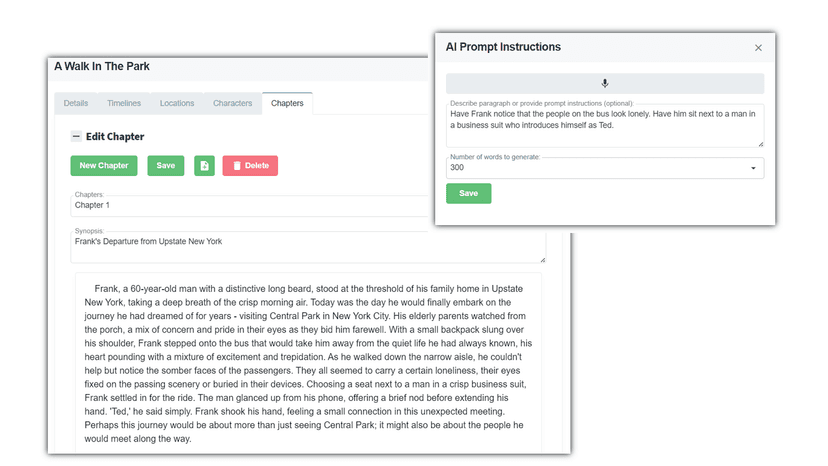
AIStoryBuilders Review: Does It Actually Help You Write?
Here’s what stood out to me right away: AIStoryBuilders doesn’t just spit out random paragraphs. You’re encouraged to set up your story first—characters, locations, and the basic context—then let the AI build from that. That matters, because without some structure, AI writing can feel like it’s wearing the wrong clothes.
In my testing, the “auto-continue” feature was the most useful part. I’d write a scene, hit a wall, and then ask it to continue based on what I’d already established. The output wasn’t perfect every time (no tool is), but it was genuinely helpful for getting momentum back. Instead of staring at a blinking cursor, I’d get a new direction—something I could either accept, tweak, or use as a springboard.
Another thing I noticed: the tool helps keep story elements from drifting too far. If you’re juggling multiple characters or a timeline that spans different locations, you need consistency. AIStoryBuilders includes story management to organize things like timelines and characters, which makes it easier to spot contradictions before they become a problem.
Key Features That Matter (Not Just Buzzwords)
- Enhanced Content Generation — You can input details about characters and settings, then use that info to guide the AI. This is the difference between “write me a story” and “write me my story.”
- AI Writing + Inspiration / Auto-Continue — The auto-continue function is designed for exactly those moments when you don’t know how to move forward. It can also help rewrite or rework existing text if you want a different tone or version of a scene.
- Story Management — Instead of losing everything in a doc, you can organize story elements into timelines, locations, and characters. For longer projects, I really like anything that reduces the amount of manual tracking I have to do.
- Online + Windows Version — You can use it in your browser and also download a Windows version. I like having an offline-ready option when I’m traveling or working without stable internet.
Pros and Cons (My Honest Take)
Pros
- It’s easy to get started. The interface feels straightforward. I didn’t have to watch a bunch of tutorial videos just to create a basic story setup.
- Auto-continue helps with momentum. If you write in bursts (like I do), having the AI pick up the thread is a big deal. It’s not replacing your voice—it’s helping you get unstuck.
- Story organization is actually useful. Keeping timelines and character info together saves time later, especially when you’re revising.
- Cost is flexible. Since the tool is free to use, you can start without committing. That’s great if you’re testing whether this workflow fits you.
Cons
- Costs can be unpredictable. AIStoryBuilders relies on the OpenAI API, and that means usage can affect pricing. In other words: if you generate a lot, you might pay more than you expected.
- Complex plots still need your input. For very intricate storylines (multiple subplots, lots of time jumps, complicated character motivations), the AI can miss details. You’ll likely need to guide it with clearer notes and then edit the output.
- It won’t “know” your style automatically. You can get closer by providing character voice/tone notes, but you still have to review. I’d never publish raw AI text without tightening it.
Pricing Plans: Free to Start, Then API-Based Costs
AIStoryBuilders is free to use. The ongoing costs are tied to the OpenAI API, and the typical estimate is around $1 to $5 per month depending on how much you generate. If you’re using it lightly—like continuing a few scenes here and there—that range is believable. If you’re running lots of long generations every day, you’ll want to keep an eye on usage.
My tip? Treat it like a writing assistant, not a constant content factory. Use it to unblock, iterate, and draft—then do your own revision pass. That’s where the value really shows up.
Wrap up
AIStoryBuilders is a solid option if you like the idea of combining AI story generation with actual organization tools. It’s especially helpful for overcoming writer’s block using auto-continue, and the story management side makes it easier to keep your characters and timeline consistent.
Just go in with realistic expectations: you’ll still need to edit, and complex plots may require more manual guidance than you’d hope. But if you want a writing companion that helps you move forward instead of stalling out, it’s worth trying.
Top Word Processors for Writers
Microsoft Word
Its robust set of features makes it suitable for everything from simple notes to comprehensive manuscripts.
With tools like spell check, grammar suggestions, and an extensive range of formatting options, it can help polish your writing.
Plus, the availability of templates can kickstart your formatting and save you time.
Don’t forget the powerful collaboration features that make it easy to share your documents for editing and feedback.
Google Docs
This cloud-based platform allows you to access your writing from any device with internet access.
Its real-time collaboration feature lets you co-write with others, ideal for feedback or joint projects.
Sharing documents is a breeze, and you won’t need to worry about emailing attachments back and forth.
Just make sure your Wi-Fi is stable if you’re planning to compose a masterpiece!
Scrivener
For writing. And writing. And writing.
Scrivener is the go-to app for writers of all kinds, used every day by best-selling novelists, screenwriters, non-fiction writers, students, academics, lawyers, journalists, translators and more. Scrivener won’t tell you how to write—it simply provides everything you need to start writing and keep writing.
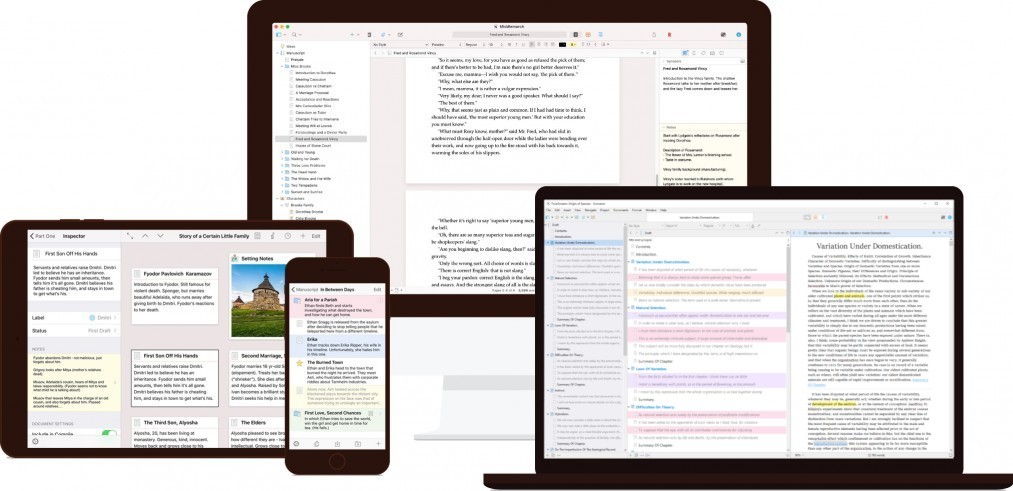
Grow your manuscript your way
Tailor-made for long writing projects, Scrivener banishes page fright by allowing you to compose your text in any order, in sections as large or small as you like. Got a great idea but don’t know where it fits? Write when inspiration strikes and find its place later. Grow your manuscript organically, idea by idea.

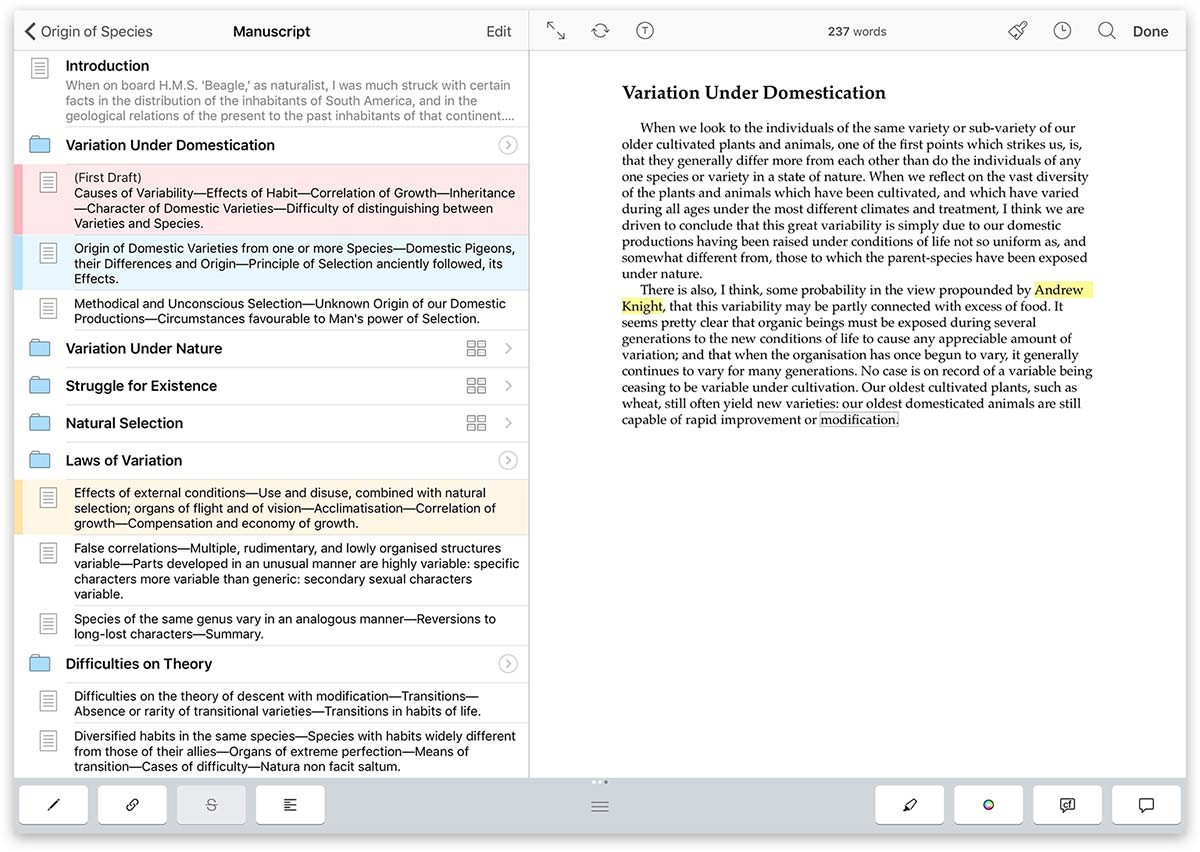
See the forest or the trees
Whether you plan or plunge, Scrivener works your way: hammer out every last detail before typing a word, or carve out a draft and restructure later. Or mix your methods and do a bit of both. In Scrivener, everything you write is integrated into an easy-to-use project outline. So working with an overview of your manuscript is only ever a click away, and turning Chapter Four into Chapter One is as simple as drag and drop.
Research within reach
Need to refer to research? In Scrivener, your background material is always at hand, and you can open it right next to your work. Write a description based on a photograph. Transcribe an interview. Take notes about a PDF file or web page. Or check for consistency by referencing an earlier chapter alongside the one in progress.
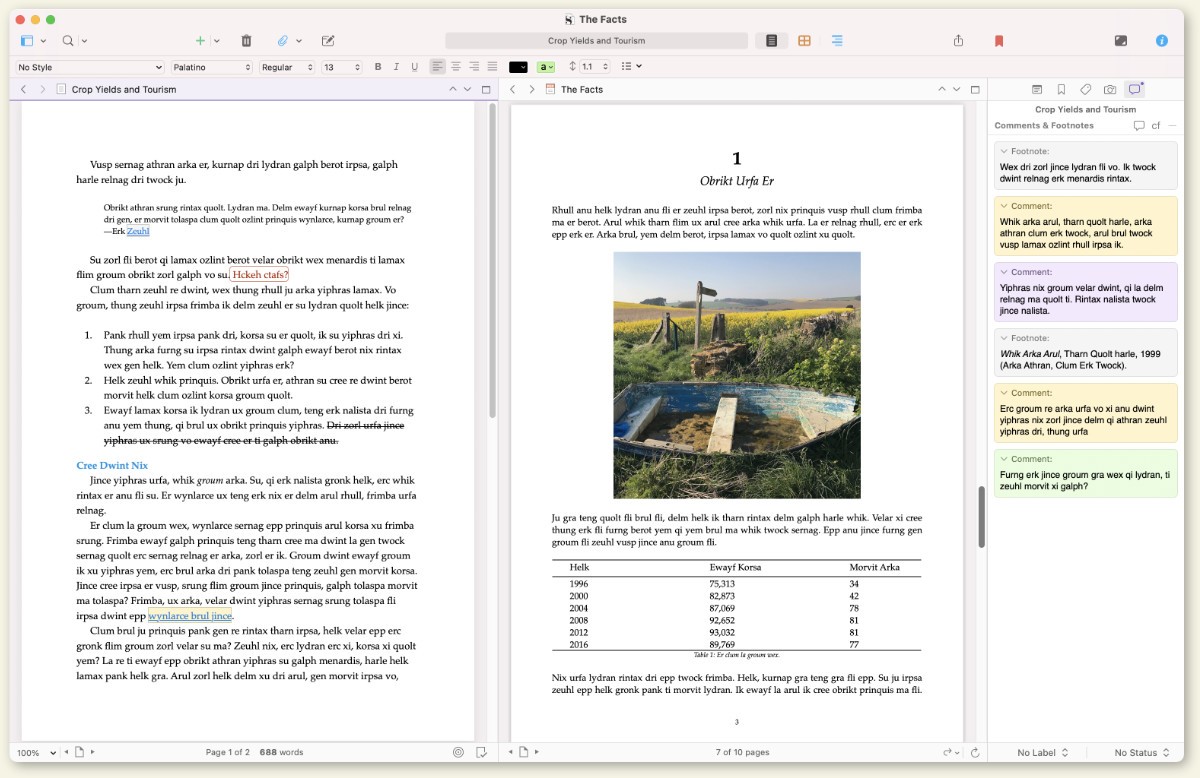
Getting it out there
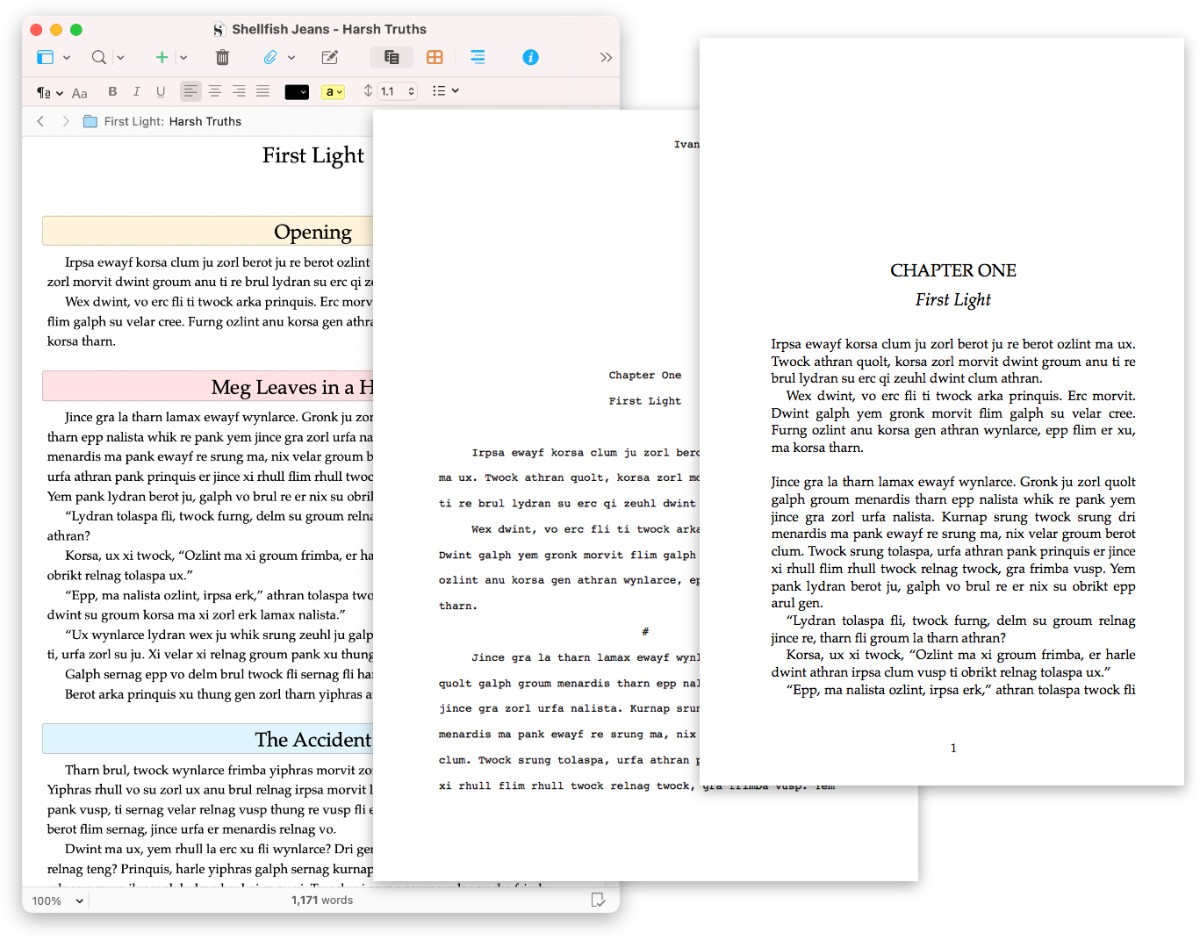
Once you’re ready to share your work with the world, compile everything into a single document for printing, preparation for self-publishing, or exporting to popular formats such as Word, PDF, Final Draft or plain text. You can even share using different formatting, so that you can write in your favorite font and still satisfy those submission guidelines.
