
Qantas passengers endured nearly 50 hours of disruption after a QF64 A380 developed a nose-wheel problem in Johannesburg, prompting renewed calls for stronger compensation rules.
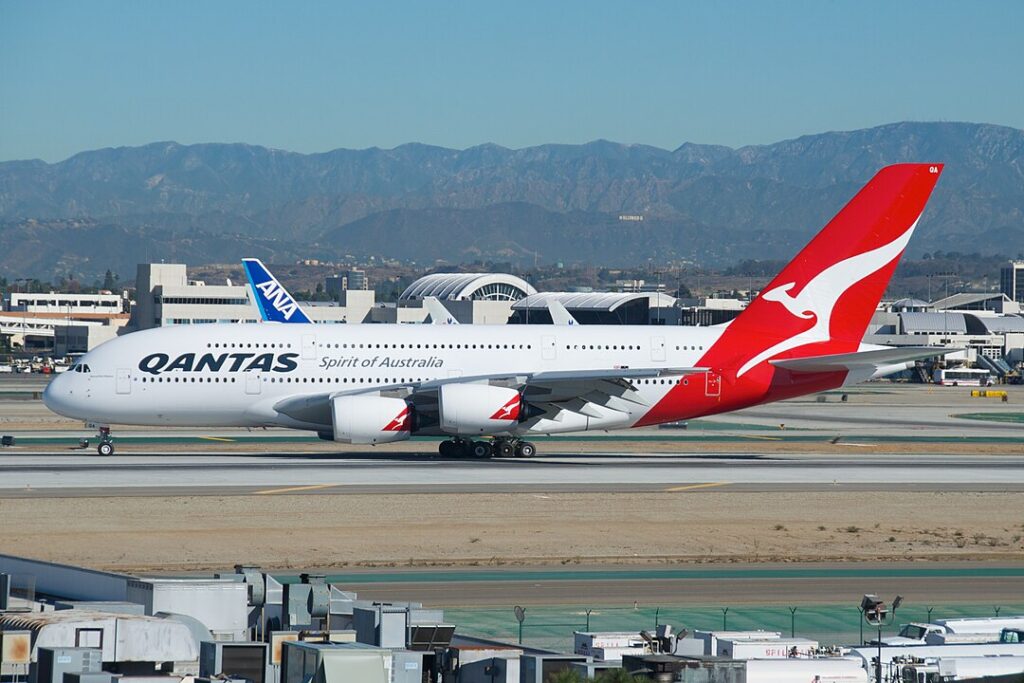
JOHANNESBURG—passengers have demanded greater compensation after a mechanical problem stranded them in South Africa for almost 50 hours, forcing the airline to cancel QF64 from OR Sydney Airport (SYD).
The Airbus A380 remains in Johannesburg while engineers continue work on the aircraft. The disruption began on August 10 when the aircraft developed a problem involving its nose wheel. Passengers faced repeated delays, disembarkations and hotel arrangements before Qantas secured another aircraft on August 12, allowing hundreds of travelers to return to Sydney.
Qantas A380 Grounded After Mechanical Fault engineers sourced replacement parts from overseas on August 11, but additional work was required before the aircraft could safely return to service.
Rather than extend the disruption, the airline arranged another aircraft to operate the journey.
Qantas later apologized to passengers, acknowledging the disruption and thanking them for their patience during what became a lengthy interruption.
Passengers, however, said the experience created significant personal and financial difficulties.
Some travelers reported missing important events, while families with young children faced shortages of essentials such as nappies and formula.
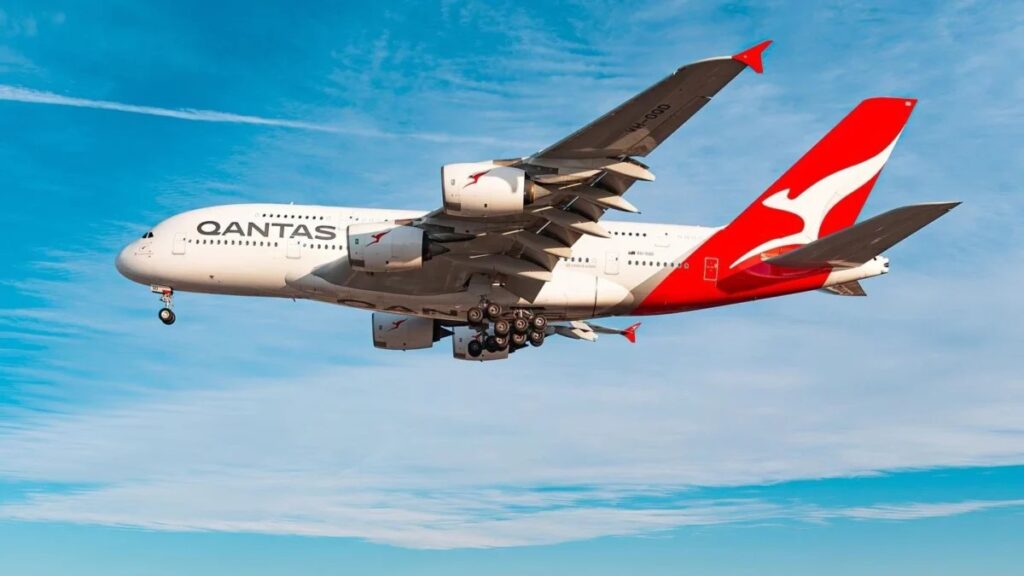
Passengers Seek Compensation After 50-Hour Delay
Passenger Harriett Moore described the experience as distressing and questioned whether the airline’s initial compensation reflected the scale of the disruption. She said travelers had to manage hotel arrangements while receiving changing information about when the flight would operate. Qantas passengers demand compensation after days stranded in South Africa as A380 remains grounded Hundreds of Qantas passengers have arrived home after being stranded in Johannesburg for three days when the A380 scheduled to fly them to Sydney was grounded with mechanical issues.
The airline sent another aircraft to bring the passengers home, while the original plane remains on the tarmac in South Africa.
What’s next?
Qantas says affected passengers will receive a full refund for their Johannesburg-Sydney flight, but passengers say a better compensation scheme is needed.
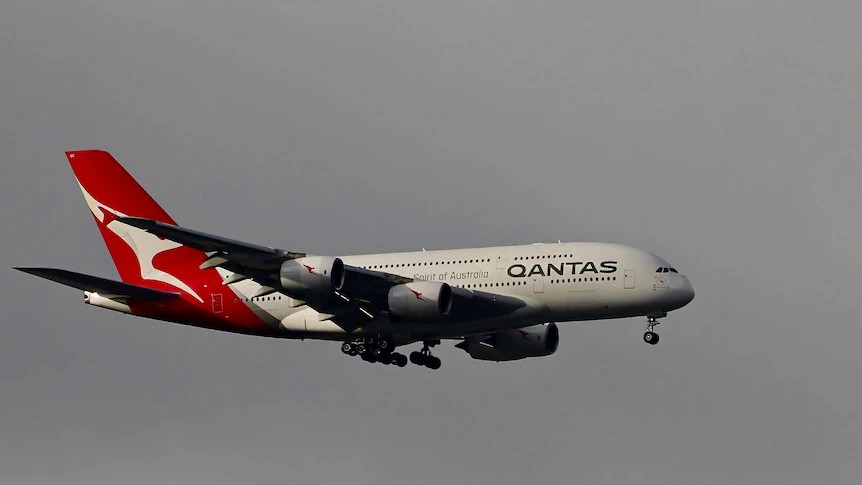
Exhausted Qantas passengers are demanding answers and compensation after a mechanical problem with their plane left them stranded in South Africa for days.
QF64 from Johannesburg to Sydney was due to depart OR Tambo International Airport on Monday night, local time, for the 12-hour journey back to Australia.
Instead, passengers say they were left in limbo and forced to scramble for their own accommodation after multiple attempts to depart were abandoned.
The super jumbo remains on the tarmac in the South African city undergoing repairs.
Qantas eventually sent another plane to bring them home, with hundreds arriving in Sydney last night.
Passenger Harriett Moore said the experience was “distressing”.
“We had fellow passengers with children that ran out of nappies and formula, other passengers missed events like parties,” Ms Moore said.
“We accept that safety must come first; however, why a near 50-hour delay has been met with limited explanation and an offer … that does not reflect the disruption, cost and distress involved.”
In an email to passengers, Qantas said it had identified a problem with the aircraft’s nose wheel.
It said the plane returned to the gate on August 10 for “engineering support” and on August 11 engineers “sourced and installed replacement parts from overseas” but “further work was needed to fully resolve the issue”.
“On August 12, we secured a new aircraft to avoid any further delay. Safety will always be our highest priority,” the email to passengers said.
Qantas initially offered Qantas Frequent Flyers 20,000 points, or a $200 “Customer Care Travel Voucher” for non-members on August 10, the day of the scheduled departure.
But after questions from the ABC, Qantas sent another email to customers as they landed back in Sydney yesterday, instead offering to refund the Johannesburg to Sydney leg as well as an Uber voucher home.
“On behalf of everyone at Qantas, we sincerely apologise for the significant disruption to your travel plans this week from Johannesburg,” the email to passengers said.
“Thank you for your patience and understanding throughout what we know was an exceptionally difficult experience.”
Passengers left in limbo
Ms Moore, who had been visiting family in South Africa, said the drama unfolded on Monday night.
“The captain told us there was something wrong with the nose gear, so we waited and waited, the plane pushed back, and then the captain came on again and said there was still an issue and we would have to disembark,” Ms Moore said.
She said passengers scrambled for hotel rooms and were not assisted by the airline.
“The next morning we got a message saying our flight was leaving that afternoon, so we got back on board. We were then again told there were issues, and they were cancelling our flight, so we had to get off and go and find another hotel.”
Ms Moore said Qantas’ revised offer to refund one leg of the flight did not go far enough.
“There needs to be a change in regulations to compensate customers who are stranded like the EU does,” she said.
“The cost of us now needing to take unpaid leave from work and missing critical meetings will not be compensated for a flight refund.”
The European Union requires airlines to pay passengers delayed by mechanical faults up to 600 euros ($980) in compensation. Federal budget allocates $40m to fund an overhaul of airline passenger rights
In short:
The federal government has announced nearly $40 million to fund an overhaul of aviation consumer rights.
These include a new watchdog and complaints system that could lead to compensation for disrupted passengers.
What’s next?
The laws, first outlined in 2024, could take effect within months, as airlines warn the changes could drive up airfares. Rohan Young was scrolling through the news when she discovered her family’s flights to Sydney, for her aunt’s 80th birthday celebrations, could be in doubt. Fuel crisis hits WA tourist route as Jetstar suspends Sydney-Busselton flights
In short:
Jetstar has suspended flights between Sydney and Busselton, citing high fuel costs driven by the war in the Middle East.
Qantas says there has not been enough passenger demand to support the service.
What’s next?
The airline hopes to resume the service in September. Travellers arriving in WA’s South West from Sydney say they are baffled by Jetstar’s decision to suspend the route.
The low-cost carrier has announced it will halt its Busselton to Sydney service from June to September 22, citing high fuel costs driven by the war in the Middle East.
The first direct flight between WA’s premier food and wine region and Sydney was launched in 2024.
A Qantas Group spokesperson said there had not been enough demand to support the service.
“We know this is frustrating for customers, and we look forward to restarting the service later this year,” the spokesperson said.
Touching down in Busselton on Tuesday afternoon, travellers said they were shocked by Qantas’s call.
“It’s very disappointing for me,” Annie McMahon said.
Having recently moved to the region, she uses the regular flights to visit one of her sons who is living in Sydney.
“The flight today was full, so I can’t understand why they’d be cancelling it, to be honest,” Ms McMahon said.
“I’ve never noticed it without plenty of people on it.”
She said the expense of having to travel up to Perth before flying would force her to reconsider future travel.
Qantas blames fuel costs
Increasing fuel costs have forced the airline to reduce domestic capacity by 5 per cent between May 18 and the end of June.
The company’s fuel bill is tipped to increase by $600 million to $800 million in the first half of this year.
The spokesperson said impacted customers would be contacted directly and rebooked via alternative routes or offered a refund. The airline will continue to offer three direct flights a week between Melbourne and Busselton, with Qantas’s charter operations supporting the mining industry not affected by the cuts.
Premier slams ‘opportunistic’ move
Premier Roger Cook took aim at the airline for its decision, accusing Qantas of walking away from the WA tourism industry.
“This is the same airline that is very happy to jack up prices whenever it suits them, regardless of fuel supply,” Mr Cook said.
“It sounds as it was a bit of an opportunistic decision by Qantas to cut those sectors.
“We should be walking together to support our tourism industry, not walking away from it.”
Immediate impact for businesses
With international and interstate visitors generally staying longer and spending more than local visitors, the suspension is a blow to the region’s operators.
Shelter Brewing chief executive Paul Maley, whose 650-seat brewery and restaurant is a major attraction on the Busselton foreshore, said the news was devastating.
“Those flights, along with the Melbourne route, play a key role in our visitor mix,” he said.
“We believe we’ll see an immediate impact when those flights stop.”
With local travellers also rethinking trips and spending due to rising fuel costs, he said the reduction in visitors would be a double blow.
“We’re obviously really well-visited by Busselton locals, but tourism is a critical part of our business,” Mr Maley said.
“We’re hopeful the flights will return in summer.”
Push for flights to resume
Margaret River Busselton Tourism Association chief executive Sharna Kearney said there had been strong demand for the Sydney–Busselton service.
“Those flights bring in about 500 people to our region each week, which is really important over those winter months,” Ms Kearney said.
“It’s typically one of the quietest periods of the year; occupancy is typically running between 30 and 50 per cent.
“So any loss in visitors is going to be acutely felt by the industry.”
She said the route’s suspension reflected the global impact of the ongoing fuel crisis, rather than the route’s future viability.
“We know there were very few seats available on those flights going in and out of the region,” Ms Kearney said.
“We want to see the flight reinstated as soon as it’s practical.”
“I quickly checked my emails but there was nothing from Jetstar,” Ms Young said.
“It was only when I logged into my account that I saw our flight had been cancelled.”
She said she spent hours on the phone and in online customer chats with the airline, trying to confirm the cancellation and find alternative flights to make the July celebration.
The family eventually rescheduled their flights on different dates to depart from Perth — a three-hour drive from home — leaving them with less time in Sydney for the celebration.
“There does not seem to be anyone who you can raise a complaint with when these things happen,” she said.
“The impact on people’s lives when travel is disrupted can be profound and often you only get a perfunctory email from the airline provider with little recourse for the traveller.”
Money in budget for passenger rights
The federal government has now moved to fund an overhaul of passenger rights unveiling a nearly $40 million package in Tuesday’s budget.
It will establish an Aviation Consumer Protection Authority to enforce the government’s aviation consumer protections bill, which is now before a Senate committee, along with an independent ombuds scheme. Currently, Australia has no guaranteed compensation scheme for disrupted flights, unlike the European Union, where passengers are automatically entitled to about $400 euro for delays of three hours or more, or last-minute cancellations.
“Consumers need stronger protections and an independent body that will take their complaints seriously,”
campaigns director Andy Kelly said.
He said the COVID-19 pandemic exposed major weaknesses in aviation consumer protections, with passengers often left “given the run-around” when flights were disrupted.
Airlines say fares could rise
But airlines say the proposed laws will force up the price of flights.
In its submission to the senate committee examining the new laws, Virgin Australia said the legislation unfairly extended liability into areas it did not control, including airport infrastructure, baggage systems, security screening and travel agents.
Qantas will cut domestic flights due to higher fuel costs and the uncertainty of the Middle East war, as it flags as much as $800 million in extra fuel costs.
“A regulatory framework that does not align responsibility with control is unlikely to improve consumer outcomes,” the airline said.
Qantas said there was a “real risk” the framework would push up fares, reduce route viability and undermine low-cost carrier models.
“It is vitally important that any further regulation is proportionate to the issue,” Qantas said.
Aviation expert Justin Wastnage, from the Griffith Institute for Tourism, said European consumer protection measures had seen a drop in the number of flights cancelled, since legislation was introduced two decades ago.
“Canada, the United States and Brazil have also introduced this system, and the airlines have fought it every step of the way,” Mr Wastnage said.
“Qantas and Virgin have known this is coming for some time, and I’d suggest they have already factored in extra costs for when the laws come into effect.”
Federal transport minister Catherine King said the reforms would strengthen protections for passengers and improve accountability across the aviation sector.
“Legislation to establish the new consumer protection framework has now been introduced, with the timing of passage a matter for the parliament,” she said.
“The Albanese government will continue to work constructively with consumer groups and the aviation industry as this legislation and the associated regulations are progressed.
“In the meantime, an interim aviation ombudsperson has been appointed to support improved outcomes for aviation consumers in the short term.” The federal government allocated almost $40 million in the May budget to support reforms that include stronger oversight, complaints handling and passenger protections.
The proposed system would establish an Aviation Consumer Protection Authority and an Aviation Consumer Ombuds Scheme, while a new charter would set minimum standards for assistance during delays and cancellations.
However, the current legislative framework does not guarantee automatic monetary compensation for every significant disruption.
The incident has also drawn attention to the A380, although there is no indication that the Johannesburg nose-wheel problem is connected to recent structural inspections involving a limited number of A380 aircraft.
Aviation experts continue to regard the type as a highly regulated and safe aircraft.
For Qantas passengers, the immediate concern remains compensation for the costs and disruption caused by the extended delay.
The grounded A380 will remain in Johannesburg until its mechanical issue is fully resolved.
