
The Indian benchmark indices ended marginally lower on Friday, 14 August 2026, with the BSE Sensex sliding 70.71 points to close at 78,009.25 and the NSE Nifty 50 shedding 29.85 points to settle at 24,366.00. Selling pressure remained broad-based for a fourth consecutive session, though a late-afternoon recovery helped the benchmarks claw back from their intraday lows. Sensex today | Stock Market Highlights: Sensex shed 70.71 pts or 0.09% to end at 78,009.25 after hitting a low of 77,684.37; Nifty 50 dipped 29.85 pts or 0.12% to 24,366 Sensex, Nifty, Share Prices Highlights: Easing expectations of a September US Fed rate hike and softer crude prices offered limited support, restricting the market’s decline.

Sensex Today, Nifty 50 | Stock Market Highlights – Find here all the highlights related to Sensex, Nifty, BSE, NSE, share prices and Indian stock markets for 14th August 2026.
The Nifty 50 fell 0.8% this week to 24,366 and the BSE Sensex lost 0.6% to 78,009.25
The rupee was little changed versus the US dollar at 95.4175 and on course for a weekly decline, with frequent central interventions helping limit losses amid the West Asia conflict.
Tata Motors Passenger Vehicles shed 4.3% to be the biggest loser on the Nifty 50 after the carmaker’s quarterly profit slumped about 80% due to higher costs. LG Electronics India jumped 9.6% after strong quarterly results and an affirmation of the full-year revenue target.
At 3.32 p.m., the Sensex was down 70.71 points, or 0.091%, at 78,009.25, while the Nifty fell 29.85 points, or 0.12%, to 24,366.00. The US has indicated it could maintain a naval blockade of Iran indefinitely as ceasefire talks remain stalled. Brent crude eased to $87 a barrel on inventory and demand concerns.
Foreign investors extended their selling streak, offloading ₹511 crore of Indian equities on Thursday. US producer prices were unchanged in July, further reducing Fed rate hike expectations.
Key technical pointers for today’s trade
* Nifty 50: Trading at 24,330, down 0.26%, with weak market breadth at 16 advances against 34 declines.
* Immediate trend: The index is struggling to sustain buying momentum after Wednesday’s rebound from 24,266.
* Key support: 24,250 is the crucial support zone. A decisive break below this level could drag the Nifty towards 24,000.
* Immediate resistance: 24,400. A sustained move above this level could open the way towards 24,480–24,500.
* Nifty futures: August futures at 24,401, with immediate support at 24,350 and strong resistance in the 24,450–24,470 zone.
* Futures breakout: A decisive break above 24,470 could push the contract towards 24,540–24,580.
* Futures downside: A break below 24,350 could pull the contract towards 24,300 or lower.
* Trading range: Nifty futures may remain within 24,350–24,470 in the near term. A breakout on either side could determine the next directional move.
* Market stance: The risk-reward setup is currently unfavourable. Traders may prefer to stay on the sidelines and wait for the weekly close before taking fresh positions.
* Key levels: Support — 24,350, 24,300; Resistance — 24,470, 24,540.
Muthoot MCred Strengthens Growth Momentum in Q1 FY27; PAT Rises 232.73%, AUM Grows 58.53% to ₹7,098.38 Crores
Muthoot MCred Limited (formerly known as Muthoottu Mini Financiers Limited), one of India’s trusted gold loan NBFCs, announced strong financial performance for the quarter ended June 30, 2026. Profit After Tax (PAT) increased by 232.73% year-on-year to ₹100.29 crore. AUM grew 58.53% year-on-year to ₹7,098.38 crore. Total income stood at ₹399.64 crore in Q1 FY27, registering a 76.38% year-on-year growth.
The Company continued to maintain strong asset quality and operational discipline, with Gross NPA at 0.59% and Net NPA at 0.24% as of June 30, 2026. Return on Assets (ROA) improved significantly to 5.17% in Q1 FY27, compared with 2.84% as of March 31, 2026, reflecting a strong improvement in the Company’s profitability and asset utilisation. The ROA achieved during the quarter positions Muthoot MCred among the leading performers in the industry.
The branch network expanded by 3.76% year-on-year, from 958 branches in Q1 FY26 to 994 branches in Q1 FY27, further strengthening customer accessibility across key markets. The Company plans to further expand its network across diverse regions and markets, with a focus on strengthening its presence in key growth markets, reaching new customer segments, and enhancing accessibility to its financial services. Alongside network expansion, the Company remains focused on driving both horizontal and vertical growth by increasing its branch footprint while enhancing business growth and productivity at existing branches.
Mr. Mathew Muthoottu, Managing Director, Muthoot MCred Limited, said, “Q1 FY27 has started on a positive note for Muthoot MCred, with continued growth across profitability, AUM, and our operating footprint. The performance reflects the strength of our business model, disciplined portfolio management, and the trust we have built with our customers. As we move ahead, we remain focused on sustainable growth, responsible lending, and strengthening our institutional capabilities to create long-term value for all our stakeholders.”
Bandhan Life announces new distribution structure
Bandhan Life, the life insurance arm of the Bandhan Group, today announced a new, robust distribution structure, reinforcing its commitment to sustainable growth and deeper market reach. The move is designed to bring together a unified distribution strategy encompassing Bancassurance, Group, Corporate Agency & Broking (CABR), Digital partnerships and Emerging India businesses. With this integrated distribution engine, Bandhan Life aims to accelerate its multi-channel growth strategy, enabling it to reach more customers across India, especially in the East.
Over the past two years, Bandhan Life has built a strong distribution foundation, growing its Bancassurance channel while scaling its other businesses.
Commenting on the development, Satishwar B, MD & CEO of Bandhan Life, said, “Our journey over the past two years has been one of building strong foundations for sustainable growth. As we advance towards our vision of insuring every Indian household, this realignment marks an important step in our growth journey. By strengthening our distribution and sharpening our market focus, we are building a more agile and customer-centric organisation. Our goal is to expand access to life insurance across India, particularly the East, while delivering meaningful and reliable protection to every family we serve.”
Alkem Laboratories Ltd announces Q1 FY27 results
Alkem Laboratories Ltd. today announced its standalone and consolidated financial results for the first quarter ended June 30, 2026. The Board of Directors took record of these results at its meeting held in Mumbai today.
Q1FY27 Key Financial Metrics
Commenting on the results, Mr. Sandeep Singh, MD of Alkem, said, “We have started FY27 on a steady note, with healthy growth across our India and international businesses. Our India business continued to outperform the market, while the strong growth in our non-US international markets was encouraging. At the same time, there are areas where we need to improve, particularly in strengthening execution, addressing operational and regulatory priorities, and improving the consistency of performance across our businesses. We are also investing in R&D, MedTech and Biotech as we build our next phase of growth. Our focus will be to strengthen the core, address the areas that need improvement and build these newer opportunities in a disciplined manner.”
Q1 FY27 Key Financial Highlights
Total Revenue from Operations was ₹37,402 million, with YoY growth of 10.9%.
India sales were ₹24,978 million, YoY growth of 10.3%.
International sales were ₹12,223 million, with YoY growth of 16.0%.
EBITDA at ₹7,661 million, resulted in an EBITDA margin of 20.5%, a growth of 3.7% YoY.
R&D expenses for Q1 FY27 were ₹1,502 million, or 4.0% of total revenue from operations, vs. ₹1,184 million in Q1 FY26 at 3.5% of total revenue from operations.
Profit before tax (before exceptional item) was ₹7, 720 million, YoY growth of 1.8%.
Net Profit (after Non-Controlling interest) was ₹5,200 million, YoY de-growth of 21.7%.
Q1FY27 Operational Highlights
Domestic Business Key Highlights
The contribution of domestic sales to total sales was 67.1% vs. 68.2% in Q1 FY26.
According to IQVIA (SSA) data, for Q1 FY27:
The Company registered a growth of 13.2% YoY vs Indian Pharmaceutical Market (IPM), which grew by 12.2%, 100 bps outperformance.
Acute segment reported growth of 12.3% vs IPM which grew by 10.1%, 220 bps outperformance.
Chronic segment reported growth of 17.9% vs. IPM which grew by 15.4%, 250 bps outperformance.
We have outperformed IPM in seven key focused therapies: Anti-infectives grew by ~1.1X; Gastro-intestinal grew by ~1.2X, VMN ~1.4X, Pain ~1.8X, Anti-Diabetic ~1.4X, Respiratory ~1.6X and Derma ~1.6X.
Amagi delivers highest-ever quarterly revenue of ₹437 cr in Q1 FY27, up 32%; Adjusted EBITDA rises 3x to ₹50 cr and PAT over 8x to ₹34 cr
Amagi Media Labs Limited (NSE: AMAGI, BSE: 544679), a cloud-native SaaS platform providing AI-enabled solutions to global media and entertainment companies, today announced its financial results for Q1 FY27, the quarter ended June 30, 2026.
The Company reported a strong start to FY27, with revenue growing 32.4% year-over-year to ₹437 Cr, the highest quarterly revenue in its history, and 21.3% in constant currency, driven by existing customers expanding on the platform and continued adoption of cloud-native streaming, monetization, and broadcast workflows. Adjusted EBITDA rose 201% to ₹50 Cr, with margin expanding 6.4 percentage points year-over-year to 11.5%, while Profit After Tax grew 760% to ₹34 Cr, reflecting expanding operating leverage and disciplined execution across the business.
Key highlights
Q1 FY27 performance
Revenue increased 32.4% Y/Y to ₹437 Cr; constant currency growth stood at 21.3%
Adjusted EBITDA rose 201% Y/Y to ₹50 Cr; adjusted EBITDA margin expanded 6.4 ppts Y/Y to 11.5%
PAT grew to ₹34 Cr from ₹4 Cr in Q1 FY26; PAT margin expanded 6.3 ppts Y/Y to 7.5%
Cash, including investments and bank balances, stood at ₹1,616 Cr (+118% Y/Y), with zero debt
Platform and business momentum
Delivered 104 FIFA World Cup 2026 matches and over 300 hours of live programming across 3 global regions
A major US news network selected Amagi NEWSPULSE, the Company’s flagship AI product, for AI transformation of their newsrooms, with over 10 active pilots underway with news organizations globally
Signed major wins, including a US news network moving broadcast operations to Amagi and FAST channel mandates from 2 major US TV networks
Ravi Malani joins Sanctum Wealth as its Head of Portfolio Management Services
Sanctum Wealth, a Mumbai-headquartered wealth management company, has announced the appointment of Ravi Malani as Head of Portfolio Management Services (PMS). Based in Mumbai, he will report to Roopali Prabhu.
Ravi brings over 33 years of experience across financial services, with extensive experience in equity investing and portfolio management. Over the course of his career, he has led equity businesses and managed portfolios across PMS, direct equities, equity mutual funds, and long/short funds.
At Sanctum Wealth, he will lead the PMS business, including Sanctum’s Indian Olympians and Indian Titans, a large-cap-oriented strategy and a multi-cap PMS strategy, respectively, alongside its Tailored Discretionary Portfolio Management Services (TDPMS) and Non-Discretionary Portfolio Management Services (NDPMS) strategies. He will also be a member of the Sanctum Investment Committee.
Shiv Gupta, Founder & CEO of Sanctum Wealth, said, “We are pleased to welcome Ravi to Sanctum Wealth. Our PMS platform is an important pillar of our investment offering, and we see significant opportunity to build on its strengths and deepen its capabilities. Ravi brings over three decades of experience across equities and portfolio management, including experience in building and leading equity businesses. We look forward to the perspective he will bring as we continue to strengthen our PMS capabilities for our clients.”
Commenting on his appointment, Ravi Malani said, “I am delighted to join Sanctum Wealth at an important stage in the evolution of its PMS business. The firm’s emphasis on disciplined research and a robust investment process strongly resonates with my own approach to investing. I look forward to working with the team to further strengthen the platform and deliver differentiated, long-term investment outcomes for clients.”
Key Factors Driving the Selling Pressure
- Geopolitical Headwinds: Continued standoff between the US and Iran over a potential naval blockade kept global risk appetite low.
- Crude Oil Pressures: Even though Brent crude oil prices stabilized around $87 per barrel, the persistent geopolitical risk weighed on heavy energy consumers like India.
Persistent FII Outflows: Foreign Institutional Investors continued their exit momentum, offloading ₹510.69 crore worth of equities on Thursday alone.
Stock markets decline in early trade; Sensex down 300 points offloaded equities worth ₹510.69 crore on Thursday (August 13, 2026), according to exchange data.
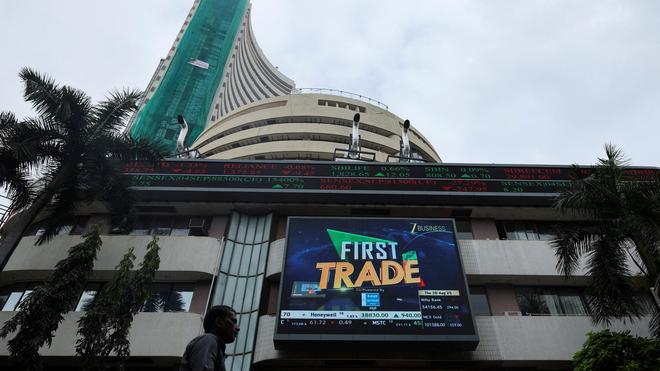
Market benchmark indices Sensex and Nifty declined in early trade on Friday (August 14, 2026) as the prolonged U.S.-Iran impasse weighed heavily on investors’ sentiment.
Weak Corporate Earnings: Muted Q1 corporate earnings guidance and a massive 80% profit slump in heavyweights like Tata Motors Passenger Vehicles severely dented investor sentiment. The Indian stock market opened significantly lower on August 14, 2026, with the Sensex declining by 279 points and the Nifty falling below the 24,400 mark. Factors such as global trends, domestic economic indicators, and investor sentiment are contributing to the volatility, while Tata Steel also reported a 1% drop in shares, affecting broader market dynamics. In a move aimed at aligning rituals strictly with the Ramanandi Sampradaya, the Shri Ram Janmabhoomi Teerth Kshetra Trust’s religious committee has introduced a revised dress code and grooming protocol for all priests at the Ram Temple in Ayodhya. Under the new guidelines, priests will now wear light-yellow silk dhotis paired with matching unstitched uttariyas, completely replacing the previously worn stitched chaubandi kurtas and turbans. The trust highlighted that light yellow—a color sacred and dear to Lord Ram—was selected to preserve ritual purity and foster uniformity in daily worship.
The Sensex has opened the trading session on August 14, 2026, with a notable drop of 279 points. This decline marks a challenging start for investors and indicates potential volatility in the market for the day. The index’s performance is being closely monitored as traders respond to various ongoing economic factors.
As a result of this downturn, analysts are assessing the influences behind the decrease. Factors such as global market trends, domestic economic indicators, and investor sentiment are likely playing significant roles in shaping today’s stock market landscape. Market analysts are preparing for potential changes throughout the day as trading progresses.
Nifty Falls Below 24,400 Mark
The Nifty index has also seen a notable decrease, falling below the 24,400 level. This decline could signify a broader trend affecting various sectors within the stock market. Market watchers are keenly observing this movement, as it could impact investment strategies for both institutional and retail investors alike.
Investors may be reacting to several external variables that are causing uncertainty. News from international markets, currency fluctuations, and ongoing geopolitical tensions are all contributing to the current market sentiment. Stakeholders are advised to remain cautious and vigilant as the situation develops.
Several sectors are likely to feel the immediate effects of this decline, leading analysts to consider potential repercussions for companies listed on the indices. Traders might look for opportunities within sectors that demonstrate resilience or are less affected by the downturn.
Tata Steel Reports a 1% Drop in Shares
Tata Steel has reported a decline of 1 per cent in its share prices amidst the market slowdown. This is noteworthy given Tata Steel’s significant role in the Indian manufacturing sector. The drop could influence investor confidence and market dynamics in the related sectors.
The steel industry, which has been recovering in recent months, may be facing headwinds due to broader economic conditions impacting demand. Stakeholders are evaluating how such shifts might affect operational strategies and long-term planning for companies like Tata Steel.
As the trading day progresses, investors are expected to closely watch the performance of major companies and sectors. The overall sentiment in the market can influence not only stock prices but also broader economic indicators in the coming weeks. The reaction to today’s opening performance will likely shape investor outlooks as they adjust their portfolios based on market conditions.
In summary, the opening of the Sensex and Nifty indicates a challenging day ahead for the Indian stock market. With multiple factors contributing to the current environment, traders and investors will need to carefully assess their options as the situation unfolds. The performance of Tata Steel and other major companies will be critical in determining the market’s trajectory throughout the day.
Sectoral Performance broader indices saw deep corrections—with both the Nifty Midcap 100 and Smallcap 100 indices underperforming by approximately 0.7%—certain pockets showed defensive resilience. Market Midday, 17 July 2026: Benchmarks Maintain Momentum Market Midday, 17 July 2026: Benchmarks Maintain Momentum Market Midday, 17 July 2026: Benchmarks Maintain Momentum
