
Maharashtra CM Devendra Fadnavis recently approved nine new power substations in Nagpur to support the city’s rapid expansion and ensure uninterrupted electricity supply. This is part of a larger push for development in the region, which includes the “New Nagpur” project and significant logistics investments. Nine New Substations To Power City’s Expansion Nagpur: The Maharashtra govt on Friday approved nine new power substations for Nagpur as chief minister Devendra Fadnavis reviewed a wide slate of urban expansion and infrastructure projects. These included land transfers for housing, loan guarantees for the new ring road network, and major upgrades to the city’s electricity backbone. Officials said the decisions aimed to keep pace with the region’s rapid growth and rising residential and industrial demand.At the meeting held at the Vidhan Bhavan cabinet hall, the CM directed the Nagpur Municipal Corporation (NMC) to allocate land at Khamla for a 220 kV substation to support the upcoming London Street project.For Butibori’s expanding industrial zone, the govt resolved that MIDC would provide land for a 400 kV facility, a move officials said would ensure an uninterrupted supply in one of Vidarbha’s fastest-growing manufacturing hubs. “As the city expands, power infrastructure must expand with equal urgency,” Fadnavis told officials.Deputy chief minister Ajit Pawar, guardian and revenue minister Chandrashekhar Bawankule, MLAs Krishna Khopde and Pravin Datke, chief secretary Rajesh Aggarwal, energy additional chief secretary Abha Shukla, senior secretaries, and heads of civic and planning bodies attended the review meeting. Shukla reported that two new substations at Jattarodi and Pachgaon were already commissioned this year, while capacity upgrades were completed at Khapri and Umred. Work was progressing at Lendra Park, MIHAN, Yenwa, and Butibori (Avaada), she said, adding that Kadwali and Bazargaon were nearing completion and planning had begun for facilities at Kanhan and Selu.Additionally, seven substations at Hingna, Mahagaon, MIDC Umred, Dabha, Pawangaon, Katol, and Neri have now received approval.The meeting also cleared a state guarantee for a Rs7,800-crore HUDCO loan — Rs3,000 crore for New Nagpur and Rs4,800 crore for the new ring road. Officials said the project is intended to link major arterial roads and support the city’s outward growth. Nagpur Improvement Trust (NIT) chairman Sanjay Meena presented the plan to the cabinet.For housing under the Pradhan Mantri Awas Yojana, the state agreed to transfer 11,913.19 sq m of MHADA land in Jaitala to the NMC, along with 4,625 sq m of govt land in Hudkeshwar at a nominal cost. The meeting also approved changes in municipal service-entry rules to ensure seniority-based priority for employees and reviewed compliance with a previous decision to grant heirship benefits to families of surplus sanitation workers.On policing, Fadnavis directed the Police Commissionerate, the Directorate General of Police, and the administration to submit a coordinated proposal on new police stations, required manpower, and facilities, saying that “planning must keep pace with the city’s needs.”
Key Development Updates for Nagpur
The approval of the power substations is one of many recent initiatives aimed at transforming Nagpur into a well-planned, future-ready metropolis. Chaired a meeting regarding various development works in the Nagpur Municipal Corporation region. With Nagpur expanding rapidly, it is essential that the infrastructure keeps pace with the growing needs of the city. Nine new power substations across Nagpur were approved, and land allocation for a 220 kV substation at Khamla, keeping in mind the London Street project and a 400 kV substation for the Butibori area. Reviewed progress of ongoing and commissioned substations at key locations. For the New Nagpur and the New Ring Road projects, the State Government has guaranteed a ₹7800 crore HUDCO loan. Reviewed works under Pradhan Mantri Awas Yojana. Directed the preparation of an detailed proposal for new police stations and required manpower. These decisions strengthen the push for a well-planned, future-ready Nagpur. MLA Krishna Khopde ji, MLA Pravin Datke and concerned officials were present. New Power Substations: The nine new substations, along with land allocation for a 220 kV substation at Khamla and a 400 kV substation for the Butibori area, are intended to meet the growing power needs of the expanding city and support projects like the London Street development.
“New Nagpur” and Ring Road: The state government has guaranteed a significant ₹7,800 crore HUDCO loan to fund the development of “New Nagpur” and a new ring road designed to link major arterial roads and support outward growth.
Logistics Hub: Nagpur is positioning itself as India’s logistics capital due to its central location and connectivity. A ₹2,000 crore XSIO Industrial and Logistics Park, a net-zero-ready hub, had its groundbreaking in November 2025 and is projected to generate over 10,000 jobs.
MIHAN Project: The Multi-modal International Hub Airport at Nagpur (MIHAN) project, which includes a Special Economic Zone (SEZ), is operational and expanding. Major IT companies like TCS, Infosys, and HCL are key employers, and new companies continue to start operations.
General Infrastructure:
A new Development Plan (DP) is being drafted for the city after a 25-year gap, aiming for structured, data-driven growth by December 2025. Work is ongoing for a Multi-Modal Transport Hub (MMTH) near the railway station, integrating bus, metro, and rail services. Several Smart City projects are nearing completion, with the goal of finishing all remaining projects by March 2025.

Nagpur’s First New Development Plan in 25 Years Covers 22,700 ha; Old Plan 90% Unused
The city of Nagpur is set for a major urban reset. With 7,167 hectares transferred to NMRDA and high-rise approvals rising, development momentum is building. Nagpur is finally drafting a new Development Plan (DP) after more than 25 years. The last one, approved in 2000, remains mostly unimplemented. Officials admit that 90% of it stayed on paper, with just 92 of 896 land reservations acted upon – mainly for roads. The rest kept the land frozen and slowed growth.
A New Plan for a Growing City
The new DP will cover 22,700 hectares, including newly merged areas like Hudkeshwar and Narsala. But some East Nagpur areas, such as Bharatwada and Punapur, remain outside the plan. This is because of overlapping control from the Smart City body and MahaMetro.
As per the MRTP Act, Nagpur Municipal Corporation (NMC) must complete the draft by December 13, 2025. After two decades of delay, this is a crucial deadline. While officials promise that the new DP is data-driven, citizens are waiting to see if it will succeed where the old plan failed.
Big Boost from Land Allocation
One major push has come from the transfer of 7,167 hectares of government land to the Nagpur Metropolitan Region Development Authority (NMRDA). This is the largest land allocation in the city’s history. It will provide space for housing, commercial growth, and public projects.
Transport Hub Gains Speed
Nagpur’s long-planned Multi-Modal Transport Hub (MMTH) also got fresh momentum. In July 2025, the state cleared land-use changes near the railway station to move the project ahead. The MMTH will integrate bus, metro, and rail services with retail and offices, creating a modern transit zone.

Nagpur Property Tax 2025: How to Calculate & Pay Online The property tax in Nagpur is the amount a homeowner needs to pay annually to the government or the municipal corporation. It is mandatory to pay this tax. Check all about NMC Property Tax!
Property tax, as most of us know, is an amount of money the land owner pays annually to the local government or the municipal corporation under which the land falls. Nagpur property tax is levied by Nagpur Municipal Corporation, is a direct tax imposed on properties like commercial, rented, residential, and even vacant lands.
Being a significant source of revenue for the Nagpur Municipal Corporation, NMC Nagpur property tax is duly collected by the Municipal Corporation every year. Residents of every town or city having their land are bound to pay property taxes to their local government or corporation. Telangana Property Tax 2025: How to Calculate & Pay Online Know how to pay GHMC property tax or Greater Hyderabad Municipal Corporation (GHMC) property tax through different online and offline methods. Read more here.
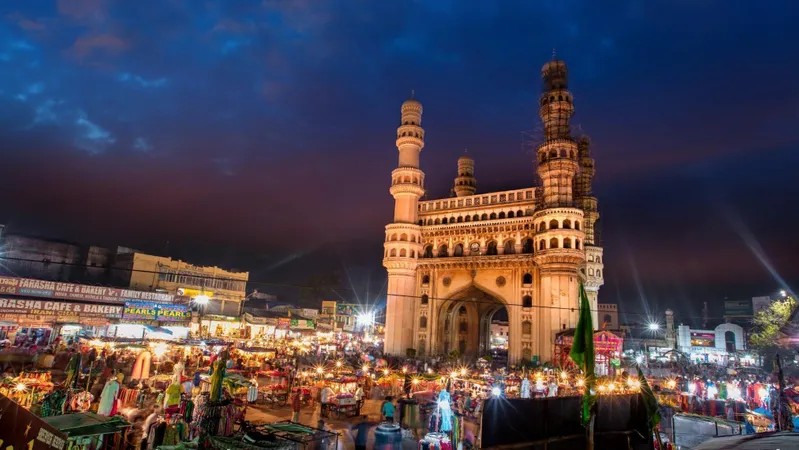
Greater Hyderabad Municipal Corporation or GHMC is the municipal corporation of Greater Hyderabad. GHMC ensures that robust physical infrastructure and excellent social amenities are provided to the citizens of Hyderabad.
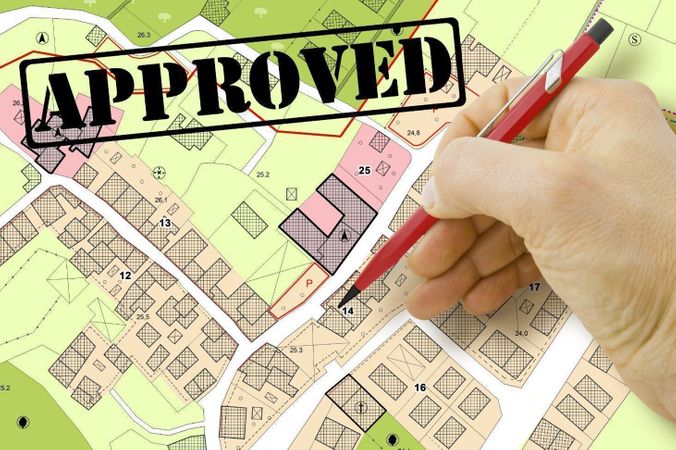
Building Approval Plan – Meaning, Plan Inclusions, Factors for Approval & Importance
The building approval plan is one of the most important documents a home buyer should know about. The builder must get sanctions from the local authorities before starting the construction. The builder needs to get the building plan sanctioned from the local authorities before starting the construction. This is called a building approval plan.
Property investments require significant capital. Any mistakes made during the undertaking can cause substantial issues for the buyer. As a result, a buyer must exercise extreme caution when reviewing the property documents. The prospective buyer may guarantee that the investment brings peace of mind and security by seeking legal advice. They should also scrutinize the documents and verify relevant information about the property.
What is a Building Approval Plan?
The local development or planning authorities approve the building approval plans. The construction is deemed illegal if the building approval plan is not provided.
Building Approval Plan Inclusions
A building approval plan is also known as the blueprint of the construction site. It aids in visualizing the project before completion. A building approval plan includes the following:
- A site plan
- Elevations
- Plumbing
- Electrical detailing
- Structural plans
- Floor plans
- Cross-sections
- Landscape drawings.
Civil engineers and architects frequently use it as a reference during building construction.
Building Plan Details
The building approval plan includes the building plan and layout approval for construction.
1. Building Plan:
Before beginning construction, a builder must submit a building plan. Building plans are graphical representations of how a structure will appear after construction. A building plan ensures that the structure complies with building codes. After the building plan approval, the builder must start construction work within two years. And there should be no deviations from the approved plan. A building plan comprises the following components. Site Plan – Key Elements, Uses, and Types of Site Plans Find out site plans are, what they are not, and their essential components. This blog details you on key elements of site plans, different types, uses of the site plan.

Imagine having a detailed map that helps architects and builders build a building and tells the history and future of a place. That map is a site plan. Sometimes called a plot plan, site plans are like the ultimate architectural Master Plan – What Is It, Importance, Advantages & How It Is Made
The Master Plan, also known as the Comprehensive Plan provides a long-term vision for the community’s development. It assists in guiding on how to use lands appropriately within municipal orders. It also helps protect public health, safety, and general welfare.
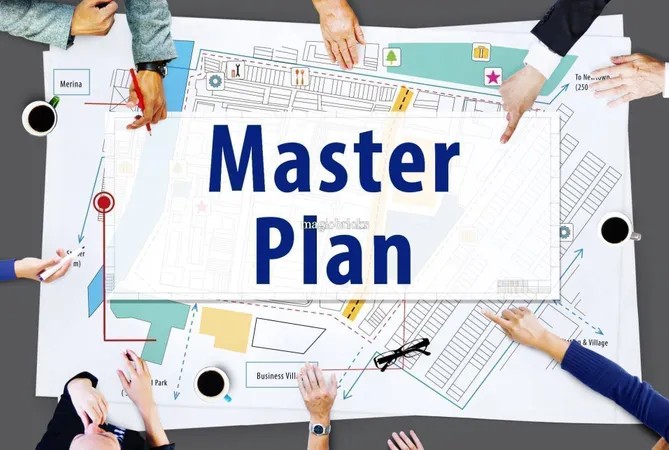
The Master Plan, also known as the Comprehensive Plan, provides a long-term vision for the community’s development. It assists in guiding you on how to use lands appropriately within municipal orders. And helps protect public health, safety, and general welfare. A Master Plan study includes the following:
- Population
- Economy
- Housing
- Transportation
- Community Facilities
- Land-Use Analysis
- Recommendations & Suggestions for a Site’s Population Size
- Community Facilities
- Transportation
- Land Use
A master plan can assist in deciding on the following:
- Dependable location for residential, commercial, and mixed-use development
- Increasing density and city structure through redevelopment
- Opportunities to expand open space, civic facilities, and so on
- Boost economic development
- Keep the topics that require discussion
- Provides solutions to traffic congestion
Master plans are clear, tangible declarations. They outline a specific’s current location, desired future location, and development requirements. Master Plans need a significant amount of time to process. But they are far more successful because they represent a vision that incorporates the concerns of various groups. They also consider their recommendations. Thus creating a solid foundation for communal and political support. Features of a good master plan include:
- Adaptability
- Community involvement
- Based on stakeholder suggestions
- Have a legal foundation
- Greater likelihood of success
Importance of a Master Plan
In today’s rapidly urbanizing world, urban environments face many challenges. These include climate change, identity crisis, population growth, and unplanned development.
The master plan is the first step in creating a long-term strategy. It helps to realize a development plan’s true economic, social, and environmental potential. Once the vision is established, one can narrow down the feasibility, phasing, style, aesthetic of the project, and so on. A detailed project delivery framework supports a master plan. This framework considers technical aspects such as:
- Planning regulations
- Sustainable design strategies
- Budget, engineering solutions
- Infrastructure
It also accounts for the aesthetic aspects of design, such as building massing, vistas, and building hierarchy.
Master planning projects span various sectors. These include:
- Residential
- Commercial
- Urban Regeneration
- Logistics
- Industrial
- Recreational
- Hospitality
- Entertainment
- Educational
- Mixed-Use Townships
There are many guidelines for carrying out a master planning enterprise. Remembering that each site is unique and will require a unique approach to ensure the project’s success.
Advantages of a Master Plan
A master plan has numerous advantages for both investors and users.
- It serves as a road map for all future project development decisions.
- Master-planned projects have a much higher success rate than unplanned ones.
- An effective master plan reduces project costs in the long run. It has effective utility, street network, material, and climate-responsive design planning.
- It evolves with input from stakeholders and investors, avoiding future conflicts of interest.
- Master planning aids in determining the timeline and cost of a project. This aids in effectively phasing the project. Which further aids in generating revenue even before the project is completed.
- The process ultimately boosts the credibility and visibility of a development project. This is achieved by showcasing its perspective with clearly estimated figures.
It is prudent that a master plan to direct your town’s future development will pay you in the long run because it:
1. Identifies And Aligns Your Immediate And Long-Term Goals
Your strategic master plan will outline the goals you hope to achieve over the next three to five years. It will also outline the projects necessary to achieve them. But, even if building two new parking garages generates more revenue, does it align with your town’s vision of being more walkable and “greener”? A master plan ensures consistency. And that your short-term activities protect and maintain the character of your community.
2. Fosters Private Sector Investment
A master plan indicates smart community planning at work. Investors feel more secure when there is evidence of concrete plans and an organized direction for future growth. You’ll also be more likely to attract the type of investors you want. Such as those interested in historic preservation or environmentally conscious development.
3. Allows for Consistent and Clear Decision-Making
A master plan acts as a reference point for multiple boards and committees in a city during their decision-making processes. When everyone acts according to the same set of “rules,” a city is more likely to develop predictably and orderly.
The Process of Creating a Master Plan
Master planning begins with a feasibility study. Considering the project’s many aspects, it determines if the chosen site suits the required function. Feasibility studies aid in developing a product mix, phasing strategies, and creating a project brief. Phase-wise planning facilitates and broadens the search for stakeholders, allowing you to get the most out of each stage.
The master plan could have different sections and be developed differently depending on its role. But this section explains some common characteristics of a good master plan.
1. Feasibility Study: It is an objective examination of development options. A feasibility study contains the results, analysis, and conclusions of scope and vision exercises for a specific site. Considering a proposal’s many aspects, a feasibility study shows whether or not the chosen site is suitable. A feasibility study helps better understand the site’s geographic, environmental, and historical context.
2. Strategic Framework: It establishes a baseline for the site’s social, physical, and economic context and environment. This context data should include the location and dimensions of the site, as well as the topography and existing uses. It should highlight any particularly significant opportunities and constraints relevant to the site.
The next step will involve creating a solid spatial master plan. For this, creating a strategic framework is essential. It includes all studies and analyses required before the design phase. Particularly urban design analysis, which offers possibilities for various urban form scenarios.
3. Spatial and Physical Elements of a Master Plan: Master plans establish and develop land use options based on the first two phases. These are then transformed into 3-D models to identify development needs, costs, and values. To ensure a successful and integrated design and outcome, the master plan should include a few of the following components:
- Image, neighborhood character, and heritage are all important considerations. The plan should demonstrate the incorporation of contextual features. A master plan should include local topography, unique landscape, waterways, and historical features. These factors significantly influence the character of an urban area.
- The plan should show where various types of uses (residential and commercial), densities, yields, and lot sizes will be located. Various forms of housing and sizes must be considered when developing residences. The plan should also ensure adequate housing density and diversity in this context. The master plan should also be adaptable enough. It should allow for changes in housing diversity over time as communities mature.
- Similarly, commercial areas within other areas should be planned to promote mixed-use neighborhoods. That may remain active at all hours of the day. The master plan should include entertainment and retail land uses as well.
- The plan should show the location of important biodiversity values. It should also elaborate on how these will be incorporated into the site’s development. A master plan should consider biodiversity variables at the initial stage. This helps safeguard, improve, manage, and balance the viability of flora and fauna and development uses. This will help to avoid any policy issues in the future. For example, if a site is home to an endangered species, the site may need to be redesigned, or the species relocated. As a result, surveying the land and assessing biodiversity early in the process is critical.
- The master plan’s design should be based on the site’s waterways. It should carefully consider preserving both old and new wetlands and catchment areas. Site design should consider the various waterways, catchments, and utility infrastructure. This will make it easier to guarantee all site lots’ electricity, water, sewage, gas, and telecommunications infrastructure. Waterway capacity must also be taken into account. To prevent flooding, allowances should be made for expansion.
- The plan should depict the street hierarchy, pedestrian and cycle paths, public transport, and freight routes. It should also specify how arterial roads, and local access streets, will be built. And specify the plans for various modes of transportation, land uses, and trees. Path design should prioritize public transport and encourage cycling and walking.
Need for Master Planning in India
Development projects in countries like India could be planned in an integrated and efficient manner. It should be in response to project-specific challenges. This should aid in the elimination of poorly planned projects. Especially those resulting in a decrease in the quality of the constructed and natural environment. Many clients frequently confuse master planning with building design. This is due to a lack of understanding. The general misconception is that building design handles master planning. And that hiring a Master planner separately is a luxury rather than a necessity.
It should be ensured that the project satisfies its maximum commercial potential at its start. It is critical to consider its long-term sustainability by emphasizing a good quality master plan. This must be supported by robust urban design, sustainability, and placemaking principles. This will improve the quality of the environment. Simultaneously will attract extra investments. Thus increasing the real estate value of the project and its surrounding assets several times. Current Trends in City Master Plan Development
Here is a quick overview of the current trends in the city master plan development.
Smart City Integration – Today, cities are increasingly using IoT sensors as well as real-time data for guiding urban planning and optimising infrastructure and improving public services.
Data-Driven Planning – Needless to say, AI and data analytics are revolutionizing master planning by enabling scenario modeling, and optimising traffic and mobility solutions.
Focus on Sustainability – While making a master plan, cities are focusing on eco-friendly infrastructure, renewable energy as well as adaptive lighting. All this is being done with a growing focus on climate resilience.

Affordable Housing – What It Means, Challenges & Solutions Affordable housing makes housing accessible to all, especially the economically weaker sections in the country. Read on for an overview of what government housing schemes denote, its challenges and solutions.
In a country like India with its rapidly increasing population and a large section of the public being economically marginalised, housing becomes an elusive possibility. The rising real estate costs and the ever existent urban-rural disparity led the government to introduce the affordable housing scheme in the country. With the majority of low to moderate income sections of the country residing in slums or inadequate housing conditions, affordable housing in India aims at providing viable and affordable housing solutions. Let us take a look into the different types of schemes under affordable housing, affordable housing challenges and its solutions.
What is Affordable Housing in India?
In India, the housing sector is under immense pressure due to the growing population and rapid urbanisation taking place. This creates an increased demand for housing options and while there may not be any shortage in supply, it definitely increases the cost of owning a home. Thus, to promote social and economic development amongst all sections of the public, the Government of India introduced affordable housing. This scheme aims at giving a fair chance at better living conditions by providing permanent and affordable housing to families falling under low income groups.
Under this scheme, the government offers reasonably-priced housing options that the economically weaker sections (EWS) and families with low to medium income can afford. This ensures that everybody has a fair chance at owning a safe and secure home with a better quality of life, increased access to healthcare, education and other essential opportunities.
 Affordable housing scheme makes owning a home a happy possibility Benefits of Affordable Housing in India?
With a majority of the economically weak living under inadequate living conditions, affordable housing offers a range of benefits both in the short-term and long-term. The benefits of affordable housing are two-way – it offers benefits to the immediately concerned, those seeking good affordable housing and to the society that aims at continually progressing and improving the standard of living. Some significant benefits of affordable housing are:
- It offers a fair chance at economic stability to the weaker sections of the public. Homeownership leads to improved economic stability and self-dependency.
- It makes the society more socially inclusive by inviting the economically weak into respectable folds of the society.
- It offers better opportunities for healthcare and education which are a natural byproduct of stable housing.
- It creates jobs by attracting both employers and employees, increases consumer spending and tax revenue for the government.
- It provides safe and affordable housing to houseless households, those living under inadequate living conditions and households forced to live in cramped spaces due to over congestion.
Video: Is Affordable Housing Lost in the Luxury Housing Wave?
MBTV takes up a panel discussion on how luxury housing has hit the affordable housing segment. The past few years have seen property rates in key metro cities doubling and trebling, while this has buoyed the real estate market, how is the budget conscious consumer impacted. And what does this imply for the real estate market overall. Watch the video here.
https://www.youtube.com/embed/UEcJkIkpyDs?si=M9rDuvA7xuNvI1HI&enablejsapi=1&origin=https%3A%2F%2Fwww.magicbricks.com
Panel discussion on – Is affordable housing in a crisis? And what needs to be done.
Government Schemes Offering Affordable Housing
There are a number of housing schemes both at the central and state level under which one can seek affordable housing options. The schemes are:
- Pradhan Mantri Awas Yojana – Urban (PMAY): This scheme offers interest subsidy on home loans for first-time urban home buyers.
- Pradhan Mantri Awas Yojana – Gramin (PMAY G): This scheme provides financial assistance to homeless families by providing them with pucca houses at costs shared by the state government. Earlier, it was known as the Indira Awas Yojana scheme.
- Rajiv Awas Yojana: This scheme aims at formalising illegal housing and constructions to work towards a slum-free society.
Apart from these schemes, there are state-run schemes as well that provide better opportunities for affordable housing to the public. These are:
- Maharashtra Housing and Area Development Authority (MHADA) Lottery Scheme in Maharashtra
- Tamil Nadu Housing Board Scheme in Tamil Nadu
- NTR Housing Scheme in Andhra Pradesh
Challenges Affecting Affordable Housing
Affordable housing is an optimistic scheme but one that does not come without its share of challenges. Let’s take a look at the challenges that affect affordable housing goals.
- Costs of developing affordable projects largely depend on land availability. In urban areas, where the demand for housing is especially high, lack of available land and housing stock limits the scope of this scheme. High construction costs contribute to this challenge further.
- Inadequate access to financing is another challenge impacting affordable housing. Securing loans with reasonable and quick paperwork at reasonable rates is a daunting task.
- Lengthy regulatory processes are another significant challenge to the scheme as they tend to delay projects and increase the costs involved.
- Improper urban planning affects the quality and accessibility of affordable housing units.
Solutions for Challenges Affecting Affordable Housing
In order to counter the challenges inhibiting affordable housing and make this drive a positive success, a multi-faceted approach is required.
- The need for better and more public-private partnerships that encourage collaboration between the government and the private sector. The private sector can offer its resources and expertise to further the cause of affordable housing.
- Simplifying regulatory procedures at the government level will encourage more initiatives and ensure better delivery timelines by curtailing cost of construction and keeping land prices in check.
- Sustainable construction techniques and designs will help leverage utility costs and property maintenance making it even more affordable.
- By promoting community development, the scheme can ensure a community spirit and a sense of belonging.
Most Popular Affordable Housing Projects in India
Since affordable housing as a concept was introduced in India, numerous projects have been successfully completed. Some of these projects have become extremely popular, setting benchmarks in terms of various aspects of planning, construction and allocation. Some of the most popular affordable housing projects are:
- Aranya Community Housing in Indore, Madhya Pradesh
- Tara Housing in Delhi
- The Standwood Residency in Halol, Gujarat
- CIDCO Housing in Navi Mumbai, Maharashtra
- Housing for mahouts and their elephants in Jaipur, Rajasthan
- Sheikh Sarai Housing Complex in South Delhi
- Sublime Ordinaries Housing Project in Vasind, Maharashtra
- Atira Staff Housing in Ahmedabad, Gujarat
- Chegalchoola Housing in Trivandrum, Kerala
- Incremental Housing in Belapur, Maharashtra
Summing Up Affordable Housing
The concept of affordable housing in India is not just a promotional government policy but a drive crucial for the socio-economic development of the society. Affordable housing paves the way for a more confident, inclusive and equitable socio-economic structure that is crucial to the growth of the country. Affordable housing demands significant attention from both the public and private sectors to facilitate better planning, collaborative work, financial planning, and make housing an achievable goal for all sections of the public.

Guys, mx58casino has been in my rotation for a bit now. It has a good selection and is easy to use. Worth a try at least! Check it! mx58casino