
World Heritage Day, celebrated globally on April 18, highlights the urgent need to protect and preserve humanity’s cultural and natural treasures for future generations. Officially known as the International Day for Monuments and Sites (IDMS), it was established in 1982 by the International Council on Monuments and Sites (ICOMOS) and later approved by UNESCO in 1983. World Heritage Day: Date, Theme, Importance, Celebration And More. Every year on April 18th, the world celebrates World Heritage Day or the International Day for Monuments and Sites. This significant day serves as a reminder of our responsibility to protect and preserve the irreplaceable cultural and natural treasures we’ve inherited from the past.
What is World Heritage Day?
Established in 1982 by UNESCO (The United Nations Educational, Scientific and Cultural Organization), World Heritage Day raises awareness about these sites’ threats and promotes collaborative efforts to ensure their survival.
Why Does World Heritage Day Matter?
Our world has remarkable places – ancient monuments, breathtaking landscapes, and iconic cultural sites. These “World Heritage Sites”, designated by UNESCO, represent the essence of who we are and where we come from. World Heritage Day highlights their significance by:
- Raising Awareness: Bringing global attention to the threats these sites face, like climate change, neglect, and unsustainable tourism.
- Promoting Conservation: Inspiring efforts to conserve these irreplaceable landmarks and natural wonders for future generations.
- Fostering Cultural Understanding: Celebrating our diverse heritage fosters appreciation for different cultures and ways of life, promoting tolerance and understanding.
The Role of UNESCO in World Heritage Preservation:
UNESCO plays a vital role in safeguarding our world’s heritage through the World Heritage Convention. This international treaty, adopted in 1972, establishes a framework for identifying, protecting, and preserving cultural and natural sites considered “outstanding universal value.”
This World Heritage Day, here’s a glimpse into how UNESCO works:
- Identification and Nomination: Countries can nominate sites within their borders for inscription on the World Heritage List. These nominations are rigorously evaluated based on specific criteria.
- Technical Assistance: UNESCO provides technical and financial aid to support the conservation and management of World Heritage Sites.
- Monitoring and Reporting: There’s ongoing monitoring to ensure their continued preservation.
- Public Awareness: UNESCO works to raise public awareness and encourages local communities to participate actively in protection efforts.
List of World Heritage Sites Around The World
1. Machu Picchu (Peru) – An ancient of the Inca empire in the Andes Mountains.
2. Great Barrier Reef (Australia) – The world’s largest coral reef system, stretching over 2,300 kilometres.
3. Taj Mahal (India) – This stunning white marble mausoleum in Agra was envisaged and constructed by Shah Jahan, the mughal emperor, in memory of his wife, Mumtaz Mahal.
4. Pyramids of Giza(Egypt) – This iconic ancient monument consists of three pyramids, including the Great Pyramid.
5. Acropolis of Athens (Greece) – A symbol of classical spirit and civilization, featuring the Parthenon temple.
6. Great Wall of China (China) – An array of fortifications made of stone, brick, tamped earth, wood, and other materials, built along an east-to-west line across China’s historical northern borders.
7. Venice and its Lagoon (Italy) – A unique city built on water, known for its canals, bridges, and beautiful architecture.
8. Petra (Jordan) is an ancient city well-known for its rock-cut architecture and water conduit system.
9. Angkor Wat (Cambodia) is the largest religious monument in the world. It was constructed as a Hindu temple for the God Vishnu at first and then transformed into a Buddhist temple.
10. Galápagos Islands (Ecuador) – A volcanic archipelago in the Pacific Ocean, the Galápagos Islands are renowned for their unique biodiversity and contributed to Charles Darwin’s theory of evolution.
Here are ten well-known World Heritage Sites from India:
1. Taj Mahal (Agra) – A stunning white marble mausoleum built by Emperor Shah Jahan.
2. Jaipur City, Rajasthan – Known as the Pink City, Jaipur is world renowned for its immersive culture, majestic forts, and palaces.
3. Red Fort Complex (Delhi) This historic Mughal fort, built by Emperor Shah Jahan, is in the heart of Old Delhi.
4. Qutub Minar (Delhi) – The tallest brick minaret in the world, standing as a symbol of the rich Islamic heritage of India.
5. Fatehpur Sikri (Uttar Pradesh) – A well-preserved city built at the time of Emperor Akbar in the 16th century, showcasing Mughal architecture.
6. Ajanta and Ellora Caves (Maharashtra) – Ancient rock-cut cave complexes featuring Buddhist, Hindu, and Jain temples and artworks.
7. Sundarbans National Park (West Bengal) – A mangrove forest in the delta formed by the convergence of the Ganges, Brahmaputra, and Meghna Rivers, home to the Royal Bengal Tiger.
8. Khajuraho Group of Monuments (Madhya Pradesh) – Hindu and Jain temples known for their intricate erotic sculptures.
9. Konark Sun Temple (Odisha) – This 13th-century temple dedicated to the Sun God is renowned for its architectural grandeur and intricate carvings.
10. Humayun’s Tomb (Delhi) – A UNESCO World Heritage Site and an astute example of Mughal architecture, built in the 16th century.
World Heritage Day: Themes, Events, and How You Can Participate
Every year, World Heritage Day tackles a unique theme related to heritage preservation. This theme helps focus global attention on a specific aspect of protecting our irreplaceable cultural and natural treasures. Past themes have shone a light on crucial topics such as:
- Rural Landscapes: Highlighting the significance of preserving rural areas that showcase traditional farming practices, unique ecosystems, and vernacular architecture.
- Cultural Landscapes: This topic raises awareness of the interwoven relationship between human activity and the natural environment, emphasising the importance of safeguarding landscapes that hold cultural and historical significance.
- Indigenous Cultures: Recognizing the invaluable contributions of indigenous communities in protecting their cultural heritage and traditional knowledge systems, often intertwined with the natural world they inhabit.
These themes raise awareness about these specific areas and encourage discussions and solutions for their preservation.
Events and Activities: World Heritage Day celebration ideas
World Heritage Day comes alive with various events and activities held worldwide. These events offer a novel opportunity to learn more about heritage preservation, experience the wonder of World Heritage Sites firsthand, and connect with others who share your passion for history and culture. Here’s a glimpse into some of the exciting possibilities:
- Educational Talks and Workshops: Delve deeper into specific heritage topics through informative talks led by experts. Workshops can provide hands-on learning experiences related to traditional crafts, restoration techniques, or archaeological discoveries. For children, World Heritage Day charts could showcase and explain the importance of heritage sites. Additional competitions, such as a World Heritage Day quiz, can be held to test their knowledge.
- Site Visits and Open Days: Many World Heritage Sites open their doors for special tours and events on World Heritage Day. This is a unique opportunity to explore these iconic landmarks, often with access to restricted areas or guided tours by knowledgeable staff. This will help people explore World Heritage Day meaning.
- Photo Exhibitions and Competitions: Showcasing the beauty and diversity of World Heritage Sites through stunning photography exhibits. You can even participate in photo competitions, putting your photographic skills to the test while capturing the essence of these irreplaceable treasures.
- Film Screenings and Cultural Performances: World Heritage Day can also be a platform for cultural immersion. Film screenings explore the history and significance of specific sites, while live performances showcase traditional music, dance, and art forms associated with different cultures. Unconventional events such as a poetry recital, where poets bring in their different perspectives and recite poems on World Heritage Day, can be interesting to see poets share a thought on World Heritage Day.
- Social Media Campaigns using #WorldHeritageDay: Join the global conversation! Social media allows everyone to participate in World Heritage Day. Share photos from your visits to heritage sites, use the hashtag #WorldHeritageDay to raise awareness, and follow discussions about worldwide heritage preservation efforts.
- World Heritage Day quotes: World Heritage Day quotes by renowned figures can be incorporated into a speech on World Heritage Day along with presentations, sparking reflection on the importance of heritage preservation. Students can prepare and deliver speeches highlighting the challenges faced by World Heritage Sites or delve into the rich history of specific sites found on World Heritage Day in India.
- World Heritage Day speech: Schools can organise World Heritage Day speech competitions to encourage creativity and public speaking. Students can present on various themes, from the significance of rural landscapes to the fascinating traditions of indigenous cultures.
What is World Heritage Day, and when is World Heritage Day celebrated?
These questions can be explored through interactive quizzes and informative sessions. Additionally, schools can organise World Heritage Day activities like art competitions based on iconic sites or photo exhibitions showcasing student-captured glimpses of local historical landmarks.
Students gain valuable knowledge about the world’s diverse heritage by participating in such events while developing communication and presentation skills. This active involvement deepens their understanding of the importance of World Heritage Day and empowers them to become responsible stewards of our shared legacy.
Get Involved: Be a Responsible Steward of Our Shared Legacy
World Heritage Day isn’t just about attending events and taking action! Here are some ways you can contribute to safeguarding our world’s heritage:
- Educate Yourself: The more you know, the more you care! Research the importance of heritage preservation and the challenges faced by World Heritage Sites.
- Become a Responsible Tourist: Be mindful of your impact when visiting heritage sites. Follow guidelines, respect local customs, and minimise your environmental footprint.
- Support Conservation Efforts: Donate to organisations working on heritage preservation projects. Volunteering your time and skills can also make a significant difference.
- Spread Awareness: Speak with your friends, family and loved ones about importance of World Heritage Day and work towards protecting cultural and natural treasures. Sharing a simple slogan on World Heritage Day on social media could also make a huge difference. It inspires youth and motivates them to think about culture and heritage.
By actively participating in these ways, you can become a responsible steward of our shared heritage, ensuring that these irreplaceable landmarks continue to inspire future generations.
World Heritage Day in India:
India boasts a rich and diverse collection of World Heritage Sites, showcasing its incredible history and cultural heritage. From the majestic Taj Mahal to the awe-inspiring Ajanta Ellora Caves, these sites are a source of immense pride for the nation.
How You Can Get Involved:
Everyone has a role to play in safeguarding our world’s heritage. Here’s how you can contribute:
- Learn More: Educate yourself about the importance of heritage preservation and the threats these sites face.
- Visit a World Heritage Site: Plan a trip to a World Heritage Site near you and experience its magic firsthand. Be a responsible tourist and follow sustainable practices.
- Spread Awareness About Culture: Have discussions about World Heritage Day and protecting cultural and natural heritage. Share World Heritage Day information and resources on social media. It is essential to make an effort to start a conversation about caring for or looking after World Heritage Sites. Raising awareness about the importance of one’s heritage and culture is why World Heritage Day is celebrated.
- Support Conservation Efforts: Donate to organisations working to preserve World Heritage Sites or volunteer your time and skills.
World Heritage Day: Frequently Asked Questions
Q: When is World Heritage Day celebrated?
A: World Heritage Day is celebrated annually on April 18th.
Q: What is the meaning of World Heritage Day?
A: World Heritage Day is a global celebration that raises awareness about preserving our world’s cultural and natural heritage sites. These sites are considered “outstanding universal value” and represent the richness and diversity of human history and the natural world.
Q: How is World Heritage Day celebrated?
A: World Heritage Day is celebrated in many ways around the world. Events and activities can include:
- Educational talks and workshops
- Site visits and open days for World Heritage Sites
- Photo exhibitions and competitions
- Film screenings and cultural performances
- Social media campaigns using the hashtag #WorldHeritageDay
Q: What can I do to participate in World Heritage Day?
A: There are many ways you can participate in World Heritage Day! Here are a few ideas:
- Learn more about World Heritage Sites and the threats they face.
- Visit a World Heritage Site near you and experience its beauty firsthand.
- Talk to your friends and family or share information on social media to spread awareness about World Heritage Day and the importance of heritage preservation.
- Support organisations working to conserve World Heritage Sites.
By taking action, we can all help to ensure that these irreplaceable treasures are protected for future generations.
Conclusion:
World Heritage Day is a strong yearly reminder that the cultural and natural wonders of our world aren’t just old things from the past. They’re important parts of our shared human history. Whether it’s the amazing Taj Mahal or the beautiful countryside of France, these special places show how creative, smart, and strong humans have been throughout history.
The Taj Mahal, for example, isn’t just a symbol of love—it’s also an incredible piece of art and architecture that shows the skill of the people who built it. And when you look at the peaceful villages and farms in rural France, you see centuries of culture and tradition that have shaped the land.
By celebrating World Heritage Day, we’re saying that we want to protect these amazing places for the future. They’re not just pretty or interesting; they’re part of who we are as people. So, we work together to take care of them, learn from them, and make sure they’re still here for the next generations.
The ever-changing slogan on World Heritage Day reflects the evolving challenges faced by these sites, urging us to take action. Whether it’s through World Heritage Day quotes that inspire reflection, informative speeches delivered by students, or captivating World Heritage Day activities like photo exhibitions, each of us has a role to play.
World Heritage Day in India celebrates the nation’s rich culture and tradition, while educational talks and workshops provide opportunities to explore the details of heritage preservation.
Remember, World Heritage Day isn’t just about attending events; it’s about becoming a responsible steward. Support conservation efforts, be a mindful tourist, and spread awareness using social media with the hashtag #WorldHeritageDay.
World Heritage Day is a powerful call to action for the current generation to act as stewards of the past. The magnificent monuments and breathtaking sites we celebrate are not simply relics – they are tangible connections to the stories, innovations, and artistry of those who came before us.
Preserving these places isn’t just about safeguarding stone and mortar; it’s about safeguarding humanity’s legacy, ensuring these stories and lessons continue to inspire future generations. This is where education becomes the essence of the celebration.
Educating the next generation about the cultures and heritage embodied in these sites is crucial for ensuring their continued appreciation and protection. Unfortunately, even in today’s age, illiteracy remains a challenge because several children are unable to go to school because their parents cannot afford their school fees. This is where crowdfunding platforms can help bridge the gap. Platforms like Ketto offer a transparent and secure way for people passionate about social causes to raise or donate funds. By supporting educational initiatives, we can empower the next generation to become informed custodians of our shared heritage – a mission perfectly aligned with the spirit of World Heritage Day.
World Heritage Day 2026 Theme
The theme for 2026 is “Emergency Response for Living Heritage in Contexts of Conflicts and Disasters”.
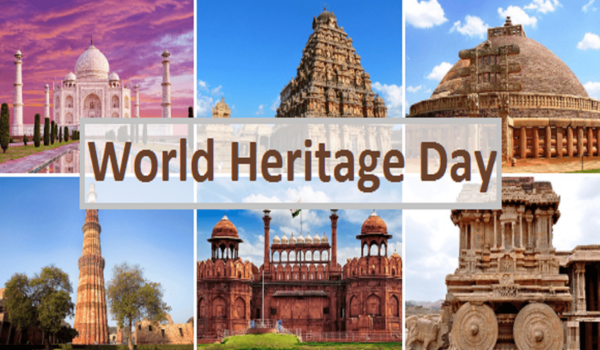
World Heritage Day is being observed globally today. This day promotes awareness about the diversity, vulnerability, and importance of cultural and natural heritage.
World Heritage Day, also known as the International Day for Monuments and Sites, is celebrated annually on 18 April to encourage the protection and conservation of historical sites. This day was established by UNESCO’s General Conference following a proposal by the International Council on Monuments and Sites (ICOMOS). The theme for this year is “Emergency Response for Living Heritage in Contexts of Conflicts and Disasters”, which focuses on strengthening resilience and protecting cultural heritage sites and traditions from crises. Celebrations on this day include visits to monuments, conferences, educational programmes, and photo exhibitions.
Lok Sabha Speaker Om Birla also extended his greetings to citizens of the country. In a social media post, Mr Birla said that India has always been home to historical treasures, architectural marvels, and cultural diversity, which reflect its glorious traditions.
Focus on Living Heritage: This year shifts attention from static physical monuments to “living heritage,” which includes traditions, rituals, oral histories, and traditional knowledge passed through generations.

Every year on April 18, the world pauses to reflect on something priceless – the cultural and natural heritage that defines who we are as a civilisation. This day is called the International Day for Monuments and Sites, popularly known as World Heritage Day. In 2026, the theme chosen by the International Council on Monuments and Sites (ICOMOS) for World Heritage Day 2026 is Emergency Response for Living Heritage in Contexts of Conflicts and Disasters.
For UPSC, APSC, and State PCS aspirants, World Heritage Day is an important topic. It connects directly to GS Paper I (Art and Culture, History), GS Paper III (Environment and Biodiversity for natural heritage sites), and the Current Affairs section. This article covers everything you need to know about World Heritage Site, 2026.
For expert guidance, consider a trusted to strengthen your preparation strategy.

What Is World Heritage Day 2026?
World Heritage Day, officially called the International Day for Monuments and Sites (IDMS), is an international observance dedicated to protecting and celebrating the cultural and natural heritage of humanity. Organisations, governments, schools, universities, and individuals across the world mark this day with events, open-house visits to monuments, workshops, conferences, and awareness campaigns.
The idea for World Heritage Day came from a conference held by ICOMOS in Tunisia on April 18, 1982. ICOMOS proposed that April 18 be designated as an international day to draw attention to the world’s monuments and sites. In 1983, UNESCO officially approved this proposal at its 22nd General Conference. Since then, April 18 has been marked annually as World Heritage Day.
Each year, ICOMOS selects a new theme that reflects the most pressing challenge or opportunity facing global heritage. Activities under this theme include workshops, academic publications, training programmes, emergency response exercises, and public events organised by ICOMOS national and international committees across 180 countries.
What Counts as Heritage?
Heritage is broader than just old buildings. UNESCO and ICOMOS recognise three main types of heritage that World Heritage Day seeks to protect:
1. Cultural Heritage
Cultural heritage includes tangible and intangible elements that communities have created, inherited, and passed down through generations. Tangible cultural heritage includes monuments, groups of buildings, and archaeological sites – from the Taj Mahal to the Colosseum. Intangible cultural heritage includes living traditions, oral histories, performing arts, rituals, festivals, and traditional craftsmanship – things that live in people rather than in stone.
2. Natural Heritage
Natural heritage includes outstanding natural areas and landscapes that hold exceptional universal value from a scientific, conservation, or aesthetic standpoint. Examples include the Sundarbans mangrove forests, the Himalayan ecosystems, and the Serengeti in Africa. Natural heritage sites often support endangered species and unique ecosystems that no other place on Earth replicates.
3. Mixed Heritage
Mixed heritage sites hold both significant cultural and natural value. India has one such site – Khangchendzonga National Park in Sikkim. The park is not only an ecological treasure with the world’s third-highest peak and outstanding biodiversity, but also a sacred landscape deeply connected to the beliefs and traditions of the Lepcha and Bhutia communities.
World Heritage Day 2026: Key Facts
| Fact | Detail |
| Official Name | International Day for Monuments and Sites (IDMS) |
| Popular Name | World Heritage Day |
| Date | April 18 every year (in 2026: Saturday, April 18, 2026) |
| 2026 Theme | Emergency Response for Living Heritage in Contexts of Conflicts and Disasters |
| 2025 Theme | Heritage at Risk from Disasters and Conflicts: Preparedness and Learning from 60 Years of ICOMOS Actions |
| Proposed By | ICOMOS (International Council on Monuments and Sites) on April 18, 1982 |
| Approved By | UNESCO at its 22nd General Conference in 1983 |
| First Celebration | 2001; theme was Save Our Historic Villages |
| ICOMOS Scientific Plan | Triennial Scientific Plan 2024-2027: Disaster and Conflict Resilient Heritage |
| India’s UNESCO WHS Count (2026) | 44 sites (36 Cultural, 7 Natural, 1 Mixed) |
| India’s Global Rank (WHS) | 6th in the world |
| World Total UNESCO WHS | Over 1,220 sites across 168 countries |
| ASI on World Heritage Day | Archaeological Survey of India offers free entry to protected monuments on April 18 |
World Heritage Day 2026 Theme: Explained Simply
The official theme for World Heritage Day 2026 is: Emergency Response for Living Heritage in Contexts of Conflicts and Disasters.
Let us break this down word by word so you understand exactly what ICOMOS means — and why it matters for your exam.
What Is Living Heritage?
Living Heritage refers to cultural practices, traditions, knowledge systems, and expressions that communities actively practise and transmit from one generation to the next. Unlike a stone monument, living heritage lives in people. It includes:
- Traditional music, dance, and performing arts.
- Oral literature, storytelling, and poetry.
- Traditional craftsmanship – pottery, weaving, metalwork, woodcarving.
- Ritual and festive practices – harvests, ceremonies, pilgrimage traditions.
- Traditional knowledge about nature, medicine, and agriculture.
- Sacred natural sites where communities maintain spiritual relationships with landscape.
Because living heritage exists in communities – in people’s bodies, minds, and social practices, it is extremely vulnerable. When communities are displaced by war, floods, or earthquakes, their living traditions often disappear with them. The 2026 theme places living heritage at the centre of the emergency response conversation.
Why Emergency Response?
The 2026 theme fits into ICOMOS’s Triennial Scientific Plan for 2024-2027, which focuses on Disaster and Conflict Resilient Heritage. The plan works in three phases:
- 2025 focused on Preparedness – how do communities and governments prevent or mitigate damage to heritage before disasters strike?
- 2026 focuses on Emergency Response – when a disaster or conflict actually happens, what actions do we take to protect living heritage immediately?
- 2027 will focus on Recovery – how do we help communities rebuild their heritage traditions after a crisis?
Emergency response in the context of heritage is not the same as sending firefighters to a burning building, though it can include that. It involves a wide range of expert actions:
- Emergency monitoring of endangered heritage sites and practices during active crises.
- Safety and security assessments – identifying what is immediately at risk.
- Damage assessments – documenting what has already been lost or damaged.
- People-centred assessments – making sure that humanitarian needs come first, before heritage salvage.
- Activating emergency documentation – recording oral histories, musical traditions, and craft knowledge before they disappear.
Why Conflicts and Disasters?
The specific mention of both conflicts and disasters in the 2026 theme reflects the dual nature of threats to living heritage worldwide. Natural disasters such as earthquakes, floods, cyclones, and wildfires destroy physical sites and displace the communities that sustain living traditions. Armed conflicts and wars target cultural identity deliberately – destroying monuments, banning traditional practices, and forcing populations to flee.
Examples that make this theme vivid and exam-relevant include:
- The conflict in Ukraine has led to the documentation of thousands of folk music recordings, oral histories, and craft traditions on an emergency basis.
- The 2015 Nepal earthquake damaged centuries-old temples and shrines in the Kathmandu Valley, threatening both tangible and intangible heritage.
- Floods in South Asia including India’s northeastern states regularly threaten living cultural practices of tribal and indigenous communities.
- Armed conflicts in West Asia and parts of Africa have led to the deliberate destruction of ancient heritage sites as a form of cultural erasure.
What Does Emergency Response Mean for India?
India is among the countries most vulnerable to natural disasters. The country faces floods, cyclones, earthquakes, landslides, and drought every year. Many of these disasters occur in regions rich with living cultural heritage – the tribal communities of Odisha, Chhattisgarh, and the Northeast; the coastal fishing communities of Andhra Pradesh and Tamil Nadu; the high-altitude villages of Ladakh, Himachal Pradesh, and Uttarakhand.
Furthermore, the 2026 theme connects directly to India’s rich tradition of intangible cultural heritage. India has an enormous inventory of living traditions listed under UNESCO’s Representative List of the Intangible Cultural Heritage of Humanity including Yoga, Vedic chanting, Koodiyattam, the Garba dance of Gujarat, and the Kolkata Durga Puja. Protecting these traditions during emergencies requires not just infrastructure but community-level preparedness and documentation.
ICOMOS and UNESCO: The Organisations Behind World Heritage Day
What Is ICOMOS?
ICOMOS stands for the International Council on Monuments and Sites. It is the world’s only global non-governmental organisation dedicated entirely to the conservation and protection of cultural heritage. ICOMOS was founded in 1965, following the adoption of the Venice Charter of 1964, an international agreement that established standards for the conservation and restoration of ancient monuments and sites.
ICOMOS operates through:
- National Committees in over 110 countries.
- International Scientific Committees specialising in specific types of heritage – prehistoric sites, rock art, vernacular architecture, historic gardens, industrial heritage, and more.
- Working Groups that conduct research and develop best practices for heritage conservation.
ICOMOS also serves as the official advisory body to UNESCO on cultural heritage matters. When a country nominates a site for UNESCO World Heritage status, ICOMOS evaluates the nomination and advises the World Heritage Committee on whether the site truly has Outstanding Universal Value (OUV).
What Is UNESCO’s Role?
UNESCO stands for the United Nations Educational, Scientific and Cultural Organization. It was founded in 1945 as part of the United Nations system. In 1972, UNESCO adopted the Convention Concerning the Protection of the World Cultural and Natural Heritage – commonly called the World Heritage Convention. India ratified this convention on November 14, 1977, making its sites eligible for inclusion on the UNESCO World Heritage List.
The World Heritage Committee, composed of 21 elected member states, meets annually to decide which nominated sites qualify for inscription. Sites must demonstrate Outstanding Universal Value (OUV) – a level of significance so exceptional that it transcends national boundaries and is of importance to all of humanity, present and future.
UNESCO’s World Heritage Centre in Paris maintains and coordinates the World Heritage Programme, provides technical assistance to member states, and coordinates emergency response when heritage sites face threats.
The Venice Charter (1964): The Foundation of Modern Heritage Conservation
Before moving forward, exam aspirants must know the Venice Charter. Adopted in 1964, this international document defined the principles of conservation and restoration of ancient monuments and sites for the first time. It established that:
- Conservation and restoration of monuments must use all the sciences and techniques which can contribute to the study and safeguarding of the architectural heritage.
- The aim of conservation is to safeguard works of art and historical evidence as much as to preserve an aesthetic quality.
- The process of restoration is a highly specialised operation and must stop at the point where conjecture begins.
The Venice Charter directly inspired the creation of ICOMOS in 1965. Understanding this document helps aspirants answer Mains questions on heritage conservation philosophy.
World Heritage Day: Themes Across the Years
ICOMOS assigns a new theme every year. The table below covers recent themes that are relevant to exam preparation:
| Year | Theme |
| 2026 | Emergency Response for Living Heritage in Contexts of Conflicts and Disasters |
| 2025 | Heritage at Risk from Disasters and Conflicts: Preparedness and Learning from 60 Years of ICOMOS Actions |
| 2024 | Disasters and Conflicts Through the Lens of the Venice Charter |
| 2023 | Heritage Changes |
| 2022 | Heritage and Climate |
| 2021 | Complex Pasts: Diverse Futures |
| 2020 | Shared Cultures, Shared Heritage, Shared Responsibility |
| 2019 | Rural Landscapes |
| 2018 | Heritage for Generations |
| 2017 | Heritage and Sustainable Tourism |
| 2016 | Heritage and Sport: Legacy of the Olympic Games |
| 2015 | Monuments and Sites: A Vehicle for Social Cohesion |
UNESCO World Heritage Sites: The Basics Every Aspirant Must Know
What Is a UNESCO World Heritage Site?
A UNESCO World Heritage Site is a place – a monument, a group of buildings, a natural area, or a landscape that UNESCO’s World Heritage Committee has recognised as having Outstanding Universal Value (OUV). This means the site is so exceptional that it transcends national interests and belongs to the heritage of all humanity.
To qualify as a UNESCO World Heritage Site, a nominated place must meet at least one of ten criteria set by UNESCO’s Operational Guidelines. Six of these criteria relate to cultural heritage and four relate to natural heritage.
The Ten UNESCO Criteria:
| Criterion | Type | What It Means |
| i | Cultural | A masterpiece of human creative genius. |
| ii | Cultural | Shows an important interchange of human values over time — in architecture, art, science, town planning, or landscape design. |
| iii | Cultural | Bears a unique or exceptional testimony to a living or disappeared civilisation or cultural tradition. |
| iv | Cultural | An outstanding example of a type of building, architectural or technological ensemble, or landscape that illustrates a significant stage in human history. |
| v | Cultural | An outstanding example of traditional human settlement or land-use, especially if it is becoming vulnerable under the impact of irreversible change. |
| vi | Cultural | Directly associated with events or living traditions, with ideas or beliefs, with works of outstanding universal significance — used only in exceptional or alongside other criteria. |
| vii | Natural | Contains superlative natural phenomena or areas of exceptional natural beauty and aesthetic importance. |
| viii | Natural | Outstanding examples representing major stages of earth’s history — geological processes, biological evolution, geomorphic features. |
| ix | Natural | Outstanding examples of significant ongoing ecological and biological processes in the evolution of ecosystems and communities of plants and animals. |
| x | Natural | Contains the most important and significant natural habitats for in-situ conservation of biological diversity, including those containing threatened species of Outstanding Universal Value. |
India’s UNESCO World Heritage Sites in 2026
As of 2026, India has 44 UNESCO World Heritage Sites. This places India sixth in the world, behind Italy (61), China (60), Germany (52), France (52), and Spain (50). India ratified the World Heritage Convention in 1977 and received its first inscriptions in 1983 — the Ajanta Caves, Ellora Caves, Agra Fort, and the Taj Mahal.
India’s 44 sites divide into three categories:
- 36 Cultural Heritage Sites — temples, forts, ancient ruins, historic cities, and unique burial systems.
- 7 Natural Heritage Sites — national parks and wilderness areas with outstanding biodiversity.
- 1 Mixed Heritage Site — Khangchendzonga National Park in Sikkim (the only site that qualifies on both cultural and natural grounds).
Cultural Heritage Sites: Selected Important Examples
| Site | State / UT | Year Inscribed | Why It Matters |
| Ajanta Caves | Maharashtra | 1983 | Buddhist rock-cut caves with outstanding mural paintings and sculptures; first inscription. |
| Ellora Caves | Maharashtra | 1983 | Rock-cut temples representing Hindu, Buddhist, and Jain traditions together; first inscription. |
| Agra Fort | Uttar Pradesh | 1983 | Mughal military and palatial architecture; associated with Akbar, Jahangir, Shah Jahan, Aurangzeb. |
| Taj Mahal | Uttar Pradesh | 1983 | Supreme masterpiece of Mughal architecture; built by Shah Jahan as a mausoleum for Mumtaz Mahal. |
| Group of Monuments at Hampi | Karnataka | 1986 | Capital of the Vijayanagara Empire; stunning Dravidian temples and royal enclosures. |
| Fatehpur Sikri | Uttar Pradesh | 1986 | Akbar’s planned imperial city; blend of Mughal and Persian architectural styles. |
| Qutb Minar | Delhi | 1993 | Earliest surviving example of Islamic architecture in India; 72.5 metres high. |
| Humayun’s Tomb | Delhi | 1993 | Precursor to the Taj Mahal; first garden tomb on the Indian subcontinent. |
| Chhatrapati Shivaji Maharaj Terminus | Maharashtra | 2004 | Victorian Gothic architecture fused with Indian ornamentation; a functioning railway station. |
| Red Fort Complex | Delhi | 2007 | Mughal imperial palace complex; symbol of India’s sovereignty; Independence Day address site. |
| Jantar Mantar, Jaipur | Rajasthan | 2010 | Astronomical observatory built by Maharaja Sawai Jai Singh II; largest stone sundial in the world. |
| Hill Forts of Rajputana | Rajasthan | 2013 | Six forts — Chittorgarh, Kumbhalgarh, Ranthambore, Amber, Jaisalmer, Gagron — representing Rajput defensive architecture. |
| Dholavira | Gujarat | 2021 | Harappan city of the Indus Valley Civilisation; approximately 5,000 years old; unique water management system. |
| Hoysala Sacred Ensembles | Karnataka | 2023 | Three Hoysala temples — Belur, Halebid, Somanathpura; intricate sculptural decoration. |
| Santiniketan | West Bengal | 2023 | Rabindranath Tagore’s ashram and educational community; distinctive rural university philosophy. |
| Moidams — Ahom Mound-Burial System | Assam | 2024 | Burial mounds of the Ahom dynasty; unique funerary tradition of the northeastern region. |
| Maratha Military Landscapes of India | Maharashtra and Tamil Nadu | 2025 | Twelve forts including Raigad, Shivneri, Pratapgad (Maharashtra) and Gingee (Tamil Nadu); most recent addition. |
Natural Heritage Sites: All Seven
| Natural Heritage Site | State | Year | Key Feature |
| Kaziranga National Park | Assam | 1985 | Home to two-thirds of the world’s great one-horned rhinoceroses. |
| Keoladeo Ghana National Park | Rajasthan | 1985 | Critical wintering ground for migratory birds including the Siberian crane. |
| Manas Wildlife Sanctuary | Assam | 1985 | Biodiversity hotspot at the base of the Himalayas; elephant, tiger, and pygmy hog habitat. |
| Sundarbans National Park | West Bengal | 1987 | World’s largest mangrove forest; home to the Royal Bengal Tiger and Irrawaddy dolphin. |
| Nanda Devi and Valley of Flowers | Uttarakhand | 1988 / 2005 | High-altitude wilderness; rare alpine flowers; snow leopard and Asiatic black bear habitat. |
| Western Ghats | Multiple States | 2012 | One of the world’s eight biodiversity hotspots; spans four states across 1,600 km. |
| Great Himalayan National Park | Himachal Pradesh | 2014 | Protects high-altitude alpine meadows and upper Himalayan wildlife. |
India’s Only Mixed Heritage Site
Khangchendzonga National Park, Sikkim (inscribed 2016) is India’s only UNESCO World Heritage Site in the mixed category. It qualifies on both cultural and natural grounds. Culturally, it holds deep sacred significance for the Lepcha and Bhutia communities, who consider the mountain a living deity. Naturally, it protects a vast range of elevations from 1,220 metres to 8,586 metres, supporting exceptional biodiversity including the snow leopard, Himalayan red panda, and over 550 bird species.
Conclusion:
World Heritage Day 2026, celebrated on April 18, 2026, carries a message of urgency. The theme for 2026 – Emergency Response for Living Heritage in Contexts of Conflicts and Disasters – reminds all of us that heritage is not merely historical. It is alive. It lives in communities, in traditions, in the knowledge systems that make each culture unique. And when disasters strike and conflicts erupt, these living traditions face extinction just as surely as physical monuments.
For UPSC, APSC, and State PCS aspirants, this topic connects GS Paper I (Art and Culture, Ancient and Medieval History), GS Paper II (International Organisations and India’s Foreign Policy), GS Paper III (Disaster Management and Environment), and Current Affairs.
In conclusion, World Heritage Day 2026 highlights the urgent need to protect both cultural and natural heritage, especially in times of conflicts and disasters. Moreover, the focus on living heritage conservation reminds us that traditions, practices, and community knowledge are equally vulnerable. Therefore, governments, institutions, and communities must act together to strengthen heritage protection strategies and emergency response systems. Ultimately, safeguarding UNESCO World Heritage Sites and intangible heritage ensures that future generations inherit a rich and resilient cultural legacy.The theme for 2026 is “Emergency Response for Living Heritage in Contexts of Conflicts and Disasters”. [5, 6]
- Focus on Living Heritage: This year shifts attention from static physical monuments to “living heritage,” which includes traditions, rituals, oral histories, and traditional knowledge passed through generations. [7, 8]
- Urgent Action: It emphasizes the vulnerability of these traditions when communities are displaced by natural disasters like floods and earthquakes or by armed conflicts. [7, 9]
- Resilience Building: The goal is to strengthen emergency response systems and build community resilience to ensure cultural continuity even in crisis situations. [8, 10]
The day serves as a global reminder of several critical preservation needs:
- Combating Global Threats: Sites face increasing risks from climate change, pollution, rapid urbanisation, and neglect.
- Cultural Identity: Heritage is a symbol of shared history and collective memory; losing it means losing a sense of belonging.
- Economic Impact: Preserving these sites boosts local economies through sustainable tourism. [1, 6, 9, 11, 12]
Heritage in India (2026 Context)
As of 2026, India is home to 44 UNESCO World Heritage Sites, reflecting its vast cultural and natural diversity: [8, 13]
On this day, organizations and individuals participate in activities like heritage walks, museum exhibitions, and educational workshops to foster a sense of responsibility toward these irreplaceable landmarks. [5, 13]
Would you like to explore specific local heritage sites or find heritage walk events scheduled near your location?
