
India has been a federal republic since 1950, governed through a democratic parliamentary system. It is a pluralistic, multilingual and multi-ethnic society. The National Portal of India provides single-window access to information and services offered by the government at all levels. India is one of the fastest growing economies of the world and is poised to continue on this path. With aspirations to achieve high middle-income status by 2047. A landmark 2026 study by Climate Trends revealed that indoor temperatures in low- and middle-income urban homes frequently remain above 31°C to 34°C well into the night, exposing millions to continuous, unyielding thermal stress. New study sheds light on indoor, nighttime heat retention in Indian homes even air conditioning cannot mitigate the heat in low-and middle-income housing in Indian cities, mostly built from heat-trapping brick and reinforced concrete, finds analysis.

A new study tracking indoor temperatures inside 50 low-and middle-income homes in Chennai found that temperatures rarely dropped below 31 degrees Celsius (°C) and often remaining above 34°C for hours after sunset, even in winter. Indoor temperatures frequently exceeded 32°C and climbed above 35°C during the warmer months. Relative humidity stayed stubbornly above 75 per cent throughout, a figure that matters for coastal cities like Chennai as humidity amplifies the effects of heat on the body by weakening its primary defence: sweating.
“Most people spend the majority of their time indoors, where they face the dual threats of heat stress and poor air quality. These exposures carry uncertain physiological trade‑offs and add psychological as well as economic strain on individuals and households,” said Naveen Puttaswamy, Associate Professor, Faculty of Public Health, SRIHER, and co-author of the study.
Most alarming was the persistence of night-time heat. Temperatures peaked around 8 and 9 PM, reaching nearly 34.7°C, a delayed surge caused by concrete walls and floors releasing the heat they had been storing since morning. Even in the early morning hours, homes saw little relief, with temperatures hovering around 33.8°C to 34°C.
“Overall, the diurnal profile demonstrates a compressed temperature range with limited fluctuation, indicating that indoor environments do not experience meaningful cooling at any point during the day. This sustained thermal exposure underscores the challenge of achieving thermal comfort—especially during night-time hours when recovery from heat stress is critical,” the report highlighted.
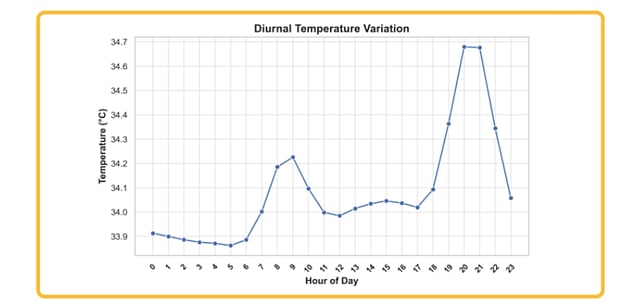
Diurnal Variation in Temperature across 50 HouseholdsSource: Nighttime Thermal Stress in Low & Middle-Income Housing in, Climate Trends
The structural reasons behind this are: construction materials, ventilation, and housing density. Low-and middle-income housing in Indian cities tends to be built from brick and reinforced concrete, materials with high thermal mass that absorb solar radiation efficiently and release it slowly.
Previous research from Ahmedabad and Hyderabad has previously recorded night-time indoor temperatures running 2-5°C hotter than outdoors for exactly this reason.
Across the 50 households studied, nearly all had concrete roofs with similar thermal mass properties. Additionally, income determined whether residents had any means to cope. Every high-income household in the sample had an air conditioner. Every low-income household had only a ceiling fan.
Critically, the report found, that even air conditioning cannot mitigate the baseline heat exposure embedded in the structure itself. RCC buildings retain heat throughout the 24-hour cycle. With the AC turned off, the heat makes itself felt again.
Research published in The Lancet Planetary Health demonstrates strong associations between elevated nighttime temperatures and increased mortality during heat wave events. Sleep studies further indicate that indoor temperatures above 26-28°C significantly impair sleep quality, while temperatures exceeding 30°C contribute to chronic discomfort and cumulative physiological stress.
Aarti Khosla, Founder and Director, Climate Trends said, “The study brings into focus how night-time heat retention must also receive attention. It is concerning to note the level of baseline heat exposure and heat stress for the residents.”
The report was released during the India Heat Summit, 2026. Addressing the summit virtually, Pralhad Joshi, Union Minister for New and Renewable Energy, said, “Rising temperatures and extreme weather events are realities affecting our cities, villages, economies, and our daily lives of citizens. Heat stress has emerged as one of the defining challenges of our times.”
The Mechanism: Why Indoor Nights Are Trapping Heat
Historically, cooler nights provided a physiological window for the human body and the environment to recover from daytime heat. However, a combination of climate change and urbanisation has broken this cycle: Rapid urbanisation fuels alarming heat surge in Bihar

Patna: As skyscrapers rise and roads widen, Bihar’s cities are paying the price of progress – in degrees. Rapid urbanization across Patna and other key urban centres in recent decades has dramatically altered local microclimates, giving rise to a growing and dangerous phenomenon – the urban heat island (UHI) effect.
The RCC Heat Trap: Most modern Indian homes use Reinforced Cement Concrete (RCC) roofing and walls. RCC absorbs intense solar radiation all day and slowly radiates it back inside after dark, causing indoor temperatures to peak between 8 PM and 9 PM rather than midday.
The Humidity Barrier: In coastal and tropical regions, relative humidity stays consistently above 75% at night. High moisture levels stop sweat from evaporating, neutralizing the body’s natural cooling mechanism.
Urban Heat Island (UHI) Effect: Concrete infrastructure, vehicular emissions, and air conditioners trap heat in dense neighborhoods, keeping cities 3°C to 5°C warmer at night than adjacent rural areas. Chennai Residents Face Exposure To Heat Even Indoors: A new study that examined 50 residential units in Chennai’s urban neighbourhoods between October 2025 and April 2026 has revealed that the indoor temperatures frequently exceeded 32 degrees Celsius.

New Delhi:
A new study that examined 50 residential units in Chennai’s urban neighbourhoods between October 2025 and April 2026 has revealed that the indoor temperatures frequently exceeded 32 degrees Celsius.
The worst-affected households recorded between 5,700 and 5,800 hours of exposure above the 32-degree Celsius threshold, equivalent to eight months of continuous heat, the study has found. Titled “Nighttime Thermal Stress in Low and Middle Income Housing in India: Linking Indoor Temperatures and Relative Humidity with Perceptions of Comfort”, the study was released on Wednesday by Climate Trends, a climate-research organisation based in New Delhi.
Every high-income household in the sample had an air-conditioner and every low-income household had only a ceiling fan.
In a statement, Naveen Puttaswamy, associate professor at the Sri Ramachandra Medical College, Chennai, and co-author of the study, said, “Most people spend the majority of their time indoors, where they face the dual threats of heat stress and poor air quality.” “These exposures carry uncertain physiological tradeoffs and add psychological as well as economic strain on individuals and households,” he added. The analysis has found that nighttime (between 8 pm and 6 am) temperatures rarely fell below 31 degrees Celsius even during the cooler months of the study period.
It has also highlighted that relative humidity remained consistently above 75 per cent throughout the nighttime hours, compounding discomfort by limiting the body’s ability to cool itself through evaporation. “The structural characteristics of housing play a decisive role in shaping indoor thermal conditions. Reinforced cement concrete (RCC) used in roofing and walls prolongs indoor heat exposure,” the study said. It noted that even air-conditioning cannot mitigate the baseline heat exposure embedded in the structure itself. RCC buildings retain heat throughout the 24-hour cycle. With the air-conditioner turned off, the heat makes itself felt again.
Severe Health Consequences of Nocturnal Heat Study Highlights Growing Health Risks from Night-Time Heatwaves in India

A new study has revealed that heat risk in Indian cities is increasingly driven not only by daytime heatwaves but also by rising night-time heatwaves and compound heatwaves. Compound heatwaves occur when an intense daytime heatwave is followed by persistently high temperatures during the night.
Importantly, the findings highlight a critical gap in India’s Heat Action Plans (HAPs) and urban climate policies, which largely focus on daytime heatwaves while overlooking night-time heat stress. HAPs are designed to function as early warning systems and preparedness strategies for extreme heat events.
Study Highlights Rising Night-Time Temperatures
Speaking to PTI, Kashif Imdad, co-author of the study and Associate Professor of Geography at Pandit Prithi Nath (PPN) PG College, Kanpur, emphasised that policymakers have yet to fully recognise night-time heat as a major threat.
“Most state and district plans, including the Uttar Pradesh State Plan, focus almost entirely on daytime heatwaves. We have not identified night-time and compound heatwaves as a problem yet,” he said.
Notably, the study’s findings reinforce observations from several earlier research efforts indicating that night-time temperatures in India and globally are steadily increasing.
Evidence from Previous Climate Studies
For example, a 2025 study by the Council on Energy, Environment and Water (CEEW) found that between 2012 and 2022, the number of very warm nights increased faster than very warm days across India.
Furthermore, the analysis revealed that over 70 percent of districts experienced five or more additional very warm nights per summer season (March to June) during this decade.
Health Risks Linked to Hot Nights
These trends are particularly concerning from a public health perspective. When night-time temperatures remain high, the human body struggles to cool down after exposure to intense daytime heat.
Consequently, prolonged heat exposure can significantly increase the risk of heat-related illnesses, including heat stroke, while also aggravating non-communicable diseases such as diabetes and hypertension.
Research on Heatwave Patterns Across Smart Cities
The latest research, titled “Night-time and Compound Heatwaves as Emerging Climate Risks in India’s Smart Cities,” was published in the journal Physics and Chemistry of the Earth on March 12.
As reported by The Hindu Business Line, the study was conducted by Kashif Imdad, Anubha Yadav (PhD scholar at PPN PG College), Archana Chaudhary (researcher at Vikramajit Singh Sanatan Dharma College, Kanpur), and Rayees Ahmed from the Indian Institute of Science (IISc), Bengaluru.
To assess heatwave trends, the researchers developed a Diurnal Persistence Index and analysed 100 Indian smart cities between 2001 and 2024. The study examined the occurrence of daytime, night-time, and compound heatwaves across different geographical regions.
Regional Patterns of Heatwaves in India
The researchers categorised cities into plains, plateau regions, coastal areas, and hill regions to better understand regional variations.
According to Imdad:
- Indo-Gangetic plain cities are experiencing a mixed pattern, where daytime heatwaves are declining while night-time and compound heatwaves are increasing.
- Southern peninsular cities continue to experience dominant daytime heatwaves.
- Coastal and hill cities, on the other hand, are witnessing a higher frequency of night-time heatwaves.
Cities Experiencing the Most Severe Heatwaves
The study also identified cities experiencing the highest frequency and intensity of heatwaves between 2001 and 2024.
- Srinagar recorded the highest frequency of daytime and compound heatwaves among the 100 smart cities analysed.
- Dahod in Gujarat experienced the most intense compound heatwaves.
- Varanasi recorded the most intense night-time heatwaves.
- Imphal experienced the most intense daytime heatwaves.
Urban Planning Solutions to Reduce Night-Time Heat
To address rising night-time temperatures, the researchers emphasised the need to revise Heat Action Plans and urban climate policies. Specifically, authorities should prioritise strategies that reduce night-time heat retention and improve urban cooling.
Key measures suggested in the study include:
- Installing cool roofs
- Improving natural ventilation and ventilation corridors
- Expanding urban greenery and tree cover
These interventions can significantly reduce heat accumulation in densely built urban environments.
Public Health Measures for Extreme Heat
In addition to urban design solutions, the study recommends strengthening public health responses to heat stress. Authorities should consider introducing:
- Hot night warning systems
- Night-time cooling shelters
- Reliable electricity supply for cooling systems
- Risk communication focusing on cumulative heat exposure rather than daytime heat alone
Such measures can help protect vulnerable populations from prolonged heat exposure.
Need for Location-Specific Cooling Strategies
However, Imdad cautioned that heat mitigation strategies must be adapted to local climatic conditions.
For instance, cool roof technology works well in regions where temperatures remain high throughout the year, such as South India or parts of Gujarat. However, the same approach may not be suitable in cities with extreme seasonal temperature variations.
“In places like Lucknow, temperatures may reach 47°C in summer but drop to minus one degree Celsius in winter. If roofs are permanently designed to remain cool, people might benefit during summer but face severe cold during winter,” he explained.
Therefore, he suggested removable cooling solutions for such regions. For example, temporary cool roofs using plants, seeds, or green mats commonly used in nurseries can be installed during summer and removed during winter.
By adopting climate-sensitive urban planning and targeted public health strategies, Indian cities can better prepare for the growing threat of night-time and compound heatwaves in the coming decades.
When indoor environments fail to cool below 26°C–28°C, the health impacts transition from simple discomfort to severe clinical conditions:
[Daytime Heat Exposure] ➔ [No Nighttime Cooling Relief] ➔ [Cumulative Physiological Stress] ➔ [Organ Strain & Heat Stroke]
Cumulative Heat Exhaustion: The human body requires lower nocturnal ambient temperatures to drop its core temperature, regulate its internal clock, and repair tissues. Lacking this, the body stays in a high-stress state, triggering cumulative exhaustion and daytime fatigue.
Unnoticed Dehydration: Fluid loss through sweating continues aggressively during sleep. Because people do not actively drink water while sleeping, they awake with severe dehydration, increasing the risk of kidney strain.
Cardiovascular Strain: To radiate heat, the heart must work significantly harder, pumping blood to the skin. This continuous nocturnal cardiac workload triggers a dangerous rise in blood pressure, strokes, and heart attacks, particularly for individuals with pre-existing hypertension or diabetes.
Unprecedented Nighttime Heat Strokes: Hospitals are increasingly reporting cases of heat exhaustion and severe heat stroke manifesting late at night or early in the morning, driven primarily by non-air-conditioned indoor environments.

Why India’s Cities Must Prepare for Rising Night Heat Recent studies indicate that night-time heatwave health risks are becoming a critical concern for Indian cities as temperatures remain high after sunset. Current Heat Action Plans (HAPs) traditionally focus on daytime extremes. However, new data shows a significant rise in nocturnal temperatures across India. This shift prevents the human body from recovering from daytime heat stress.
Program in Acute Medicine
OC Academy is delighted to announce a highly regarded course in Acute Medicine with elearning material developed by the NHS England Technology Enhanced Learning team, and elearning content authored by members of the Royal Colleges of Physicians, the Royal College of Physicians and Surgeons of Glasgow and the Royal College of Physicians of Edinburgh.
This Global course is structured around critical medical and surgical emergencies and its management. The elearning element is detailed across over 40 sessions, with content authored by members of these esteemed Royal Colleges. From anaphylaxis to acute myocardial infarction, cerebral stroke to renal failure, breathlessness to cardiac arrest, we have everything in the field of Acute Medicine covered for you. This blend of topics is expected to accelerate your dream career in Acute Medicine, straight from where you are, at a pace and place of your liking.
Don’t wait any further. Go ahead and enroll NOW, and upon programme completion, receive a certificate of completion from OC Academy, NHS England and eIntegrity.

The Growing Threat of Compound Heatwaves
A compound heatwave occurs when a scorching day leads directly into an exceptionally warm night. Between 2012 and 2022, very warm nights increased faster than warm days in over 70% of Indian districts. Furthermore, cities in the Indo-Gangetic plain and coastal regions are seeing a dominance of these night-time events. Srinagar and Varanasi have emerged as hotspots for these intense thermal shifts. Therefore, urban climate policies must evolve to address this relentless 24-hour heat cycle.
Night-time heatwave health risks in urban areas
High nocturnal temperatures significantly worsen non-communicable diseases like hypertension. Moreover, the lack of cooling at night increases the likelihood of heat stroke. Medical professionals emphasize that the body needs lower ambient temperatures to regulate its internal clock and repair tissues. Consequently, failing to cool down at night leads to cumulative heat exhaustion. Authorities must prioritize interventions that enhance night-time cooling to protect vulnerable urban populations.
Strategic Interventions for Urban Cooling
To tackle these risks, cities should implement cool roofs and improve natural ventilation corridors. Specifically, experts recommend expanding urban greenery to reduce the “urban heat island” effect. Notably, some regions require removable cooling solutions. For instance, in cities with extreme winters like Lucknow, permanent cool roofs might be hazardous. Instead, residents can use green mats or plants during the summer. Additionally, public health responses should include night-time cooling shelters and reliable electricity for fans and air conditioning.
Frequently Asked Questions
Q1: What defines a compound heatwave in the context of Indian cities?
A compound heatwave occurs when a high-intensity daytime heatwave is immediately followed by a high-temperature night-time heatwave, leaving no period for thermal recovery.
Q2: Why are rising night temperatures more dangerous than daytime heat alone?
Rising night temperatures prevent the body from cooling down after daytime exposure.
Vulnerable Demographics
The impact of indoor nighttime heat is highly inequitable: Sleepless In India: New Study Says How Nights Are Getting Hotter Amid Climate Change, Posing Health Risks Study finds a surge in India’s nighttime temperatures, with cities experiencing 50-80 extra nights above 25°C annually. This increase exacerbates health problems, particularly for vulnerable groups.

A woman suffering from a heat-related illness being brought to LNJP Hospital in New Delhi for treatment. New Delhi: India is experiencing a dramatic increase in nighttime temperatures due to climate change, with significant implications for public health, a new analysis reveals. The study, conducted by Climate Central, shows that the country has been subjected to an additional 50 to 80 nights per year where temperatures exceed 25°C, affecting sleep and exacerbating health problems.
Impact of Rising Nighttime Temperatures
Global mean temperatures have risen by over 1.3°C since 1850, hitting a new peak in 2023. This warming is primarily driven by increased carbon dioxide levels from burning fossil fuels such as coal, oil, and natural gas. The analysis highlights that nighttime temperatures are rising more quickly than daytime temperatures, posing severe health risks. Increased nighttime temperatures make it difficult for people to recover from the heat of the day, leading to a range of health issues. Poor sleep due to hot nights is linked to higher risks of physical and mental health problems, impaired cognitive function, and greater chances of workplace accidents.
Mortality risks are also heightened, with relative mortality risk on hot nights being 50% higher than on cooler nights, says the analysis by Climate Central, an independent group of researchers comprising scientists and communicators. Extreme indoor temperature a growing health hazard in rural areas of India Climate change projections indicate that heavily populated regions across the globe will face a rising occurrence of more frequent, severe, and extended heat waves (HW), accompanied by prolonged periods of extreme heat. These events are poised to trigger widespread overheating in rural areas, leading to heat-related illnesses and mortalities. In this context, our study aimed to examine heat stress vulnerability, heat mitigation measures and indoor discomfort in rural areas. The study was carried out in the rural areas of Wardha district located in the Vidarbha region of Maharashtra, India. The census household survey method was adopted to collect quantitative data during the summer month of 2022. The environmental factors such as indoor temperature, relative humidity and dew point were measured for the period from 1st March 2022 to 30th June 2022. A total of 2,672 individuals (comprising 54 % men and 46 % women) reside in the census survey household (700 households), with 38 % of the population falling within the 21 to 40-year age group. People living in house with cement roofs were less affected with odds of 1.00 (0.78, 1.29) as compared to those with tin roofs. The highest indoor temperature was recorded in the tin roof house, reaching 40.0 °C, while cement slab houses recorded an average temperature of 38.5 °C. The highest temperatures ranged from 35 °C to 37 °C (May 11–18, 2022) and 35 °C to 38 °C (June 1–8, 2022). Notably, 80 % of individuals (2136) reported experiencing at least one self-reported Heat-Related Symptom (HRS), with symptoms such as fatigue (736), heavy sweating (679), intense thirst (518), dry mouth (364), leg cramps (255) and headache (238) were reported commonly. A small number of population experienced Severe Heat-Related Symptoms (HRS) like fainting (2), hallucinations (5) and paranoid feelings (6). While the majority exhibited Mild Heat-Related Symptoms (HRS). The mitigation strategies for extreme temperatures encompass seeking shade (1025), wearing light and loose clothing (881), drinking water frequently before feeling thirsty (802), drinking plenty of water (732), clothing removal for free air/airy dress (376) and covering head with a traditional scarf (253). Development of Heat Action Plan (HAP) will be a crucial step to avoid the HRS at local level. In the preparation of HAP engagement of local level stakeholder is very important for the effective implementation. The findings of the study will help policy makers to understand the implications of change in temperature and its consequences on the population.
Necessary Interventions
To address this silent threat, climate scientists and medical professionals are urging authorities to update standard Heat Action Plans (HAPs), which historically only monitored daytime peak temperatures.

Managing the Health Impact of Night-time Heatwaves
The Rising Threat of Night-time Heatwaves
Indian cities are seeing a rise in night-time heatwaves, which significantly shift urban heat risks. Furthermore, current Heat Action Plans (HAPs) largely overlook these nocturnal events. Consequently, urban populations face prolonged exposure to extreme thermal stress. However, research suggests that compound heatwaves—daytime heat followed by night-time heat—are becoming more frequent. Specifically, over 70% of Indian districts reported additional very warm nights between 2012 and 2022. These findings indicate that daytime warming is no longer the only concern for public health experts. Therefore, clinicians must understand how nocturnal heat impacts physiological recovery.
Health Implications of Night-time Heatwaves
High temperatures during the night prevent the human body from cooling down effectively. Moreover, this lack of recovery time increases the risk of severe heat stroke. Additionally, persistent heat worsens non-communicable diseases like diabetes and hypertension. Research identifies Srinagar as a city with a high frequency of compound events. Similarly, Varanasi recorded the most intense night-time heat. Consequently, doctors should monitor vulnerable patients more closely during these episodes. For instance, elderly patients or those in poorly ventilated housing face the greatest danger. Thus, localized warnings for nocturnal heat are becoming a necessity for clinical safety.
Strategies for Urban Mitigation
Authorities must update urban climate policies to prioritize night-time cooling interventions. Specifically, implementing cool roofs and improving natural ventilation can lower indoor temperatures. Furthermore, expanding urban greenery provides essential cooling corridors for dense neighborhoods. However, experts warn that solutions must fit local climates. For example, removable cool roofs work best in cities like Lucknow where winters are cold. Alternatively, permanent cooling solutions suit South Indian cities better. Consequently, public health responses must include dedicated night-time cooling shelters. Reliable electricity for fans and cooling devices also remains a critical requirement for patient safety.
Passive Cooling Materials: Deploying removable cool roofs, lime-washing, and shading can drop indoor temperatures by several degrees.
Structural Ventilation: Redesigning urban housing guidelines to mandate cross-ventilation and open wind corridors.
Localized Night Warnings: Implementing weather alerts specifically targeting high minimum nighttime temperatures so vulnerable citizens can proactively hydrate and seek cooler spaces. Influence of the shading nets on indoor thermal environment and air-conditioning energy consumption in lightweight buildings. This stage encompassed the construction process of the building using BIM methods and techniques, concluding with the building constructed after passing through the construction tasks required (e.g. obtaining planning permissions, pouring the foundation, framing, and electrical and plumbing installations). This stage included several different tasks involving several experts (e.g. architects, plumbers, and structure engineers) and processes in several areas. This stage included several different tasks involving several experts (e.g. architects, plumbers, and structure engineers) and processes in several areas.
Building Automation and Intelligent Buildings
Today over half the world’s population lives in cities, and over the next 20 years, it is estimated that nearly 10% more will move to cities. This rising demand for urbanization has encouraged greater efficiency. Thus the concept of intelligent buildings, which was introduced in the United States in the early 1980s. With this approach, intelligent buildings employ high-technology electronics extensively to achieve desired results, which basically consisted of integrating four primary groups (energy efficiency, life safety systems, telecommunications systems, and workplace automation) into a single computerized system.
There have been various definitions of intelligent buildings and sustainability. The definition proposed by the Intelligent Building Institute is “an intelligent building is one that provides a productive and cost-effective environment through optimization of its four basic elements—structure, systems, services and management.
interrelationships (correlations and interactions) among conservation projects are often unobserved
This concern is especially relevant when readily available benefit measures (such as soil quality) drive the selection process. Studies examine how targeting conservation can lead to CEC when projects are interrelated (Wu and Boggess, 1999). Interrelationships can take many forms. For instance, preserving habitat on contiguous parcels likely delivers greater benefits than discontiguous parcels, all else equal. In other words, spatial scale matters and there may be a spatial benefit agglomeration. Intelligent buildings help business owners, property managers and occupants to realize their goals in the areas of cost, comfort, convenience, safety, long-term flexibility and marketability.” Regarding sustainability, the ASHRAE GreenGuide defines it as “Providing for the needs of the present without detracting from the ability to fulfill the needs of the future.” An intelligent building, on the other hand, can be said to be one that provides a productive and cost-effective environment through optimization of its basic elements: structure, systems, services and management, and the interrelationships between them. Thomas Hartman, P.E., a building automation expert, on the other hand, believes there are three cardinal elements of an intelligent building.
Building Automation and Intelligent Buildings
The concept of intelligent buildings was introduced in the United States in the early 1980s. With this approach, buildings employ high-technology electronics extensively to achieve desired results, which basically consist of integrating four primary groups (energy efficiency, life safety, telecommunications, and workplace automation) into a single computerized system.
Today over half the world’s population lives in cities, and over the next 20 years, it is estimated that nearly 10% more will move to cities. This rising demand for urbanization has encouraged greater efficiency. Thus the concept of intelligent buildings, which was introduced in the United States in the early 1980s. With this approach, intelligent buildings employ high-technology electronics extensively to achieve desired results, which basically consisted of integrating four primary groups (energy efficiency, life safety systems, telecommunications systems, and workplace automation) into a single computerized system.
There have been various definitions of intelligent buildings and sustainability. The definition proposed by the Intelligent Building Institute is “an intelligent building is one that provides a productive and cost-effective environment through optimization of its four basic elements—structure, systems, services and management—and between them. Intelligent buildings help business owners, property managers and occupants to realize their goals in the areas of cost, comfort, convenience, safety, long-term flexibility and marketability.” Regarding sustainability, the ASHRAE GreenGuide defines it as “Providing for the needs of the present without detracting from the ability to fulfill the needs of the future.” An intelligent building, on the other hand, can be said to be one that provides a productive and cost-effective environment through optimization of its basic elements: structure, systems, services and management, and the interrelationships between them. Thomas Hartman, P.E., a building automation expert, on the other hand, believes there are three cardinal elements of an intelligent building. These are as follows:1.
The Occupants: An intelligent building is one that provides easy access; keeps people comfortable, environmentally satisfied, secure; and provides services to keep the occupants productive for their purpose in the building.2.
Structure and Systems: An intelligent building is one that at a bare minimum significantly reduces environmental disruption, degradation, or depletion associated with the building while ensuring a long-term useful functional capacity for the building.3.
Advanced Technologies: An intelligent building is one that because of its climate and/or use is challenged to meet elements 1 and 2 above, and succeeds in meeting those challenges through the use of appropriate advanced technologies.
Many in the engineering field today understand an intelligent building to be a building that incorporates computer programs to coordinate many building subsystems to regulate the interior temperatures HVAC and providing power. The goal is usually to reduce the operating cost of the building while maintaining the desired environment for the occupants (Fig. 9.6). Often people fail to realize that it is really about the use of advanced technologies to dramatically improve the comfort, environment, and performance of its occupants while minimizing the external environmental impact of its structure and systems. The key phrase here is “comfort of its occupants”—which is what it is all about. In the final analysis, intelligent buildings help property owners and developers as well as tenants to achieve their objectives in the areas of comfort, cost, safety, long-term flexibility, and marketability as well as increased productivity.

Although there are numerous commercial-off-the-shelf Building Automation Systems (BAS) now on the market and the majority of facility and building managers recognize the potential value of such systems as a powerful energy saving tool, if it was not for the initial costs involved there would be no hesitation in employing them. As an example, one basic BAS that is readily available saves energy by widening temperature ranges and reducing lighting in unoccupied spaces and reduces costs for electricity by shedding loads when electricity is higher priced. But Bill Lydon, InTech, Chief Editor, airs a degree of caution and says, “It is easy to label a product with the term commercial off-the-shelf (COTS), and lately it is being done more often as a way to lead buyers to believe it should be the only criteria to select a product. Automation and control professionals should consciously make decisions based on their operational goals.”
In this respect, Kristin Kamm, a senior research associate at E Source notes that some of the most common strategies that BASs employ to cut energy use include:•
Scheduling: Scheduling turns equipment on or off depending on time of day, day of the week, day type, or other variables such as outdoor air conditions.•
Lockouts: Lockouts ensure that equipment does not turn on unless it is necessary.
