
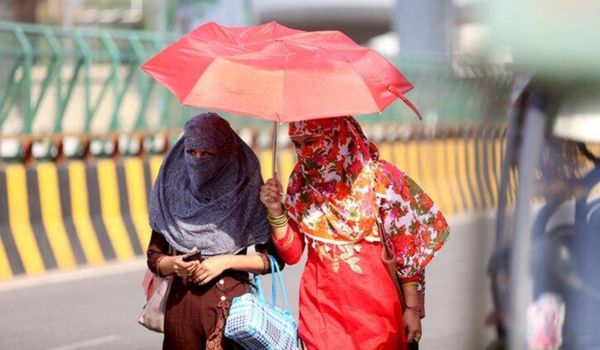
Uttar Pradesh is reeling under a severe heatwave, with record-breaking temperatures being recorded each day.
Banda district in the Bundelkhand region of the state continues to be the hottest place in the country for the third consecutive day, with the maximum temperature reaching 48.2 degrees Celsius. There has been no respite from the scorching heat in other parts of the state as well, with maximum temperatures ranging between 44 and 47 degrees Celsius at many places.
Even nights have become unusually warm, with minimum temperatures hovering close to 30 degrees Celsius in several cities. Animals and birds have been severely affected by the rising mercury levels. Normal life has been disrupted and incidents of heatstroke have increased.
The India Meteorological Department has issued a red alert for severe heatwave conditions in the state for the next two days. Uttar Pradesh was established in 1950 after India had become a republic. This sprawling state is a testament to India’s rich heritage, boasting 3 UNESCO World Heritage Sites – the majestic Taj Mahal, Fatehpur Sikri and Agra Fort. The India Meteorological Department (IMD) has responded by issuing a red alert for severe heatwave conditions across the state’s southern and western belts, warning that the extreme thermal wave will persist over the next 48 hours.
Severe heat wave grips Uttar Pradesh, red alert issued in 11 districts
Lucknow, May 20 (UNI) Uttar Pradesh is reeling under intense heat and heatwave conditions, with Banda remaining the hottest city in the country for the third consecutive day, recording a temperature of 48.2 degrees Celsius on Tuesday, 4.7 degrees above normal.
The previous two days saw temperatures of 47.6 degrees and 46.4 degrees Celsius in Banda too.
The Lucknow Meteorological Centre has issued a red alert for severe heatwave conditions for May 20 and 21. This warning applies to 11 districts, including Banda, Chitrakoot, Prayagraj, Fatehpur, Agra, Firozabad, Etawah, Jalaun, Hamirpur, Mahoba, and Jhansi.
Mohammad Danish, senior scientist at the Meteorological Centre, said, “Heatwave to severe heatwave conditions are likely to prevail during the day in many parts of the southern part of the state and in some parts of the rest of the region.” He said that nights will also be unusually hot in some places, providing no relief from the day’s heat.
The department has warned that severe heatwaves are likely in 14 districts. These include Kaushambi, Pratapgarh, Chandauli, Varanasi, Ballia, Kanpur Dehat, Kanpur City, Rae Bareli, Auraiya, and Lalitpur.
The weather will remain dry across the state, with strong surface winds blowing at speeds of 20 to 40 km per hour. Nights are expected to remain hot in western Uttar Pradesh for the next 48 hours, after which an orange alert may be issued.
On Tuesday, several cities in Uttar Pradesh sweltered above 40 degrees Celsius. Jhansi and Agra recorded 46.5°C, Prayagraj 45.8°C, Orai 45.2°C, Kanpur IAF 44.8°C, Kanpur City 44°C, Meerut 43.6°C, Aligarh 43.4°C, Churak 43.2°C and Etawah 43°C.
The day temperature in Lucknow was 40.9°C and the night temperature was 27.8°C. The maximum and minimum temperatures in Lucknow are expected to be around 42°C and 28°C respectively on Wednesday.
Meanwhile, a report from Varanasi said the increasing heatwave, and humidity have caused immense distress to people.
However, whether it’s hot or cold, nothing can stop faith. Even amidst the intense heat, devotees continue to flock to the Shri Kashi Vishwanath Dham for darshan and worship.
The Shri Kashi Vishwanath Temple Trust has made special arrangements to provide relief from the heat to devotees visiting the shrine. ORS solution and glucose have been provided at various locations throughout the shrine, ensuring relief for visitors from the intense heat.
The Temple Trust has also arranged for a health center, ambulances, and trained personnel to deal with any emergency or adverse situation. If a devotee falls ill, they are immediately provided with medical assistance and transported to the hospital for treatment.
Executive Officer Vishwa Bhushan Mishra stated that high-quality jute mats have been laid throughout the shrine complex to protect devotees’ feet from the hot floor. German hangers and tensile structures have been installed to provide adequate shade along the darshan path. Mist fans have also been installed to reduce the heat and provide coolness to devotees.
Currently, severe heat and a heat wave are prevailing throughout the Varanasi district, with temperatures hovering between 43 and 45 degrees Celsius. Despite these adverse conditions, devotees’ unwavering faith in Baba Shri Kashi Vishwanath remains unwavering. On average, approximately 150,000 devotees visit Shri Kashi Vishwanath Dham daily for darshan.
Keeping in mind the convenience, safety, and health of devotees, the Shri Kashi Vishwanath Temple Trust has ensured extensive and special arrangements within the Dham complex. Purified RO water coolers have been installed at various locations within the Dham complex as per the SOPs set by the Temple Trust. In areas where water coolers are not available, arrangements have been made for cold water in large pots, and temple staff are continuously providing drinking water to devotees through glasses.
The Shri Kashi Vishwanath Temple Trust has appealed to devotees to avoid visiting during the extremely hot afternoon hours, and to begin their journey only after consuming food and sufficient water at home. The elderly, the infirm, and those who are unwell are advised to exercise special caution.
Key Affected Districts
The IMD Lucknow Meteorological Centre has designated a red alert for 11 critical districts, while severe heat warnings encompass a total of 53 districts across the state:
Heatwave grips Uttar Pradesh:Banda records season’s hottest day at 48.2°C; schools shut and no relief expected for 10 days Uttar Pradesh has been reeling under severe heat for the past four to five days. On Tuesday, Banda recorded 48.2°C for the first time this season, making it the hottest city in the country and the third hottest in the world. Banda had earlier recorded 49.2°C in 2022. Weather officials say the four-year-old record could be broken in the coming days. Strong sunshine has been reported across most districts since Wednesday morning. Hot winds and rising humidity have made conditions extremely uncomfortable for residents.
The India Meteorological Department (IMD) has issued a heatwave alert for 53 districts in the state.
Hot winds from Balochistan and Thar desert worsening conditions
According to the IMD, dry and extremely hot winds from Pakistan’s Balochistan region and the Thar desert are directly affecting the plains of north India.
As a result, weather conditions usually seen in late May or June are already being experienced. The department has predicted intense heat across Uttar Pradesh for at least the next 10 days.
Most districts are expected to remain under heatwave conditions, with daytime temperatures likely to range between 45°C and 49°C. People have been advised to avoid going outdoors between 12 noon and 4 pm.
Schools shut in several districts due to heatwave
Amid the severe heat, schools in several districts have been closed. In Mathura, all schools have been shut from May 20 until the start of summer holidays. Camps and special school events have also been banned.
Summer vacations have also been declared in Ambedkar Nagar. In Varanasi, schools up to Class 12 have been closed till May 25. In Kanpur, Agra and Banda, schools up to Class 8 have been shut.
Temple authorities issue advisories
The management of Kashi Vishwanath Temple in Varanasi has advised devotees to avoid visiting during afternoon hours due to the extreme heat. At Banke Bihari Temple in Vrindavan, water is being sprinkled on mats laid on the temple platform to keep them cool for devotees.
iPhones overheat in Lucknow, protests over power cuts
The heat in Lucknow became so intense that iPhones reportedly began showing overheating alerts. Power cuts in several areas also triggered protests by residents late at night.
Senior meteorologist Atul Kumar Singh said weather conditions would remain clear across the state and temperatures in most districts would stay between 45°C and 49°C. He said there was no immediate possibility of relief from the heatwave.
According to him, weather conditions may begin to change after May 29 due to the activation of a new western disturbance. He also said the monsoon could reach Kerala around May 26 and may enter Uttar Pradesh through Gorakhpur around June 18, although the date remains tentative.
Weather forecast for next five days
May 25- Hot winds at speeds of around 40 kmph are expected in western UP, further increasing the heat. Thunderstorms and rain may occur in the north-eastern parts of eastern UP.
May 21- Light showers may occur in some north-eastern parts of eastern UP. Severe heat will continue in western UP.
May 22- Weather will remain clear in western UP with continuing heatwave conditions. Light rain is possible in eastern UP.
May 23- Strong sunshine and heatwave conditions will persist in western UP. Rain is likely in parts of Purvanchal.
May 24- Western UP will witness dry weather with hot winds blowing at speeds of up to 40 kmph. Rain may occur in eastern UP.
Red Alert Districts: Banda is a city and a municipal board in Banda district in the state of Uttar Pradesh, India. Banda is divided among north, east, west and south Banda. AT A GLANCE · Area: 4,408 Sq. Km. · Population: 1,799,410 (Census 2011) · Language: Hindi,Bundeli · Revenue Villages: 761 · Male: 9,65,876 · Female: 8,33,534.

Chitrakoot is a pilgrimage centre and a nagar panchayat in the Satna district in the state of Madhya Pradesh, India. Chitrakoot is a city located in Baghelkhand that has a strong connection with the Ramayana. The city was first mentioned in the Valmiki Ramayan. Chitrakoot is a city located in Baghelkhand that has a strong connection with the Ramayana. The city was first mentioned in the Valmiki Ramayan. Chitrakoot means ‘Hill of many Wonders’. Chitrakoot falls in the Northern Vindhya Range of mountains spread over the State of Uttar Pradesh and Madhya Pradesh.
History
The city of Prayagraj is among the largest cities of Uttar Pradesh and situated at the confluence of three rivers- Ganga, Yamuna and the invisible Saraswati. The meeting point is known as Triveni and is especially sacred to Hindus. The earlier settlements of the Aryans were established in this city, then known as Prayag. Prayagraj is one of the historic and mythological cities of India with glorious past and present. It continues to enjoy the distinction of being a place of haunting and lasting memories. It is a city of mixed culture of Hindu, Muslims, Jains and Christians.
Its sanctity is manifest by references to it in Purans, the Ramayan and the Mahabharata. According to Hindu Mythology, Lord Brahma, the creator God of the Trinity, chose a land on earth (ie Prayag) to perform ‘Prakrista Yag’, at the beginning of the creation and he also refereed to it as Tirth raj or the King of all pilgrimage centres. The bathing at Prayag is mentioned in Brahma Puran – in the month of Magha at the bank of Ganga Yamuna in Prayag bestows results of millions and millions of Ashvmedha Yajna.
Prayag is birth place of Som, Varuna and Prjapati. Prayag has been associated with mythological personalities in Brahmanical(Vedic) and Buddhist Literatures. It was the seat of the great sage Bhardwaj, sage Durvasa and Sage Pannas sage Bhardwaj lived here circa 5000BC and taught more than 10000 disciples. He was the greatest philosopher of ancient world.
The present Jhunsi area, very close to sangam was the kingdom of Chandrabanshiya ( lunar clan ) King Pururava. Nearby Kaushambi bloomed to prosperity during Vatsa and Maurya Rule. The earliest monument of antiques Ashok Pillar with inscriptions of third century B.C. clears the inscriptions of his directions to his fellow Rajas and praise of King Samudragupta. The Chinese traveler Huan Tsang in 643 AD found Prayag inhabited by many Hindus who regarded the place very Holy.
- 1575 AD — Emperor Akbar founded the city in by the name of “ILLAHABAS” which later became ALLAHABAD meant “The City of Allaha” impressed with the strategic importance of the SANGAM. In medieval India the city enjoyed the honour of being the religio-cultural center of India. For a long time it was Provincial capital of the Mughals. Later it was captured by Marathas.
- 1801 AD — British History of the city begun in this year when the Nawab of Oudh ceded it to the British Throne. British army used the fort for their military purposes.
- 1857 AD — The town was the centre of war of Independence and later became the crucible of Indian Freedom Movement against British.
- 1858 AD — The East India Company officially handed over India to British Government here at Minto Park. After the first war of independence the town was named “ALLAHABAD” and was made the capital of United Province of Agra and Oudh.
- 1868 AD — It became a seat of Justice when Allahbad High Court was established.
- 1871 AD — British architect Sir William Emerson erected a majestic monument All Saint Cathedral thirty years before he designed the Victoria Memorial in Kolkata.
- 1887 AD — Prayagraj became a seat of knowledge with the establishment of the fourth oldest University – University of Allahabad. Prayagraj has been rich in numerous Victorian and Georgian buildings made in synthesis with Indian architectural traditions.
This city was the heart of the Indian Freedom Movement against the British rule with Anand Bhawan being the epicentre. It was in Prayagraj (then known as Allahabad) Mahatama Gandhi proposed his program of non-violent resistance to liberate India. Prayagraj has provided the largest number of prime ministers of Post independence India Pt. Jawahar Lal Nehru, Lal Bahadur Shastri, Indira Gandhi, Rajiv Gandhi, V.P.Singh. Former Prime Minister Chandra Shekhar was student of Allahabad university.
Prayagraj is basically an Administrative and Educational city. Fatehpur is a city in the state of Uttar Pradesh, India. Situated between the rivers Ganga and Yamuna. Fatehpur District is one of the 75 districts of Uttar Pradesh state in northern India. The district covers an area of 4152 km². The District Fatehpur is lying in between two big holy rivers of India Ganga and Yamuna. The City of the Taj Mahal: Gateway to Architectural Excellence
Agra is a city that offers a glimpse into a beautiful era. Agra’s rich history is reflected in the numerous monuments scattered in and around the city. The earliest mention of Agra dates back to ancient times, when the epic Mahabharata referred to Agra as “Agravana,” meaning heaven in Sanskrit. Ptolemy, the famous geographer of the 2nd century AD, first referred to Agra by its modern name. Modern Agra was founded in the 16th century by Sikandar Lodi, ruler of the Lodi dynasty. Agra reached its peak of architectural excellence when Shah Jahan ascended the Mughal throne.The city is located on the banks of the Yamuna River in the western part of Uttar Pradesh. The majesty of the Taj Mahal draws people from all over the world to Agra, but it is not the only attraction. The city also boasts numerous impressive tombs and mausoleums. Famous for its exquisite crafts such as pietra dura (marble inlay), carpets, and leather goods, and its delicious petha, Agra is also a great shopping and foodie destination.
Taj Mahal
“The embodiment of all things pure”, said Rudyard Kipling on Taj Mahal’s beauty and that is no wordplay as the Taj is undoubtedly a pure epitome of beauty. It is an immortal poem in white marble and is the finest expression of love of an emperor for his queen. Located on a bank of River Yamuna, it was built by Mughal Emperor Shah Jahan in memory of his beloved wife and Queen Mumtaz Mahal in 1631, who died giving birth to his child and whose last wish to her husband was “to build such a tomb in her memory which the world has never seen before.” It took over 17 years, 22000 workers and 1000 elephants to build the wonderful mausoleum.
The Taj Mahal is one of the three World Heritage Sites in India. Set in a serene Mughal Garden the monument stands on a raised marble platform, with its back towards Yamuna River. The four sides of the Taj Mahal show a perfect symmetry and feature impressive vaulted arches embellished with Pietra Dura scrollwork, and verses from the Quran in calligraphy using inlaid jasper. This architectural masterpiece is one of the most frequented places in India by photographers and foreign tourists. The Taj Mahal looks as immaculate today as when it was first built, leaving the onlookers mesmerized.
Agra Fort
A massive red-sandstone fort located on the banks of River Yamuna was built under the commission of Emperor Akbar in 1565 and was further built by his grandson Shah Jahan. The fort, semi-circular on plan, is surrounded by a 21.4 m high fortification wall. The fort was built primarily as a military structure; parts of it are still reserved under Indian Army. Shah Jahan transformed it into a palace, later it became his gilded prison for eight years after his son Aurangzeb seized power in 1658. The fort houses a maze of buildings, including vast underground sections. The Amar Singh Gate to the south is the sole entry point. A path leads straight from here up to the large Moti Masjid. Just before this is the open Diwan-e-Aam, where Shah Jahan listened to people’s petitions or issues. A small staircase just to the left of Diwan-e-Aam throne leads up to a large courtyard. To the left is a beautiful white marble Nagina Masjid. Other places to see within the Fort are: Diwan-e-Khas – which once housed Shah Jahan’s legendary Peacock throne and the diamond Koh-I-Noor, Shish Mahal- a palace with walls inlaid with tiny mirrors, and Khas Mahal – the white octagonal tower and palace. In the South of the fort, there is a huge red-sandstone Jahangir’s Palace, built by Akbar probably for his son Jahangir.
Sikandra/Akbar’s Tomb
Located in the western periphery of the city, the red-sandstone and marble tomb was built by Emperor Akbar, which was later completed by his son Jahangir. Its interior is covered with exquisite calligraphy that reflects the tenets of Din-e-Ilahi, a religious movement started by Emperor Akbar based on the fusion of primarily Hinduism and Islam including other religions as well. Sikandra is the resting place of the Mughal emperor Akbar and his grave lies here in a dark chamber. The outlying garden which is laid out in the Char Bagh style is yet another attraction of the place.
Itmad-Ud-Daula
A masterpiece of design and construction, this tomb was built under the commission of Empress Noor Jahan in memory of her father Mirza Ghias Beg in 1623-28 A.D. This ornate tomb is considered a precursor of Taj Mahal. It is built completely in white marble and reflects a dazzling charm to the visitors.
Chini Ka Rauza
This place is a mausoleum of Shah Jahan’s Prime Minister and Persian poet Afzal Khan Mullah. It is situated in Etmadpur and is just a Km away from Itmad-ud-Daula. The monument is set amid well-tendered gardens, known for its blue glazed tile. The glazed tiles used in the monument are made from porcelain which is also known as “Chini Mitti” or “Chinese Clay” which is said to be brought from China. The tiles used in the monument can still be seen on a small part of the exterior while most of the interior is painted in Floral Designs. This place is a curtain raiser to an exotic Persian art style, which finds itself a home in Agra. You can visit the place from sunrise to sunset any day.
Mariam’s Tomb
This unique tomb in red sandstone was built in the memory of Emperor Akbar’s wife Mariam Zamani. The tomb is just a km away from the tomb of Akbar. It is situated on the Delhi-Agra National Highway, near Fatehpur Sikri. Born a Rajput Princess, Heer Kunwari was married to Akbar in 1562, and rechristened as Mariam-uz-Zamani. She bore Akbar a son, the future king, Jahangir. After her death in 1623, Jahangir built a tomb for her close to Sikandra. The tomb has exceptional carvings and the ground floor consists of some forty chambers built by Sikandar Lodi, which bear faint traces of paintings on plastered walls. The centre of the ground floor houses the cenotaph of Mariam. The facades of the baradari had been covered with red sandstone, which is cut into numerous panels and adorned with geometrical patterns carved in bas-relief. Each quoin of the structure is added with an ornamental octagonal tower. The tower is crowned by a pavilion supported by slender pillars. The upper storey contains the marble cenotaph, which is open to sky.
Ram Bagh
Ram Bagh is one of the earliest Mughal gardens, believed to be laid out by Mughal Emperor Babur, the founder of Mughal Dynasty. The Garden is located just 3 KMs away from the Tomb of Itmad-Ud_Daula and 500 meters away from the Chini ka Rauza. It is Agra’s oldest garden which was established in 1528, and is an oasis in the thick of a bustling market. It is said that Babur was temporarily buried here before being taken to Kabul in Afghanistan. It was established by Babur and was later renovated by Noor Jahan, wife of Jahangir.
Nagina Mosque
Nagina Masjid is a beautiful mosque located in Agra Fort. It is located near Moti Masjid. This mosque is constructed with pure white marble and hasabeautifully designed prayer chamber. The Mosque built in the north-western corner of the Machchi Bhawan was meant for the personal use of the Emperor. It has a marble paved court enclosed by walls to the north, south and east and the prayer chamber on the west. The prayer chamber is also made up of marble and has three domes on its top. The mosque has a three-arched façade with the cusps and supported on slender piers as its entrance. The arch in the middle is larger and has nine cusps and ones on the either sides have seven cusps only.
Mehtab Bagh
Mehtab Bagh is located on the left Bank of River Yamuna opposite to the Taj Mahal. This park is originally built by Emperor Babur as the last series of the 11 parks on the Yamuna’s bank.The garden complex, square in shape, measures about 300 by 300 metres (980 ft × 980 ft) and is perfectly aligned with the Taj Mahal on the opposite bank.The excavation has revealed a huge octagonal tank at center and a gateway at the northern wall.This is now one of the best places to view the great mausoleum.
Jama Masjid
The Jama Masjid is one of the Largest Mosque built by the Mughals in India. This Masjid houses a rectangular open forecourt constructed in 1648 A.D by Shah Jahan’s daughter, Jahanara Begum. The architecture of this monument is done beautifully while imbibing the Iranian architecture and is built using red sandstone and white marble .The construction of Jama Masjid required some 5,000 workers and was completed in a time period of 6 years.
Guru Comes
Guru Ka Taal is a very famous Gurudwara in Agra. The construction of this place was started in the 1970’s and it is said that the four out of the 10 Sikh gurus are said to have paid it visit. This Gurudwara has both historical and religious importance, and attracts large number of devotees and tourists. Every year thousands of devotees gather here to pay homage to the great Sikh guru. This beautiful structure is reckoned among the magnificent architectural wonders of India. Boasting elaborate stone carvings this Gurudwara beckons travellers from far and away to bask in its glory.
Food to Eat in Agra
Something
Agra is famous for its Petha. It is a sweet made from white pumpkin or ash gourd and is infused with different flavors. This delicious sweet is found in many different varieties and shapes. The twopopular varieties of Petha are – the dry, hard and chewy ones and the other is soft and syrupy. The Petha is available in many variants like plain (white), Kesar(saffron),Angoori Petha and Paan Petha to name a few. Petha is believed to have medicinal traits and is considered beneficial for blood pressure, hydration, brain growth, and more. The best place to buy Petha in Agra is Panchi Petha located at Hari Parvat Crossing.
Dalmoth
Dalmoth is a mixture of nuts, spices, lentils and oil. It is a traditional Namkeen crispy, spicy, and a little bit greasy. The best Dalmoth can be found in Panchi Petha and Baluganj .This tastes best with a cup of tea when you wish to munch something crunchy.The Dalmoth is packaged in boxes and bags, this traditional namkeen (snack) will overwhelm your taste buds with a spicy flavor.
Bedhai & Jalebi
Bedhai is a typical breakfast, usually served at street stands in Agra. This is a sweet and spicy combination which consists of two parts: spicy bedhai and sweet Jalebi. Bedai is a fried, puffy bread,which resembles Kachori and is served with a bowl of spicy sabzi dotted with hunks of potato and a dollop of curd.The jalebi, is a luscious dessert which is made out of fermented batter which is fried and then soaked in hot sugary syrup. This is a balanced breakfast and can be found in every corner of the city. The Famous point where one can find delicious Bedhai and Jalebi are GMB and Shree ji sweets on Fatehabad road.
Paratha
Paratha is a famous dish of the Mughlai Cuisine and Agra is famous for it. Parathas in Agra are mostly vegetarian, made with pan fried flat wheat bread which is stuffed with potatoes, cauliflower, carrots and cheese. Parathas will satisfy your craving for traditional Indian flavors. People usually eat them in breakfast accompanied with curd, pickle and chutney and it is said to be a wholesome and nourishing Indian Breakfast. When in Agra Rambabu parathe wale on old Delhi Agra highway are the famous Paratha points serving mouth-watering parathas.
Mughlai Food
The Mughlai Food is a souvenir of the Mughal era in India.The food has been borrowed from the Mughal kitchen.The Mughlai dish mainly consists of meat enriched with creamy, boldly flavoured curries; with lots of dried fruits with ground as well as whole spices. As time passed, the Mughlai dishes travelled from Agra to different parts of North India. However, the taste of Mughlai food in Agra is special and delicious. When the Mughals made Agra the Capital city of India in the 16th century, they left indelible imprints on the cuisine of Agra. The best places to get the lip smacking and original taste of the Mughlai food in Agra are areas like Nai ki Mandi area on MG road, Indiana, Pinch of Spice, Taj Mahal Restaurants on Fatehabad road
Chaat
Chaat is very popular in Agra as a part of snacks, especially Dahi-bhalla, Raj kachori, samosas, and gol gappas. While talking about Agra we shall only focus on the Bhallas as it is city’s favourite. The bhalla in Agra is a fried potato and chickpea patty that’s smashed open and topped with grated ginger and a spicy-sweet tamarind sauce. The Bhallas here are made bigger and crispier than the others. This is a perfectly satisfying snack that can only be found on the streets of Agra. To enjoy the true taste of the chaat in Agra one can explorechaat wali gali in sadar bazar.
Fairs & Festivals in Agra:
Taj Mahotsav
Taj Mahotsav is the most famous festival in Agra organized in the month of February for a period of 10 days. The festival organized by Uttar Pradesh Tourism is aimed to promote the creative art craftsmen and help them showcase their respective skills. Arts, crafts, cultures, different kinds of food and traditions of the country are at display here. Various traditional performances by local artists also take place at the Taj Mahotsav. Also, there are camels and elephant rides which attract the kids. The festival is celebrated to welcome spring with pomp and show. It begins with a huge procession with decorated camels and elephants and following them are folk artists who display their respective arts. Chikankars from Lucknow, Handmade Carpet makers from Bhadohi, Wood Carvers from Saharanpur all come here to display their excellent work. Beyond these other major attractions include – famous pottery from Khurja, beautiful silk sarees from Varanasi, Sapera dance form of Rajasthan, famed Nautanki of Uttar Pradesh and Lavani dance of Maharashtra and many more.
Bateshwar Fair
Bateshwar is a small town located 70 km away from Agra. The name of the town comes from the deity called Bateshwar Mahadev. Bateshwar is culturally and spiritually significant because of its 108 temples belonging to many different goddesses and gods of Hindu religion. An annual fair is organized here during the months of October and November. This festival is celebrated in honour of Lord Shiva and lasts for a month. Lord Shiva’s devotees come here to take dip in the holy Yamuna. A cattle and livestock fair is also arranged at the celebrations. The festivities extend all the way to Agra.
Ram Barat
Ram Baraat is organized annually before the festival of Dussehra. It is celebrated as ‘barat’ or marriage procession of Lord Rama. The festival is actually a part of the re-enactment of Ramleela which finishes into the celebrations of Dussehra with the execution of effigy of Ravana by Lord Rama. ‘Janakpuri’ the palace of Sita is setup at a venue where the ‘baraat’ arrives. The procession highlight is the colorful and decorated ‘Jhankis’ that are carried. The venue is where the fair takes places and people of faith flock here to witness the wedding. The idols of Lord Rama and his brothers are decorated with jewels and are placed on a chariot which is a part of the procession.
Kailash Fair
On the outskirts of Agra, a Kailash fair is organized at Kailash temple to honour Lord Shiva. Organized in the month of August or September, it marks the auspicious sighting of Lord Shiva as the ‘Lingam’. Devotees from Agra and nearby areas come to attend this fair.
Things to do in Agra
Taj Mahal at Sunrise and Sunset
The best view of the Taj Mahal is during sunrise. There are fewer crowds, the air is cool and pleasant. Sunset is another time to enjoy the white marble masterpiece.
Taj Mahal for five nights during full moon
It is said that during the full moon the light from the moon illuminates the Taj Mahal not seen on a regular light. It is a sight to behold for one and all. It is available to seen for five days around new moons. The tickets can only be bought a day in advance and entries are also limited.
Taj Nature Walk
Many different locations in the city offer great and artistic views of the Taj Mahal. One such spot is 500m away located on the East gate road of Taj. It is a maintained lush 180 acre garden that has 20 ft high watch towers for perfect views of the white marble magnificence. It is advisable to visit during sunrise and sunset to get splendid views.
Nearby Excursions
Fatehpur Sikri
Perched atop a rocky ridge, 37 KM west of Agra, Fatehpur Sikri came into being centuries ago as a city of victory for Emperor Akbar. The city’s red sandstone architecture and intricate carvings give a dreamy experience.
Mathura
Located at a distance of 49 KM from Agra, Mathura is the birthplace of Lord Krishna. Dotted with magnificent temples depicting the various phases of Lord Krishna’s life it takes the devotees back to the divine era.
On Sarovar Bird Sanctuary
Escape the hullaballoo of the city with this beautiful place tucked away 26 Kms outside the city of Agra. Winter time is best to catch a sight of the beautiful migratory birds here.

Firozabad is a city near Agra in Firozabad district in the state of Uttar Pradesh in India. Firozabad is a city and district headquarters of Uttar Pradesh. This city is famous for the construction of bangles. Etawah (IAST: Iṭāvā), also known as Ishtikapuri, is a city situated on the banks of Yamuna River in the state of Uttar Pradesh in India. Jalaun is a city in Uttar Pradesh state in northern India. The town was formerly the residence of a Maratha governor. Jalaun district is a district of Uttar Pradesh, India. The district is named after the town of Jalaun, which was the former headquarters of a Maratha governor.
Hamirpur town is the district headquarters. It consists of Four Tehsil namely Hamirpur, Maudaha, Rath,Sarila and Seven Blocks namely Gohand, Kurara, Maudaha. Hamirpur district is a part of Chitrakoot Division. The district occupies an area of 4,121.9 km 2. Mahoba is a city in Mahoba District of the Indian state of Uttar Pradesh [3] in the Bundelkhand region, well known for the ninth century granite Sun temple. AT A GLANCE · Area: 2884 Sq. Km. · Population: 875968 · Language: Hindi · Villages: 521 · Male: 466358 · Female: 409600. Covid19 Related Information. Mahoba is a city located in the Indian state of Uttar Pradesh, in the Bundelkhand region. Mahoba is known for its closeness to Khajuraho, Laundi. Jhansi is a historic city in the Indian state of Uttar Pradesh. (Toshan) Balwant Nagar was the old name of Jhansi. Discover the rich history, culture, and attractions of Jhansi, Uttar Pradesh. Explore the city’s temples, monuments, and markets. DISTRICT AT A GLANCE · Jhansi The City Of Valour (CTB) · List of Collectors / District Magistrate · Public Representatives · List of Development Works.
Severe Heatwave Areas:The present Kaushambi district was carved out of Allahabad district on 4th April 1997. The District Headquarter, Manjhanpur is situated in the south-west. Kaushambi district is a district in the state of Uttar Pradesh in India. Manjhanpur is the district headquarters. Pratapgarh district is one of the districts of Uttar Pradesh in India. Pratapgarh administrative headquarters is located in Pratapgarh city.At a Glance · Area: 3730 Sq.km. · Population: 32,09141 · Language: Hindi · Village: 2266 · Male: 16,06085 · Female: 16,03056. Pratapgarh is a town and municipality in the state of Uttar Pradesh in India. Pratapgarh is the administrative headquarters of Pratapgarh. The District Chandauli is located in 24° 56′ to 25° 35′ to north and 81° 14′ to84° 24′ east at a distance of about 30 kms east-south-east of Varanasi. Chandauli district, a part of Varanasi Division, became a separate district on 20 May 1997.Chandauli district is located in south eastern Uttar Pradesh.
