
The National Human Rights Commission (NHRC) of India is the country’s independent statutory watchdog responsible for protecting and promoting rights relating to life, liberty, equality, and dignity. NHRC – Protecting & Promoting Life, Liberty, Equality & Dignity for all the National Human Rights Commission (NHRC) of India was established on 12 October 1993. The statute under which it is established is the Protection of Human Rights Act (PHRA), 1993 as amended by the Protection of Human Rights (Amendment) Act, 2019.
Section 2(1)(d) of the PHR Act, 1993 defines Human Rights as the rights relating to life, liberty, equality and dignity of the individual guaranteed by the Constitution or embodied in the International Covenants and enforceable by courts in India.
It is in conformity with the Paris Principles, adopted at the first international workshop on National Institutions for the Promotion and Protection of Human Rights held in Paris in October 1991, and endorsed by the General Assembly of the United Nations by its Regulations 48/134 of 20 December 1993.
The NHRC is an embodiment of India’s concern for the promotion and protection of human rights.
Core Overview
- Establishment: Founded on 12 October 1993 under the Protection of Human Rights Act (PHRA).
- Global Alignment: Formed in conformity with the Paris Principles for national human rights institutions.
- Headquarters: Located at Faridkot House in New Delhi.
- Leadership: Justice V. Ramasubramanian serves as the current Chairperson.
National Human Rights Commission (NHRC)
Why in News
Human Rights Day is observed every year on 10th December – the day the United Nations General Assembly adopted, in 1948, the Universal Declaration of Human Rights (UDHR).
- The UDHR established a set of common basic values both with regard to the view of human beings and to the relationship between the state and the individual.
- 2020 Theme: Recover Better – Stand Up for Human Rights.
Key Points
- Human Rights:
- These are rights inherent to all human beings, regardless of race, sex, nationality, ethnicity, language, religion, or any other status.
- These include the right to life and liberty, freedom from slavery and torture, freedom of opinion and expression, the right to work and education, and many more.
- Nelson Mandela had stated ‘To deny people their human rights is to challenge their very humanity’.
- International Human Rights Conventions and Bodies:
- Universal Declaration of Human Rights (UDHR):
- The 30 rights and freedoms include civil and political rights, like the right to life, liberty, free speech and privacy and economic, social and cultural rights, like the right to social security, health and education, etc.
- India took active part in drafting of the UDHR.
- The UDHR is not a treaty, so it does not directly create legal obligations for countries.
- The 30 rights and freedoms include civil and political rights, like the right to life, liberty, free speech and privacy and economic, social and cultural rights, like the right to social security, health and education, etc.
- Universal Declaration of Human Rights (UDHR):
Protesting is a Fundamental Right: UN
United Nations
What is the UN?
The United Nations (UN) is an international organization founded in 1945. It is currently made up of 193 Member States.
Its mission and work guided by the purposes and principles contained in its founding Charter and implemented by its various organs and specialised agencies.
Its activities include maintaining international peace and security, protecting human rights, delivering humanitarian aid, promoting sustainable development and upholding international law.
What is the History of UN Foundation?
- In 1899, the International Peace Conference was held in The Hague to elaborate instruments for settling crises peacefully, preventing wars and codifying rules of warfare.
- It adopted the Convention for the Pacific Settlement of International Disputes and established the Permanent Court of Arbitration, which began work in 1902. This court was the forerunner of UN International Court of Justice.
- The forerunner of the United Nations was the League of Nations, an organization conceived in circumstances of the First World War, and established in 1919 under the Treaty of Versailles “to promote international cooperation and to achieve peace and security.”
- The International Labour Organization (ILO) was also created in 1919 under the Treaty of Versailles as an affiliated agency of the League.
- The name “United Nations”, coined by United States President Franklin D. Roosevelt. A document called The Declaration by United Nations was signed in 1942 by 26 nations, pledging their Governments to continue fighting together against the Axis Powers (Rome-Berlin-Tokyo Axis) and bound them against making a separate peace.
- United Nations Conference on International Organization (1945)
- Conference held in San Francisco (USA), was attended by representatives of 50 countries and signed the United Nations Charter.
- The UN Charter of 1945 is the foundational treaty of the United Nations, as an inter-governmental organization.
What are the Components of the UN?
The main organs of the UN are
- the General Assembly,
- the Security Council,
- the Economic and Social Council,
- the Trusteeship Council,
- the International Court of Justice,
- and the UN Secretariat.
All the 6 were established in 1945 when the UN was founded.
1. General Assembly
- The General Assembly is the main deliberative, policymaking and representative organ of the UN.
- All 193 Member States of the UN are represented in the General Assembly, making it the only UN body with universal representation.
- Each year, in September, the full UN membership meets in the General Assembly Hall in New York for the annual General Assembly session, and general debate, which many heads of state attend and address.
- Decisions on important questions, such as those on peace and security, admission of new members and budgetary matters, require a two-thirds majority of the General Assembly.
- Decisions on other questions are by simple majority.
- The President of the General Assembly is elected each year by assembly to serve a one-year term of office.
- Recently, they was elected the President of the 76th session of the UNGA for 2021-22
- 6 Main Committees: Draft resolutions can be prepared for the General Assembly by its six main committees: (1) First Committee (Disarmament and International Security), (2) Second Committee (Economic and Financial), (3) Third Committee (Social, Humanitarian, and Cultural), (4) Fourth Committee (Special Political and Decolonization), (5) Fifth Committee (Administrative and Budgetary), (6)Sixth Committee (Legal).
- Each Member State may be represented by one person on each Main Committee and on any other committee that may be established upon which all Member States have the right to be represented.
- Member States may also assign advisers, technical advisers, experts or persons of similar status to these committees.
- Other Committees:
- General Committee: It meets periodically throughout each session to review the progress of the General Assembly and its committees and to make recommendations for furthering such progress. It is composed of the President of the General Assembly and 21 Vice-Presidents of the Assembly and the Chairmen of the six Main Committees. The five permanent members of the Security Council serve as Vice-Presidents, as well.
- Credentials Committee: It is mandated to examine the credentials of representatives of Member States and to report to the General Assembly.
2. Security Council
- It has primary responsibility, under the UN Charter, for the maintenance of international peace and security.
- The Security Council is made up of fifteen member states, consisting of five permanent members—China, France, Russia, the United Kingdom, and the United States—and ten non-permanent members elected for two-year terms by the General Assembly on a regional basis.
- In January 2022, (Albania, Brazil, Gabon, Ghana and the United Arab Emirates) after Estonia, Niger, St Vincent and the Grenadines, Tunisia and Vietnam finished their terms.
- Albania is joining for the first time while Brazil is taking an 11th turn. Gabon and Ghana each have been on the council three times before and the UAE once.
- India, for the eighth time, entered the UNSC in 2021 and is on the council for two years i.e 2021-22.
- “Veto power” refers to the power of the permanent member to veto (Reject) any resolution of Security Council.
- The unconditional veto possessed by the five governments has been seen as the most undemocratic character of the UN.
- Critics also claim that veto power is the main cause for international inaction on war crimes and crimes against humanity.
- However, the United States refused to join the United Nations in 1945 unless it was given a veto.
- The absence of the United States from the League of Nations contributed to its ineffectiveness.
- Supporters of the veto power regard it as a promoter of international stability, a check against military interventions, and a critical safeguard against U.S. domination.
3. Economic and Social Council (ECOSOC)
- It is the principal body for coordination, policy review, policy dialogue and recommendations on economic, social and environmental issues, as well as implementation of internationally agreed development goals.
- It has 54 Members, elected by the General Assembly for overlapping three-year terms.
- It is the United Nations’ central platform for reflection, debate, and innovative thinking on sustainable development.
- Each year, ECOSOC structures its work around an annual theme of global importance to sustainable development. This ensures focused attention, among ECOSOC’s array of partners, and throughout the UN development system.
- It coordinates the work of the 14 UN specialized agencies, ten functional commissions and five regional commissions, receives reports from nine UN funds and programmes and issues policy recommendations to the UN system and to Member States.
UN bodies within the purview of the ECOSOC:
| Specialized agenciesInternational labour Organization (ILO)Food and Agriculture Organization of the United Nations (FAO)United Nations Educational, Scientific and Cultural Organization (UNESCO)World Health Organization (WHO)World Bank GroupInternational Monetary Fund (IMF)International Civil Aviation Organization (ICAO)International Maritime Organization (IMO)International Telecommunication Union (ITU)Universal Postal Union (UPU)World Meteorological Organization (WMO)World Intellectual Property Organization (WIPO)International Fund for Agricultural Development (IFAD)United Nations Industrial Development Organization (UNIDO)World Tourism Organization (WTO)Functional commissionsStatistical CommissionCommission on Population and DevelopmentCommission for Social DevelopmentCommission on Human RightsCommission on the Status of WomenCommission on Narcotic DrugsCommission on Crime Prevention and Criminal JusticeCommission on Science and Technology for DevelopmentCommission on Sustainable DevelopmentUnited Nations Forum on ForestsRegional CommissionsEconomic Commission for Africa (ECA)Economic and Social Commission for Asia and the Pacific (ESCAP)Economic Commission for Europe (ECE)Economic Commission for Latin America and the Caribbean (ECLAC)Economic and Social Commission for Western Asia (ESCWA)Standing CommitteesCommittee for Programme and CoordinationCommission on Human SettlementsCommittee on Non-Governmental OrganizationsCommittee on Negotiations with Intergovernmental AgenciesCommittee on Energy and Natural Resources | Ad hoc bodiesAd Hoc Open-ended Working Group on InformaticsExpert bodies composed of governmental expertsCommittee of Experts on the Transport of Dangerous Goods and on the Globally Harmonized System of Classification and Labelling of Chemicals.United Nations Group of Experts on Geographical NamesExpert bodies composed of members serving in their personal capacityCommittee for Development PolicyMeeting of Experts on the United Nations Programme in Public Administration and FinanceAd Hoc Group of Experts on International Cooperation in Tax MattersCommittee on Economic, Social and Cultural RightsCommittee on Energy and Natural Resources for DevelopmentPermanent Forum on Indigenous IssuesRelated bodiesInternational Narcotics Control BoardBoard of Trustees of the International Research and Training Institute for the Advancement of WomenCommittee for the United Nations Population AwardProgramme Coordination Board of the Joint United Nations Programme on HIV/AIDSFunds and programmes which send reports to ECOSOCUnited Nations Children’s Fund (UNICEF)United Nations Conference on Trade and Development (UNCTAD)United Nations Development Fund for WomenUnited Nations Development Programme (UNDP)United Nations Environment Programme (UNEP)Office of the United Nations High Commissioner for Refugees (UNHCR)United Nations Population Fund (UNFPA)United Nations Relief and Works Agency for Palestine Refugees in the Near East (UNRWA)Office for Drug Control and Crime Prevention (ODCCP)World Food Programme (WFP)UN-HABITAT |
4. Trusteeship Council
- It was established in 1945 by the UN Charter, under Chapter XIII.
- Trust territory is a non-self-governing territory placed under an administrative authority by the Trusteeship Council of the United Nations.
- A League of Nations mandate was a legal status for certain territories transferred from the control of one country to another following World War I, or the legal instruments that contained the internationally agreed-upon terms for administering the territory on behalf of the League of Nations.
- United Nations trust territories were the successors of the remaining League of Nations mandates, and came into being when the League of Nations ceased to exist in 1946.
- It had to provide international supervision for 11 Trust Territories that had been placed under the administration of seven Member States, and ensure that adequate steps were taken to prepare the Territories for self-government and independence.
- By 1994, all Trust Territories had attained self-government or independence. The Trusteeship Council suspended operation on 1 November 1994.
5. International Court of Justice (ICJ)
- The International Court of Justice is the principal judicial organ of the United Nations. It was established in June 1945 by the Charter of the United Nations and began work in April 1946.
- The ICJ is the successor of the Permanent Court of International Justice (PCIJ), which was established by the League of Nations in 1920.
6. Secretariat
- The Secretariat comprises the Secretary-General and tens of thousands of international UN staff members who carry out the day-to-day work of the UN as mandated by the General Assembly and the Organization’s other principal organs.
- The Secretary-General is chief administrative officer of the Organization, appointed by the General Assembly on the recommendation of the Security Council for a five-year, renewable term.
Antonio Guterres: 2nd Term UN Secretary General
Why in News
What is the UN?
The United Nations (UN) is an international organization founded in 1945. It is currently made up of 193 Member States.
Its mission and work guided by the purposes and principles contained in its founding Charter and implemented by its various organs and specialised agencies.
Its activities include maintaining international peace and security, protecting human rights, delivering humanitarian aid, promoting sustainable development and upholding international law.
What is the History of UN Foundation?
- In 1899, the International Peace Conference was held in The Hague to elaborate instruments for settling crises peacefully, preventing wars and codifying rules of warfare.
- It adopted the Convention for the Pacific Settlement of International Disputes and established the Permanent Court of Arbitration, which began work in 1902. This court was the forerunner of UN International Court of Justice.
- The forerunner of the United Nations was the League of Nations, an organization conceived in circumstances of the First World War, and established in 1919 under the Treaty of Versailles “to promote international cooperation and to achieve peace and security.”
- The International Labour Organization (ILO) was also created in 1919 under the Treaty of Versailles as an affiliated agency of the League.
- The name “United Nations”, coined by United States President Franklin D. Roosevelt. A document called The Declaration by United Nations was signed in 1942 by 26 nations, pledging their Governments to continue fighting together against the Axis Powers (Rome-Berlin-Tokyo Axis) and bound them against making a separate peace.
- United Nations Conference on International Organization (1945)
- Conference held in San Francisco (USA), was attended by representatives of 50 countries and signed the United Nations Charter.
- The UN Charter of 1945 is the foundational treaty of the United Nations, as an inter-governmental organization.
What are the Components of the UN?
The main organs of the UN are
- the General Assembly,
- the Security Council,
- the Economic and Social Council,
- the Trusteeship Council,
- the International Court of Justice,
- and the UN Secretariat.
All the 6 were established in 1945 when the UN was founded.
1. General Assembly
- The General Assembly is the main deliberative, policymaking and representative organ of the UN.
- All 193 Member States of the UN are represented in the General Assembly, making it the only UN body with universal representation.
- Each year, in September, the full UN membership meets in the General Assembly Hall in New York for the annual General Assembly session, and general debate, which many heads of state attend and address.
- Decisions on important questions, such as those on peace and security, admission of new members and budgetary matters, require a two-thirds majority of the General Assembly.
- Decisions on other questions are by simple majority.
- The President of the General Assembly is elected each year by assembly to serve a one-year term of office.
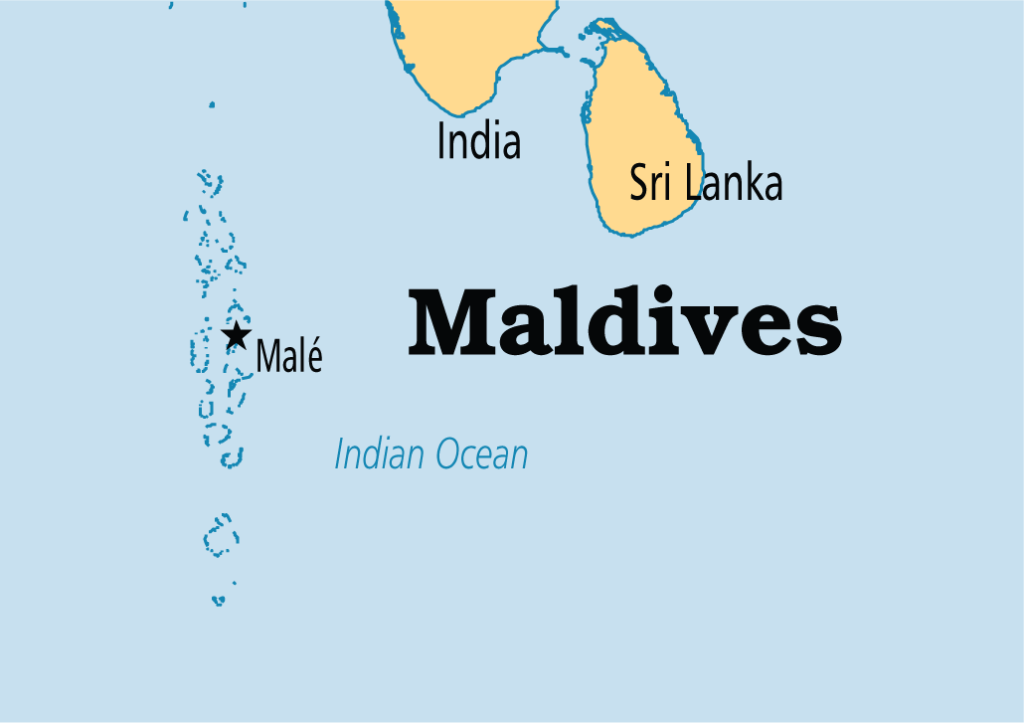
- The win was welcomed by India as Indian diplomats had been helping the Maldives and India expects close cooperation with Maldives at the UN.
- However, the Maldives has made no decision on opening an Indian consulate in its southern Addu Atoll even as the Indian Cabinet cleared a proposal for it.
Key Points
- President of UNGA:
- This is a post held on an annual basis, rotated amongst various regional groupings. The 76th session (2021-22) is the turn of the Asia-Pacific group. This is the first time Maldives will be occupying the office of the President of UNGA.
- 6 Main Committees: Draft resolutions can be prepared for the General Assembly by its six main committees: (1) First Committee (Disarmament and International Security), (2) Second Committee (Economic and Financial), (3) Third Committee (Social, Humanitarian, and Cultural), (4) Fourth Committee (Special Political and Decolonization), (5) Fifth Committee (Administrative and Budgetary), (6)Sixth Committee (Legal).
- Each Member State may be represented by one person on each Main Committee and on any other committee that may be established upon which all Member States have the right to be represented.
- Member States may also assign advisers, technical advisers, experts or persons of similar status to these committees.
- Other Committees:
- General Committee: It meets periodically throughout each session to review the progress of the General Assembly and its committees and to make recommendations for furthering such progress. It is composed of the President of the General Assembly and 21 Vice-Presidents of the Assembly and the Chairmen of the six Main Committees. The five permanent members of the Security Council serve as Vice-Presidents, as well.
- Credentials Committee: It is mandated to examine the credentials of representatives of Member States and to report to the General Assembly.
2. Security Council
- It has primary responsibility, under the UN Charter, for the maintenance of international peace and security.
- The Security Council is made up of fifteen member states, consisting of five permanent members—China, France, Russia, the United Kingdom, and the United States—and ten non-permanent members elected for two-year terms by the General Assembly on a regional basis.
Why in News
- Recently, China has taken over as president of the UN Security Council for the month of March 2020.
The Big Picture – UN Security Council Reforms
The French envoy to the UN has recently said that India and nations like Germany, Brazil and Japan are “absolutely needed” as permanent members of a reformed and enlarged UN Security Council to better reflect contemporary realities. India has always remained at the forefront of efforts at the UN to push for the long-pending reform of the Security Council, emphasising that it rightly deserves a place at the UN high table as a permanent member.
Drishti Input:
United Nations Security Council
- Established by the United Nations charter in 1945, the Security Council has primary responsibility of maintaining international peace and security.
- The Security Council has 15 members.
- There are five permanent members: the United States, the Russian Federation, France, China and the United Kingdom.
- The non-permanent members of the Security Council are elected for a term of two years.
- Each member of the Security Council has one vote. Decisions of the Security Council on matters are made by an affirmative vote of nine members including the concurring votes of the permanent members. A “No” vote from one of the five permanent members blocks the passage of the resolution.
- Any member of the United Nations which is not a member of the Security Council may participate, without vote, in the discussion of any question brought before the Security Council whenever the latter considers that the interests of that member are specially affected.
Need for UN Security Council Reforms
- UN represents a larger world and the irony is that it has only 5 permanent members in its such an important body.
- Current composition of the Security Council represents the post World War II realities and thus is not in pace with the changing balance of power in the world.
- At the time of the formation of UNSC, big powers were given privileges to make them part of the council. This was necessary for its proper functioning as well as to avoid the failure like that of the organization ‘League of Nations’.
- The regions like far East Asia, South America, Africa have no representation in the permanent membership of the council.
- Rise of fora like G4 (India, Brazil, Germany, and Japan) as important economies and emerging world powers are pushing after quick UN Security Council reforms.
Impediments in the expansion of UN Security Council
- The five permanent members themselves don’t want anyone to come on board with them. The world has no evidence in the history where countries have given up such a status quo on their own.
- In the year 2005, when G4 came with a resolution for the expansion of the council, U.S. and China lobbied very hard with African countries to ensure that they do not vote for the resolution.
- One country opposing another country’s bid for the permanent membership from a region. For example:
- Pakistan does not want India to be the permanent member of the council.
- China has serious objections to Japan being there in the Security Council.
- Italy trying to compete with Germany in Europe for a place in the Security Council.
- Argentia does not agree with the fact that Brazil should represent South America in the UNSC as a permanent representative.
- In Africa, there is still no consensus on which country should represent the region as a permanent member.
- There are no parameters in the UN Security Council for considering the countries for permanent membership.
- There is a concern that expansion of the council may lead to a decline in its efficiency and functioning.
Coffee Club/Uniting for Consensus
An informal “coffee club”, comprising 40-odd members states, has been instrumental in holding back reforms to the United Nations Security Council. Most members of the club are middle-sized states who oppose bigger regional powers grabbing permanent seats in the UN Security Council.
The prime movers of the club include Italy, Spain, Australia, Canada, South Korea, Argentina and Pakistan. While Italy and Spain are opposed to Germany’s bid for Security Council’s permanent membership, Pakistan is opposed to India’s bid.
Similarly, Argentina is against Brazil’s bid and Australia opposes Japan’s. Canada and South Korea are opposed to developing countries, often dependent on their aid, wielding more power than them at the UN.
India and its demand for permanent membership
- For the first 40 years of the UN Security Council formation, India never asked for the permanent membership.
- Even in 1993 when India submitted its written proposal to the UN as response to the General Assembly resolution related to reforms, it did not specifically state that it wants permanent membership for itself.
- It is only from the last few years that India has started asking for a permanent membership in the council.
- India deserves a permanent place in the council considering the size of its economy, population and the fact that it is the largest democracy in the world.
- India has become a major player not only in the Asia but also in the world.
- The Security Council would be a more representative body if India would be there in it as a permanent member.
Benefits for India
- By having a veto power, one can enjoy enormous powers.
- This is clear from the recent case of Masood Azhar. Since 2009, India was trying to get him designated as a global terrorist. One veto power of China kept delaying it.
- India will be able to work better for its interests.
- There was a time when USSR actually started boycotting the UNSC and that was the time when US managed to get the resolution passed for the Korean War. From that time onwards USSR realized that it doesn’t make sense to boycott the UN. It needs to keep veto if at all resolution is against them.
- India’s presence as a permanent member will be an acknowledgment of its rise as a global power, ready to play a key role in the council’s objectives of international peace and security.
- India will be able to enjoy the ‘prestige’ associated with the permanent membership of the council.
Is India ready?
- By remaining silent on contentious issues, India has always remained in a safe zone. Once India becomes a permanent member, it has to give its views on every issue.
- India’s foreign policy machinery is not geared with the kind of deal making that permanent five do all the time.
Besides expansion, issues like whether a country having a veto power should be allowed to lock a motion or not, should be taken into consideration. As far as India’s membership is considered, all five permanent members including China are more or less on board. India just needs to prepare itself for the permanent position in the council.
- The other 5 organs of the United Nations are—the General Assembly, the Trusteeship Council, the Economic and Social Council, the International Court of Justice, and the Secretariat.
- Its primary responsibility is to work to maintain international peace and security.
- The council has 15 members: the five permanent members and 10 non-permanent members elected for two-year terms.
- The five permanent members are the United States, the Russian Federation, France, China and the United Kingdom.
- Each member of the Security Council has one vote. Decisions of the Security Council on matters are made by an affirmative vote of nine members including the concurring votes of the permanent members. A “No” vote from one of the five permanent members blocks the passage of the resolution.
- Any member of the United Nations which is not a member of the Security Council may participate, without vote, in the discussion of any question brought before the Security Council whenever the latter considers that the interests of that member are specially affected.
- The council’s presidency is a capacity that rotates every month among its 15 members.
- The council is headquartered at NewYork.
India’s Non-permanent Seat at the UNSC
All the countries in the Asia-Pacific Group at the United Nations have unanimously supported India for a non-permanent seat at the UN Security Council (UNSC) for a two-year term in 2021-22.
- Both Pakistan and China have supported India’s candidature.
- The Asia-Pacific Group consists of 55 members states, they get to nominate one of its members for the June 2020 elections to a non-permanent seat on the UNSC.
- India has been a non-permanent member of the UNSC seven times, the most recent was for the year 2011-12.
- Estonia, Niger, Tunisia, Vietnam and St. Vincent and the Grenadines were elected earlier this month.
- It gives primary responsibility for maintaining international peace and security to the Security Council, which may meet whenever peace is threatened.
- All members of the United Nations agree to accept and carry out the decisions of the Security Council.
- While other organs of the United Nations make recommendations to member states, only the Security Council has the power to make decisions that member states are then obligated to implement under the Charter.
Permanent and Non-Permanent Members
- The Council is composed of 15 Members:
- Five permanent members: China, France, the Russian Federation, the United Kingdom, and the United States.
- Ten non-permanent members elected for two-year terms by the General Assembly (with the end of term year):
- Belgium (2020), Côte d’Ivoire (2019), Dominican Republic (2020), Equatorial Guinea (2019), Germany (2020), Indonesia (2020), Kuwait (2019), Peru (2019), Poland (2019), South Africa (2020).
Selection of non-permanent members of the Security Council
- Each year, the General Assembly elects five non-permanent members (out of ten in total) for a two-year term. The ten non-permanent seats are distributed on a regional basis:
- five for African and Asian countries;
- one for Eastern European countries;
- two for Latin American and Caribbean countries;
- two for Western European and other countries.
- Aspiring member needs the vote of two-thirds of the 193 UN General Assembly members to win a non-permanent seat on the UNSC.
- Article 23 of the UN Charter concerns the composition of the Security Council.
United Nations Regional Groups
- The Regional Groups are the geopolitical regional groups of member states of the United Nations. UN member states were unofficially grouped into five geopolitical regional groups.
- Many UN bodies are allocated on the basis of geographical representation. Top leadership positions, including Secretary-General and President of the General Assembly, are rotated among the regional groups.
- The groups also coordinate substantive policy and form common fronts for negotiations and bloc voting.
Key Points
- Contributions of India at UNSC: India has served seven times in the UN Security Council.
- 1950-51: India, as President of UNSC, presided over the adoption of resolutions calling for cessation of hostilities during the Korean War and for assistance to the Republic of Korea.
- 1967-68: India co-sponsored Resolution 238 extending the mandate of the UN mission in Cyprus.
- 1972-73: India pushed strongly for admission of Bangladesh into the UN.
- 1977-78: India was a strong voice for Africa in the UNSC and spoke against apartheid and for Namibia’s independence in 1978.
- 1984-85: India was a leading voice in UNSC for resolution of conflicts in the Middle East, especially Palestine and Lebanon.
- 1991-92: Participated in the first ever summit-level meeting of the UNSC and spoke on its role in maintenance of peace and security.
- 2011-2012: India was a strong voice for developing world, peacekeeping, counter-terrorism and Africa. First statement on Syria was during India’s Presidency at the UNSC.
- During the 2011-12 term, India chaired the UNSC 1373 Committee concerning Counter-Terrorism, the 1566 Working Group concerning threat to international peace and security by terrorist acts, and Security Council 751/1907 Committee concerning Somalia and Eritrea.
At UNGA, India Calls for Early Adoption of CCIT
External Affairs Minister Sushma Swaraj reiterated India’s demand for a Comprehensive Convention on International Terrorism (CCIT) at the 73rd session of UN General Assembly.
About CCIT
- In 1996, with the objective of providing a comprehensible legal framework to counter terrorism, India proposed to the United Nations General Assembly (UNGA) the adoption of the “Comprehensive Convention on International Terrorism” (CCIT).
- India, which has been a victim of cross-border terrorism, took cognizance of the threat it poses to international peace and security long before the major world powers.
- CCIT included the following major objectives:
- To have a universal definition of terrorism that all 193-members of the UNGA will adopt into their own criminal law.
- To ban all terror groups and shut down terror camps.
- To prosecute all terrorists under special laws.
- To make cross-border terrorism an extraditable offense worldwide.
- Definition of terrorism:
- According to this convention, Any person who commits an offense, with the purpose of the conduct is to intimidate a population or to compel a Government or an international organization to do or abstain from doing any act, which causes:
- Death or serious bodily injury to any person; or
- Serious damage to public or private property, including a place of public use, a State or government facility, a public transportation system, an infrastructure facility or the environment; or
- Damage to property, places, facilities, or systems resulting in or likely to result in a major economic loss,
- According to this convention, Any person who commits an offense, with the purpose of the conduct is to intimidate a population or to compel a Government or an international organization to do or abstain from doing any act, which causes:
Issues surrounding CCIT
- The conclusion and ratification of the CCIT remains deadlocked due to opposition from three main blocs –
- The US
- The US wanted the draft to exclude acts committed by military forces of states during peacetime.
- The U.S. has been worried about the application of the CCIT to its own military forces especially with regard to interventions in Afghanistan and Iraq.
- The Organization of Islamic Countries (OIC)
- OIC wants exclusion of national liberation movements, especially in the context of Israel-Palestinian conflict.
- It was argued that there is a need to distinguish acts of terrorism from movements for self-determination so that legitimate movements are not labeled as criminal acts of terrorism.
- The Latin American countries.
- Latin American countries wanted the draft to cover “state terrorism” and also the violation of International Human Rights laws by states.
- Currently, the negotiations of the Comprehensive Terrorism Convention are deadlocked because of differences over the definition of terrorism.
- This definition itself is not controversial. The deadlock is because of issue that whether such definition would be applicable to the armed forces of a state and to Self- determination movements.
Conclusion
- To create an effective mechanism to counter terrorism it is necessary that countries should agree upon a definition of terrorism. Countries should not look from the prism of their self-interest rather look into the issue through a broader perspective of solving the problem of global terrorism.
- India worked closely with its partners in the UNSC to ensure the listing of Pakistan-based terrorist Masood Azhar under the UNSC’s 1267 Sanctions Committee (May 2019) concerning al-Qaeda and ISIS and associated individuals and entities, which was pending since 2009.
- Challenges at UNSC:
- China Challenge:
- India is entering the UNSC at a time when Beijing is asserting itself at the global stage much more vigorously than ever. It heads at least six UN organisations and has challenged the global rules.
- China Challenge:
The Big Picture – Indo-Pacific : Strategic Importance
The External Affairs Minister, who is on a two day visit to Russia, has said that Indo Pacific is one of the new concepts and approaches thrown up by the changing world. With various countries and international forums using the term Indo Pacific in their official statements, it is gaining currency in recent times.
India, France and Australia have held track 1.5 dialogue to identify security challenges and sustainability issues in the Indo Pacific region. Safeguarding freedom of navigation and keeping Indo Pacific stable was a crucial item on the agenda during Prime minister Narendra Modi and French President Emmanuel Macron’ s recently concluded annual summit in Paris.
Note:
- The track 1.5 dialogue refers to top-level political decision-makers, yet in informal, non-official settings.
- These track 1.5 mediation/dialogue processes often serve to sort out and prepare for track 1 talks.
- The first level (track 1) includes negotiation between the leadership of two countries (e.g. political and/or military).
The Term ‘Indo-Pacific’
- It is a recent concept. It was about a decade ago that the world started talking about the Indo-Pacific but its rise has been quite significant.
- One of the reasons behind the popularity of this term is an understanding that the Indian Ocean and the Pacific are a linked strategic theater.
- Also, the centre of gravity has shifted to Asia. The reason being maritime routes, the Indian Ocean and the Pacific provide the sea lanes. Majority of the world’s trade passes through these oceans.
- There was a time before the cold war when the centre of gravity of the universe was across the Atlantic i.e. trade was actually transiting from the Atlantic but now it has shifted.
- The earlier term used to be Asia-Pacific, from which India was excluded.
- This term was prevalent during the cold war time.
- The shift to the term ‘Indo-Pacific’ shows the salience of India in the new construct.
- Terrorism and the fear of assertion by a particular country in the region are major threats to the Indo-Pacific region.
- The Indo-Pacific region includes world’s four big economies: USA, China, Japan and India.
- The term ‘Indo-Pacific’ is interpreted differently by different stakeholders.
- India considers the region as an inclusive, open, integrated and balanced space. India continuously emphasises on strategic inter-connections, common challenges and opportunities between the Indian Ocean and the Pacific.
- The U.S. considers it to be a free and open Indo-Pacific, highlighting the importance of rules or norms of conduct in the region, thus trying to contain the role of China in the region.
- The ASEAN countries look at Indo-Pacific as a consociational model, thus bringing in China not only for the sake of giving it some stakeholdership but looking for ways to cooperate with it in the region.
Note:
- Consociationalism is a stable democratic system in deeply divided societies that is based on power sharing between elites from different social groups.
India’s Perspective of Indo-Pacific
- A lot of India’s special partners, the US, Australia, Japan and Indonesia actually look at Indo-Pacific as Asia Pacific plus India. They try to embed India into the strategic dynamic of Asia Pacific.
Sansad TV Discussions
New Indo-Pacific Strategy
The US is banding together with nations like India, Australia, Japan and South Korea to ensure that the sovereignty of Indo-Pacific nations is protected. The United States has bolstered its military presence in the South China Sea and has put nations around the world on notice that the sale of key infrastructure and technology companies to China threatens their national security. China claims almost all of the strategic South China Sea with Brunei, Indonesia, Malaysia, the Philippines, Taiwan and Vietnam pushing competing claims to parts of the resource-rich maritime region. The United States, Japan and India do not have any territorial claims in the sea but want to ensure freedom of navigation there.
The Concept of ‘Indo Pacific’
- First time, the term ‘Indo Pacific’ was used by the Japanese Prime Minister Shinzo Abe on Indian soil in 2007. Then, he said that there is a connect between the Indian Ocean and the Pacific Ocean.
- After about ten years, the President of the United States used this term during his visit to East Asia. He repeatedly used this term instead of ‘Asia Pacific’. The motive is to ensure that all the countries in the region are working in a direction to make it an open, free, inclusive, prosperous and rule based Indo Pacific system.
- China is giving a tough competition to U.S in all sectors. In the trade war with China, U.S. wants to pump up as much as banding together of other nations as possible.
- India considers two important aspects within the scope of this term:
- One, centrality of the ASEAN (Association of Southeast Asian Nations), which is necessary to take forward the notion of Indo-Pacific.
- Second, respect for international laws, especially the United Nations Convention on Law of the Sea, 1982 (UNCLOS) at the time of disputes, particularly over the South China Sea.
Significance of the Indo Pacific Region
- It is a very rich region in terms of natural resources (fisheries, oil, gas) as well as mineral resources.
- About 3.5 trillion dollars international trade flows through the South China Sea.
- Trade of some of the major economies like China, Japan, Korea or the west coast of the United States goes through the South China Sea.
- About 50% of India’s trade is conducted through the South China Sea.
India’s Role in the Indo Pacific Region
- India has been one of the major players in the region. India conducts many naval exercises with the United States, countries of ASEAN, Japan, Korea and Vietnam.
- Last time in 2015, with the United States, India issued a strategic vision for the Indian ocean and the Pacific, in which maintaining the security in the South China Sea, was also mentioned.
- ONGC Videsh Ltd is prospecting for oil and gas in the exclusive economic zone of Vietnam. India imports 82% of its oil. It needs oil from wherever it can get. Therefore, explorations at the South China Sea is very important for it.
- The international community including India wants freedom of navigation, freedom of over flights in the region, especially the South China Sea.
Claims Made by China in the South China Sea
- The Chinese regime claims that it has historical ownership over nearly the entire region, which gives it the right to manufacture islands, declare defensive perimeters around its artificial islands, and to chase ships from other nations out of the South China Sea. The International Court of Arbitration rejected the claim in 2016.
- China considers disputes in the South China Sea as territorial disputes and therefore considers that UNCLOS does not have a locus standi to pass the judgement over disputes.
What other littoral countries in the dispute are doing to counter China?
- It was Phillipines only that took the case to the International Court of Arbitration in 2016. But it has been seen recently that it is ready to provide its islands to China provided China invests in its region.
- None of the states in dispute is willing to or is capable of confronting China.
- Economically, China is leading the region. Also, in general, China has a record of making countries fall into line with it either through warnings or by giving bribe in the form of investment.
Should India collaborate with US in the South China Sea?
- To show its presence and to not allow China to do which is not as per the UNCLOS, it is necessary for India to have its ships in the South China Sea.
- Participating in the exercises like Malabar that desist China from doing something unconventional.
- The Malabar exercise started in 1992 as a bilateral one between the Indian Navy and the US Navy in the Indian Ocean. Japan became a permanent member of the Malabar exercise in 2015.
- India shall not get sucked in with US, but rather have more and more naval exercise in other countries’ seas in their respective exclusive zones, close to the areas in the South China Sea which China claims.
- India’s assets are not that large to be there permanently in the sea but in the name of maritime exercises, it can show its presence there to the world.
India needs to have maritime alliances like Quad (India, Australia, the US and Japan) with different countries including US to protect its interests in the South China Sea without provoking China.
Commission Composition
The NHRC functions as a multi-member framework:
- Chairperson: Must be a retired Chief Justice of India or a Supreme Court Judge.
- Appointment: Nominated by the President of India based on recommendations from a high-level six-member committee headed by the Prime Minister.
- Tenure: Members serve for a term of three years or until reaching 70 years of age, whichever comes first.
⚙️ Main Functions & Powers
- Inquiry: Possesses the legal powers of a civil court to investigate human rights violations or public negligence.
- Suo Motu Cognizance: Empowered to take up cases independently based on media reports or public data without an official complaint.
- Intervention: Steps into active court proceedings involving rights violations with judicial approval.
- Systemic Monitoring: Conducts mandatory inspection visits to jails and detention facilities to study inmate conditions.
- Advisories: Regularly issues directives to the government, such as the Transgender Persons Welfare Advisory 2.0 issued in May 2026.
Grievance & Public Engagement
Filing Complaints:
Status Tracking:
Student Programs: Internship programme (Online & In-person)
The National Human Rights Commission has expressly been mandated to promote Human Rights literacy and awareness vide Section 12 (h) of the Protection of Human Rights Act, 1993. With a view to spread awareness among University students about the need for protection and promotion of Human Rights, the Commission has been regularly conducting Internship Programmes since 1998.
The Commission offers two structured internship programmes for university/college students to gain practical experience in human rights:
- Summer/Winter In-Person Internship (4 Weeks)
- Online Short Term Internship Programme (OSTI) (Two weeks)
Summer Internship/ Winter Internship (in person)
Four weeks’ Offline Internship programme (SIP/WIP)
The National Human Rights Commission (NHRC) offers offline internship programme twice a year, during the summer (June-July) and winter (December-January) season. These programs provide an invaluable opportunity for students from across India to gain practical experience in the field of human rights.
In this four week’s internship programme approximately 80 interns are selected. The Interns successfully completing the internship receive stipend of Rs 12000/- and also TA (3 rd AC to & fro fare from Place of educational institution to Delhi).
Eligibility and selection criteria will be as follows:-
- Students who have completed 1st year and are pursuing 2nd or 3rd year LLB (3 years) courses;
- Students who have completed 3 years OR Semester VI of the Integrated 5 Year Law couse etc. and pursuing 4th and 5th years;
- Students pursuing L.L.M. Course;
- Students pursuing PG Diploma in Human Rights, MA in Human Rights, PG students of Political Science, Sociology, Social Work (MSW), Criminology, Public Administration Rural Development, History, Economics, Commerce, Anthropology, Mass Communication, International Relations and any of the discipline of Social Sciences would be considered with preference to students pursuing their final year;
- Only students of regular courses of UGC Recognized Universities will be eligible.
- Students must have attained a minimum of 65% marks in Class XII and all subsequent semesters in attended degree programs.
- The applicant should not be more than 28 years of age.
- A 300-500 words write-up (in online form) on the topic “Reason for joining as Intern in NHRC” will be required to be submitted by the applicants which would also be considered as a Statement of Purpose (SOP), along with the online application which will also serve as a basis of selection. Students who have research potential in the areas relating to human rights will be preferred (As indicated by them in the write-up).
- The merit will be made on the basis of marks calculated out of a total of 100 marks on account of Class XII @ 30 Marks, Graduation @ 40 Marks and the Marks scored in the Write-up of 300-500 words @ 30 Marks.
- Students who have attended the regular one month Summer/ Winter Internship Programmes organized by NHRC earlier will not be eligible to apply.
Duration: Summer (June-July) | Winter (December-January)
Details:
- A four-week offline programme providing an invaluable opportunity for students from across India to gain practical experience in the field of Human Rights.
- Approximately 100 interns are selected.
- Stipend: ₹12,000 + travel allowance (3rd AC train fare to/fro from place educational institute to Delhi).
Eligibility:
- Students who have completed 1st year and are pursuing 2nd or 3rd year LL.B. (3 years) courses;
- Students who have completed 3 years OR Semester VI of the integrated 5 year Law course and pursuing 4th and 5th years;
- Students pursuing LL.M. Course;
- Students pursuing PG Diploma in Human Rights, MA in Human Rights, PG students of Political Science, Sociology, Social Work (MSW), Criminology, Public Administration Rural Development, History, Economics, Commerce, Anthropology, Mass Communication, International Relations and any of the discipline of Social Sciences would be considered with preference to students pursuing their final year;
- Only students of regular courses of UGC Recognized Universities will be eligible.
- Students must have attained a minimum of 60% marks in Class XII and first six semesters in attended degree programs.
- Age: Not exceeding 28 years
- Enrolled in regular courses at UGC-recognized universities.
Selection Process:
- Submit a 300-500 word Statement of Purpose on “Reason for Joining as Intern in NHRC” with the online application.
- Selection based on: Class XII (30 marks), Graduation (40 marks), Statement of Purpose (30 marks).
- Preference for candidates with research potential in Human Rights.
- Students who have attended the regular one month summer/winter Internship Programmes organised by NHRC earlier will not be eligible to apply.
Online Short Term Internship Programme (OSTI) (Two weeks)
Duration: As announced on the NHRC website.
Details:
- A two-week virtual internship programme offering valuable learning experiences and practical exposure to human rights.
- Approximately 100 interns are selected.
- Stipend: ₹2,000.
Eligibility:
- Students studying in 3rd year and onwards of any integrated 5 year PG Course;
- Students studying in 3rd / final year of a graduation course;
- Students of any semester/ year of any post-graduate degree course (also applicable to the students in three year LL.B programme);
- Students of any semester/ year of any post-graduate diploma course;
- Students who are research scholars in any stream.
- Consistently attained a minimum of 60% marks in Class XII and first four semesters in attended degree, including the presently pursued courses.
Selection Process:
- Submit a 250 word Statement of Purpose on “Reason for Joining as Intern in NHRC” with the online application.
- Selection based on: Class XII (30 marks), Graduation (40 marks), Statement of Purpose (30 marks).
- Preference for candidates with research potential in Human Rights.
- Students who have attended any Internship Programmes organized by NHRC earlier will not be eligible to apply.
Selection Process and Application Details:
Information regarding the application process, deadlines, and selection criteria is announced on the NHRC website from time to time through advertisement of each internship programme. The commission encourages all interested students with a passion for Human Rights to apply for these programmes.
