
“Kerala (officially known as Keralam) is an extremely beautiful and prosperous state located on the south-western Malabar Coast of India. Due to its amazing natural beauty, it is also called ‘God’s Own Country’.”
Kerala: A Quick Overview
Kerala is a state located in the southwestern coastal region of India, along the Malabar Coast. It covers about 1% of India’s total land area and is known for its unique culture, influenced by its long coastline and interactions with various communities throughout history.
Geography
The geography of Kerala is characterized by the Western Ghats mountain range to the east and a narrow strip of coastal plains along the Arabian Sea to the west. This region, known as the Kerala Plains, is dotted with numerous lagoons, rivers, and backwaters, making it a vital network for inland waterways. The state also features forests, wetlands, and fertile lowlands. Anamudi, the highest peak in peninsular India, is located in the Western Ghats within Kerala.
Culture and Society
Kerala boasts a rich cultural heritage, evident in its diverse architecture, art forms, literature, and performing arts. The state is home to ancient Hindu temples, mosques, and colonial-era churches, reflecting its historical interactions. Traditional art forms include intricate paintings, murals, and a variety of lamps, earning Kerala the nickname “Land of Lamps”.
The Malayalam language, an offshoot of Tamil, is spoken in Kerala and has a rich literary tradition. The state has also gained recognition for its realistic and experimental Malayalam cinema. Traditional dances like Kathakali and Mohiniyattam, as well as martial arts such as Kalaripayattu, are significant aspects of Kerala’s cultural landscape. Kerala is also noted for the high social status accorded to women, partly due to its historical matrilineal kinship system.
Education and Economy
Kerala has one of the most advanced educational systems in India, with nearly universal literacy rates for both men and women. Education is compulsory for children aged 6 to 14, and the state has numerous primary, secondary, and higher education institutions, including several universities.
The economy of Kerala is diverse, with significant agricultural output including rice, cassava, sugarcane, spices like pepper and cardamom, and plantation crops such as rubber, coffee, and tea. The state also engages in processing cashews, tea, and fish, and manufactures cement, aluminum, and electrical goods. Its well-developed transportation network includes extensive road and railway systems, major and minor ports, and inland waterways, facilitating trade and connectivity.
Main Geographical and Demographic Facts
- Capital: Thiruvananthapuram (Trivandrum) is the capital of this state.
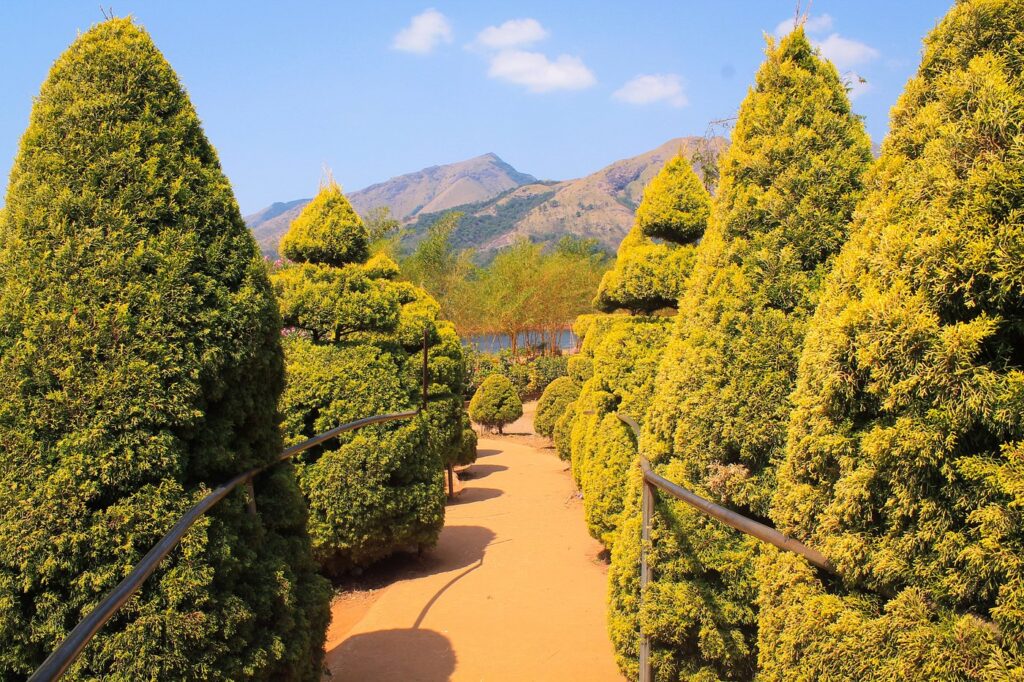
Kerala, India
India’s millennia-old natural medicine, Ayurveda, is the guiding force in southern state Kerala’s famed health resorts. To rejuvenate in luxurious surrounds, try 50-acre oasis Kairali Ayurvedic Health Resort’s authentic ayurvedic healing with aromatherapy, massage, essential oils and yoga.
Language: Malayalam is the main and official language here. In the agricultural sector, coconut, tea, coffee, cashew, and spices are important crops. The state has a coastline of 595 kilometres (370 mi), and 1.1 million people depend on the fishing industry, which accounts for around 3% of the state’s income. The economy is largely service sector oriented, while the primary sector contributes a comparatively smaller share. As a result, Kerala is traditionally referred to as Parashurama Kshetram (“The Land of Parashurama”). According to legend, Parashurama threw his axe across the sea, and the water receded to the point where it landed. A substantial portion of present-day Kerala is believed to have been submerged under the sea in ancient times. The discovery of marine fossils near Changanassery supports this hypothesis. Merchants from West Asia and Southern Europe established coastal posts and settlements in Kerala. The Jewish connection with Kerala is believed to date back to 573 BCE. According to the traditions of these communities, some of the earliest religious establishments in India were built in Kerala. By the 10th century, however, the Ays had lost their power, and the region was incorporated into the Kulashekara realm. It was during this time that a distinct Keralite identity began to emerge, separate from Tamil culture, particularly through linguistic differentiation. Each province was further subdivided into desams, which were overseen by Desavazhis. A series of Chera–Chola conflicts in the 11th century disrupted foreign trade through Kerala’s ports. Following his death, and in the absence of a strong central authority, the region fragmented into thirty small, frequently warring principalities. Following his death, and in the absence of a strong central authority, the region fragmented into thirty small, frequently warring principalities. However, tensions arose when the Portuguese attacked Arab traders operating under the Zamorin’s protection, causing a breakdown in relations. Seizing the opportunity presented by rivalry between the Zamorin and the King of Kochi, the Portuguese allied with Kochi. Under his administration, the Portuguese consolidated their influence by building several fortifications along the Malabar Coast. Marthanda Varma continued his military campaigns, establishing Travancore as the preeminent power in Kerala. The British East India Company also secured tributary alliances with Kochi in 1791 and Travancore in 1795. In the 20th century, Kerala was the site of several major uprisings during the Indian independence movement. Social reform moments also gained momentum during this period, particularly those challenging caste-based discrimination. The state has a coast of 590 km (370 mi) and the width of the state varies between 11 and 121 kilometres (7 and 75 mi).Geographically, Kerala can be divided into three climatically distinct regions: the eastern highlands; rugged and cool mountainous terrain, the central mid-lands; rolling hills, and the western lowlands; coastal plains. A catastrophic flood in Kerala in 1341 CE drastically modified its terrain and consequently affected its history; it also created a natural harbour for spice transport. The chain’s forests are considered to be older than the Himalaya mountains. The average length of the rivers is 64 kilometres (40 mi). Many of the rivers are small and entirely fed by monsoon rain. The rivers face problems such as sand mining and pollution. The state experiences several natural hazards like landslides, floods and droughts. Around 65% of the rainfall occurs from June to August corresponding to the Southwest monsoon, and the rest from September to December corresponding to Northeast monsoon. Around 65% of the rainfall occurs from June to August corresponding to the Southwest monsoon, and the rest from September to December corresponding to Northeast monsoon. The “Arabian Sea Branch” of the Southwest monsoon first hits the Western Ghats, making Kerala the first state in India to receive rain from the Southwest monsoon. The distribution of pressure patterns is reversed in the Northeast monsoon, during this season the cold winds from North India pick up moisture from the Bay of Bengal and precipitate it on the east coast of peninsular India. In Kerala, the influence of the Northeast monsoon is seen in southern districts only. Kerala’s rainfall averages 2,923 mm (115 in) annually. In eastern Kerala, a drier tropical wet and dry climate prevails. During the summer, the state is prone to gale-force winds, storm surges, cyclone-related torrential downpours, occasional droughts, and rises in sea level. The mean daily temperature ranges from 19.8 °C to 36.7 °C. Mean annual temperatures range from 25.0 to 27.5 °C in the coastal lowlands to 20.0–22.5 °C in the eastern highlands.
- Boundaries: It is bordered by Karnataka to the north, Tamil Nadu to the east, and the Arabian Sea to the west.
- Literacy and Health: Kerala is the state with the highest literacy rate in India. It has the lowest infant mortality rate, and the sex ratio favors women, with more females than males.
- Religious Diversity: People from the Hindu (approx. 54.7%), Muslim (approx. 26.5%), and Christian (approx. 18.4%) communities mainly live here together in harmony.
Religion in Kerala is diverse. According to the 2011 Indian census, 54.73% of Kerala’s population is Hindu, 26.56% is Muslim, 18.38% is Christian and the remaining 0.33% follows other religions or has no religion. As of 2020, Hindus, Muslims, Christians and others contribute 41.5%, 43.9%, 13.9% and 0.7% of total child births in the state respectively. Historical legends about the origin of Kerala are Hindu in nature. Kerala gave birth to many saints and movements. Politically speaking, Muslims in Kerala have displayed greater unanimity than any other major community in modern Kerala. Since the country gained independence from British rule in 1947, the overwhelming majority of Muslims in the former Malabar district (northern Kerala) have supported the Muslim League.
Culture and Festivals
- Festivals: Onam is the most prominent and harvest festival here, featuring the traditional Snake Boat Race. Apart from this, ‘Vishu’ is also a major festival here.
- Dance Styles: Kathakali, Mohiniyattam, and Thullal are the world-famous traditional classical dances of this region.
- Martial Arts: ‘Kalaripayattu’ is considered the ancient martial art of Kerala.
10 Colourful Festivals of Kerala
Kerala’s beauty is unmatched. It offers a variety of exciting festivals. Plan your trip with all of these in mind. There are some festivals you’ll regret missing.
Onam, the main festival of Kerala, is celebrated in most parts of the state. This festival marks the harvest season and lasts for ten days. During this time, Kerala is adorned with beautiful flower decorations known as Pookkalam. Traditional dances like Kathakali and Pulikali are also performed, and boat races are also held. A sumptuous feast called Onam Sadya is also prepared. People wear traditional attire, adding to the enchanting atmosphere of the festival.
Thrissur Pooram is one of Kerala’s most anticipated temple festivals, celebrated in Thrissur. It features a display of colors, firecrackers, and decorated elephants. Participants take out grand processions to temples, display percussion instruments, play traditional music, and organize a breathtaking fireworks competition, creating a spectacular spectacle.
Vishu marks the beginning of the Malayalam New Year and is celebrated with great pomp. During this festival, it is customary to offer Vishu Kani, auspicious items, and Vishukkainitta (gifts). The spectacular fireworks, traditional feasts, and cultural performances add to the enchanting charm of the festival.
Theyyam, although not a single festival, is a vibrant ritualistic performing art form celebrated throughout the region, especially in the northern part of Kerala. The colorful costumes, elaborate makeup, and distinctive dance styles of this art form make it a unique and captivating cultural experience.
Pongala at the Attukal Bhagavathy Temple:
A unique festival called Pongala is celebrated at the Attukal Bhagavathy Temple in Thiruvananthapuram, where thousands of women come together to prepare a special dish called Pongala as an offering to the Goddess. During this time, pots of Pongala line the streets of the capital, Thiruvananthapuram. This festival celebrates unity and communal harmony. Women, dressed in traditional attire, brave the scorching heat to prepare offerings to the Goddess.
Aarattupuzha Pooram:
Aarattupuzha Pooram is one of Kerala’s oldest and most colorful temple festivals. A grand procession of caparisoned elephants is held, and traditional percussion groups perform. The final ceremony of Aarattupuzha Pooram creates a vibrant and festive atmosphere.
Kalpatti Ratholsavam:
Kalpatti Rathotsavam is a colorful chariot festival celebrated annually in Palakkad. The highlight of this festival is the procession of magnificently decorated chariots accompanied by traditional music and dance performances, which mesmerize both devotees and tourists.
Kadammanitta Padayani is a unique folk festival celebrated in Pathanamthitta. Participants wear colorful costumes and vibrant masks to represent various gods and goddesses. Traditional instruments are played, and a variety of visuals add to the festivities. Cochin Carnival is a vibrant festival held in the last week of December. Colorful processions are held throughout the city, along with cultural programs and various competitions, culminating in a grand celebration on New Year’s Eve. The streets are adorned with colorful decorations, adding to the festive spirit.
Kerala
Schools Kalotsavam is not a traditional festival, but a massive cultural extravaganza in which students from state-run schools showcase their talents in various art forms. Their vibrant performances of dance, music, and other cultural activities add to the vibrant atmosphere.
Tourism
Kerala is world-famous for its endless backwaters, coconut trees, beaches, and hill stations:
- Munnar: A hill station famous for its beautiful tea gardens and cold weather.
Flanked by the Arabian Sea in the West, the towering Western Ghats in the East and networked by 44 interconnected rivers, Kerala is blessed with a unique set of geographical features that have made it one of the most sought after tourist destinations in Asia. A long shoreline with serene beaches, tranquil stretches of emerald backwaters, lush hill stations and exotic wildlife, are just a few of the wonders that await you once you crossover to the other side. And what’s more, each of these charming destinations is only a two hour drive from the other – a singular advantage no other place on the planet can offer. Kerala prides itself for being the flag bearer for not just how a culture can respect its past but also march forward with growth & progress as well. Hundred percent literacy, world-class health care systems, India’s lowest infant mortality and highest life expectancy rates are among a few of the milestones that the people of the state are extremely proud of.

Geography
Kerala is divided into three geographical regions: Highlands, which slope down from the Western Ghats onto the Midlands of undulating hills and valleys into an unbroken 580 km long coastline with many picturesque backwaters, interconnected with canals and rivers. The wild lands are covered with dense forests, while other regions lie under tea and coffee plantations or other forms of cultivation. Most of the state is engulfed in rich greenery which ensures a very calming experience at all times.

Seasons
Bestowed with a pleasant and equable climate throughout the year, Kerala is a tropical land where one can relax and be at ease. The Monsoons (June-September and October-November) and summer (February-May) are the seasons markedly experienced here, while Winter is only a slight drop in temperature from the normal range of 28-32°C. The generally pleasant climate prevalent here is what our guests end up loving.
People and Life
Kerala is one of India’s most progressive states in terms of social welfare and quality of life. The State boasts of one of India’s highest literacy rates, highest life expectancy and lowest child mortality rates. The literacy rate for women in Kerala is one of the highest in all of Asia. Enjoying a unique cosmopolitan viewpoint, the people here, at all levels of society, have greater access to services and opportunities – as well as a greater say in their governance.

History
Kerala’s history is closely linked with its commerce, which until recent times revolved around its spice trade. Celebrated as the Spice Coast of India, ancient Kerala played host to travellers and traders from across the world including the Greeks, Romans, Arabs, Chinese, Portuguese, Dutch, French and the British. Almost all of them have left their imprints on this land in some form or the other and that has helped us mould and design our own special way of interacting with the world.
Location
Kerala is situated on the southwestern coast of India, a country in South Asia.
- Alappuzha (Alleppey): It is called the ‘Venice of the East’, known for houseboats and backwater rides.
- Wayanad: Renowned for its lush green hills, waterfalls, and caves.
- Kochi: A historic port city offering glimpses of Dutch, Portuguese, and British culture.
The eternal beauty and cultural richness of Kerala
Welcome to the enchanting world of Kerala, where the heart and essence of this divine land resides in its picturesque landscapes and heartwarming villages, each telling a fascinating story of timeless traditions and vibrant cultures. Its rural beauty remains untouched by the impact of industrialization, preserving an authentic charm that invites you to enjoy a serene and indigenous experience. The warmth of its people and the aroma of its delicious cuisine further enhance Kerala’s allure, making it a destination where you can immerse yourself in vibrant traditions and relax in the lap of nature.
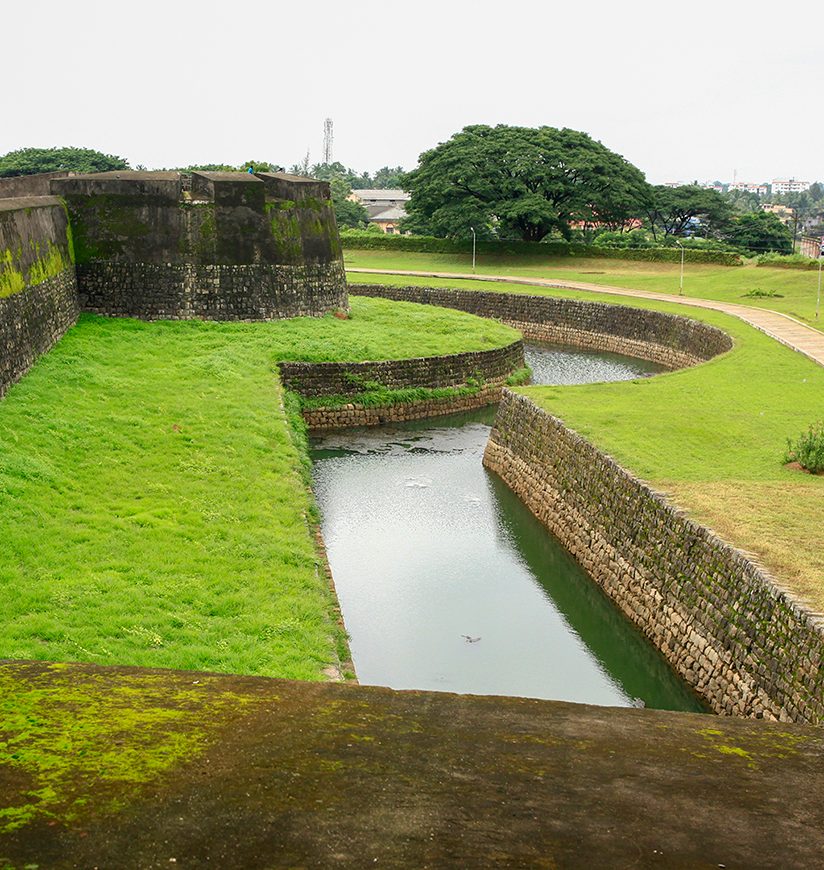
Kerala’s historical marvels
Delve into the historical wonders of Kerala, including the grandeur of the Mattancherry Palace, Shakthan Thampuran Palace, Bolgatty Palace, Thalassery Fort, Bekal Fort, and Fort Kochi, each standing as a testament to the region’s splendid past. In the heart of Kochi, the Kerala Folklore Museum showcases a rich tapestry of the state’s cultural, artistic, and architectural heritage, offering a captivating glimpse into the cultural legacy of Kerala. Kollam, formerly recognized as Quilon, stands as an ancient port city on the scenic Malabar Coast reflects rich history intertwined with the legacies of the Phoenicians, Romans, Arabs, and Chinese. Kollam has thrived as a cultural crossroads and a flourishing trade hub for numerous centuries. Now transformed into a luxurious hotel, the Halcyon Castle in the beach town of Kovalam, was originally constructed in 1932 as a summer escape for the regent queen of Travancore, Maharani Sethu Lakshmi Bayi.
In the historic district of Mattancherry in Kochi, the Paradesi Synagogue, also known as the Jewish Synagogue or Mattancherry Synagogue, has stood since 1568 as a significant cultural and historical landmark. Kerala is also home to Karumadikkuttan, a site of historical importance showcasing a striking black granite statue of Lord Buddha, believed to have origins dating back to the 9th or 10th century. Embark on a journey through time as you explore numerous other heritage sites, including forts, palaces, and museums, each narrating the intriguing stories of Kerala’s illustrious history.
Art forms reflecting rich culture
You are in for a memorable treat if you’re an art lover, as Kerala is renowned for its vibrant artistic expressions. Its art and cultural forms encompass classical performances, age-old rituals, religious expressions, enchanting folk tales, and martial arts. The ancient Indian martial art of Kalaripayattu is deeply rooted in the region’s cultural legacy. The classical art form of Kathakali, celebrated globally for its grandeur, was born on Kerala’s shores over three centuries ago, and is a must-see experience. Delight in the mesmerising spectacle of Theyyam, a ritual art form that captivates with its grandeur and spiritual fervour. Mohiniyattam, a captivating classical dance form, traditionally performed by temple dancers, took inspiration from Lord Vishnu’s transformation into the enchantress Mohini to secure the elixir of life during a battle with demons!
The folk dances of Kerala are a sight to behold. From the spirited Kaikotti Kali dance and the traditional Kuthiyottam dance to the graceful Thiruvathirakali Dance and the energetic Thirayattam dance, each performance is a celebration of tradition and devotion. The enchanting Kanniyar Kali, a reverent dance dedicated to Goddess Bhagvaty, stands as one of the oldest folk dances in the region, characterised by its fast-paced movements set to rhythmic devotional tunes.
From exquisite Chinese ceramics and brass-inlay crafts to intricate creations such as caskets, teapots, tin candle stands, bells, and lamps. The local jewellery in Kerala boasts a distinctive allure, characterised by intricate designs and the opulence of gold, showcasing the region’s rich craftsmanship.
Charismatic cuisine of Kerala
Kerala’s culinary delights offer a rich array of both vegetarian and non-vegetarian dishes, featuring an exquisite blend of fish, meat, poultry, and rice preparations. The cuisine is renowned for its aromatic medley of spices, with the generous use of coconut oil and milk, a result of the region’s abundant coconut cultivation. A quintessential highlight is the Kerala Sadya, a lavish banquet meal prepared during festivals and special occasions, showcasing the vibrant flavours and culinary expertise of the region. The menu boasts a variety of rice-based delicacies such as idli and dosa, crafted from a fine rice batter, while the tantalizing use of chillies, curry leaves, mustard seeds, turmeric powder, and asafoetida adds depth and character to the dishes.
Kerala’s festive kaleidoscope
Kerala being called as the god’s own country, celebrates several important and fascinating festivals. Onam, a vibrant 10-day harvest festival, unfolds during August-September, enveloping the state in a celebration of culture. The festivities are marked by lively fairs and engaging contests, inviting people to immerse themselves in the rich traditions and vibrant spirit of the occasion. The pinnacle of Onam, the tenth day, is hailed as the most significant, radiating the essence of Kerala’s cultural splendour.
Vishu, the New Year for the people of Kerala, dawns in the month of Medam, typically falling in April. This auspicious occasion marks the beginning of a fresh cycle, brimming with hope and renewal. Furthermore, the exhilarating Thrissur Pooram, celebrated during the month of Medam in which the spirited competition between the traditional groups of Thiruvambai and Paramekkavu is highlighted by a stunning display of decorated elephants, resplendent in ornate garments and majestic umbrellas.
Cuisine
Traditional Feast: Traditionally, ‘Sadya’ (a grand vegetarian feast) is served here on a banana leaf. Idli, Dosa, Appam, and Puttu are popular breakfast items here.
Staple Food: The staple food of Kerala is rice and fish.
Key Ingredients: Coconut, coconut oil, and curry leaves are abundantly used in the dishes here.
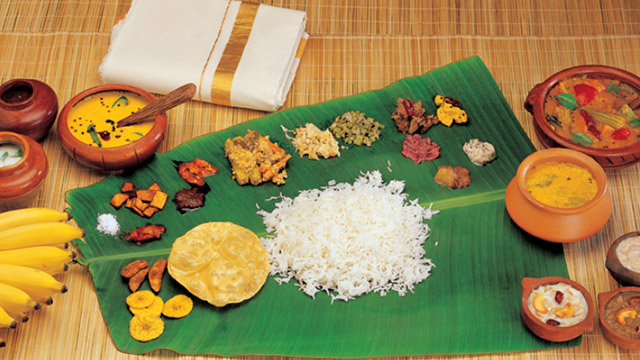
Sadhya includes a variety of vegetarian dishes. It can contain up to 28 dishes at a time. Traditionally, Sadhya is served on a banana leaf, with the edge of the leaf facing the guest’s left. It includes rice, side dishes, snacks, pickles, and sweet dishes, served at different times during the meal. Rice is usually served at the bottom of the leaf. The first item served after rice is Parippu, followed by the South Indian favorite Sambar. Side dishes such as Avial, Thoran, Kalan, and Olan are equally important. Main savory dishes include Upperi, Pappadum, ginger pickle, and Kichadi. These are served with mango and lemon pickles. Payasam is a favorite sweet dish in Kerala. It is served with yellow bananas, called Payasam. There are many varieties of Payasam, such as Paal Payasam, Palada Pradhaman, and Kadalparippu Pradhaman. At the end of the meal, rice is served again with rasam. The food is wrapped in a banana leaf folded in half. Sadhy is a feast of many flavors and satisfies your taste buds in many ways.
Latest Update (Weather)
According to the India Meteorological Department (IMD), the 2026 southwest monsoon hit the coast of Kerala on June 4, 2026, triggering a spell of heavy rainfall across many parts of the state.
Monsoon begins, after Kerala, it will enter these states including Maharashtra and MP.
Southwest Monsoon 2026: After a long wait, the monsoon has finally arrived in India. According to the Meteorological Department (IMD), it reached Kerala on June 4th. This time, the monsoon arrived in Kerala three days later than its normal date. Over the next two to three days, the monsoon will cover several states, including Karnataka, Tamil Nadu, Maharashtra, and Madhya Pradesh.
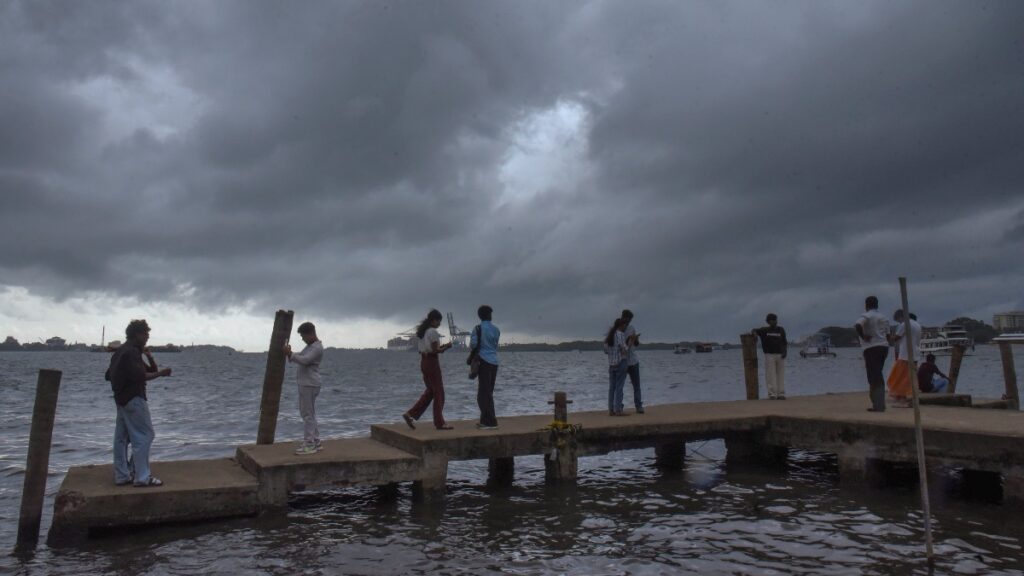
The India Meteorological Department (IMD) has announced some good news: The southwest monsoon has finally arrived in Kerala on June 4th. Normally, the monsoon arrives in Kerala on June 1st, but this time it arrived three days late. Weather refers to the air and atmospheric conditions of a place. It includes things like temperature, rainfall, wind speed, and humidity.
Most weather events on Earth occur in the lowest layer of the atmosphere, called the troposphere.
Weather varies because air pressure, temperature, and humidity vary from place to place, depending on the angle of sunlight and the latitude of the place.
In simple terms, weather tells us what the sky will be like today, tomorrow or on a particular day – hot, cold, rainy or sunny. Department, today the monsoon has further advanced into the remaining parts of the southwest and southeast Arabian Sea, some parts of the west-central and east-central Arabian Sea, the entire Lakshadweep Islands, Kerala and Mahe, some parts of Karnataka and Tamil Nadu, remaining parts of the Comorin area, southeast Bay of Bengal and southwest, west-central, east-central and north-eastern parts of the Bay of Bengal.
The monsoon is expected to intensify over the next 2-3 days, reaching the entire Goa region, parts of Maharashtra and Andhra Pradesh, remaining parts of Karnataka and Tamil Nadu, the southwest Bay of Bengal, and parts of the northeastern states. It should be noted that many areas of Kerala have been experiencing heavy rainfall since last night. Ahead of the monsoon’s arrival, the cloud cover over the southeast Arabian Sea has increased over the past two days. Westerly winds are blowing at a speed of 20-25 knots at lower levels, with gusting up to 4.5 kilometers.
The India Meteorological Department (IMD) has issued an orange alert for Alappuzha, Kottayam, and Ernakulam districts, expecting heavy to very heavy rain and thunderstorms. Thiruvananthapuram, Kollam, Pathanamthitta, Idukki, and Thrissur districts are forecast to experience moderate rain and thunderstorms with winds up to 40 km/h. The IMD had already issued an orange alert for eight districts in the state for Thursday. Kerala has been receiving good rainfall for the past two days. Heavy rains have even been recorded in some areas. In light of these signs, meteorologists have officially announced the arrival of the monsoon in Kerala on June 4th. The arrival of the monsoon has brought smiles to the faces of farmers working in the fields. Now, sowing of Kharif crops can begin in full swing. Amidst the humid heat in the country, people are breathing a sigh of relief with the news of the arrival of the monsoon. The Meteorological Department (IMD) has issued a warning of heavy rain in some areas of Kerala, Tamil Nadu, Karnataka, and Odisha. However, people in northern Indian states will have to wait for the monsoon rains.
