
The United States military has launched multiple waves of retaliatory air strikes against Iranian military targets and imposed a naval blockade in the Strait of Hormuz. These actions follow a series of Iranian missile and drone attacks on commercial shipping vessels transiting the vital waterway. UAE condemns Iran’s ‘brazen’ attack on tankers as US launches fresh strikes accused Iran of a “brazen” attack on two tankers in the Strait of Hormuz on Monday, killing one and wounding eight, as Donald Trump said the US would impose a 20% charge as part of a new blockade on the waterway.
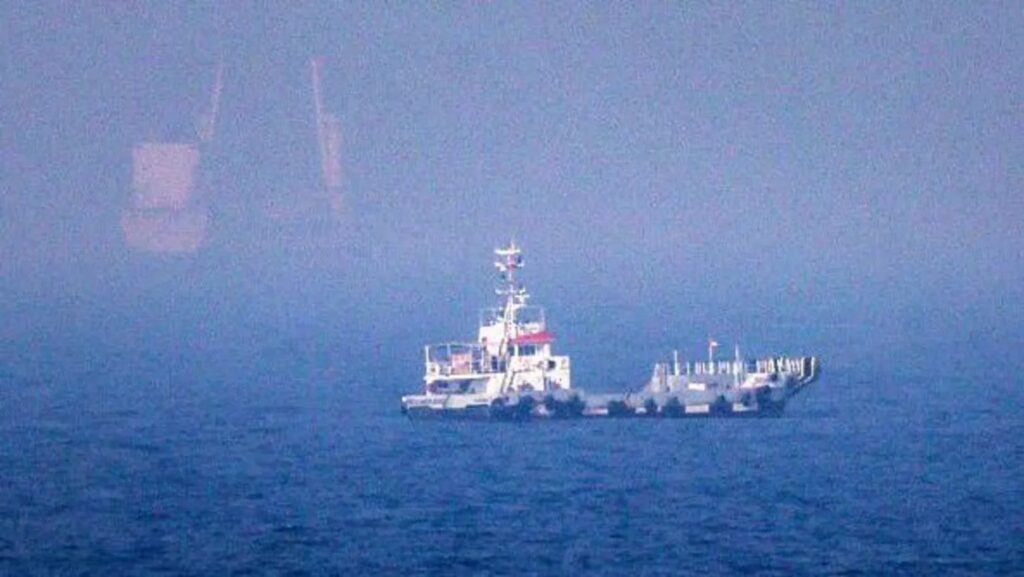
The US president said they were hitting Iran “very hard” as strikes were launched for the third consecutive night amid escalating attacks between the two countries.
Iran’s foreign minister responded to the announcement of a blockade by saying that Tehran would remain the Strait’s “GUARDIAN” – using Trump’s word.
The dispute over control of the Strait of Hormuz threatens to derail efforts to end their war, but Trump insisted a deal was still possible.
As tensions over the international waterway ramped up, the United Arab Emirates said on Monday night that Iranian cruise missiles targeted two national tankers, killing an Indian crew member and wounding eight others, four seriously.
Six of those injured were Indian, while two were Ukrainian, the UAE Ministry of Defence said in a statement on X.
“The Ministry of Defense condemns this brazen attack, which constitutes a serious violation and a clear breach of international law, threatening the security and stability of the region,” it said.
Iran’s Islamic Revolutionary Guard Corps (IRGC) later confirmed the strikes via a statement to Telegram, where it said two tankers had ignored warnings, turned off navigation systems and attempted to pass through a mined route.
In response, the IRGC said it had hit the tankers and disabled them.
It added that “co-operation with the aggressor enemy” would only lead to regret, damage and delays in opening the Strait – as well as the “creation of an energy crisis in the world”. Oil prices edged higher in Asian trade on Tuesday. Brent crude was up by 0.7% at $83.87 (£62.79) a barrel, while US-traded oil was 0.9% higher at $79.04.
That followed a more than 9% jump in the price of Brent on Monday as the conflict escalated. US and Iran trade fire as tensions rise over Strait of Hormuz threatens to derail efforts to end their war.
The US military said it hit dozens of targets on Sunday night to degrade the ability of Iranian forces to continue attacking commercial shipping in the crucial Gulf waterway. Iranian media reported that four people were killed.
Iran’s Revolutionary Guards said they attacked US military assets in Kuwait, Jordan, Bahrain and Oman, where authorities said they intercepted projectiles.
Hours later, President Donald Trump said the US was reinstating its naval blockade on Iran and would charge 20% on all cargo shipped through the strait.
The Revolutionary Guards said the US was jeopardising the world’s oil and gas supplies by interfering in the waterway, through which around 20% of global shipments usually pass.
Over the weekend, Iran announced that the strait was closed, while the US insisted it was not controlled by Iran and that traffic was flowing.
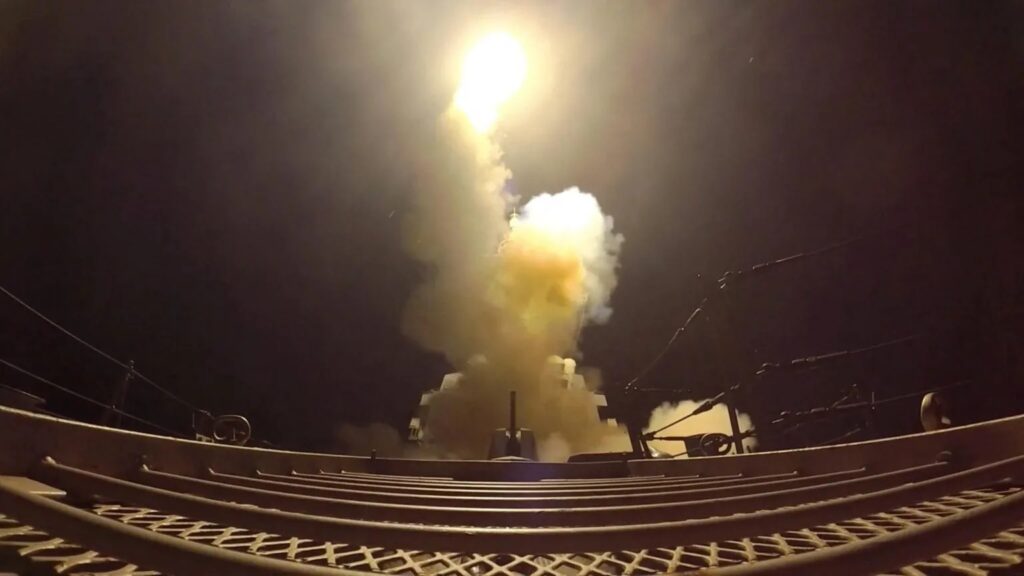
The escalation has cast doubt over the preliminary agreement that the US and Iran signed in June to end their four-month conflict and reopen the strait.
They have also caused a jump in oil prices, with Brent crude up more than 3% on Monday. Shortly after 17:00 ET (21:00 GMT) on Sunday, US Central Command said it had begun a new round of strikes across Iran.
Fighter jets, naval vessels, and one-way attack aerial and sea drones targeted Iranian air-defence systems, coastal radar sites, and missile and drone capabilities, a later statement said.
US forces were “prepared to ensure that freedom of navigation remains available to commercial shipping despite Iran’s continued unwarranted aggression, harassment, threats, and arbitrary declarations,” it added.
Minutes before the initial Centcom announcement, Iranian state TV reported explosions in several locations along the country’s Gulf coast, including in Sirik, Qeshm Island, Bandar Abbas and Jask.
State news agency Irna reported that a US strike killed one person at a water pumping station in the south-western city of Mahshahr, in Khuzestan province. A telecommunications company worker was also killed in a strike in Hormozgan province, to the east, it added.
On Monday afternoon, Irna cited an official in Khuzestan as saying that two people had been killed in US strikes in the border city of Abadan. It also said several fresh explosions had been heard in Qeshm and Bandar Abbas.
The Islamic Revolution Guard Corps (IRGC) said Iran had retaliated for the overnight strikes with a series of attacks on US military bases and infrastructure in the Middle East.
These included fuel tanks and ammunition dumps at the Prince Hassan air base in Jordan, a drone command-and-control centre and radar systems in Bahrain, a missile base in Kuwait, and a radar system in Oman.
The Jordanian armed forces said on Monday morning that they intercepted four missiles that entered the kingdom’s airspace from Iranian territory, and that no casualties or material damage were reported.
Kuwait’s military meanwhile said that its air defence systems engaged “hostile aerial targets” within its airspace, and Bahrain’s military said it had intercepted and destroyed “several treacherous Iranian aerial attacks”.
Later on Monday, Iranian state TV said the IRGC’s naval forces had fired “warning shots” at two ships attempting to “illegally” transit the Strait of Hormuz.
Iran pledged to allow the safe passage of commercial vessels through the strait according to the memorandum of understanding it signed with the US last month. However, it has launched missiles and drones at a number of ships that it has said are using an unauthorised route through Omani territorial waters.
In an interview with Fox News on Monday, Trump said the US was hitting Iran “very hard” because it had broken the deal on the Strait of Hormuz.
“We’re going to keep the strait, and we’ll probably run it. We’ll become the guardian of the strait,” he added. “And we should be reimbursed for that.”
Later, Trump wrote on Truth Social that the US was immediately reinstating its naval blockade of Iranian ships and vessels using Iranian ports.
“All other countries will have fair and open use of the Strait,” he added.
“The U.S.A. will be, from this point forward, known as ‘THE GUARDIAN OF THE HORMUZ STRAIT,’ but as such, and as a matter of FAIRNESS, will be reimbursed, at the rate of 20% on all cargo shipped, for any and all costs necessary to do the job of providing safety and security to this very volatile section of the World.”
An IRGC spokesman said that by interfering in the Strait of Hormuz the US had “seriously endangered the security of the world’s oil and gas supply and must be held accountable”, according to Irna.
He also declared that Iran would “continue to exercise sovereignty over and management of the Strait of Hormuz”.
Iran’s foreign ministry said in a statement earlier on Monday that the US attacks were “rendering futile” all efforts to reduce tensions.
“The US regime has also caused the return of insecurity in the Strait of Hormuz and disruption of international commercial shipping by openly interfering in the process of Iran implementing the necessary arrangements in the Strait of Hormuz,” it added. Foreign ministry spokesman Esmail Baqai told reporters that Iran was trying to agree a joint mechanism with Oman to manage traffic through the strait, but that pressure on Muscat from Washington was impeding progress. Trump threatens more strikes on Iran as Tehran warns of ‘fearless’ response ceasefire agreement with Iran is “over”, blasting the country’s leadership as “scum” and “cuckoo” after fresh exchanges of fire overnight. Speaking later to reporters at a Nato summit in Turkey, the American president said the US “hit them very hard last night” and will “probably hit them hard again tonight”.
He accused Tehran of violating an interim deal signed by both countries in June that called for an end to the conflict, adding that they “lie” and “cheat”.
Iran’s Foreign Minister Abbas Araghchi responded in a post on X: “We do not answer vulgarity with vulgarity, but with action: fearlessly and with great valour.”
Tuesday night into Wednesday saw the worst exchange of strikes between the US and Iran since the deal – known as a memorandum of understanding (MoU) – was signed on 17 June. US-Iran memorandum of understanding in full text of an agreement between the US and Iran to end the war has been released by the US.
A senior US official read the deal – known as a memorandum of understanding (MOU) – to the media, including the BBC. It includes a commitment from both sides to further talks to reach a final agreement over the next 60 days, and also refers to reopening the Strait of Hormuz and the US lifting sanctions on Iran.
Point 1: The United States of America and the Islamic Republic of Iran and their allies in the current war, by signing this MOU, declare the immediate and permanent termination of military operations on all fronts, including in Lebanon, and undertake from now on not to initiate any war or any military operation against each other, and to refrain from the threat or use of force against each other, and ensuring the territorial integrity and sovereignty of Lebanon. The final deal will confirm the permanent termination of the war on all fronts, including in Lebanon and other provisions of this paragraph.
Point 2: The United States of America and the Islamic Republic of Iran undertake to respect each other’s sovereignty and territorial integrity, and to refrain from interfering in each other’s internal affairs.
Point 3: The United States of America and the Islamic Republic of Iran commit to negotiating and achieving the final deal in maximum 60 days, extendable with mutual consent.
Point 4: Immediately upon the signing of this MOU, the United States of America will begin the removal of its naval blockade and any disturbances or impediments against the Islamic Republic of Iran, and it will fully end the naval blockade within 30 days. During this period, the traffic of vessels will be in proportion to the numbers of pre-war traffic being restored by the Islamic Republic of Iran. United States of America further undertakes to remove its forces from the proximity of the Islamic Republic of Iran within 30 days after the final deal.
Point 5: Upon the signing of this MOU, the Islamic Republic of Iran will make arrangements using its best efforts for the safe passage of commercial vessels with no charge for 60 days, only from the Persian Gulf to the Sea of Oman and vice versa. The traffic of commercial vessels will immediately start, and considering the need for removing the tactical and military obstacles and de-mining by the Islamic Republic of Iran will be instated within 30 days. The Islamic Republic of Iran will conduct dialog with the Sultanate of Oman to define the future administration and maritime services in the Strait of Hormuz, in discussion with other Persian Gulf littoral states in line with the applicable international law and the sovereign rights of coastal states of the Strait of Hormuz.
Point 6: The United States of America undertakes with regional partners to develop a definitive, mutually agreed plan with at least $300 billion (£225 billion) for the reconstruction and economic development of the Islamic Republic of Iran. The mechanism for the implementation of this plan will be finalised as part of a final deal within 60 days. All required licenses, waivers and permissions needed for the relevant financial transactions will be granted by the United States of America.
Point 7: The United States of America undertakes to terminate all types of sanctions against the Islamic Republic of Iran, including the United Nations Security Council resolutions, i.e. International Atomic Energy Agency (IAEA) Board of Governors resolutions and all unilateral U.S. sanctions, primary and secondary, in an agreed upon schedule. As part of the final deal, the Islamic Republic of Iran and the United States of America acknowledge the critical importance of the sanctions termination issue above mentioned, and express their intentions to immediately address these issues in the negotiations in order to achieve mutual agreement on them.
Point 8: The Islamic Republic of Iran reaffirms that it shall not procure or develop nuclear weapons. The United States of America and the Islamic Republic of Iran have agreed to resolve the disposition of stockpiled enriched material, pursuant to a mechanism that will be mutually agreed upon in accordance with the schedule mentioned in paragraph seven, with the minimum methodology to be down. Blending on site under the supervision of the IAEA. The two parties also agreed to discuss the issue of enrichment and other mutually agreed matters related to the Islamic Republic of Iran’s nuclear needs, based on a satisfactory framework being agreed upon in the final deal. The final deal will confirm the provisions of this paragraph. The United States of America and the Islamic Republic of Iran acknowledge the critical importance of the nuclear issues above mentioned, and expressed their intention to immediately address these issues in the negotiations in order to achieve mutual agreement on them.
Point 9: Pending the final deal, the United States of America and the Islamic Republic of Iran agree to maintain the status quo. The Islamic Republic of Iran will maintain the current status quo of its nuclear program, and the United States of America will not impose any new sanctions and will not deploy additional forces in the region.
Point 10: The United States of America undertakes that immediately upon the signing of this MOU and until the termination of sanctions, the U.S. Department of Treasury will issue waivers for the export of Iranian crude oil, petroleum products and derivatives and all associated services including banking, transactions, insurances, transportation, etc.
Point 11: The United States of America undertakes to make fully available for use the frozen or restricted funds and assets of the Islamic Republic of Iran upon the implementation of the MOU, the United States of America and the Islamic Republic of Iran will mutually agree on the procedures related to the release of these funds. During the negotiations. Such funds, whether retain the original account or transfer, shall be made fully usable for payment to any ultimate beneficiary designed by the central bank. Ultimate beneficiary designated by the central Bank of the Islamic Republic of Iran. The United States of America undertakes to issue all necessary licenses and authorisations accordingly.
Point 12: The United States of America and the Islamic Republic of Iran agreed that an executive mechanism will be established to monitor the successful implementation of this MOU and the future compliance of the final deal.
Point 13: After signing the MOU and subject to the beginning of the implementation of paragraphs one, four, five, ten and 11 of this MOU and the continuing implementation of these measures. The United States of America and the Islamic Republic of Iran will start negotiations regarding the final deal exclusively.
Point 14: The final deal will be endorsed by a binding United Nations Security Council (UNSC) resolution.
When asked about the deal at the Nato summit on Wednesday, Trump said: “I think it’s over. I don’t want to deal with them any more, they’re scum… they’re led by sick people and they’re vicious, violent people.”
“We make a deal… They [Iran] go outside, talk to the press, they say ‘we never even talked about it’. There’s something wrong with them. They’re cuckoo. As far as I’m concerned, it’s over.”
Speaking ahead of the summit, the president said US negotiators could continue talks “if they want” but said he saw it as “a waste of time”.
However in a later news conference, Trump told reporters he didn’t think the Iran war would start again and said “anything that happens will be over quickly”. His comments have prompted responses from several Iranian officials. A senior adviser to Iran’s supreme leader, Ali Akbar Velayati, warned new strikes from the US would be met with an “immediate response”.
Iran’s Deputy Foreign Minister Kazem Gharibabadi also said Trump’s comments “are not a sign of strength, but rather an admission of the failure of a policy built on brute force, sanctions, and threats for years, which could not bring the Iranian nation to its knees”.
US Central Command (Centcom) said on Tuesday it had launched “powerful” strikes in response to attacks on three tankers in the Strait of Hormuz. Iranian state media said eight members of the country’s army had been killed in US strikes in Bandar Abbas and Bushehr, southern Iran.
The US also said it had revoked its temporary suspension of sanctions on Iranian oil sales.
On Wednesday, Iran said it targeted US military sites in Bahrain and Kuwait in retaliation.
Oil prices jumped after Trump’s comments, although they are still well below the highs seen during the full closure of the strait.
Centcom said on Wednesday more than 20 US Navy warships were continuing to patrol waters across the Middle East. Iran’s parliamentary speaker Mohammad Bagher Ghalibaf, who is also the country’s chief negotiator with the US, accused the US of breaching the MoU on sanctions on oil sales and other issues, including the attacks in southern Iran and “violating Iranian adjustments in the Strait”.
“The era of bullying and extortion is over. It leads nowhere. We don’t fold,” he said after the US strikes.
Nato chief Mark Rutte described the American strikes as “absolutely necessary”, saying that Iran was “basically violating the ceasefire”. US strikes Iran after attack on cargo ship military has conducted strikes on Iranian targets after President Donald Trump accused Iran of a “foolish violation” of its truce following an attack on a cargo ship in the Strait of Hormuz.
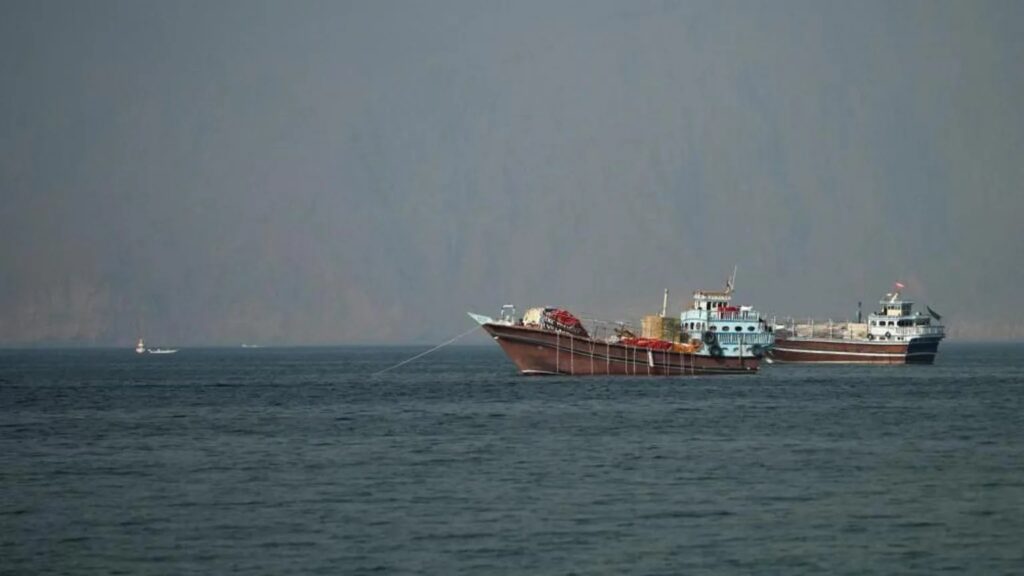
US Central Command said it had struck missile and drone storage facilities and coastal radar positions on Friday, in response to a drone attack on a cargo ship on Thursday which halted a planned evacuation of sailors stuck in the region.
Tehran said the cargo ship was attacked because it was using an unauthorised route to transit through the Gulf waterway.
After the US strikes, Iran in turn accused the US of violating their interim deal and said it had struck targets linked to American forces.
US Central Command – or Centcom – described the American strikes as “a powerful response” to the drone attack a day earlier.
“The unwarranted aggression against commercial shipping by Iranian forces clearly violated the ceasefire,” it said in a statement.
“Furthermore, Iran’s dangerous behaviour undermined freedom of navigation as commerce increasingly flows through the vital international trade corridor.”
Centcom said the US military would “continue to provide safe passage coordination and support to commercial vessels transiting the strait”.
Iran’s foreign ministry released a statement on Saturday morning, saying the country had carried out strikes against targets linked to American forces in response, and blamed the “treaty-breaking US regime” for the situation.
Iran’s Islamic Revolutionary Guard Corps (IRGC) said its navy had struck US military positions in the region, without providing further details. The BBC contacted the Pentagon for comment.
Bahrain’s foreign ministry said the country had come under attack from “several Iranian drones” early on Saturday, condemning the action as a “flagrant violation” of its sovereignty and accusing Tehran of undermining peace efforts. Also on Saturday, the United Kingdom Maritime Trade Operations (UKMTO) said a tanker was struck by an unidentified projectile in the Strait of Hormuz.
The vessel sustained damage to its bridge, but all crew were safe and no environmental damage had been reported, UKMTO added. Tehran effectively closed the strait after US and Israeli attacks against Iran began at the end of February.
The shutdown of the critical waterway for oil and gas shipments caused a spike in global oil prices and choked off shipments of other crucial commodities such as fertiliser.
The US and Iran agreed on 17 June to end hostilities under a 14-point memorandum of understanding, which had also called for Iran to use its “best efforts for the safe passage of commercial vessels with no charge for 60 days”.
In a post on X following the US retaliatory strikes, Vice-President JD Vance said that if Iran “has disagreements about how the MOU is being applied, they can pick up the phone”.
“But violence will be met with violence,” he added.
Ebrahim Azizi, head of the Iranian parliament’s national security commission, though, said on social media that the US had “attacked Iran in the middle of negotiations once again”.
He continued in his social media post: “This reckless violation of the ceasefire will, as always, lead to retreat and regret on their part. The blame game does not work anymore.”
Speaking to reporters at the White House on Friday afternoon, Trump refused to be drawn into questions on how the US might respond to the drone attack, or whether he viewed the ceasefire as still intact.
“You’ll find out,” he said. “I don’t like the fact that they took a shot yesterday. They shouldn’t be doing that.”
Asked why he believed Iran would conduct such an operation, Trump said only that “they’re a little bit different”.

In recent days, Trump and other US officials insisted negotiations with Iran were progressing well, saying Iran had given up any suggestion of tolling vessels transiting through the Strait of Hormuz.
In a Truth Social post on Wednesday, Trump said Iran had informed the US that there would be “no tolls, no insurance costs and no other charges of any kind being sought or received”.
“If this is false information, negotiations would end, immediately,” he added. US-Iran Strikes: Latest Developments Iran and US forces traded new military attacks Tuesday, with Tehran warning of “more decisive and powerful” strikes ahead as the conflict threatened to widen with a blockade of Saudi ports by Houthi rebels in Yemen.
Here are the latest developments on Wednesday:
US Secretary of State Marco Rubio told Southeast Asian foreign ministers on Wednesday that Iranian control of the Strait of Hormuz would set a dangerous precedent with repercussions beyond the Middle East.
“If we create a precedent in the Middle East where a nation-state can decide to control an international waterway, charge a toll and blow up your ships if you don’t pay, we have created a very dangerous precedent that will repeat itself in other parts of the world, including this region,” Rubio told envoys at a Manila gathering of the Association of Southeast Asian Nations (ASEAN).
He added that the United States remains “open” to diplomacy with Iran but that Tehran is not “serious”.
US Central Command said Tuesday it had completed an 11th consecutive night of strikes on military targets in Iran as the Middle East war intensified. US forces targeted military infrastructure to “further degrade Iran’s ability to threaten commercial shipping in the Strait of Hormuz,” CENTCOM posted on X.
US President Donald Trump met his Lebanese counterpart Joseph Aoun at the White House, where he vowed to support the country with disarming Iran-backed Hezbollah and forging a lasting peace with Israel.
“President Aoun stressed the urgent need for a full Israeli withdrawal from Lebanese territory,” according to a readout of the meeting from the Lebanese presidency. After the talks, Trump said he would authorize the resumption of direct flights by US airlines to Lebanon, which have been suspended since the 1985 hijacking by Lebanese Islamist militants of a TWA flight with many Americans aboard.
Defense Secretary Pete Hegseth said the Iran war has cost the United States $37.5 billion so far, up from a previous estimate of nearly $29 billion in mid-May.
“The estimate we have as of today is $37.5 billion,” Hegseth told lawmakers during a congressional hearing Tuesday where he defended a request for $67 billion in supplemental funding for the Pentagon.
Trump said the United States will continue attacks on Iran, while forecasting it would take the Islamic republic two decades or more to rebuild from current damage. “If we left right now, it would take Iran 20, 25 years to rebuild. Okay, and we’re not finished at all…we’re not leaving right now,” he told reporters during his meeting with Lebanon’s Aoun.
Trump said he would “take care of” the Houthi rebels if the Iran-backed militant group follows through on its threatened blockade of Saudi ports.
“If something like that happens, we take care of it,” Trump told reporters.
Pakistan’s Prime Minister Shehbaz Sharif called for restraint from all warring sides during a meeting with Iran’s interior minister.
Sharif “urged all sides to exercise restraint and refrain from actions that could further destabilize the region”, a statement from his office said, adding that he told Iran’s Eskandar Momeni that Pakistan would continue to act as a mediator. Kuwait said Iran hit several power and water desalination plants Monday, causing fires in the fourth such attacks in as many days.
Bahrain sounded sirens as the country’s military had said it intercepted the latest of a spate of Iranian attacks on the Gulf kingdom.
“The siren has been sounded, Citizens and residents are urged to remain calm and head to the nearest safe place,” the interior ministry said in a statement on X.
Iran’s Revolutionary Guards said they stopped two “non-compliant oil tankers” attempting to transit the Strait of Hormuz, after “explosions caused extensive fires aboard them,” state news agency IRNA reported.
The Barron’s news department was not involved in the creation of the content above.
Naval Blockade: President Donald Trump reinstated a strict naval blockade. He proposed a 20% security fee to escort vessels through the Strait.
Tanker Engagements: US aircraft disabled the Curacao-flagged oil tanker Belma using Hellfire missiles. The vessel ignored warnings while heading toward Iran’s primary oil hub at Kharg Island. US strikes Iranian-linked oil tanker deep within operation deep within the gulf signals a widening of the blockade’s scope. Recent attacks in the waterway have heightened regional tensions significantly. The International Energy Agency warned of global economic peril if the conflict persists.
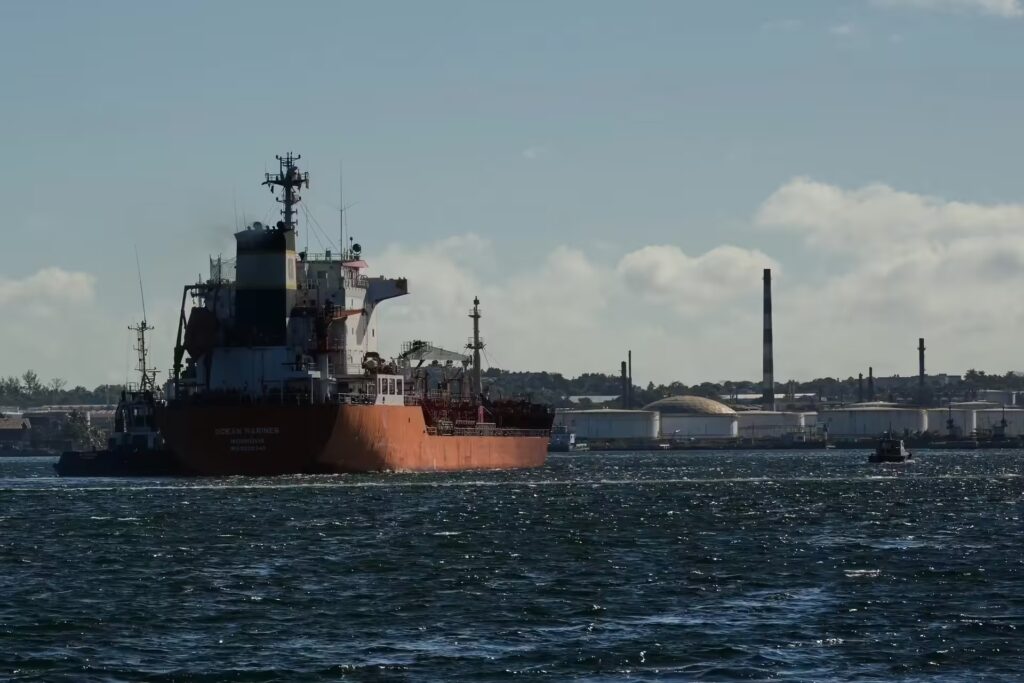
WASHINGTON/CAIRO, June 28 (Reuters) – Iran and the United States agreed to halt recent hostilities in the Gulf and renew talks regarding their dispute over the Strait of Hormuz, a U.S. official said on Sunday, raising hopes of saving an interim peace deal that was under pressure from days of tit-for-tat strikes.
“Technical talks are slated to continue on all areas of the MOU. Both sides will stand down for now and vessels can move freely,” the official said, referring to the 14-point memorandum of understanding that was agreed on June 17 under which the strait would be re-opened for traffic. Axios, which first reported the cessation of hostilities, citing a senior U.S. official, said talks would resume Tuesday in Qatar.
A return to diplomacy would follow several days of strikes and counterstrikes since an Iranian projectile hit a cargo vessel in the Strait of Hormuz on Thursday, with both the U.S. and Iran accusing the other of breaking an interim ceasefire that was agreed to on June 17.
