
Birds bear the brunt of fractured wings, lacerations, and neck injuries due to the banned manjha that continues to be used in kites. An NGO, PfA Wildlife Hospital in Bengaluru, is helping the birds recover.
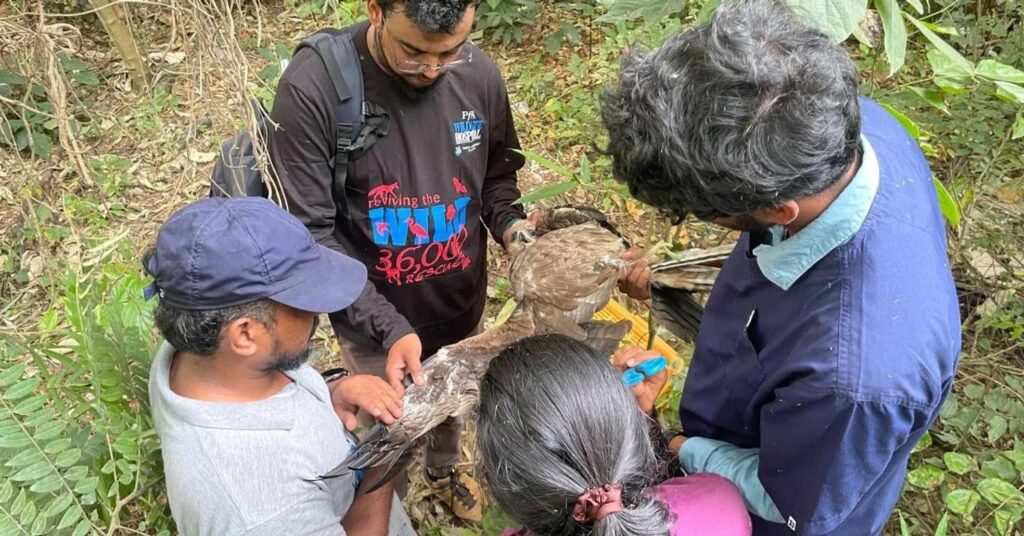
Bengaluru’s PfA Wildlife Hospital treats birds for manjha-related injuries across India are eagerly anticipating the next few days. The birds aren’t. A spectrum of colours in the form of kites is set to fill the skies as the country gears up to celebrate Makar Sankranti, the harvest festival that marks the end of winter and heralds spring. As We Fly Kites This Makar Sankranti, A Small Choice Can Make Skies Safer for Birds As skies fill with kites during Makar Sankranti, the choice of manjha can mean joy for some and injury or death for birds and people below.
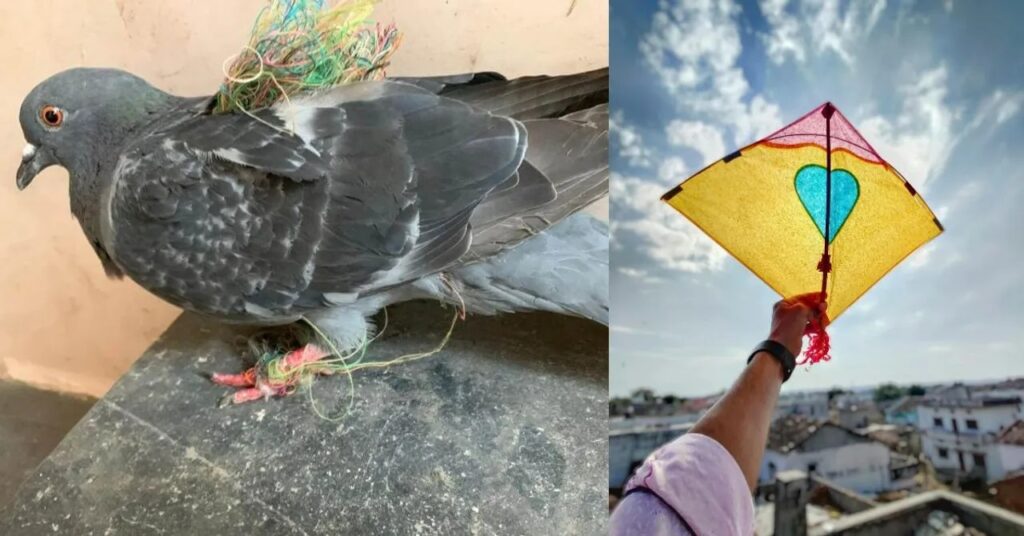
Chinese manjha has been banned in many parts of India due to its danger to birds and people.
Every January, rooftops and open grounds across India come alive with colour as families gather to celebrate Makar Sankranti. The festival is marked by laughter and friendly kite battles. However, beneath this festive joy lies a troubling reality. For birds, stray animals, and even people on the streets below, the choice of kite string, or manjha, can be the difference between celebration and catastrophe.
Meet the Delhi Brothers Who Rescued 23000+ Birds Entangled in Kite Strings
For over two decades, Nadeem Shehzad and Mohammad Saud have been saving Delhi’s injured birds, victims of deadly kite strings, from a tiny home clinic.
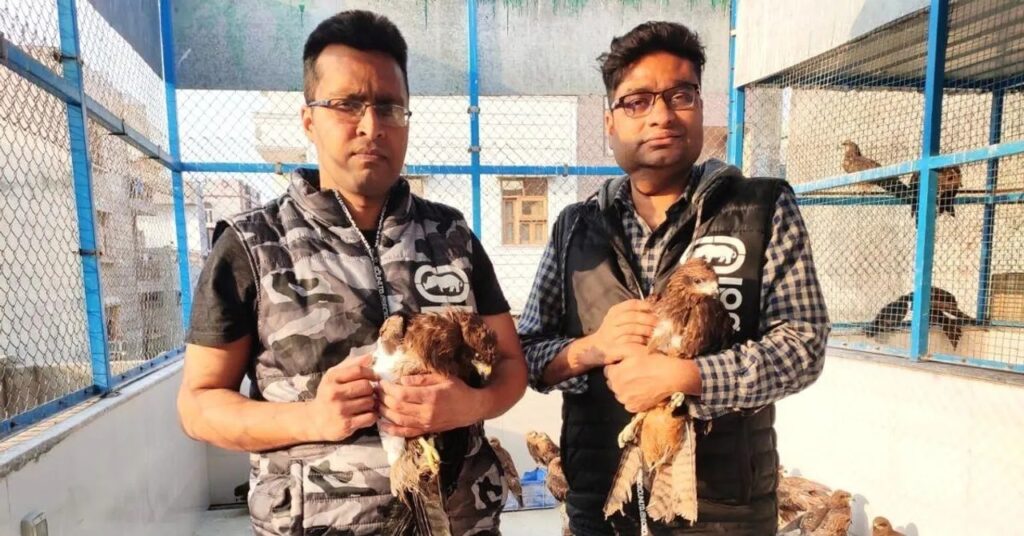
In the 90s, when Delhi-based brothers Nadeem and Mohammad Saud were in their late teens, they came across an injured kite. The bird was entangled in a manjha, and lay on the side of the road.
This was the first time that the duo saw how birds fall prey to injuries and even death due to excessive kite flying. Manjhas, which are synthetic kite strings coated in metal or glass, can be fatal to birds flying in the sky — they can lose their wings, leaving them permanently grounded. How Many People Would Quit Their Jobs & Then Save an Endangered Bird? This Hero Did Wildlife warrior Ramki Sreenivasan started the non-profit Conservation India (CI) and Friends of the Amur Falcon to stop the illegal poaching of over one lakh of the threatened migratory birds in Nagaland.
Every winter, thousands of majestic Amur falcons fill the Nagaland skies along the Doyang valley reservoir. World Migratory Bird Day 2026 to Highlight Important Role of Community Science in Bird Conservation
Bonn/Boulder/Incheon, 18 December 2025 – The global Partners behind World Migratory Bird Day (WMBD) are excited to announce the theme for 2026: “Every Bird Counts – Your Observations Matter!” highlighting the important role of community science (also referred to as citizen science) for the conservation of migratory birds.
The 2026 campaign shines a spotlight on people-driven efforts that are essential for bird conservation and science, celebrating how individuals, communities, and organizations around the world are helping to build the knowledge base to better conserve migratory birds across borders.
By focusing on the contribution of individuals, participatory science and public bird monitoring efforts, the campaign will celebrate the millions of bird enthusiasts around the world that are contributing to the data and knowledge that inform policy decisions and are essential for bird conservation – through each recorded observation.
The Power of Community Science
From backyard observations to coordinated global surveys, millions of people around the world contribute vital information about migratory birds, their habitats, and the challenges they face each year. Through these recorded observations, people are engaging in community / citizen science that helps track migration patterns, population trends, and changes in habitats across flyways. The campaign will showcase how every observation contributes essential data and supports evidence-based conservation at local, national, and international scales.
Connecting with Nature to Support Conservation
When people take part in bird counting activities that help gather this important data, they also strengthen their connection to nature, deepen their understanding of the pressures facing birds, and often become stewards of nature protection, strengthening society’s engagement with nature.
A Global Effort Across All Flyways
This year’s theme is particularly meaningful as it recognizes the many community science projects along all of the world’s major flyways. We will be focusing on the monitoring initiatives and platforms that already exist to record bird observations in ways that support both science and policy. World Migratory Bird Day 2026 also coincides with the 60th Anniversary of the International Waterbird Census, an opportunity to celebrate this global effort to monitor and protect migratory waterbirds as well as promote other community and citizen science initiatives across all flyways of the world. By encouraging people to gather observations from across migratory routes, we can build a clearer picture of the “story of the flyways,” emphasizing connectivity, international collaboration, and our collective responsibility.
How You Can Contribute
You can get involved in conservation-focused projects that contribute to long-term monitoring and research, such as community science programs, coordinated bird counts, or public events that build awareness of how sustained data collection supports migratory birds. Even small, regular observations can add value when they are part of a larger, ongoing effort to track populations over time. However you choose to participate, thoughtful and consistent engagement helps strengthen the science that informs conservation policy across the world’s flyways. World Migratory Bird Day 2026 will take place on 9 May and 10 October, recognizing that migration occurs at different times in the northern and southern hemispheres and is part of a repeating annual cycle. The partners behind World Migratory Bird Day look forward to working closely with all interested stakeholders, external partners, governments, organizations, and communities across all flyways to amplify this message and continue using World Migratory Bird Day as a way to raise awareness and conservation action for migratory birds across borders.
Every bird counts! Join us and make a difference by counting birds for conservation!
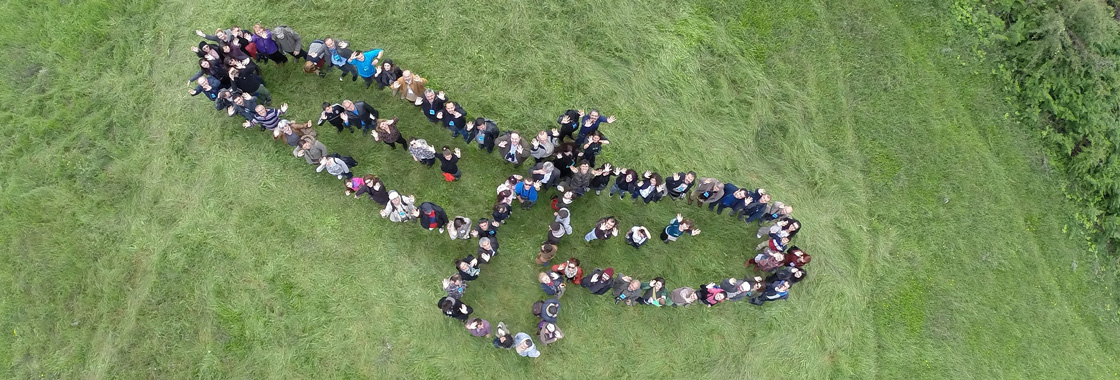
World Migratory Bird Day is an Annual Global Celebration
World Migratory Bird Day (WMBD) is an annual awareness-raising campaign highlighting the need for the conservation of migratory birds and their habitats. It has a global outreach and is an effective tool to help raise global awareness of the threats faced by migratory birds, their ecological importance, and the need for international cooperation to conserve them. Every year people around the world take action and organize public events such as bird festivals, education programmes, exhibitions and bird-watching excursions to celebrate WMBD. All these activities can also be undertaken at any time on the year because that countries or regions observing the peak of migrations at different times, but the main days for the international celebrations on the second Saturday in May and in October. Nagaland is the largest roosting site for migratory birds — a stopover on their way to Southern Africa. The birds spend a few weeks in the Indian sub-continent before they resume their inter-continental journey, which spans 22,000 km, making it one of the longest routes in the avian species category.
However, these grey insectivorous birds of prey were under serious threat of poaching. Each year, as the birds would their roosts in Doyang Valley, the local fishermen would hunt them on a massive scale.
However, thanks to a team of committed conservationists, these numbers have boiled down to almost zero. Interestingly, the very fishermen who trapped the birds in their fishing nets have now become fierce protectors of the species.
Putting A Blanket Ban On Hunting
/english-betterindia/media/post_attachments/uploads/2021/12/Amur-net-1639148241.jpg)
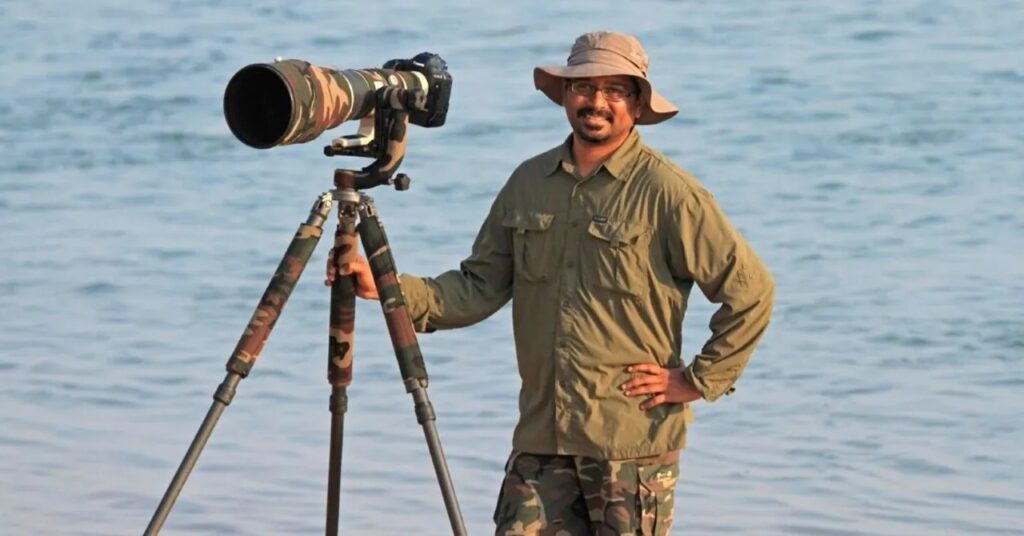
The team of conservationists consisted of Bano Haralu and Roko Kuotsu from Nagaland, Shashank Dalvi, a wildlife biologist from Mumbai, and Ramki Sreenivasan, a Bangalore-based wildlife photographer.
How Many People Would Quit Their Jobs & Then Save an Endangered Bird? This Hero Did
Wildlife warrior Ramki Sreenivasan started the non-profit Conservation India (CI) and Friends of the Amur Falcon to stop the illegal poaching of over one lakh of the threatened migratory birds in Nagaland.
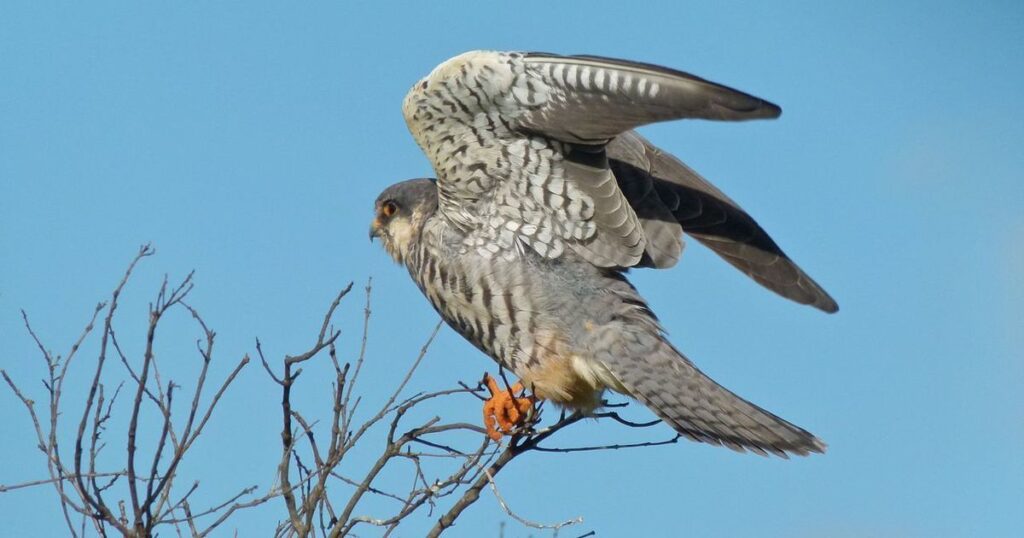
Every winter, thousands of majestic Amur falcons fill the Nagaland skies along the Doyang valley reservoir. The birds are native to South Russia and North China, and the International Union for Conservation of Nature (IUCN) has listed this endangered species under protection under and the Convention on Migratory Species.
Nagaland is the largest roosting site for migratory birds — a stopover on their way to Southern Africa. The birds spend a few weeks in the Indian sub-continent before they resume their inter-continental journey, which spans 22,000 km, making it one of the longest routes in the avian species category.
However, these grey insectivorous birds of prey were under serious threat of poaching. Each year, as the birds would their roosts in Doyang Valley, the local fishermen would hunt them on a massive scale. A conservative number during hunting season in 2012 was estimated at least birds in a single season.
However, thanks to a team of committed conservationists, these numbers have boiled down to almost zero. Interestingly, the very fishermen who trapped the birds in their fishing nets have now become fierce protectors of the species.
Putting A Blanket Ban On Hunting
The team of conservationists consisted of Bano Haralu and Roko Kuotsu from Nagaland, Shashank Dalvi, a wildlife biologist from Mumbai, and Ramki Sreenivasan, a Bangalore-based wildlife photographer.
Ramki’s passion for conservation and wildlife stems from his younger years, which he spent observing and learning about birds. “I remember being fascinated by birds in school and pursued my interest through documentaries, books and binoculars,” he tells The Better India.
“Before this, I was in the corporate world, and eventually became an entrepreneur. In 2008, I returned to my passion – wildlife. I started in Bengaluru, which was the hub of bird photographers, and was quick to hop on the bandwagon. I started wildlife photography with my friend Shashank,” he says.
During these sessions, Ramki says he observed a number of things. For one, birds were captured, skinned and used for trade and delicacies. The activity had continued uninterrupted despite a 2010 government ban on hunting and killing the birds. It was a massacre, and as every house had Amur falcons either dead or dying. He says the team was shocked and felt pained by this.
So the same year, Ramki founded Conservation India (CI) to establish norms, share learnings, case studies and draw a blueprint for best practices in the field, including running campaigns. It is the largest conservation portal in the country today.
Ramki says that the team’s investigation revealed that over one lakh birds were falling victim to indiscriminate hunting.
“The investigation revealed that every house was involved in hunting, which was a lucrative business to earn quick profits during the winters. However, the impoverished fishermen were unaware of the massive harm they were doing to the environment,” he says.
Ramki and his friends documented all their research in photographs and shared it with the district commissioner in 2012. Shocked by the revelation, the administration issued fresh directives banning the hunting of the birds. Moreover, the movement mobilised the forest department officials to take legal action against the perpetrators.
They also made the findings of their study public via the media. International publications took cognisance of the issue and put pressure on local authorities. Stopped but required a long term plan rather than a temporary solution.
Poachers Become Conservators
/english-betterindia/media/post_attachments/uploads/2021/12/Amur-trap-1639148258.jpg)
In addition to the CI foundation, Ramki started an initiative, Friends of the Amul Falcon, to seek grants and funding from various organisations. The campaign worked to create awareness for children on conservation.
He felt the need to devise a new way to create awareness among the locals and sensitise them towards conservation. The children learned quickly and influenced the behaviour of their parents and adults around them, Ramki says. In 2013, then CM of Nagaland, Neiphiu, visited the valley and appreciated the locals’ cooperation in conserving the species.
Eventually, the hunters became protectors and started the Amur Falcon Roosting Area Union to keep vigil and stop any illegal activity. The fishermen also started rescuing birds stuck in discarded nets. It showed their commitment to saving the birds. The Pangti Story: How a Nagaland village turned from hunting ground to safe haven for Amur falcon six years ago, villagers in Pangti hunted nearly 14,000 of the migratory bird but now they guard them. What changed?
For filmmaker Sesino Yhoshu, watching tens and thousands of Amur falcons, Falco amurensis, roost by the Doyang reservoir in a remote corner of Nagaland was an awe-inspiring moment. It stirred something deep inside her. Pangti Population – Wokha, Nagaland
Pangti is a large village located in Sungro Circle of Wokha district, Nagaland with total 1209 families residing. The Pangti village has population of 7825 of which 3826 are males while 3999 are females as per Population Census 2011.
In Pangti village population of children with age 0-6 is 856 which makes up 10.94 % of total population of village. Average Sex Ratio of Pangti village is 1045 which is higher than Nagaland state average of 931. Child Sex Ratio for the Pangti as per census is 1212, higher than Nagaland average of 943.
Pangti village has lower literacy rate compared to Nagaland. In 2011, literacy rate of Pangti village was 77.13 % compared to 79.55 % of Nagaland. In Pangti Male literacy stands at 83.40 % while female literacy rate was 71.02 %.
As per constitution of India and Panchyati Raaj Act, Pangti village is administrated by Sarpanch (Head of Village) who is elected representative of village. Our website, don’t have information about schools and hospital in Pangti village.
Pangti Data
| Particulars | Total | Male | Female |
|---|---|---|---|
| Total No. of Houses | 1,209 | – | – |
| Population | 7,825 | 3,826 | 3,999 |
| Child (0-6) | 856 | 387 | 469 |
| Schedule Caste | 0 | 0 | 0 |
| Schedule Tribe | 7,803 | 3,817 | 3,986 |
| Literacy | 77.13 % | 83.40 % | 71.02 % |
| Total Workers | 2,970 | 1,597 | 1,373 |
| Main Worker | 2,190 | – | – |
| Marginal Worker | 780 | 360 | 420 |
Caste Factor
In Pangti village, most of the village population is from Schedule Tribe (ST). Schedule Tribe (ST) constitutes 99.72 % of total population in Pangti village. There is no population of Schedule Caste (SC) in Pangti village of Wokha.
Work Profile
In Pangti village out of total population, 2970 were engaged in work activities. 73.74 % of workers describe their work as Main Work (Employment or Earning more than 6 Months) while 26.26 % were involved in Marginal activity providing livelihood for less than 6 months. Of 2970 workers engaged in Main Work, 1611 were cultivators (owner or co-owner) while 35 were Agricultural labourer.
The product of that curiosity culminated in The Pangti Story, a 26-minute documentary that explores the transition of an entire village from slaughtering hundreds and thousands of these winged visitors to becoming conservationists.
The film won the 65th National Awards for Best Environment Film in the non-feature category in India this year.
“When I first heard about the massacre of the birds in Pangti, I was pretty shocked,” Yhoshu said. “But what really woke me up was that in such a short span of time, the village managed to reach zero-mortality rate. I was curious to know how it was possible to stop the hunting almost immediately.”

https://youtu.be/BSkujlGzvX4
This is probably the single largest congregation of Amur falcons recorded anywhere in the world and it is tragic that they meet such a fate. Our team has alerted all appropriate authorities in Nagaland. Government officials we spoke to have committed to put an end to the slaughter and have initiated specific action steps outlined below. Conservation India will continue to monitor and report on the situation.
It is significant to note that India, as a signatory to the Convention on Migratory Species (CMS), is duty bound to prevent this massacre, provide safe passage, as well as draw up appropriate action plans for the long-term conservation of this bird. In the recently concluded Convention on Biological Diversity (CBD), of which India is the president for the next two years, the importance of CMS in conserving species, and especially in stopping bushmeat hunting, was repeatedly stressed.
Background
In October, huge numbers of Amur falcons arrive in northeast India from Siberia en route to their final destination — Somalia, Kenya and South Africa. This handsome little raptor has one of the longest migration routes of all birds, doing up to 22,000 km in a year. The birds are unusual in that they migrate a large distance over the sea and also continue their journey at night. In October this year, a group of us (Ramki Sreenivasan from Conservation India, Shashank Dalvi, Bano Haralu, Rokohebi Kuotsu) travelled to Doyang reservoir in Wokha district to check out information that thousands of falcons were being hunted annually on the banks of the Doyang reservoir during their passage through Wokha district, Nagaland. The trip confirmed our worst fears. Doyang is a rockfill dam and hydroelectric plant on the Doyang River, a tributary of Brahmaputra, 30 km from Wokha town in Nagaland run by the North Eastern Electric Power Corporation (NEEPCO). On Oct 21, as we were reaching Doyang reservoir at 0830hrs, we found two women walking along the road openly with about 60 skinned birds that turned out to be amurs. This was our first encounter with the species. We saw the dead birds even before we saw the live ones.
Number of Amurs around Doyang
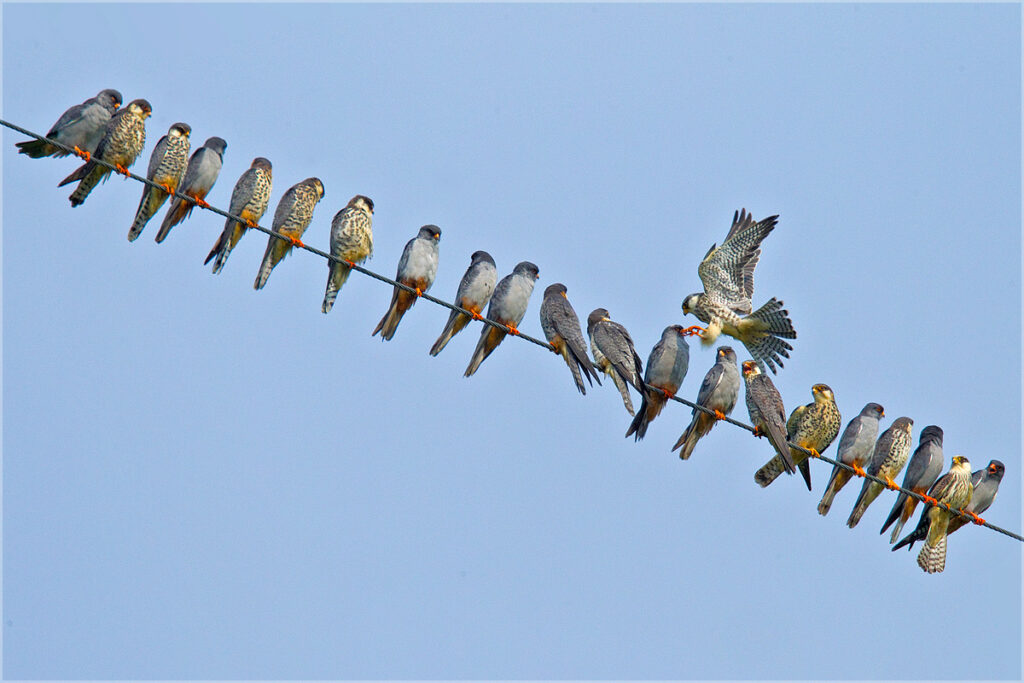
Almost immediately, we saw thousands of amurs on the transmission lines along the mountain ridge. They seemed to travel overnight and reach Doyang during the early hours. They seemed to use these wires for resting and hawking insects. Amurs are known to be wholly insectivorous (Irwin 1981). Here we estimated ~6000 Amur Falcons at 0840hrs. This count was only from the wires visible to us, and the wires stretched for hundreds of meters in each direction (see attached slideshow). The next morning (Oct 22), at 0630hrs we counted ~12,000 birds on the same wires and ~23,000 birds flying above the Doyang reservoir. Later at 0830hrs the birds were seen using transmission lines. The numbers dropped considerably and by 1230hrs, very few falcons were seen on the wires. Over the course of the day, we observed 12 hunters on the main road carrying between 60-200 birds per head totaling over a 1000 dead birds carried to their homes or local markets and even door-to-door selling.
The Massacre
1. Hunting process
The hunters ruthlessly exploit this particular behavior and set-up huge fishing nets (30-40m long, 10-12m tall) all over the roosting sites.
We accompanied one hunting group (of 4 hunters) to the other side of reservoir by rowboat where we saw several other hunting groups. Hunting groups consisted mainly of four hunters; some parties had two.
Birds get caught in the nets in large numbers. These birds get tangled in the nets while they come to roost during late evenings or when they leave the roost early in the morning. The nets were permanent and the hunters come every morning to remove the trapped birds. The nets were observed over the entire roosting area giving virtually no safe area for the birds. Branches and paths were cleared to set up the nets.
Each hunting group had set-up at least 10 nets. On an average, 18 birds (18.30, n=23) were caught per net; hence each group catches about 180 birds per day. This was confirmed with interviews with hunters. We were also informed that about 60-70 hunting groups operate every day. This means during the peak migration about 12,000 to 14,000 birds are caught everyday. This obviously results in a loss of very significant number of birds from population everyday. This year hunters started netting on 19th Oct (interview with hunter) and the netting will apparently continue till the end of migration. According to hunters the peak migration lasts 2-weeks (our group will confirm this over the course of the next week or two, plus will study it next year). Assuming just 10-days of peak migration through Doyang, this suggests a shocking 120,000- 140,000 birds removed from the population every year, and more if the migration lasts longer or if there are more hunting sites in the area (neighboring villages, districts, etc.). This number doesn’t include birds potentially killed using guns, catapults, etc. — a widespread and accepted practice amongst Nagas.
The captured birds are kept alive in mosquito nets or cane baskets near the nets so they can be exported alive to the customers and markets. From cane baskets, the birds are transferred to poles for ease of carrying into villages and towns. Birds eventually die in the process and these birds are de-feathered / plucked (like poultry) and smoked for sale (longer shelf life).
2. Sale
Each bird is sold for a price between Rs. 16-25 (always sold as number of birds for Rs. 100 ($ 1.9 / £ 1.2). This sale usually happens door-to-door in Pangti village (where most hunters are from) as well as nearby Doyang and Wokha towns. Hunters (and sellers) know that Amur killing is illegal and banned by the Deputy Commissioner (Wokha district) since 2010 vide an issued order (Order no: JUDL-13/DR/2008-09/ Dated, Wokha, the 16th Nov. 2010). We also came to know about a few Amurs on the sale in open markets in Dimapur, in the plains far away.
It is still a mystery where huge numbers of dead amurs go everyday, as the local villages cannot absorb such numbers for their consumption. One of the hunters told us that two pick-up trucks from Dimapur were to pick-up the birds from Pankgi village (we couldn’t confirm this and passed on the information to the District Commissioner and Superintendent of Police). It is critical to understand where the bulk of the birds go.
By the end of the day, with the stench of smoked amurs in our heads, the scale and the ruthlessness of the massacre numbed us.
Recommendations for Immediate Action
- Gain an understanding of and seal trade of amur meat mainly in big towns like Dimapur, Kohima.
- Aggressively follow-up on the enforcement of the DC’s ban with Forest Department, Police, local communities and the Church.
- Create awareness of the ban and the legal consequences (fine) in all villages including Pangti, Wokha, Doyang and Sungro.
Progress after our complaints
State-level
- He also intimated the superintendent of police of Wokha about the killing and the potential trade in amur meat. He also alerted all community leaders in the area to enforce the ban. He set-up a meeting for our team member Bano Haralu to address the village leaders on 29th October 2012.
- The Divisional Forest Officer (DFO) of Wokha district Mr. Supongtakshi Aier and a district administrator addressed approximately 50 village heads, council members and student bodies of Pangti, Sungro and Akhotso villages in Pangti (since most hunters are from Pangti, the village closest to the Doyang reservoir).
- The government officials categorically stated that any ongoing trapping and killing of birds after the DC order was a violation of the law and it would not be accepted. The respective village representatives were asked to inform their communities about the order and that violators would be fined. Village heads have agreed to inform their communities about the status of the Amur Falcons and to spread the message of being “guardians” to the birds rather than being “destroyers”. However, they expressed helplessness to put a total stop to the killing if some measures are not put in place to replace the “economy”generated by the killing of the birds during this season. The govt. has to address this on priority before the next season.
- The Chief Wildlife Warden of Nagaland Mr. T. Lotha has issued instructions to his staff to seize all traps found in the area and has warned of stern action including arrests against offenders. Forest guards and personnel have been on duty since, and will remain till the end of the migration to monitor the situation. They have also begun to confiscate all live and dead birds caught by villagers. Live birds have been released and dead birds burnt. In some spots, nets put up by hunters have been removed.
- A more robust and proactive plan is being thought out to be effectively implemented next year in the month of September a month before the migration season.
National-level
- The issue has been brought to the notice of the Minister of Environment and Forests, Smt. Jayanthi Natarajan, following the meeting of the standing committee of the National Board for Wildlife (NBWL) on Oct 31st, 2012 in New Delhi.
- India has repeatedly pointed out that migratory birds are killed on their way to India in other countries — the primary reason why the Siberian Crane is now locally extinct in India. This incident goes to show that bloody, seasonal hunting sprees targeting migratory species is happening in India too, and we have to take immediate action to stop this.
We will continue to update this page and send out emails to CI readers.
Additional information
The marathon migrant
The Amur Falcon is a complete, long distance, trans-equatorial migrant (Bildstein 2006). It has one of the of longest migration routes of all birds — doing upto 22,000 km in a year — from eastern Asia all the way to Southern Africa and back. It also is unusual in migrating over sea and migrates during the night (Meyburg 2010). Migrating birds leave their Asian breeding range and travel to northeast India and Bangladesh, where they fatten up while staging for overland flights over peninsular India (Ali and Ripley 1984). Subsequently, they undertake the longest regular overwater passage of any raptor, crossing over the Indian Ocean between Western India and tropical East Africa, a journey of more than 4,000 km, which also includes nocturnal flight (Bildstein and Zalles 2005). This species is finely attuned to the strong monsoon tailwinds, which results in its late arrival in eastern Africa in autumn (Ash and Atkins 2009). Migrants arrive in their southern African winter range in November-December and depart by early May (Mendelsohn 1997). This species is an “elliptical migrant” (Kerlinger 1989), and its return route back to its breeding range is largely overland and to the north and west of its southbound route (Bildstein and Zalles op cit.). Useful articles:
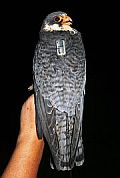
Amur Falcon migration route finally plotted Bernd Meyburg and his team has presented the first ever satellite tracking data for Amur Falcons at two conferences, one in the East (Asian Raptor Research and Conservation Network conference, Mongolia) and one in South Africa (Birds of Prey Programme Conference, Kimberley). The information gathered on 7 tracked Amur Falcons most probably represents the most exciting satellite tracking data from raptors since the first long distance raptor migrants were tracked. The Amur Falcon has one of the longest raptor migrations, but is also unique because it supposedly flies a long distance over the sea. It was believed that they flew mostly over land during their return journey, but data from Bernd has shown that they fly a distance 2,500 to 3,100km over the sea in spring and do this by flying non-stop for between 2 and 3 days. Other interesting information presented include that there is quite a lot of movement between roosts in their wintering area, they have stop over points on their migration route back to the breeding grounds, and fly south of the Himalayas in northern India. They are also capable of covering huge amounts of distance in a few days and were able to travel up much of Africa in only a few days. They have now arrived in their breeding grounds and hopefully Prof Meyburg will be able to track their return route back to South Africa at the end of the year. One wonders if they will return to the same roost?

Satellite tracking of raptors on migration has become an indispensable tool in studying the routes taken by birds. It is especially useful when used in areas where there are little chance of recovering ringed birds.In the past, it was not possible to track any of the small falcons due to the size of the satellite transmitters. However, in 2009, the first transmitters became available that were small enough not to affect the survival of the birds (typically <3% of the body mass). Several studies have used these, including those on Eleanora’s Falcon, Sooty Falcon, Hobby Falcon and Redfooted Falcon.The Amur Falcon stands out as one of the most interesting birds to track. It migrates over a very long distance (eastern China to southern Africa), it has different routes to and from its breeding grounds and it supposedly flies several thousands of its journey across the sea.Bernd Meyburg visited South Africa in January 2010, and with the help of Zephne and Herman Bernitz and Rina Pretorius and Sylva Francis, all volunteers of the Migrating Kestrel Project, trapped 10 Amur Falcons at the massive Newcastle roost and fitted satellite transmitters to these birds.Already the data collected from these birds have shown that they are capable of moving large distances each day, and do move around between roosts. We look forward to watching them as they move back to their breeding grounds, where ever these are!
Prof. Dr. Bernd-Ulrich Meyburg is Chair of the World Working Group on Birds of Prey and head of the NABU Federal Working Group on Bird of Prey Protection.
“The film also unravels the social economic structure of the village through the voices of these central characters,” Yhoshu elaborates. “For Pangti, this was not just a story of protecting birds but of deviating from their hunting culture, their food habits and a source of livelihood.”
Yhoshu emphasised that the people and communities behind the Amur falcon conservation continue their efforts irrespective of the opportunity to be in the spotlight. She believes the National Award is indeed a boost and will certainly help in taking this story to more places and to a wider audience.
“I hope that the film can continue the conversation on conservation wherever and whenever possible,” she said. “If the film is able to resonate and touch even one person, we will be very glad to have stirred the pot and would consider it the beginning of good things to come. We hope that the film can ignite questions and conversations about the environment.”

Beginning of the end
Russia and northern China and migrate west through India and across the Arabian Sea to southern Africa where they spend their winters, making a round-trip of at least 20,000 km every year, travelling between their breeding and wintering grounds.
This arduous journey includes a non-stop flight over the Arabian Sea after passing across India. As tens of thousands of Amur falcons came to roost in Pangti on the way to South Africa, Somalia and Kenya, they were targeted by local hunters. Over thousands of the raptors were harvested everyday for sale and consumption. “There were about 70 groups of people who carried out the hunting and they used old fishing nets that were draped on trees to net the birds as they swooped down on forested patches to roost in the evenings. They would collect the trapped birds from the nets in the morning,” Haralu said.
The Amur falcon is protected under the Indian Wildlife Protection Act, 1972.

Following the revelation, a massive campaign to save these birds began. Two years on, Pangti captured global attention again. It earned recognition as the falcon capital of the world and won accolades, said Yhoshu.
Haralu said the 2012 episode was the only time they saw the birds being hunted in Pangti. “We have been there several times since the revelation,” Haralu sadi. “Never did we come across hunters once again. I can’t say that Amur falcons are not killed in other districts. But it did stop in Pangti. Amur falcon has become an opportunity of a lifetime for us Nagas to see how conservation can turn things around. It has become a mascot of conservation.” The People for Animals (PfA) Wildlife Hospital in Bengaluru has rescued and rehabilitated over 14,800 birds injured by banned kite manja (glass- or nylon-coated string) over the years. Meet the Children Saving This MP Tiger Reserve From Fires and Protecting Their Forest
In Bandhavgarh’s fringe villages, where tiger attacks and forest fires are a painful reality, children are emerging as unexpected conservation leaders. Led by conservationist Bhavna Menon through Prakriti Ki Pathshala and the ‘Junior Fire Watchers’, students are counselling families, preventing fires, and spreading awareness door-to-door. 8 National Parks Across India That Make Wildlife Adventures Fun for the Whole Family
From tiger safaris in Madhya Pradesh to lion trails in Gujarat, India’s national parks offer families the perfect mix of nature, adventure, and learning. Here are eight incredible parks where every generation can experience the wild together.
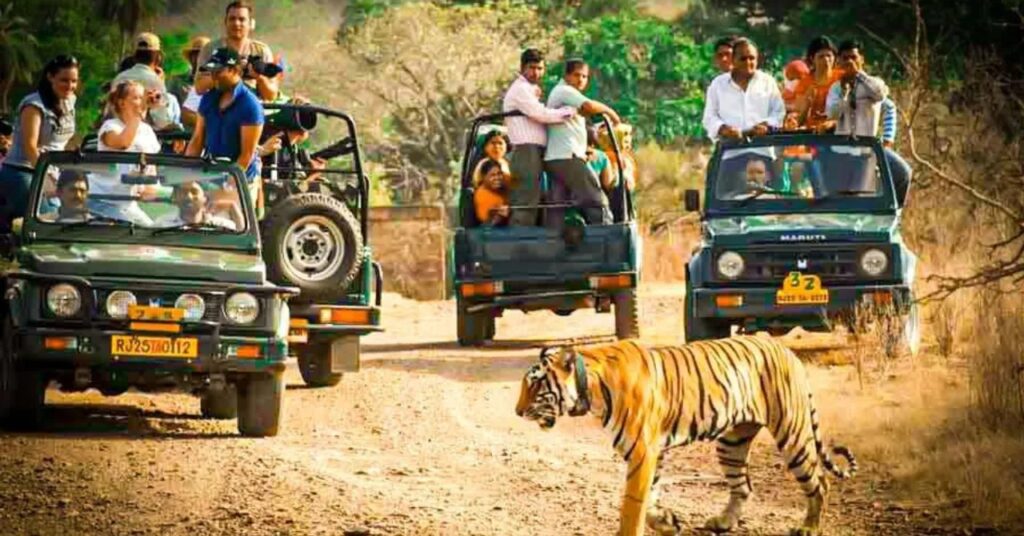
The best family vacations are the ones filled with stories — the ones where your heart races on a jungle trail, where children squeal at their first glimpse of a tiger, and where grandparents smile at the quiet beauty of a sunrise over a forest. This winter, swap the usual weekend getaways for something wilder. Across India, national parks offer safaris, treks, boat rides, and birdwatching trails that every generation can enjoy together.
In Ranthambore, I Came for the Tigers — But It Was a 1000-Year-Old Fort That Stole My Heart
/english-betterindia/media/media_files/2025/09/18/featured-img-37_11zon-1748148091-2025-09-18-17-03-22.webp)
The dust swirled around my jeep as we bumped along the rugged path, the air thick with the scent of dry leaves and the promise of the wild. I’d come for its famed tigers, of course, drawn by the allure of spotting the majestic creatures in their natural habitat. But as the imposing ramparts of Ranthambore Fort gradually loomed atop the hill, I felt a different kind of pull — a whisper from the past, an invitation to explore more than just the jungle.
The call of the wild
Like most people who find their way to Ranthambore, I arrived with visions of orange and black stripes slinking through golden grass. My abode for the stay was the spectacular Bookmark Resorts Jogi Mahal, a boutique hotel hideaway tucked close to the gates of the national park.
The moment I stepped into its stone-clad cottages surrounded by trees and birdsong, I knew this wouldn’t be just another rushed weekend escape. The staff greeted me with a warmth that didn’t feel rehearsed, and a glass of local drink instantly revived me after the hot drive from Jaipur.
/filters:format(webp)/english-betterindia/media/media_files/2025/09/18/my-abode_11zon-1748149025-2025-09-18-16-44-39.webp)
That evening, I sat on the deck of my cottage, the air alive with the chirping of crickets and the distant calls of night birds. A primal and exciting thrill coursed through me as I wondered if I would be lucky enough to spot the elusive tiger.

How would I cope with the sweltering heat and the early morning wake-up calls?
My heart raced, and my pulse quickened with the mere thought of witnessing such raw power in the wild and open. Watching a documentary on the legendary, only intensified the anticipation.
Later, over dinner, I sat with the resort’s naturalist to plan the next two days of safaris. As we swapped tiger tales and trail maps, he paused, leaned back, and asked casually, “Have you been to the fort yet? Some say it watches over the jungle like the original guardian.”
The smile that followed hinted that my Ranthambore experience wouldn’t be complete without venturing beyond the pursuit of wildlife. Intrigued, I added a visit to the ancient citadel to my itinerary, little knowing the profound connection I would feel to this historical and spiritual heart of Ranthambore.
Climbing into the past
That morning, I surprised myself. I altered my itinerary, postponing the safari and deciding to begin the day with a climb to Ranthambore Fort.
As I arrived at the base of the fort, the sun was still mellow, casting a soft glow. The air was cooler than I expected, touched by the forest dew. The path ahead, with stone steps winding upward through ancient gates, looked less like a tourist trail and more like an entry into time itself.
The climb was steep in parts, slow in others, but never dull. With each turn, the forest below opened up in grander sweeps. I paused often, not from fatigue but from awe. By the time I reached the top, the jungle had fallen into a soft hush behind me, and in front of me lay the vast sprawl of Ranthambore Fort with its sandstone ramparts, weathered but still proud.
/filters:format(webp)/english-betterindia/media/media_files/2025/09/18/the-majestic-ranthambore-fort_11zon-1748149113-2025-09-18-16-58-09.webp)
My guide for the day, Imtiyaz, a local who had grown up in the shadow of the fort, carried stories as naturally as he did his water bottle. “Built by the Chauhan kings around the 10th century,” he said, as we passed through the towering arches, “this fort has seen everything from sieges and dynasties to deaths and miracles.”
We walked through a maze of broken rooms, old granaries, and ancient reservoirs. The stone under my feet felt charged as if it remembered the rhythm of royal processions, war drums, and temple bells. “Hammir Dev Chauhan ruled from here,” Imtiyaz told me. “He fought Alauddin Khilji’s army till the very end. According to legend, his queen committed Jauhar (jumping into a fire) right here, in these ruins, to escape capture, and his unmarried daughter in the reservoir.” His story narration was beautiful, taking me back in time, and I could feel goosebumps all over my body.
After a long walk and many stories, we reached the top, and from there, we could see the panoramic views of the surrounding landscape. The view was staggering: the green expanse of Ranthambore National Park and the shimmering waters of Padam Talao. It was easy to see why this stronghold was so coveted by rulers throughout history.
/filters:format(webp)/english-betterindia/media/media_files/2025/09/18/stairs-and-fort-entrance_11zon-1748149197-2025-09-18-16-58-44.webp)
The weathered walls, punctuated by massive gates like Hathi Pol and Ganesh Pol, bore the marks of time and countless sieges. As I wandered through the crumbling structures, imagining the armies that once marched through these very gateways, I felt a tangible connection to Rajasthan’s rich and often turbulent past. The architecture, a fascinating mix of Rajput and Mughal styles, spoke volumes about the different eras and influences that had shaped this formidable citadel.
For a moment, I stood still, silenced by the scale of it all. I had come to Ranthambore looking for something wild. I didn’t know it would begin with stone.
Trinetra Ganesh Temple: Devotion carved in stone
High atop the fort, nestled within a quiet courtyard, we reached the Trinetra Ganesh Temple — a small shrine that exuded an almost tangible aura of faith. I had heard whispers of its legend even before I began the climb: that during a siege in 1299 by Alauddin Khilji’s forces, King Hammir Dev Chauhan, a devout follower of Lord Ganesh, had a dream. In it, Ganesh promised that his troubles would be over by dawn. The next morning, a self-manifested idol of Ganesh with three eyes (Trinetra) was discovered within the fort. Soon after, the siege inexplicably lifted. The idol remained, and so did the belief.
Inside the sanctum, the air felt cool and still. The Trinetra idol, flanked by his consorts Riddhi and Siddhi and sons Shubh and Labh, exuded a quiet serenity. It is said to be one of the few temples in the world that depicts Lord Ganesh in this complete familial form.
/filters:format(webp)/english-betterindia/media/media_files/2025/09/18/battis-khamba-chattri-built-to-commemorate-raja-hammirs-32-year-rule_11zon-1748149560-2025-09-18-16-59-11.webp)
As we watched a priest sort through a small pile of letters near the deity’s feet, Imtiyaz leaned in and said, “People from all over India send their first wedding invitations here. We even have a dedicated postbox for Lord Ganesh.” He smiled and added, “And yes, the postman does deliver it.”
There was something profoundly moving about that. In a world of fleeting rituals, here was a practice rooted in belief, blessing, and the quiet hope that beginnings like marriages deserve divine acknowledgement.
Standing there, I thought the rugged stone walls of the fort, which had once echoed with the cries of war and conquest, now stood silent witness to centuries of devotion. It struck me then that Ran wasn’t just a historical monument — it was a breathing, believing space. A place where faith had outlasted fire.
A place that stays with you
As I descended from the fort, the jungle began to rise again in the distance. But something had shifted. I had come to Ranthambore hoping to lock eyes with a tiger, to chase that fleeting thrill of the wild, which I did during my safari. And yet, it was the fort, not the forest, that had captured me.
/filters:format(webp)/english-betterindia/media/media_files/2025/09/18/view-from-the-fort_11zon-1748149622-2025-09-18-16-59-44.webp)
Back at the resort, the calm returned. Sitting on my cottage verandah with the forest humming gently around me, I realised the fort had given me something the jungle hadn’t—a sense of time paused, of faith held steady across centuries.
Over dinner, a staff member smiled and said, “The fort watches everything. Even the tigers know it.” And I believed him. In Ranthambore, the wild is not just in the jungle. It’s in the legends whispered through stone, in temples that receive wedding invitations by post, and in customs and beliefs passed down through generations. I came looking for a predator, but I found something else: a stillness, a strength, a sense of wonder I hadn’t expected. And that, I realised, is the real magic of Ranthambore.
/english-betterindia/media/post_attachments/uploads/2025/03/Kudrat-boutique-homestay-in-Himachal-10-1741614144.jpg)
Couple Quits Gurugram Life to Build Storybook Homestay in the Forests of Himachal
/english-betterindia/media/post_attachments/uploads/2025/04/TBI-featured-image-15_11zon-1743602081.jpg)
Stay Among the Treetops: 10 Breathtaking Treehouse Retreats in India
/english-betterindia/media/media_files/2026/01/09/mangrove-forest-representative-image-2026-01-09-16-51-49.jpg)
Short Trip Ideas For Long Weekends From Jan to May 2026
/english-betterindia/media/media_files/2026/01/08/sainji-village-2026-01-08-21-07-45.png)
This Uttarakhand Village Has Hung Corn Outside Homes for Generations — Here’s Why
/english-betterindia/media/post_attachments/uploads/2025/05/Mervin-Feature-image-2025-05-19T152312.516-1747648436.jpg)
5 Uttarakhand Treks That Offer Peace, Solitude & Spectacular Views
/english-betterindia/media/media_files/2026/01/06/kasauli-budget-trip-couples-2026-01-06-10-41-25.png)
Leave the Rush Behind & Plan a 5-Day Budget Getaway to Kasauli
Home to over 300 bird species, Ranthambore is as peaceful as it is thrilling — perfect for first-time explorers and seasoned nature lovers alike.
Best time to visit: October–June
What to look out for: Tiger safaris, birdwatching, and the historic Ranthambore Fort
3. Kaziranga National Park, Assam
Welcome to the land of the one-horned rhino. A UNESCO World Heritage Site, Kaziranga’s vast floodplains stretch along the Brahmaputra River, creating a landscape that feels wild and alive.
/filters:format(webp)/english-betterindia/media/media_files/2025/11/06/kaaziranga-national-park-2025-11-06-15-06-47.png)
Take an early morning elephant safari through mist-covered grasslands to spot rhinos grazing peacefully or catch a glimpse of tigers and wild water buffaloes. Kaziranga is also home to nine of India’s 14 primate species — so expect surprises around every corner.
Best time to visit: November–April
What to look out for: Rhino safaris, elephant rides, and birdwatching
4. Kanha National Park, Madhya Pradesh
5 National Parks in Kerala You Can Explore for Free This Wildlife Week
Celebrate Wildlife Week in Kerala from 2 to 8 October with free entry to national parks, tiger reserves, and sanctuaries. Here are five must-visit national parks from Eravikulam National Park to Palakkad’s Silent Valley.
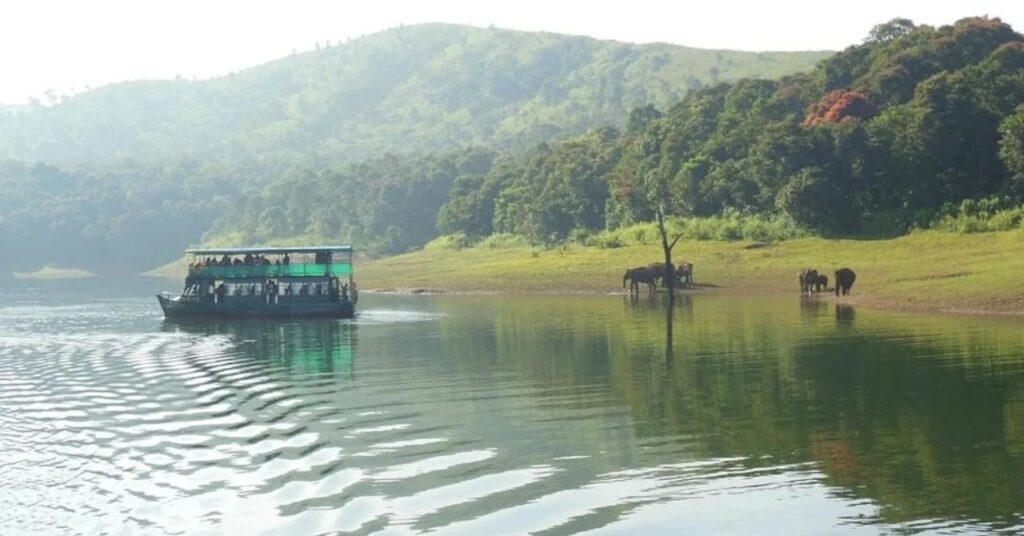
This year, Kerala is marking the occasion in a truly inclusive way — announcing free entry to all national parks, tiger reserves, and wildlife sanctuaries to encourage people to step into the wild and reconnect with nature.
Adding to the excitement, winners of special competitions will receive a unique reward: free access for themselves and up to five family members to all protected areas in Kerala for an entire year, starting 8 October 2025.
If you’re looking to explore the state’s rich wilderness, here are five national parks in Kerala that every nature lover must add to their travel list:
1. Periyar National Park
This park in Thekkady derives its name from the Periyar River, Kerala’s longest. How This Chhattisgarh IFS Officer Is Using AI To Prevent Human-Elephant Conflicts
By combining AI-driven alerts with real-time human patrolling, IFS officer Varun Jain has helped reduce human-elephant conflicts in Chhattisgarh, saving lives and fostering coexistence.
“My love towards the forest actually started out of empathy and emergency.” Fighting Poachers & Encroachers, IFS Officer Frees 600 Hectares of Forest Land Around Tiger Reserve
Being a Naxal-affected region led to several gaps in monitoring the Udanti-Sitanadi tiger reserve in Chhattisgarh, leading to the loss of almost 30,000 trees. Facing extreme opposition, IFS officer Varun Jain shares how his team reclaimed the forest land and turned the situation around.
“They hit him with a stone, he is bleeding!”
“They burnt down the forest department vehicle, what do we do?!”
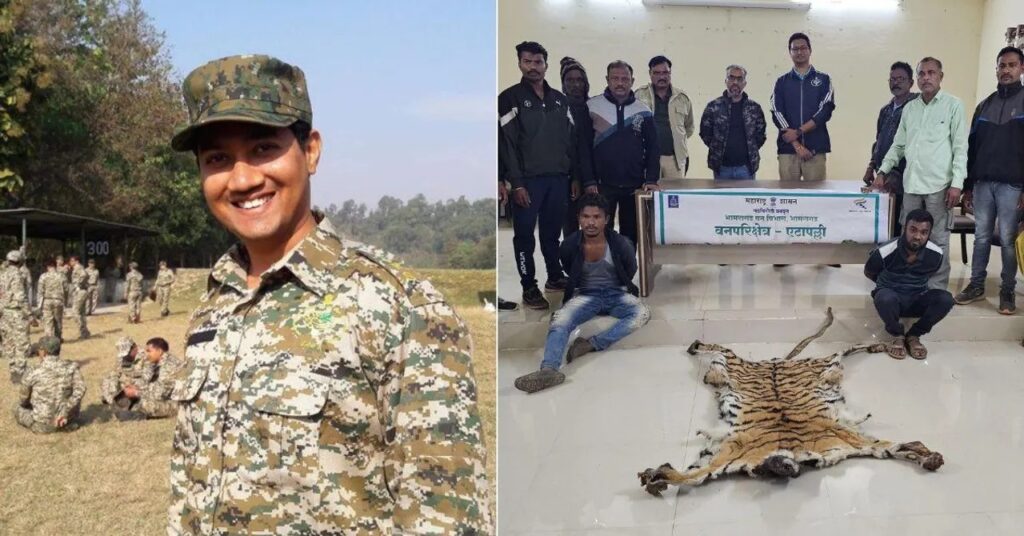
Armed with lathi (a long stick), iron rods, gullel (catapult), and stones, at least 700 villagers had surrounded nearly 250 forest guards who had reached the Taurenga buffer area inside Udanti-Sitanadi tiger reserve in Chhattisgarh to conduct an eviction drive, recounts IFS officer Varun Jain. The forest officials team, led by Jain, had apparently gotten into a heated argument with the group after it was found that roughly 200 hectares of forest land was “encroached”.
About 30,000 trees were axed and huts were built on the land despite the alleged accused having permanent settlements on revenue land. Jain evaluated the area using Google Earth imagery and GPS-tracking to find that it was a dense forest before 2008 when a large number of trees were chopped.
/english-betterindia/media/post_attachments/uploads/2024/03/Varun-Jain-1-1710826290.jpg)
The officer adds how in this past year, as many as 200 encroachers were evicted and at least 600 hectares of forest land was recovered. We sat down with the 34-year-old to understand what goes into working as a forest officer.
Where tigers were killed for fun
Hailing from Jaipur, Rajasthan, Jain pursued civil engineering at IIT-Roorkee and cracked the UPSC exam to become an IFS officer in 2017. After two years of training, he was allotted the Chhattisgarh cadre, and in February 2022, he joined Udanti-Sitanadi Tiger Reserve as a deputy director.
Sharing its boundary with Odisha, the Udanti-Sitanadi tiger reserve is known for its rich vegetation and forest cover of sal, teak, and bamboo trees. It is also home to a diverse fauna, including leopards, wild buffaloes, tigers, hyenas, elephants, bears, pangolins, and more.
After joining the tiger reserve, Jain observed a lack of awareness of wildlife and forest conservation among the local people. “As the area is Naxal-affected, forest officials would fear going for patrolling. Despite Death Threats, Fierce Official Frees 6,000 Hectares of Forest Land
‘We know where you live’, ‘We will show you’, ‘Take care of your family’ are some of the common verbal threats that Basu Kannogia has faced. Here’s how she fights against the tide to the right thing. Famously called ‘Encroachment Eviction Specialist’ among her peers, Indian Forest Service (IFS) officer, Basu Kannogia is known for her fearlessness.
Ever since the 2012-batch officer took charge in 2014, Basu has been fighting against forest mafia for unlicensed sale of trees, illegal settlers on forest lands, miners and wildlife-related crimes.
Basu has had her share of troubles for abiding by the laws without fear or favour. She has been in the epicentre of threats, and controversies.
But that has not stopped the fierce woman from discharging her duties in a career spanning five years and seven transfers. “There is no room for grey area, it is either right or wrong,” she tells The Better India, “I refuse to believe in a solution that allows intrusion in the name of development which is at the cost of nature. I am only doing my job of safeguarding the green cover which is unfortunately on a decline.”
Embracing the Challenges
/english-betterindia/media/post_attachments/uploads/2019/11/3160f555-adec-44d9-8c2a-deff2a1b5f6b.jpg "publive-image")
Basu grew up in a household that ran on strict rules. She completed her schooling in Kanpur, followed by Bachelors in Science from Allahabad University.
Basu’s father served in Uttar Pradesh’s administration service and from a very early age, she was exposed to the government’s role in uplifting the society. It stands to reason that joining government services was an obvious choice.
“I have seen my father making people’s lives easier just by doing his job honestly. He did not get intoxicated with power and instead, used it to help people,” shares Basu.
Despite Death Threats, Fierce Official Frees 6,000 Hectares of Forest Land
‘We know where you live’, ‘We will show you’, ‘Take care of your family’ are some of the common verbal threats that Basu Kannogia has faced. Here’s how she fights against the tide to the right thing.
/english-betterindia/media/post_attachments/uploads/2019/11/indian-forest-service-1.jpg)
Editor’s Note: An earlier version of this article indicated that the official had taken action against ‘poachers’. This was incorrect and a misuse of the official term. The action was taken against ‘encroachers’. The article has been updated to reflect this. The error is regretted.
Famously called ‘Encroachment Eviction Specialist’ among her peers, Indian Forest Service (IFS) officer, Basu Kannogia is known for her fearlessness.
Ever since the 2012-batch officer took charge in 2014, Basu has been fighting against forest mafia for unlicensed sale of trees, illegal settlers on forest lands, miners and wildlife-related crimes.
Basu has had her share of troubles for abiding by the laws without fear or favour. She has been in the epicentre of threats, and controversies.
But that has not stopped the fierce woman from discharging her duties in a career spanning five years and seven transfers. Over the years she has successfully freed more than 6,000 hectares of encroached land.

“There is no room for grey area, it is either right or wrong,” she tells The Better India, “I refuse to believe in a solution that allows intrusion in the name of development which is at the cost of nature. I am only doing my job of safeguarding the green cover which is unfortunately on a decline.”
Embracing the Challenges
Basu grew up in a household that ran on strict rules. She completed her schooling in Kanpur, followed by Bachelors in Science from Allahabad University.
Basu’s father served in Uttar Pradesh’s administration service and from a very early age, she was exposed to the government’s role in uplifting the society. It stands to reason that joining government services was an obvious choice.
“I have seen my father making people’s lives easier just by doing his job honestly. He did not get intoxicated with power and instead, used it to help people,” shares Basu.
“IFS mainly comprises two things – protection and plantation. Plantation cannot happen without land and thus protecting the forest land became my primary focus,” says Basu.
She cleared the examinations in the first attempt and was posted as the Divisional Forest Officer (DFO) in Madhya Pradesh’s Ashoknagar district. Not wasting much time, she undertook the task of evictions.
Improper implementation of laws was the first lesson she learnt in her one-year tenure at Ashoknagar.
“For years, no one told the people that farming or staying in Forest Reserves is against the law. For no fault of theirs, we had to displace them. Some would put forward the argument that their ancestors lived here without any problems. In such cases, it is heartbreaking but protecting the forests is more important,” says Basu.
When it comes to the rights of the forest dwellers, there are legal mechanisms like the Forest Rights Act (FRA) which they can use to attain their right to reside and manage the forest reserves.
The Better India spoke to Nitin Rai, who works at Ashoka Trust for Research in Ecology and the Environment about the rights of forest dwellers. Here’s what he had to say:
“There is a dire need to understand and respect the history of forest dwellers by opening the possibility of a democratic process. The FRA has to be implemented effectively to ensure dwellers are given their right to forest use and at the same time, the forest department can implement their conservation-related policies. There does exist an example where 400 Gram Sabhas in Gadchiroli district of Maharashtra have been given right over forest use and the department is working with them. Such a solution needs to executed across India.”
However, as per Basu, eviction is carried out only if the forest dweller fails to present any proof that validates their residency in the forest area, “Based on the proof, a 3-tier committee hands out a Right to Reside letter to the forest dwellers.”
On Protecting Forests & Family
/english-betterindia/media/post_attachments/uploads/2019/11/658863e9-d1c6-45dc-a293-b175bc4ab490.jpg "publive-image")
‘We know where you live’, ‘We will show you’, ‘Take care of your family’ are some of the verbal threats that Basu has faced many times.
There have also been times when encroachers and forest officials have engaged in a physical tussle and gunshots had to be fired to control the situation.
While Basu is brave enough to directly face the wrath, her family suffering because of this is not acceptable to her, “When times get tough, I disconnect all communications with my family members. It is unfair to drag make my loved ones in the turmoil.”
