
Google is investing $15 billion to build a 1-gigawatt AI data center and infrastructure hub in Visakhapatnam, Andhra Pradesh. The foundation stone for the hyperscale campus—spanning over 600 acres across Rambilli, Adavivaram, and Tarluvada—was laid in late April 2026 in partnership with AdaniConneX and Nxtra by Airtel. Google AI Hub – Scaling India’s AI Infrastructure and Community Impact The new hub in Visakhapatnam marks the construction phase of a $15 billion investment to provide the foundational infrastructure for India’s growing digital economy and drive long-term community impact. The multi-faceted investment in Visakhapatnam will deploy cutting-edge infrastructure, establish a new international subsea gateway, and deliver gigawatt-scale compute to power services globally.
India is experiencing a digital transformation that is unparalleled in pace and scale. At Google Cloud, we are deeply committed to being a foundational partner in this journey, working alongside the Indian government and industry leaders to realize the vision of a truly AI-first nation.
Today, we are announcing a landmark commitment: our largest investment in India to date, totaling approximately $15 billion (USD) over the next five years (2026-2030). This capital will establish our first Artificial Intelligence (AI) hub in the country, located in the vibrant city of Visakhapatnam (Vizag), Andhra Pradesh.
Deploying the Full AI Stack
This AI hub is a multi-faceted investment combining powerful gigawatt scale data center operations, new large-scale energy sources, and an expanded fiber-optic network, and has the potential to accelerate AI-driven transformation across every sector.
This investment aligns directly with the Government of India’s Viksit Bharat 2047 vision. We also see this infrastructure as playing a role in anchoring the next phase of the U.S.–India tech cooperation, particularly as both nations prioritize the secure, responsible development of AI. It’s an investment that will create high-value jobs in India, while also stimulating economic activity back in the U.S. through related research and development. This is about pioneering a generational shift in AI capability that benefits both economies.
Infrastructure Built for Scale and Speed
To meet India’s surging digital demands, the Visakhapatnam AI hub will include a purpose-built data center campus capable of gigawatt-scale compute capacity. This facility will be built to the same exacting standards that power global Google services like Search, YouTube, and Workspace.
It is critical that businesses, developers, and researchers have access to the highest-performance, lowest-latency services. Working with partners, AdaniConnex and Airtel, this hub will deliver the kind of reliable, advanced infrastructure necessary for large enterprises and innovative Indian startups alike to build and scale their own AI-powered solutions, and ultimately help India secure its place as a global leader in the AI-driven future.
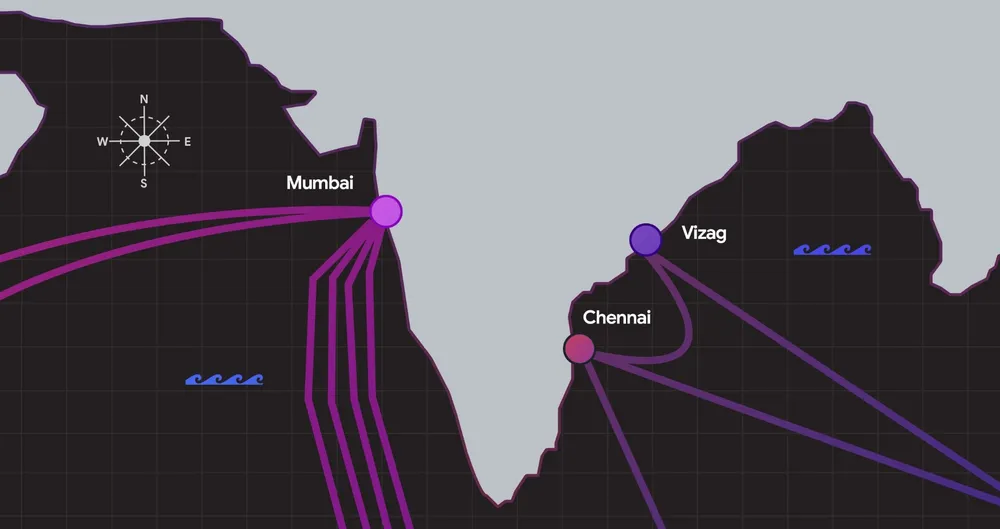
Subsea cable landings in Vizag will enhance connectivity and boost the resilience of India’s digital backbone
A New Global Connectivity Gateway
Our commitment extends beyond the data center walls. This investment includes the construction of a major new international subsea gateway. By bringing multiple international subsea cables to land in Visakhapatnam, we are creating an essential connectivity hub on India’s eastern coast. This new pathway will complement existing landings in Mumbai and Chennai, providing necessary route diversity and increasing the resilience of India’s digital backbone.
This critical infrastructure will deliver faster experiences for our users and customers and will drive digital inclusivity and transformation, bringing the benefits of AI to more people and businesses nationwide.
Finally, we recognize that growth must be responsible. Google already operates some of the most energy-efficient data centers in the world. As we expand, we will be working with partners to deliver new transmission lines, clean energy generation, and energy storage systems in Andhra Pradesh, expanding the diverse portfolio of clean energy that contributes to India’s electricity grid.
The Google AI hub in Visakhapatnam is a landmark investment in India’s digital future. We believe that by delivering industry-leading AI infrastructure at this scale, we are creating meaningful opportunities for growth and helping to drive a transformative impact for society.
Key Project Details:
- Scale & Scope: The campus spans 600 acres and will deliver 1-gigawatt compute capacity. It is Google’s largest infrastructure investment outside the United States.
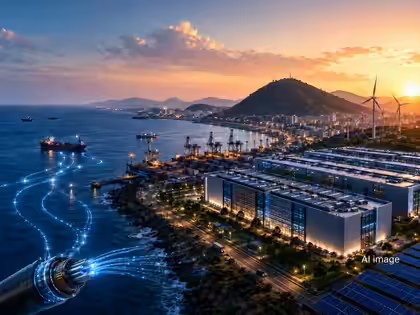
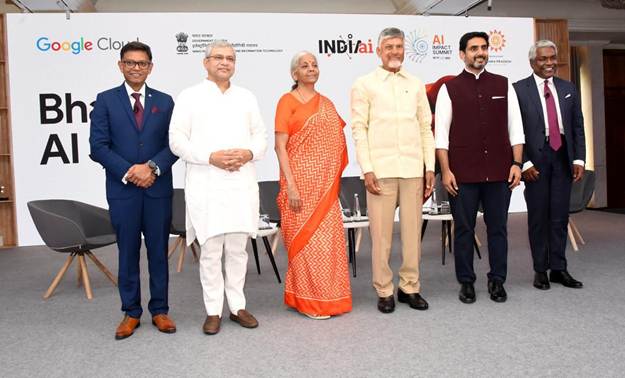
Connectivity: By landing multiple international subsea cables, the hub provides vital route diversity to complement existing portals in Mumbai and Chennai. Union Minister Ashwini Vaishnaw Highlights Google AI Hub as a Game-Changer for India’s Digital Economy, Driving AI-First Infrastructure, Clean Energy, and High-Value Job Creation Google Announces USD 15 Billion AI Hub in Visakhapatnam -Its Largest Investment in India to Advance AI-Driven Services Aligned with Viksit Bharat Vision Shri Ashwini Vaishnaw Proposes Vizag–Sittwe Digital Link to Boost Connectivity in North-Eastern States; Highlights Expansion of RailTel Network and Cross-Border Cable Extension via Myanmar “We Can Make Andaman the Next Major Hub for Global Internet Data Transfer; Government of India Will Provide Full Support” – Shri Ashwini Vaishnaw Union Minister for Electronics and Information Technology Shri Ashwini Vaishnaw, said that the Google AI Hub in Visakhapatnam marks a transformative step for India’s digital economy. He was addressing Bharat AI Shakti, an event hosted by Google ahead of its participation in the upcoming India AI Summit. The Minister said “The Google AI hub ushers in a new era for India’s digital economy. This infrastructure breaks new ground in the realm of AI-first data center architecture, anchored by investments in new subsea cable networks and powered by clean energy. It will not only fuel a new era of AI-driven services but also create high-value jobs and economic opportunities across the country. We are proud to see this partnership bring world-class technology to India.,” underscoring the Hub’s role in advancing the goals of the India AI Mission. “This digital infrastructure will go a long way in meeting the goals of our India AI Mission,” the Minister said.
Shri Ashwini Vaishnaw highlighted AI services as a key emerging sector in India’s digital economy, urging Google to leverage the facility for talent and job creation. He welcomed Google’s TPUs (Tensor Processing Unit) to compete with Nvidia’s GPUs (Graphics Processing Unit) as part of the common compute infrastructure under the India AI Mission. The Minister also highlighted that the AI Hub would significantly advance the goals of the India AI Mission, emphasizing the need for large-scale reskilling and upskilling of IT professionals amid rapid AI-driven changes. He urged Google to support the industry in this effort.
The Minister emphasized the importance of undersea subsea cable connectivity, stating, “The Andaman and Nicobar Islands are strategically located. Singapore is already overburdened. Why can’t we make Andaman the next major hub for global internet data transfer? From the Government of India’s perspective, we will provide full support for this initiative. The Andaman Islands can help Google and other internet-based organizations connect to Southeast Asia, Australia, and other regions that are seeking new data capacity.”
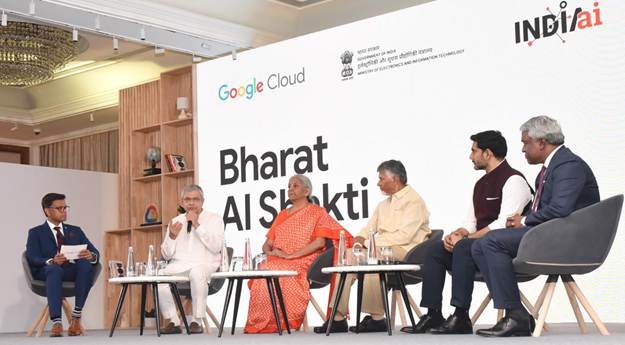
Minister Proposes Vizag–Sittwe Link to Boost Digital Connectivity in North-Eastern State
The Union Minister also proposed establishing a Vizag-Sittwe (Myanmar) link to strengthen digital connectivity in the North-Eastern states, highlighting the need to enhance the existing RailTel network. He noted that extending the cable via Myanmar to Mizoram would be a major step forward, as the railway line up to Sairang is already complete and work is underway to extend it to the Myanmar border as directed by the Hon’ble Prime Minister.
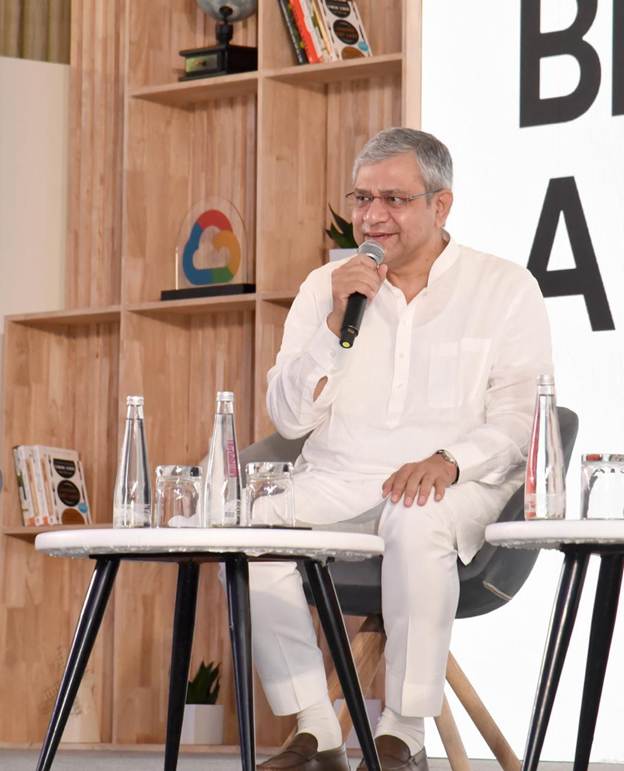
The Chief Minister of Andhra Pradesh, Shri N. Chandrababu Naidu, said on this occasion, “This significant investment in Andhra Pradesh marks a new chapter in India’s digital transformation journey. We are proud to host India’s first truly gigawatt-scale data center and Google’s first AI Hub in India, which is a testament to our shared commitment to innovation, AI adoption, and long-term support for businesses and startups in the state.”

Thomas Kurian, CEO, Google Cloud, highlighted that “The Google AI Hub in Visakhapatnam represents a landmark investment in India’s digital future. By delivering industry-leading AI infrastructure at scale, we are enabling businesses to innovate faster and creating meaningful opportunities for inclusive growth. This partnership reflects our shared commitment with the Indian and U.S. governments to harness AI responsibly and drive transformative impact for society.”
Google AI Hub: Accelerating AI Transformation
Google has announced the establishment of an Artificial Intelligence (AI) Hub in Visakhapatnam (Vizag), Andhra Pradesh, enabling the company to deploy its full AI stack with the aim of accelerating AI-driven transformation across India. The new AI Hub will bring together advanced AI infrastructure, data center capacity, large-scale renewable energy sources, and an expanded fiber-optic network, all in one place.
This investment of approximately USD 15 billion over five years (2026–2030) marks Google’s largest investment in India to date and aligns with the Government of India’s Viksit Bharat Vision, which seeks to accelerate the expansion of AI-driven services.
The Google AI Hub in Visakhapatnam will include a purpose-built data center campus, adding gigawatt-scale compute capacity to help meet demand for digital services across India and around the world. Developed with partners including AdaniConnex and Airtel, it will be built with the same cutting-edge infrastructure that powers Google products like Search, Workspace, and YouTube.
The AI Hub will also deliver the high-performance and low-latency services that businesses and organizations need to build and scale their own AI-powered solutions, accelerate research and development, and ultimately help India secure its place as a global leader in the AI-driven future. This will benefit large enterprises like MakeMyTrip, Meesho, and TCS, as well as Indian AI startups like CoRover, Glance, Invideo AI, Sarvam, and many more.
When operational, the new data center campus will join Google’s network of existing AI data centers that spans 12 countries. It will benefit from technology developed by Google’s R&D centers in Bengaluru, Hyderabad, and Pune, including the design and development of crucial software and hardware innovations.
Creating New International Subsea Gateway
Google’s AI Hub investment includes the construction of a new international subsea gateway, including multiple international subsea cables to land in Visakhapatnam on India’s eastern coast—connecting to Google’s more than two million miles of existing terrestrial and subsea cables. This will establish Visakhapatnam as an AI and connectivity hub that not only serves India but the rest of the world.
The gateway will help the country meet surging digital demands and provide route diversity to complement existing subsea cable landings in the Mumbai and Chennai areas. New high-capacity, low-latency pathways will deliver faster experiences to Google users and customers; increase the resilience and capacity of India’s digital backbone; and drive digital inclusivity and transformation across India, bringing the benefits of AI to more people and businesses nationwide.
Increasing Energy Capacity and Electricity Grid Resilience
Google operates among the most energy-efficient data centers and is committed to responsibly growing its infrastructure. Building on Google’s existing clean energy initiatives in India, the company will work with local partners to deliver new transmission lines, clean energy generation, and energy storage systems in Andhra Pradesh. This will expand the diverse portfolio of clean energy technologies that contribute to India’s electricity grid.
About Google
Google’s mission is to organize the world’s information and make it universally accessible and useful. Through products and platforms like Search, Maps, Android, Google Play, Chrome, YouTube, Google Workspace, and Google Cloud, Google plays a meaningful role in the daily lives of billions of people and has become one of the most widely known companies in the world. Google is a subsidiary of Alphabet Inc.
Timeline: The groundbreaking took place in April 2026, with full operations targeted for September 2028.
Power Source: To support responsible growth, the project is backed by extensive green energy and clean power infrastructure to feed the regional grid.
Community Initiatives: The investment includes programs to equip the local fishing and micro-enterprise sectors with AI navigation, weather-forecasting tech, and grassroots digital skills.
Google Breaks Ground on India AI Hub, Launching a National Industrial Ecosystem Alongside India’s Digital Infrastructure Milestone
Developed in strategic partnership with AdaniConneX and Nxtra by Airtel, this project establishes a gigawatt-scale AI ecosystem to power Viksit Bharat.
Visakhapatnam, India, April 28, 2026 — Today, Google officially broke ground on its landmark AI hub in Visakhapatnam (Vizag), Andhra Pradesh. This marks the start of construction on the company’s largest investment in India’s digital future to date, as well as reinforces Google’s commitment to being a long-term partner and catalyst for India’s economic and environmental resilience.
Shri Ashwini Vaishnaw, Hon’ble IT Minister, Government of India: “The groundbreaking ceremony of India AI Hub in Visakhapatnam reflects Hon’ble Prime Minister Narendra Modi Ji’s vision of making India a global leader in technology. Thanks to the support and commitment of Hon’ble Chief Minister of Andhra Pradesh, N. Chandrababu Naidu Ji, in realising this vision.The India AI Hub and three subsea cables landing in Visakhapatnam will become very important infrastructure for the country’s journey forward. Thank you Google for your continued trust in India.”
Shri N. Chandrababu Naidu, Hon’ble Chief Minister of Andhra Pradesh: “Andhra Pradesh is emerging as India’s premier investment destination, powered by speed, trust, and ease of doing business. Google’s AI hub in Visakhapatnam will be a cornerstone of our growing tech corridor, driving innovation, creating high-value opportunities for our youth, and strengthening our position in the global digital economy. Our vision goes beyond attracting investment – we want local talent, startups, and enterprises to become active partners in this technology-driven growth story. With the strong support of the Central Government and in line with the vision of a developed India, this partnership with Google reflects our commitment to combining cutting-edge innovation with inclusive growth, ensuring opportunities reach every community across Andhra Pradesh.”
Thomas Kurian, CEO, Google Cloud: “Today’s groundbreaking is a powerful realization of our shared vision with the Indian government, and an inflection point for the country’s AI-native future. Together we are laying the foundation for Viksit Bharat, and opening new doors for economic opportunity nationwide. The Google AI hub will serve as a catalyst for growth built on deep community partnerships.”
Jeet Adani, Director, Adani Group: “India’s AI moment will be defined by infrastructure. What we are building in Visakhapatnam, nearly 1 GW in a single location, signals that shift. When energy becomes more affordable and increasingly powered by clean sources, intelligence becomes more accessible and that is how India will lead the next phase of digital growth.”
Gopal Vittal, Executive Vice Chairman, Bharti Airtel: “Through our strategic partnership with Google and Adani to build this landmark AI hub, we will help advance India’s digital ambitions. With Visakhapatnam emerging as a new hub on the world’s AI map, we will ensure that India sets the pace for innovation, and sustainable growth, not just for our people, but for the whole world. Our full stack of best-in-class data centers, use of green power, pan-India ultra‑low latency fiber and a next‑gen cable landing station will enable large‑scale, world‑class AI infrastructure in Vizag.”
A US$15 Billion Blueprint for “Viksit Bharat”
Today’s groundbreaking marks a significant milestone in Google’s $15 billion investment over five years (2026-2030) to establish a comprehensive AI ecosystem in India, designed to be an important contributor to the government’s Viksit Bharat 2047 vision.
First announced in October 2025, this project includes India’s first gigawatt-scale AI hub comprising three data center campuses. AdaniConnex and Nxtra by Airtel will lead the construction of the data center buildings and connecting infrastructure, enabling Google to deploy advanced AI capabilities and scale digital services across India.
The AI hub also comprises the America-India Connect initiative for an expanded fiber-optic network; and a long-term clean energy strategy that prioritizes bringing new clean energy supply to the electricity grid, accelerating India’s national goal of reaching 500 GW of non-fossil fuel capacity by 2030.
The AI hub will deliver the high-performance, low-latency services that businesses and organizations need to build and scale their own AI-powered solutions, accelerate research and development, and ultimately help India secure its place as a global leader in the AI-driven future.
Driving Multi-Generational Impact and Community Resilience
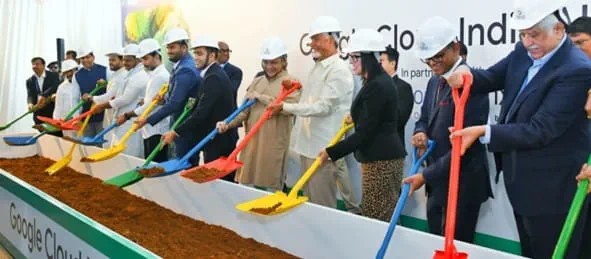
Beyond technical and industrial significance, the Google India AI hub represents a long-term investment in local job training, community projects, and the responsible stewardship of shared resources.
Everywhere it operates, Google takes a community-first approach that translates global investment into local opportunity. In Vizag, Google conducted a thorough community impact assessment based on community consultations to guide its investments well before beginning construction.
Today, Google announced a comprehensive set of community development initiatives to protect natural resources and economic security in Visakhapatnam:
- Securing Water Futures: In line with its commitment to water stewardship, Google is partnering with Sponge Collaborative to launch an integrated watershed management and community empowerment plan that addresses existing hydrological stress and coastal ecosystem sensitivities around its data center campuses. This will also link watershed restoration with community needs such as integrating clean drinking water systems like reverse osmosis plants and ‘Water ATMs,’ while enhancing resilient livelihood opportunities in local agriculture and fisheries.
- Modernizing Maritime Trades: Integrating traditional maritime practices into the digital economy is a vital step toward long-term economic security for coastal residents. Through a strategic partnership with the Sambhav Foundation, Google is launching a program to equip over 1,000 individuals from the fishing community with GPS navigation and weather-forecasting applications to enhance safety and operational efficiency, and provide training in cold-chain management and value-added processing. The program also aims to bridge the digital divide by facilitating UPI-based financial literacy and streamlining enrollment in marine welfare schemes.
- Empowering Grassroots Innovation: Working with ChangeX, the Google Udaan India Fund provides direct grants to local schools and social enterprises to advance community projects in the Visakhapatnam Metropolitan Region. These projects include AI-led skilling labs, digital literacy programs, local entrepreneurship, and climate-focused interventions.
- Scaling Women-Led Enterprises: In collaboration with the Learning Links Foundation, Google is introducing the NARI Shakti program to support women from low-income backgrounds in building sustainable livelihoods and achieving long-term financial self-reliance. This incubator program focuses on transitioning home-based work into a stable source of income for 10,000+ existing and aspiring entrepreneurs. By providing targeted training in financial literacy, business planning, and digital tools, the initiative equips participants with the essential resources needed to successfully establish and grow their own micro-enterprises.
- Building a Future-Ready Workforce:As Visakhapatnam grows into a major digital hub, Google is introducing the Skills Trade and Readiness (STAR) program to create sustainable career paths for local talent while developing a homegrown workforce ready to drive India’s digital acceleration. With hands-on training in high-demand fields like construction, welding, and facility operations, the program aims to prepare more than 1,000 people in the local workforce for vital roles in developing the city’s digital infrastructure. To support long-term career success, the initiative integrates employability coaching and an AI Literacy Mission. In tandem, Google is partnering with ICT Academy to train 1,200+ local students and educators to gain access to specialized tracks in cloud computing and generative AI.
As development of the Google India AI hub progresses, these and other new community-centric programs will continue to scale in direct response to evolving regional needs. This commitment ensures localized investments transcend immediate infrastructure requirements to drive sustainable, generational impact across Andhra Pradesh.
Building India’s AI Industrial Corridor: The Bharat AI Shakti Conclave
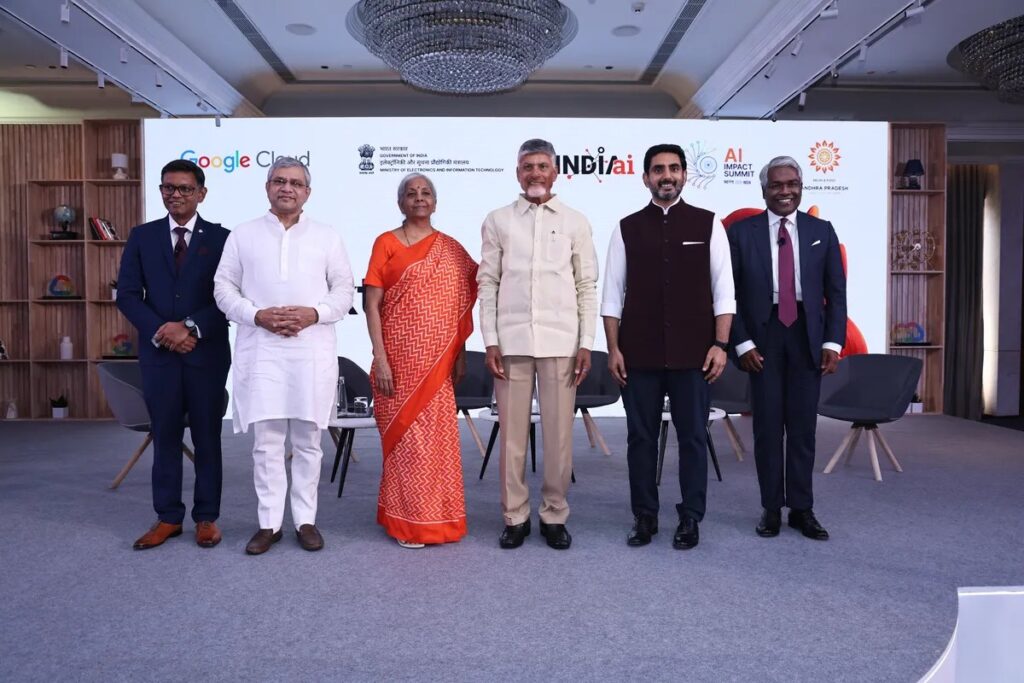
The groundbreaking ceremony was accompanied by the Bharat AI Shakti Conclave, a first-of-its-kind conference organized in strategic partnership with the Government of Andhra Pradesh and the Hon’ble Minister Shri Nara Lokesh. The Conclave served as a unique platform for convening suppliers, industry partners, and infrastructure stakeholders to explore how to translate and accelerate Google’s anchor investment into a tangible economic value chain for the region.
Themed ‘Collaborating to Deliver India’s AI Corridor,’ the Conclave reflects a deliberate industrial strategy: Google’s investment in Visakhapatnam is designed not only to build world-class infrastructure, but to catalyze a broader technology ecosystem that multiplies the benefits to the local economy. From prioritizing a local-first procurement approach for vital infrastructure activities, to integrating local small and medium enterprises (SMEs) under Google’s global safety and operational frameworks, the project aims to facilitate capacity building and effectively raise the competitiveness of regional industry players for future large-scale infrastructure work.
From L to R:
- Shri. Nara Lokesh – Hon’ble Minister for HRD ITC&E and RTG, Government of Andhra Pradesh
- Shri. Jeet Adani – Director of Adani Group
- Shri. Karan Adani – Managing Director of Adani Ports & SEZ
- Shri. Ashwini Vaishnaw Sir – Hon’ble Union Minister for Railways, Information & Broadcasting, Electronics and Information Technology, Govt. of India
- Shri. Nara Chandrababu Naidu – Hon’ble Chief Minister, Government of Andhra Pradesh
- Smt. Laura Williams Garu – U.S. Consulate General
- Shri. Bikash Koley Garu – Vice President of Google Global Infrastructure, Google Cloud
- Shri. Rakesh Mittal Garu – Vice-Chairman, Bharti Enterprises
Google Announces $15B Investment for India’s Largest AI Hub NEW DELHI, Oct. 14, 2025 – Today, Google announced an artificial intelligence (AI) hub in Visakhapatnam (Vizag), Andhra Pradesh, enabling Google to deploy its full AI stack with the aim of helping accelerate AI-driven transformation across India. The new AI hub will combine powerful AI infrastructure, data center capacity, new large-scale energy sources and an expanded fiber-optic network, all in one place. Announcing America-India Connect and new investments to advance global AI access Expanding our global infrastructure with new regions and subsea cables At Google, we’ve spent $30 billion improving our infrastructure over three years, and we’re not done yet. From data centers to subsea cables, Google is committed to connecting the world and serving our Cloud customers, and today we’re excited to announce that we’re adding three new submarine cables, and five new regions.
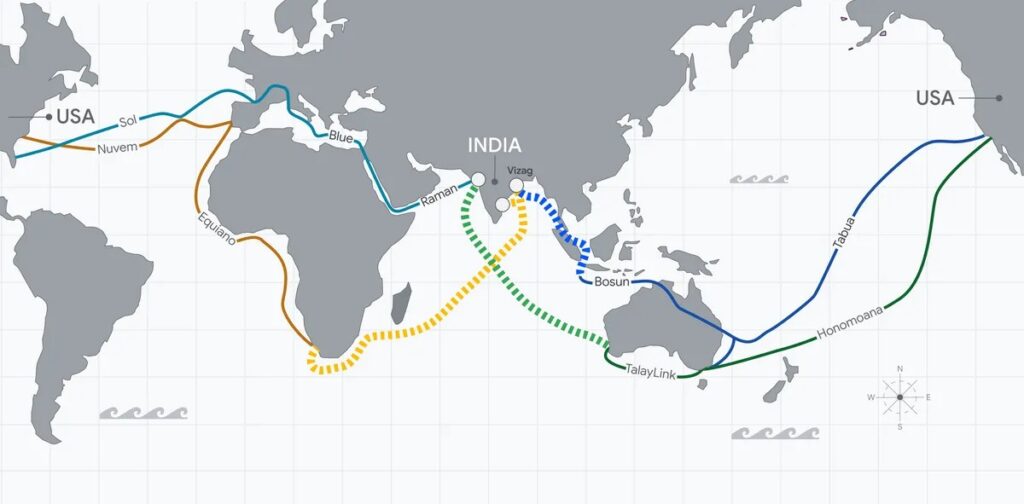
AI is poised to accelerate progress at an unprecedented rate — but only if we democratize access to it from the start. Today, Google is announcing new investments in digital infrastructure and skilling initiatives designed to increase connectivity, accelerate economic growth, and deepen resilience in India and around the world.
Expanding AI connectivity across four continents
Infrastructure is foundational to prevent the digital divide from becoming an AI divide. In collaboration with local partners, America-India Connect will establish a new international subsea gateway in Visakhapatnam (Vizag); three new subsea paths connecting India to Singapore, South Africa, and Australia; and four strategic fiber-optic routes that bolster network resilience and capacity between the United States, India, and multiple locations across the Southern Hemisphere.
Connecting India’s east coast (Vizag)
We are developing a direct fiber-optic path between Vizag and Chennai on India’s east coast to South Africa. Today we are introducing Equiano, our new private subsea cable that will connect Africa with Europe. Once complete, Equiano will start in western Europe and run along the West Coast of Africa, between Portugal and South Africa, with branching units along the way that can be used to extend connectivity to additional African countries. The first branch is expected to land in Nigeria. Delivering increased connectivity with our first private trans-Atlantic subsea cable
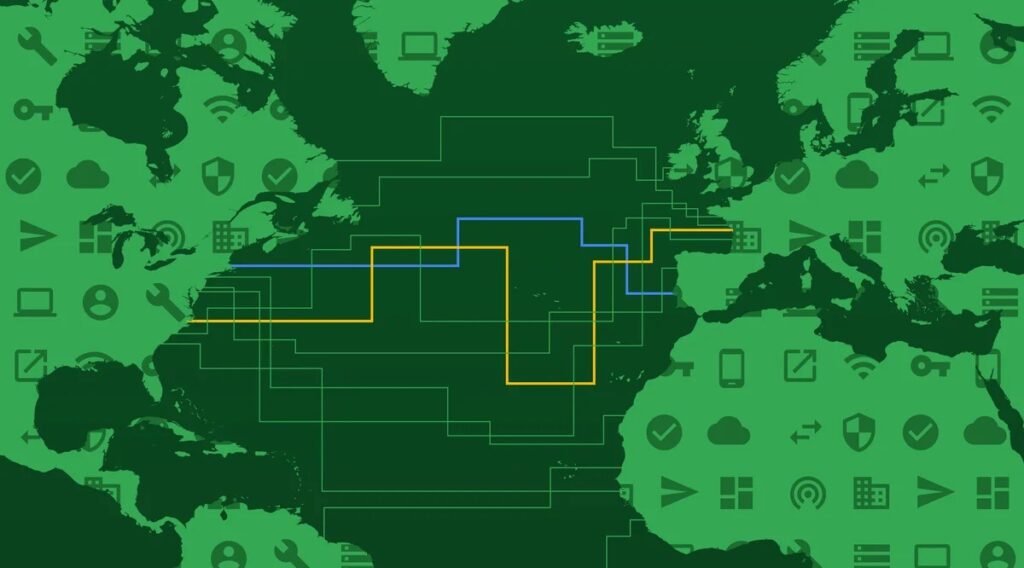
Then, in 2019 we’ll commission three subsea cables: Curie, a private cable connecting Chile to Los Angeles; Havfrue, a consortium cable connecting the U.S. to Denmark and Ireland; and the Hong Kong-Guam Cable system (HK-G), a consortium cable interconnecting major subsea communication hubs in Asia.
Together, these investments further improve our network—the world’s largest—which by some accounts delivers 25 percent of worldwide internet traffic. Companies like PayPal leverage our network and infrastructure to run their businesses effectively.
“At PayPal, we process billions of transactions across the globe, and need to do so securely, instantaneously and economically. As a result, security, networking and infrastructure were key considerations for us when choosing a cloud provider,” said Sri Shivananda, PayPal’s Senior Vice President and Chief Technology Officer. “With Google Cloud, we have access to the world’s largest network, which helps us reach our infrastructure goals and best serve our millions of users.”
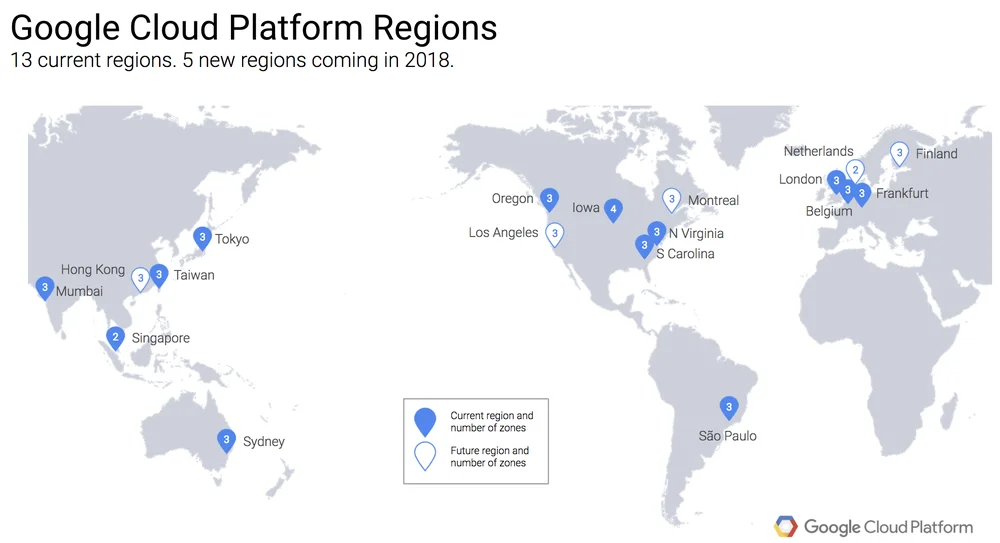
Figure 1. Diagram shows existing GCP regions and upcoming GCP regions
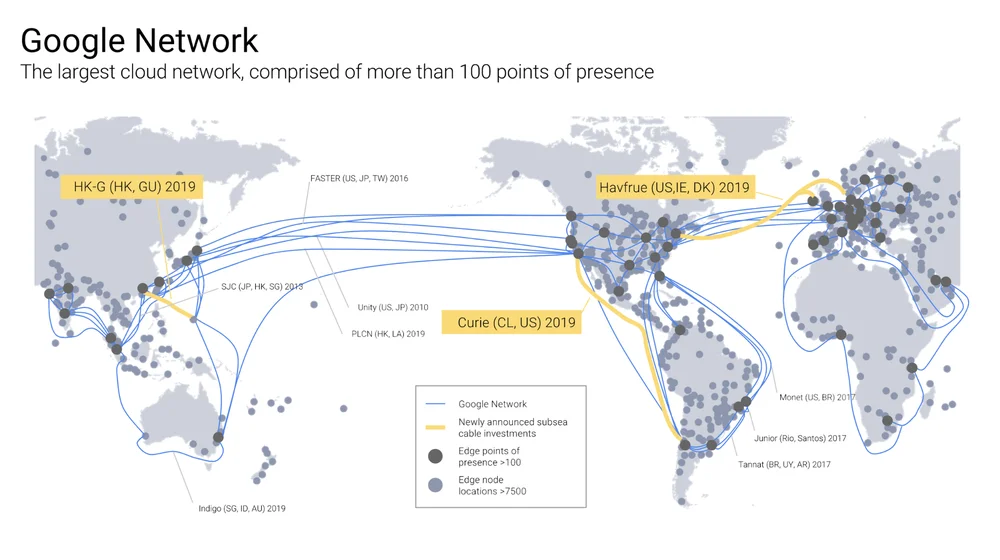
Figure 2. Diagram shows three new subsea cable investments, expanding capacity to Chile, Asia Pacific and across the Atlantic
Curie cable
Our investment in the Curie cable is part of our ongoing commitment to improve global infrastructure.
With Curie, we become the first major non-telecom company to build a private intercontinental cable.
By deploying our own private subsea cable, we help improve global connectivity while providing value to our customers. Owning the cable ourselves has some distinct benefits. Since we control the design and construction process, we can fully define the cable’s technical specifications, streamline deployment and deliver service to users and customers faster. Also, once the cable is deployed, we can make routing decisions that optimize for latency and availability.
Curie will be the first subsea cable to land in Chile in almost 20 years. Once deployed, Curie will be Chile’s largest single data pipe. It will serve Google users and customers across Latin America.
Havfrue cable
To increase capacity and resiliency in our North Atlantic systems, we’re working with Facebook, Aqua Comms and Bulk Infrastructure to build a direct submarine cable system connecting the U.S. to Denmark and Ireland. This cable, called Havfrue (Danish for “mermaid”), will be built by TE SubCom and is expected to come online by the end of 2019. The marine route survey, during which the supplier determines the specific route the cable will take, is already underway.
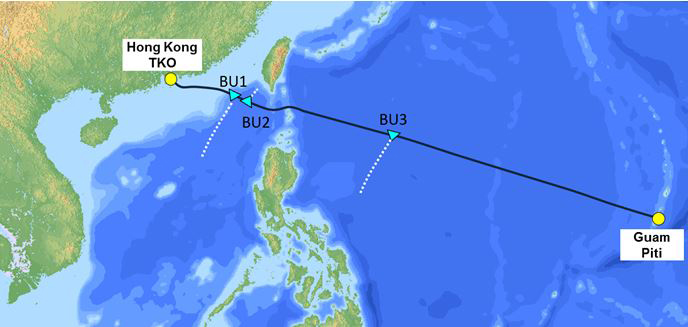
Singapore and Tokyo, Japan, 21 April 2017 – RTI Connectivity Pte. Ltd. (RTI-C) and NEC Corporation (NEC; TSE: 6701) announced that construction of the Hong Kong – Guam Cable system (HK-G) has officially commenced. The 3,900 kilometer undersea cable, featuring 100 gigabit per second (Gbps) optical transmission capabilities, will deliver design capacity of more than 48 terabits per second (Tbps), and is expected to be completed in the fourth quarter of 2019.
In Hong Kong, the cable is slated to land in Tseung Kwan O (TKO) and will land in Piti, Guam at the recently completed Teleguam Holdings LLC (GTA) cable landing station. HK-G will land in the same facility as the Southeast Asia – United States Cable System (SEA-US).
HK-G will contribute to the much-needed expansion of communications networks between Asia and the United States, while complementing other regional submarine cables, thereby improving network redundancy, increasing the availability of high capacity and ensuring highly reliable communications.
Furthermore, this cable system will be built utilizing capital from the Fund Corporation for the Overseas Development of Japan’s ICT and Postal Services Inc. (Japan ICT Fund), along with syndicated loans from Japanese institutions including NEC Capital Solutions Limited, among others.
Russ Matulich, RTI-C’s President and CEO, acknowledged this important milestone stating, “Hong Kong is already an important interconnection point for undersea cables, and Guam is emerging as a key telecommunications hub. By extending HK-G to our SEA-US cable investment in Guam, RTI-C is facilitating a new diverse 100G transpacific cable to better serve our customers’ traffic requirements between Asia, the United States and Australia.” Matulich added, “RTI-C’s existing investments, and those under current consideration, will enable other cable owners to better utilize their assets by interconnecting with RTI-C in Hong Kong or Guam.”
As one of the world’s top vendors of submarine cable systems, Mr. Toru Kawauchi, General Manager of NEC’s Submarine Network Division said, “NEC has completed nearly all of the cables that land in Hong Kong and Guam, and I am proud to be part of this latest system. HK-G will be the first project to be co-financed by the Japanese government-led Japan ICT Fund, and the second project supporting RTI’s investment in SEA-US for the Japanese loan syndicate. We wish to further utilize these funds for many more cables in the future.”
NEC has more than 40 years of experience in the submarine cable business and is recognized as one of the world’s top submarine system vendors. NEC has laid a total of more than 250,000 kilometers of submarine cable, the equivalent of six trips around the earth. As a total system integrator, NEC produces optical submarine cable (*2), optical submarine repeaters and equipment for connecting optical transmissions to land, in addition to carrying out ocean surveys, route design, laying optical submarine cable and training personnel for the handover of these systems.
About RTI-C and RTI: RTI-C and RTI are leading neutral cable owners and develop global telecom infrastructure and large-scale data connectivity in selected markets. RTI-C and RTI offer their neutral products and services to international telecommunications carriers, multinational enterprises, global content providers, and educational institutions. RTI-C is headquartered in Singapore and RTI is headquartered in San Francisco, California.
About NEC Corporation
NEC Corporation is a leader in the integration of IT and network technologies that benefit businesses and people around the world. By providing a combination of products and solutions that cross utilize the company’s experience and global resources, NEC’s advanced technologies meet the complex and ever-changing needs of its customers. The NEC Group globally provides “Solutions for Society” that promote the safety, security, efficiency and equality of society. Under the company’s corporate message of “Orchestrating a brighter world,” NEC aims to help solve a wide range of challenging issues and to create new social value for the changing world of tomorrow.

NEC is a registered trademark of NEC Corporation. All Rights Reserved. Other product or service marks mentioned herein are the trademarks of their respective owners. ©2017 NEC Corporation. Google invests in INDIGO undersea cable to improve cloud infrastructure in Southeast Asia Google invests in INDIGO undersea cable to improve cloud infrastructure in Southeast Asia Infrastructure is critical to the fabric of the internet, as well as to conducting business across the globe. For Google Cloud customers in particular, better internet means means better business operations, better user experiences and the ability to serve even more customers.
Many people are coming online across Asia, including businesses that depend on the cloud. That’s why it’s so important to enable better internet connectivity across the region, and why Google, alongside AARNet, Indosat Ooredoo, Singtel, SubPartners and Telstra, is building a new international subsea cable system in Southeast Asia, called INDIGO. The new cable system will serve Google traffic between Australia and Asia, connecting Perth, Sydney and Singapore, with a branch to Jakarta. Alcatel Submarine Networks will construct the cable, which is expected to be completed by mid-2019.
The new cable will span approximately 9,000 kilometers, and its two fiber pairs provide a design capacity of around 18 terabits per second (Tbps), with the option to expand in the future. At 18 Tbps, INDIGO provides enough capacity for people in Singapore and Sydney to join 8 million simultaneous high-definition Google Hangout video conference calls.

INDIGO opens up opportunities for people in the region and for Google Cloud customers. It’s the latest in our ongoing effort to improve Google’s connectivity to Asia; we’ve made seven submarine cable investments in total (this is our fifth in the region)—more than any other cloud.
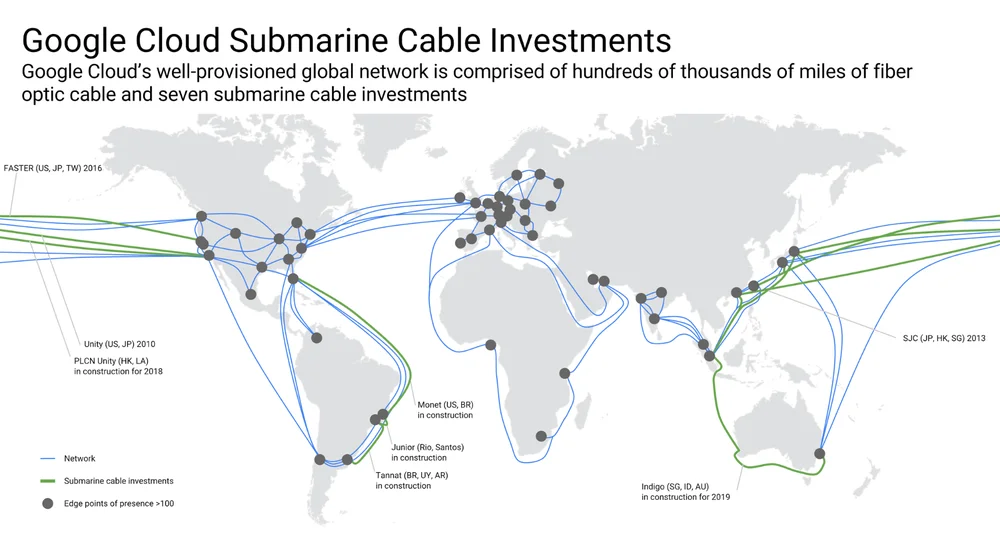
Providing a reliable, secure internet for Google Cloud customers is a top priority for Google; we’ll continue to support efforts to improve internet infrastructure, in Asia and across the globe. As more and more people conduct online searches and interact with applications like Gmail, Google Earth and YouTube, we’ve had to think outside the box to create a more scalable, affordable and easy to manage network that meets our users’ needs worldwide. One of the biggest challenges we face is staying ahead of our broadband capacity needs, especially across Asia.
One of the ways we are addressing this is by working with five other international companies to create a consortium Collectively we just signed an agreement to build a new high-bandwidth subsea cable system linking the U.S. and Japan. This cable system, named Unity, will address increasing broadband demand by providing more capacity to sustain the unprecedented growth in data and Internet traffic between Asia and the U.S. Our participation in building Unity ultimately helps provide our users with faster and more reliable connectivity. With Curie, we become the first major non-telecom company to build a private intercontinental cable.
By deploying our own private subsea cable, we help improve global connectivity while providing value to our customers. Owning the cable ourselves has some distinct benefits. Since we control the design and construction process, we can fully define the cable’s technical specifications, streamline deployment and deliver service to users and customers faster. Also, once the cable is deployed, we can make routing decisions that optimize for latency and availability.
Curie will be the first subsea cable to land in Chile in almost 20 years. Once deployed, Curie will be Chile’s largest single data pipe. It will serve Google users and customers across Latin America.
Havfrue cable
To increase capacity and resiliency in our North Atlantic systems, we’re working with Facebook, Aqua Comms and Bulk Infrastructure to build a direct submarine cable system connecting the U.S. to Denmark and Ireland. This cable, called Havfrue (Danish for “mermaid”), will be built by TE SubCom and is expected to come online by the end of 2019. The marine route survey, during which the supplier determines the specific route the cable will take, is already underway. As a result, customers will experience improved capacity and latency from Australia to major hubs in Asia. It will also increase our network capacity at our new Hong Kong region.
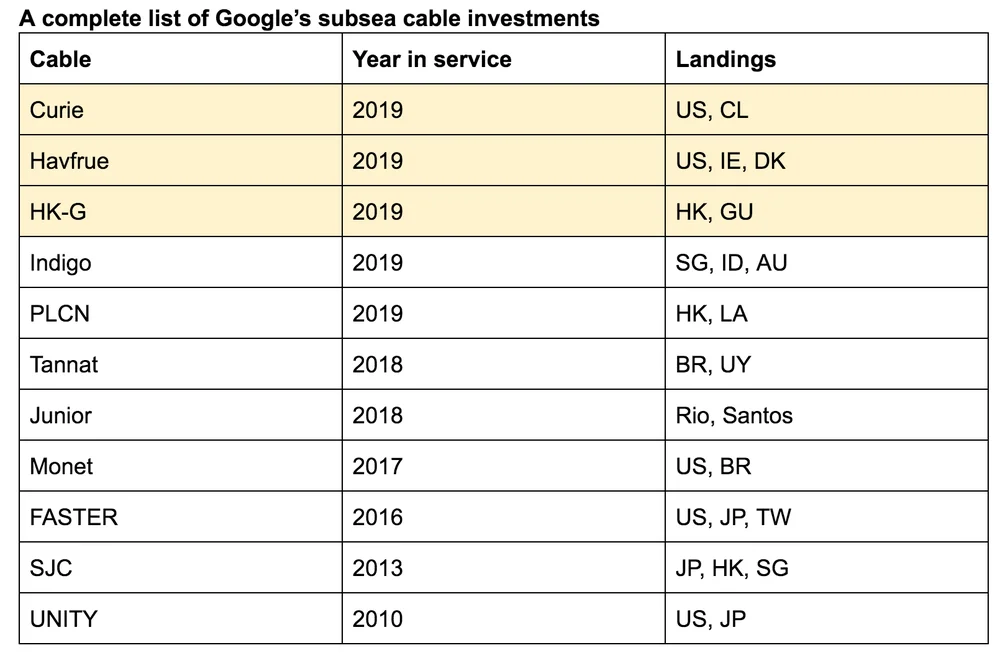
Figure 3. A complete list of Google’s subsea cable investments. New cables in this announcement are highlighted yellow. Google subsea cables provide reliability, speed and security not available from any other cloud.
Google has direct investment in 11 cables, including those planned or under construction. The three cables highlighted in yellow are being announced in this blog post. (In addition to these 11 cables where Google has direct ownership, we also lease capacity on numerous additional submarine cables.)
What does this mean for our customers?
These new investments expand our existing cloud network. Investment means faster and more reliable connectivity for all our users.
Simply put, it wouldn’t be possible to deliver products like Machine Learning Engine, Spanner, BigQuery and other Google Cloud Platform and G Suite services at the quality of service users expect without the Google network. Our cable systems provide the speed, capacity and reliability Google is known for worldwide, and at Google Cloud, our customers are able to make use of the same network infrastructure that powers Google’s own services.
While we haven’t hastened the speed of light, we have built a superior cloud network as a result of the well-provisioned direct paths between our cloud and end-users, as shown in the figure below.
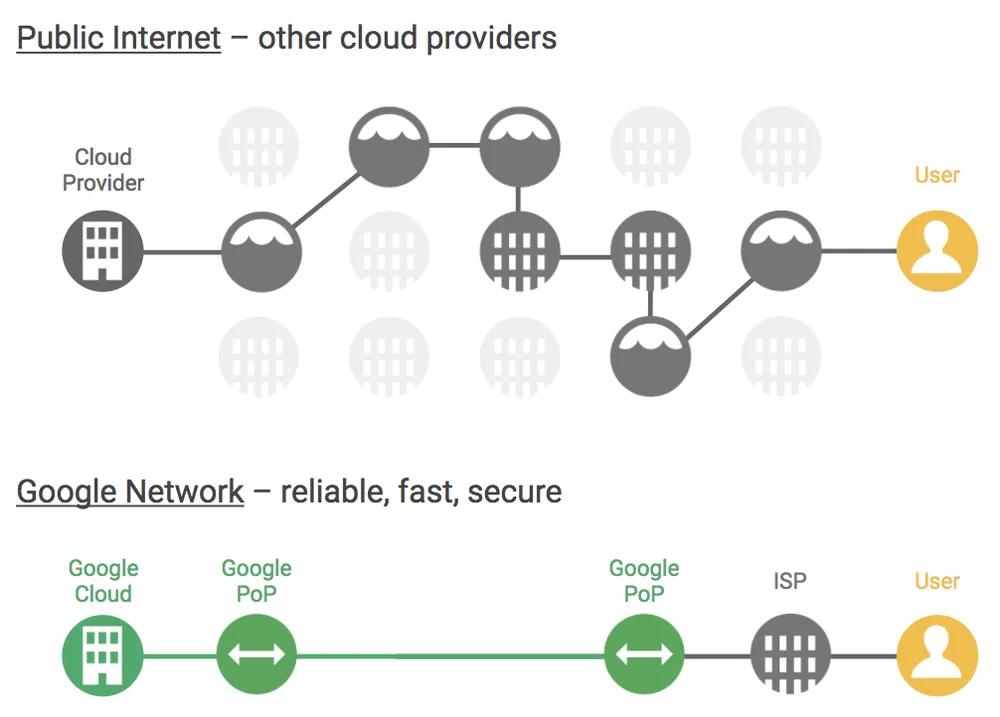
Figure 4. The Google network offers better reliability, speed and security performance as compared with the nondeterministic performance of the public internet, or other cloud networks. Dunant adds network capacity across the Atlantic, supplementing one of the busiest routes on the internet, and supporting the growth of Google Cloud. We’re working with TE SubCom to design, manufacture and lay the cable for Dunant, which will bring well-provisioned, high-bandwidth, low-latency, highly secure cloud connections between the U.S. and Europe.
In keeping with the theme we established with Curie, Dunant is also named after an influential innovator, Henri Dunant, the first Nobel Peace Prize winner and founder of the Red Cross. Like Curie and Dunant, future Google private cables will follow a similar alphabetic theme.
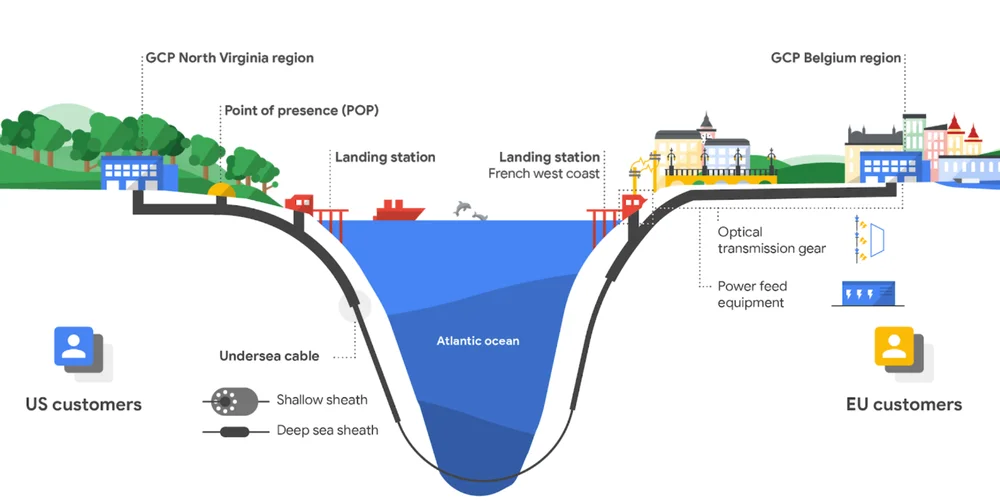
A common question we get with these projects is why we’re building them privately.
There are a few different ways to go about building a subsea cable. The first is to simply purchase capacity from an existing cable, or one being built by someone else. The second is to create a consortium of partners with similar needs and build a cable together. The third is to build it yourself.
All of these options come with different pros and cons, and we use a combination of all three methods to best serve our customers. When approaching a new cable project, and deciding on which of the three methods to use, we consider our needs, and the needs of our customers, in a few areas:
- Performance and latency: Cables are often built to serve a very specific route. When we build privately, we can choose this route based on what will provide the lowest latency for the largest segment of customers. In this case, we wanted connectivity across the Atlantic that was close to certain data centers, but the reasons could also include the ability to land in certain countries, or to connect two places that were previously underserved, such as was the case with Curie.
- Capacity: The bandwidth that we want to deliver can vary widely, depending on what already exists and where our customers need more, now and in the future. Our capacity planning includes estimates of Google’s and our customers’ needs for years to come.
- Guaranteed bandwidth for the lifetime of the cable: The life of a cable can vary from 15 to 25 years, but as with many infrastructure projects, they sometimes continue to serve the route beyond their initial projected lifespan. Our ability to guarantee our customers a certain level of connectivity helps them confidently plan for their businesses going forward.
We started off with two private cable projects that run over relatively short distances. These were our Alpha and Beta cables (a nod to how we name software releases), and their success led us to build both Curie and Dunant privately. We’ve worked with consortia on other new cables—including Havfrue, HK-G and JGA-S–and will continue to invest in consortium cables in the future.
Our investments in both private and consortium cables meet the same objectives: helping people and businesses can take advantage of all the cloud has to offer.

Thanks for sharing. I read many of your blog posts, cool, your blog is very good.