
Lake Neuron, the world’s largest known subterranean thermal lake, was discovered deep beneath the karst landscape of southern Albania near the Greek border. Located 127 metres (417 feet) underground inside the Atmos Cave system in the Vromoner region near Leskovik, it was officially confirmed as a record-breaking geological body by a team of Czech speleologists. Czech speleologists exploring a cave system in southern Albania in 2021 discovered the largest underground thermal lake ever found on Earth — a 138-metre-long body of warm water sitting 127 metres beneath the surface at the bottom of a 100-metre vertical abyss — large enough to fill more than three Olympic swimming pools, in complete darkness, that no human being had ever seen before beneath a mountain in southern Albania, in a region called Vromoner near the small town of Leskovik on the Greek border, a body of warm mineral water has been sitting in complete darkness for an indeterminate but very long time, with no human aware of its existence, no light reaching its surface, and no possibility of being entered by anyone except via a hundred-metre vertical drop through a limestone shaft. In 2021, a team of Czech speleologists became the first humans to make that drop. They were led by Marek Audy, a veteran Czech cave explorer who had spent several years investigating the underground hydrology of the Albanian-Greek mountain borderlands. The team had been tracking high-temperature springs and tall columns of steam that emerged from cracks in the surface limestone — the visible exhaust of a hidden hot-water system that had to be coming from somewhere below. Following the steam back to its source, the speleologists located a vertical shaft they later named Atmos, approximately a hundred metres deep, leading downward into a previously unmapped cavern. At the bottom of the shaft, in the darkness, was a thermal lake.
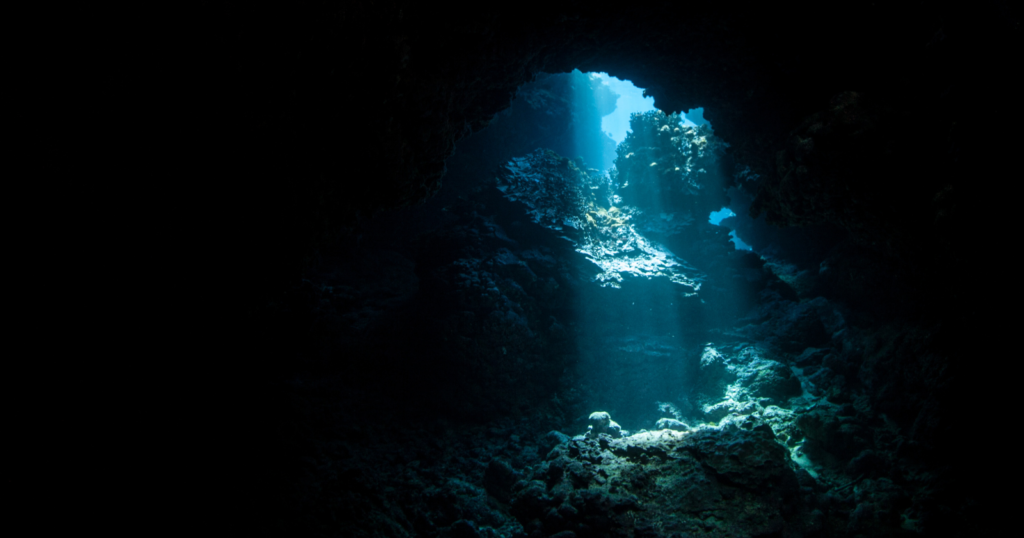
Czech scientists in Albania discover world’s largest underground thermal lake team of Czech scientists have discovered in southern Albania the world’s largest underground thermal lake, and have named it Lake Neuron, after the foundation that funded the expedition.
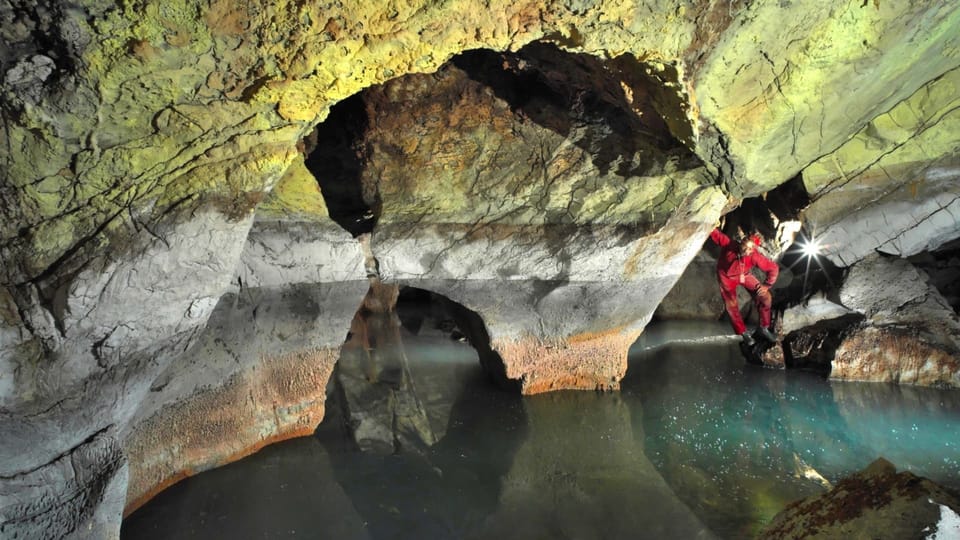
Location of the underground thermal lake Atmos in Albania|Photo: Czech Television
Within the valleys of the mountainous borderlands between Greece and Albania, Czech scientists have for several years been exploring the complex situation underground. In the Vromoner region, on the Albanian side of the border, they came across an extensive system of caves back in 2021, which they have since been mapping in detail. The system contains many heated springs that release high columns of steam, and tracking a source of the steam led them to find an abyss over one hundred metres deep, which they named Atmos.
At the bottom of that abyss, the team have now confirmed the discovery of the world’s largest underground thermal lake to date. With a length of 138m, a width of 42m and a circumference of 345m, it can hold 8,335m3 of hot water. For a Czech comparison, the size of the lake’s chamber is three times larger than the main hall of the National Theatre in Prague.
Mapping the cave system and discovering the lake required technical equipment, which was made possible by the Neuron Foundation. The Czech scientific-funding organisation provided the expedition with almost a million crowns, donated by private benefactors, and now the underground Albanian lake has been named Neuron, in the foundation’s honour.
Richard Bouda, a photographer and speleologist, describes how the discovery was made:
“During the initial exploration, we created a basic map using the equipment we had. We knew already back then that we had discovered something really special. Thanks to the Neuron Foundation, we acquired a mobile LIDAR scanner, which allows us to measure the entire cave and the entire area of the lake. We will also cooperate with hydrologists who will measure the underwater portion of that lake using sonar.
The latest technology was used by the Czech team; GeoSlam, a type of 3D scanning technology, has created accurate models of the cave. The process by which the cave containing the lake is made is also unusual. The lake’s mineral water is saturated with hydrogen sulfide, which, upon contact with air, oxidises and produces sulphuric acid that repeatedly turns the limestone rock into soft gypsum. The Czech team’s work in Albania will contribute to understanding this rare type of cave formation, and there is more work to be done there, as Richard Bouda explains:
“Thanks to the scientists we work with, we know that the surrounding springs are fed with water from the lake. We believe this discovery could also contribute to the protection of the whole area and to a better understanding of its hydrology, because to this day, nobody knows how exactly these underground waters are connected to the surface.” The team needed more precise instruments to confirm this. Mapping the full dimensions of a body of water in complete darkness, at the bottom of a hundred-metre vertical shaft, with limited working space and toxic hydrogen-sulphide air, required a mobile LIDAR scanner — a piece of equipment that the team did not own and could not initially afford. The Czech Neuron Foundation, a scientific funding organisation supported by private benefactors, provided approximately one million Czech crowns to purchase the necessary equipment. The expedition returned to the cave system in late 2024 with the LIDAR scanner and a team of 18 researchers. The measurements they took confirmed the lake’s full dimensions: 138.3 metres long, 42 metres wide, with a perimeter of 345 metres and a total volume of approximately 8,335 cubic metres of hot mineral water.
How big the lake actually is
The numbers translate into more intuitive comparisons that the team has used in subsequent communications. Rare Discovery: World’s Largest Underground Thermal Lake Found in Albania team of Czech scientists has discovered the world’s largest underground thermal lake in southern Albania, naming it “Neuron Lake”, according to the foundation that funded the scientific expedition.
For several years, Czech researchers have been exploring underground structures in mountain valleys along the Albania-Greece border. In 2021, during their research in Leskovik, in the Vromoneri Valley on the Albanian side of the border, they uncovered a vast cave system containing numerous thermal springs that release high columns of steam.
While tracing these thermal sources, the team identified a 100-meter-deep abyss, which they named “Atmos”.
At the bottom of this abyss, scientists confirmed the discovery of the largest known thermal lake to date. The lake measures 138 meters in length, 42 meters in width, and has a perimeter of 345 meters, containing approximately 8,335 cubic meters of hot water.
The mapping of the cave system and documentation of the lake was carried out using advanced technology, funded by Neuron Foundation, a Czech organization supporting scientific research.
“During our initial exploration, we created a basic map using our equipment and immediately realized that we had discovered something extraordinary. Thanks to the Neuron Foundation, we were able to use a mobile LIDAR scanner, which allowed us to accurately measure the entire cave and lake area. We are also working with hydrologists to analyze the underwater portion of the lake using sonar technology,” said Richard Bouda, a photographer and expedition participant.
For this study, the team utilized the latest scanning technology, including the GeoSlam system, a 3D scanning method that produces precise models of cave formations.
According to Radio Prague International, the discovery of this lake has significant scientific value, particularly due to the unusual way in which the cave was formed. The lake’s mineral water is saturated with hydrogen sulfide, which oxidizes upon contact with air, producing sulfuric acid. This acid gradually dissolves the limestone, converting it into soft gypsum, and continuously forming new underground spaces.
The discovery is expected to have a major impact on hydrological and geological studies in the region. Bouda emphasized that further research will continue to better understand the connections between surface and underground water sources:
“We believe this discovery will help protect the area and provide a deeper understanding of hydrological flows. Until now, no one has precisely known how these underground waters are connected to the surface,” Bouda stated.
With this extraordinary discovery, Albania is now on the map of international researchers as a country with great potential for geological and scientific exploration. The cavern containing the lake is approximately three times the size of the main hall of the National Theatre in Prague. The previous record-holder for the world’s largest underground thermal lake was substantially smaller; the Lake Neuron measurements nearly double the previous record. The cavern is large enough that the LIDAR scanner had to be moved to multiple positions to capture the full geometry, and parts of the lake remain partially unexplored — the team plans to return with sonar equipment to measure the underwater portion of the cavern, which extends below the visible waterline and whose depth is not yet known.
The water itself is the unusual feature of the find. The lake is saturated with hydrogen sulphide — the gas responsible for the distinctive rotten-egg smell that hangs in the air throughout the cavern and that is toxic at high concentrations. The hydrogen sulphide, on contact with the atmosphere at the lake’s surface, oxidises into sulphuric acid. This is also why the cavern that contains the lake exists at all. Most caves in karst topography are formed by carbonic acid — slightly acidic rainwater dissolving limestone over millions of years. The Albanian cavern was formed by a fundamentally different process: sulphuric acid, generated by the oxidising hydrogen sulphide rising from the lake, has been gradually dissolving the limestone into soft gypsum from below. The technical term is sulphuric acid speleogenesis. It produces caves that are larger, more chemically active, and substantially more dangerous to explore than the carbonic-acid caves that dominate most karst regions.
The Story of the Discovery
- Initial Discovery (2021): Led by speleologist Marek Audy, a Czech research expedition was investigating an extensive local cave system. They tracked massive, rising columns of hot steam coming out of the limestone terrain. This led them to a vertical chasm plunging over 100 metres deep, which they named the Atmos Abyss. At the very bottom of the shaft, they discovered a hidden thermal body of water.
Expedition Neuron Discovers the World’s Largest Underground Thermal Lake Czech scientific team has achieved a groundbreaking success in geological research. In southern Albania, in the Vromoner region, the Neuron Atmos Expedition has discovered the world’s largest underground thermal lake. This globally significant discovery was made possible thanks to the Neuron Foundation’s funding of essential equipment for the expedition.
It was already in 2021 when Czech scientists first encountered an extensive underground system with thermal springs . “Based on the high column of steam emerging from the limestone massif, we were able to locate an abyss over 100 meters deep, which we named Atmos. At its bottom, we discovered a strong thermal inflow and a vast lake. In order to be able to present this extraordinary find to the scientific community, thorough research and precise measurements were needed,” explained Marek Audy, leader of the Neuron Atmos Expedition.
Named in honor of the Neuron Foundation, Lake Neuron is a true geological rarity. Measuring 138.3 meters in length, 42 meters in width, with a perimeter of 345 meters, the lake holds a total of 8,335 cubic meters of thermal mineral water. A detailed hydrogeological study has confirmed its exceptional nature. To illustrate its vastness: the lake’s dome is three times larger than the main hall of the National Theatre in Prague, a true testament to its uniqueness.
“I am incredibly proud that we could support Czech scientists in such a groundbreaking project,” said Monika Řasa Vondráková, director and co-founder of the Neuron Foundation. “This achievement underscores the importance of supporting scientists directly in the field, where their expertise and dedication lead to new discoveries. Expeditions like these are vital for advancing science and expanding our understanding of the world around us.”
The scientists used state-of-the-art technologies during the expedition, including a mobile LiDAR scanner, which allowed for detailed mapping of the underground spaces. Precise geodetic measurements created a comprehensive map of the Atmos Cave and other nearby caves, such as Sulfur, Breška, and Kobyla, which were already discovered in 2021.
The Neuron Foundation supported the expedition with a sum of 988,000 CZK. It was the eleventh field research project conducted under the Neuron initiative. Given the global significance of this discovery, both local and international editions of National Geographic have expressed interest in publishing the findings. “We are currently discussing publishing with several European editions, the project is also being reviewed at the Washington headquarters edition,” confirmed editor-in-chief Tomáš Tureček.
The Neuron Foundation – Advancing Science
The Neuron Foundation actively supports Czech scientific community by recognizing outstanding researchers with Neuron Awards, the foundation seeks new scientific talents and facilitates student internships at prestigious international universities. The foundation funds field research through Neuron Expeditions, which lead to notable discoveries such as that of the oldest known Mayan city and a previously undocumented species of the uakari monkey.
All funding of the Neuron Foundation comes from private patrons, including prominent figures such as Dalibor Dědek, Eduard Kučera, Josef Průša, Jaroslav Řasa, Monika Vondráková, Francesca Kolowrat, Václav Dejčmar, Marek Vašíček, and Otakar Šuffner. To date, the foundation has invested 140 million CZK to support and promote Czech science, it awarded 120 Neuron Prizes, and funded 11 scientific expeditions with a total value of 5.5 million CZK.
The Mapping Challenge: The conditions inside the abyss were incredibly hostile—featuring pitch darkness, cramped working quarters, and toxic air filled with high concentrations of hydrogen sulphide. The initial tools were inadequate to measure the lake’s true boundaries.
3D Confirmation (Late 2024): Backed by a grant of roughly one million Czech crowns from the Neuron Foundation, the team returned with 18 researchers and a specialized mobile LiDAR scanner (GeoSlam system). The 3D models conclusively mapped the full scale of the cavern.
Naming: The geological find was named Lake Neuron in honour of the scientific foundation that funded the high-tech mapping equipment.
Key Specifications & Dimensions
- Length: 138.3 metres (454 feet)
- Width: 42 metres (138 feet)
- Total Volume: Approximately 8,335 cubic metres—roughly equivalent to 3.5 Olympic-sized swimming pools.
- Cavern Size: The vast cavern housing the lake is three times larger than the main hall of the National Theatre in Prague.
- Water Profile: The thermal mineral water is heated to 26 °C (79 °F) by deep geothermal activity.
In the Albanian caves, the worlds largest underground thermal lake has been discovered
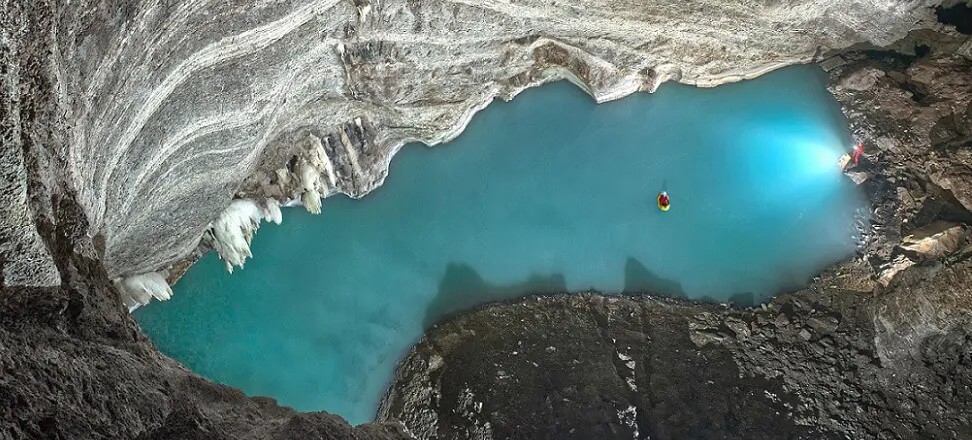
cientists have confirmed the existence of the worlds largest underground thermal lake in the karst caves of southern Albania. Neuron, as it has been named, remained hidden for millennia until 2020, when researchers came across the first traces of its existence. However, it was only four years later, thanks to modern technologies, that it was possible to measure it accurately and confirm the unique nature of the reservoir.
How big is Lake Neuron?
Measurements of the reservoir showed that it is 138 meters long and 42 meters wide. Its volume is approximately 8,335 cubic meters, which is roughly equivalent to 3.5 Olympic-sized swimming pools. The high water temperature suggests that geothermal processes are still active in this region.

How was the worlds largest underground thermal lake discovered?
It all began in 2020 when a Czech research team was exploring the difficult-to-access karst terrain in Albania. At some point, scientists noticed an unusual column of steam rising above the mountains. Analyses indicated that this could be a sign of hot springs existing beneath the Earth’s surface.
The first expedition reached a previously unknown cave, where they discovered the lake. Due to a lack of appropriate equipment, it was not possible to conduct precise measurements. It was only in 2024, using lidar scanners, that scientists created a three-dimensional model of the cave and the reservoir. The results confirmed that Neuron is the world’s largest known underground thermal lake, surpassing the previously recorded reservoir discovered in 2008 beneath the Turkish baths in Budapest.
What technologies enabled precise research?
The research team used lidar (Light Detection and Ranging), a laser scanning method that allows for the accurate mapping of hidden locations. Hydrogeological measurements determined the temperature and chemical composition of the water. A high level of mineralization was found, which may indicate a connection to an extensive underground geothermal system. The water originates from deeper layers, heated by the Earth’s internal heat, and then flows into the cave through a network of rock fissures.
What does the name of the lake refer to?
The name Neuron is a tribute to the Czech Neuron Foundation, which financially supported the research expedition. Thanks to this support, it was possible to conduct detailed analyses and confirm the size of the lake.
Lake Neuron as a new research laboratory
The discovery of Lake Neuron opens up new research opportunities, allowing for a better understanding of geothermal processes occurring beneath the Earth’s surface and their impact on the development of life in extreme conditions. The expedition leader, Marek Audy, has announced further studies that could provide groundbreaking information about the underground ecosystem and geological processes.
Scientists plan to examine the microorganisms inhabiting this isolated, geothermally heated environment and conduct further analyses of the karst cave structures in the region.
Geological Significance
The creation of the Atmos Cave breaks the mould of traditional cave systems. While most karst caves are carved by rainwater and carbonic acid over millions of years, Lake Neuron was formed via sulphuric acid speleogenesis. The heavy hydrogen sulphide gas rising from the thermal water oxidises into sulphuric acid upon meeting the air, slowly eating away the limestone walls from the bottom up and turning it into soft gypsum.
Lake Neuron
Lake Neuron (Albanian: Liqeni i Neuronit) is the world’s largest known underground thermal lake, located in the Vromoner region near the town of Leskovik in southeastern Albania, approximately 100 meters (330 feet) below the surface in a karstic cave system. First discovered in 2021 and fully mapped in 2025 by a team of Czech scientists funded by the Neuron Foundation—after which it was named—the lake measures about 138 meters (454 feet) in length and 42 meters (138 feet) in width, with a volume of approximately 8,335 cubic meters (294,350 cubic feet); it features strikingly clear, turquoise waters heated to 26 °C (79 °F) by geothermal activity, and its surface is partially covered in ice formations that some observers note resemble neural networks. The site’s exploration involved advanced spelunking techniques and geophysical surveys, confirming its status as surpassing previous records, such as a smaller thermal reservoir found beneath Turkish baths in Budapest in 2008. Lake Neuron lies within the Vjosa River watershed near the Greek border, highlighting Albania’s rich but underexplored karst landscapes formed by limestone dissolution over millennia. Its discovery underscores the potential for geothermal resources in the Balkans and has sparked interest in sustainable tourism and scientific research, though access remains limited due to the challenging descent via narrow shafts and ropes.
Discovery and Exploration
Initial Discovery
The initial hints of Lake Neuron emerged in 2021 during geological surveys conducted by Czech researchers in the Vromoner region near Leskovik, southern Albania, where they mapped an extensive cave system and detected anomalous thermal signatures suggesting an underground water body. Full confirmation came in 2024 through a dedicated expedition organized by the Czech-based Nadačně Neuron Foundation, which funded the effort to explore and document the site. The expedition was led by Marek Audy and a team of Czech speleologists and geologists from the Neuron Foundation, including experts in cave exploration and hydrogeology, who employed advanced techniques such as drone reconnaissance for aerial mapping and rope-assisted descents to navigate the approximately 127-meter-deep abyss concealing the lake. These methods allowed the team to safely access and visually confirm the lake’s presence for the first time, marking a significant advancement in subterranean exploration within Albania’s limestone karst formations. Upon discovery, the lake was named “Lake Neuron” in honor of the funding foundation. Preliminary on-site measurements provided the first estimates of its dimensions, revealing a length of approximately 138.3 meters, a width of 42 meters, a perimeter of 345 meters, and a volume of 8,335 cubic meters, with the water body situated at the base of the abyss; initial temperature readings indicated 26°C, consistent with geothermal influences in the region and rich in hydrogen sulfide.
Subsequent Expeditions
Following the initial discovery, the team conducted follow-up work as part of the 2024 expedition, employing LiDAR scanning for high-resolution 3D mapping of the cave system. Access proved particularly challenging due to narrow cave entrances less than 1 meter wide and a perilous approximately 127-meter vertical descent, necessitating advanced rappelling techniques and remote-operated equipment to mitigate risks. The expedition incorporated thermal imaging to identify geothermal heat signatures. Researchers collected the first dedicated water samples from the lake, which laboratory analysis confirmed as originating from deep thermal sources, with temperatures stable around 26°C and rich in minerals including hydrogen sulfide.These efforts yielded pivotal outcomes, including formal verification of Lake Neuron as the world’s largest underground thermal lake, exceeding the dimensions of a smaller geothermal lake discovered beneath Turkish baths in Budapest, Hungary, in 2008, with a surface area of approximately 5,800 square meters and a volume of 8,335 cubic meters capable of filling more than three Olympic-sized pools.Ongoing explorations have emphasized collaboration between the discovering Czech-led team, Albanian authorities responsible for permitting and logistics, and EU-funded initiatives like those under the Horizon Europe program, which support conservation measures to protect the fragile ecosystem while enabling continued geological and hydrological research, including planned sonar surveys of the lake bottom.
Geography and Geology
Location and Setting
Lake Neuron is situated in the Vromoner region of southern Albania, near the town of Leskovik and in close proximity to the Greek border. This karst landscape, characterized by extensive limestone formations and cave systems, forms part of Albania’s southeastern terrain. The lake occupies the floor of a deep abyss within the Atmos cave system, descending more than 100 meters (330 feet) underground. The surrounding topography includes the rugged mountains of the Pindus range, which extend from northern Greece into southern Albania and contribute to the area’s dramatic elevation changes. Influenced by the tectonic processes of the Hellenides orogeny, the region features a mix of forested slopes and rocky outcrops typical of Balkan karst environments. Access to Lake Neuron is limited and demanding, typically beginning from the vicinity of Leskovik, where initial clues like rising steam columns were observed during exploratory surveys. Reaching the site involves navigating tight passages and vertical descents that necessitate speleological gear, such as ropes and harnesses, along with technical expertise; the border area’s historical political sensitivities have further restricted visits.
Geological Formation
Lake Neuron’s geological formation is rooted in the hypogene karst processes characteristic of southern Albania’s Ionian Unit, where Jurassic to Eocene limestones have been shaped over millions of years by ascending thermal fluids. The region’s thrust belt structure, part of the broader Albanides orogeny resulting from the collision between the African and Eurasian plates, facilitated the development of fractures and faults that channeled deep groundwater. This tectonic activity, ongoing since the Eocene epoch (approximately 56 to 34 million years ago), created pathways for hydrothermal circulation, with the limestone sequence overlain by Oligocene flysch and folded into asymmetric anticlines. The primary formation mechanism involves sulfuric acid speleogenesis driven by hydrogen sulfide (H₂S) originating from the reduction of deep sulfates by migrating hydrocarbons, such as methane. Upon rising through fractures along the South-Albanian fault line (Tomor–Qeshibesh–Bodar–Lëngaricë–Postenan–Melesin–Vromoner), the H₂S oxidizes in contact with oxygen, producing sulfuric acid that dissolves the limestone bedrock, converting it to gypsum and exposing fresh rock in a repetitive cycle. Thermal upwelling, heated by geothermal gradients from mantle-derived fluids, sustains the 26°C waters rich in H₂S, which emerge at the base of tectonic blocks and feed the lake while carving expansive domes and chambers up to 127 meters deep. Four dominant fracture systems (NE-SW, NNW-SSE, NNE-SSW, and ENE-WSW) further influenced this dissolution, enhancing permeability in the karstified limestone. The rock composition is dominated by massive Jurassic to Eocene limestones, prone to karstification, with evidence of past seismic activity in the form of steeply dipping thrust faults and overturned folds. Native sulfur deposits and gypsum residues attest to the oxidative processes, while inactive nearby caves show calcite formations from earlier phases. Although rainwater percolation contributes minimally in this hypogene system, surface-derived oxygen aids the acidification at fracture intersections above the water table. Comparatively, Lake Neuron shares traits with other Balkan karst systems, such as those in the Dinarides, but stands out due to its thermal H₂S-driven input, distinguishing it from typical non-thermal underground lakes like those in colder epigene karsts. Similar hypogene features occur in adjacent Greek sites along the Sarandaporo River, but Neuron’s scale—verified by LiDAR and sonar as the largest known underground thermal lake—highlights its uniqueness in the Vromoner hydrothermal area.
Physical Characteristics
Dimensions and Morphology
Lake Neuron measures 138.3 meters in length and 42 meters in width, with a perimeter of 345 meters, giving it an elongated, irregular outline that spans a significant portion of the underlying cavern floor. The lake’s volume is approximately 8,335 cubic meters of thermal mineral water, equivalent to about 3.3 Olympic-sized swimming pools, establishing its scale as the largest known underground thermal lake. Morphologically, the lake occupies a vast chamber within the limestone massif of the Vromoner region, forming a serene, blue pool sustained by geothermal inflows at its base. It integrates directly with the Atmos abyss, a vertical shaft exceeding 100 meters in depth that descends to the lake’s edge, where a prominent column of steam rises from the thermal source. The enclosing dome-like chamber is notably expansive, roughly three times the size of Prague’s National Theatre main hall, though specific ceiling heights above the water surface vary and have not been precisely quantified in initial surveys. These dimensions were derived from detailed geodetic mapping during the 2025 Neuron Atmos Expedition, utilizing a mobile LiDAR scanner to generate a comprehensive 3D model of the cave system and lake, overcoming limitations of earlier laser rangefinders that could not measure beyond 100 meters. This mapping confirmed the lake’s structural integrity and connectivity to adjacent underground features, such as the Sulfur, Breška, and Kobyla caves.
Thermal and Hydrological Features
Lake Neuron maintains a stable temperature due to its geothermal heating from underlying subterranean sources, with water temperatures around 26°C. This geothermal influence, driven by hot springs within the cave system, prevents seasonal fluctuations and supports the lake’s isolation from surface climate variations.The hydrological cycle of Lake Neuron is characterized by minimal surface interactions, primarily fed by underground thermal springs with a low flow rate that sustains its volume without significant overflow. These inflows introduce mineral-rich water, resulting in limited outflow that manifests as feeding nearby surface springs through karst conduits. The lake’s enclosed nature in the underground chamber contributes to a stable water balance, with no tidal or major fluvial influences, emphasizing its reliance on subterranean hydrology. The water is saturated with hydrogen sulfide, which imparts a characteristic odor and contributes to local cave geochemistry through oxidation processes.Unique hydrological and thermal dynamics include periodic thermal plumes rising from bottom inflows, which can lead to localized steam columns and, in cooler ambient conditions, transient ice formations on the surface despite the underlying warmth. The lake’s isolation ensures stability against external perturbations, with no tidal effects and a self-regulating system where geothermal energy maintains thermal equilibrium, occasionally manifesting as high steam emissions from heated springs.
Ecology and Biodiversity
Aquatic Life
The aquatic life in the Vromoner karst system, including features near Lake Neuron, is characterized by highly specialized microbial and invertebrate communities adapted to extreme subterranean environments with stable temperatures around 27°C, high hydrogen sulfide concentrations (up to 65 mg/L), low oxygen levels, and perpetual darkness. These conditions foster a chemoautotrophic ecosystem, where primary production relies on sulfur-oxidizing microorganisms rather than photosynthesis, with stable isotope signatures (δ¹³C: -27 to -32‰; δ¹⁵N: -3 to -10‰) confirming negligible external organic input. Microbial diversity is dominated by thermophilic bacteria forming extensive biofilms across sediments, pool edges, and walls. Sulfur-oxidizing bacteria such as Thiotrix and Beggiatoa create white and brown filamentous mats in sulfidic streams and stagnant pools, utilizing H₂S as an energy source and atmospheric O₂ as an electron acceptor to fix carbon through chemolithoautotrophy. These communities include extremophilic archaea and bacteria thriving in the mineral-rich, low-oxygen waters, with preliminary metagenomic analyses revealing diverse chemosynthetic taxa. Additionally, cyanobacteria exhibit notable diversity, with four novel taxa identified from samples collected in 2025 near the site: the trichal genus Xomosiella audyi (forming motile filaments with cyanophycin granules), Loriellopsis vromonerensis (coccal aggregates with morphological plasticity), Mastigocladus boudae (branching filaments with heterocytes for nitrogen fixation), and Pegethrix sulphurea (sheathed filaments with hormogonia for dispersal). These cyanobacteria, observed in microscopic colonies near the lake surface and in aquatic biofilms, represent adaptations to the thermal, sulfur-rich habitat, including thylakoid arrangements and storage compounds for nutrient limitation. Invertebrate fauna in the broader cave system includes stygobitic species suited to isolation, with fish such as eels (Anguilla sp.) and cyprinids (Alburnoides sp.) present in shallower areas. Fully aquatic invertebrates comprise oligochaetes like Tubifex tubifex in sandy sediments, gastropods such as Radix labiata and Grossuana euxina grazing on biofilms (with sulfur deposits on shells for H₂S tolerance), and the endemic amphipod Niphargus lourensis, a troglomorphic groundwater specialist with elongated appendages and reduced pigmentation. Amphibiotic insects, including larvae of chironomids (Chironomus sp.and Virgatanytarsus triangularis) and beetles (Contacyphon palustris and Hydroglyphus geminus), form dense aggregations (up to 1751 individuals per 225 cm² for C. palustris larvae) on rocky shores and submerged sediments, feeding on microbial mats before emerging as terrestrial adults. These species exhibit troglomorphic traits, such as eye and pigment reduction, enabling survival in darkness and stable warmth, while H₂S detoxification mechanisms support grazing on sulfur-rich biofilms. Due to its deep isolation, Lake Neuron itself likely lacks fish and larger vertebrates.Flora is restricted to microbial mats, with no macroscopic plants; cyanobacterial biofilms form limited algae-like mats on shallow edges, while chemosynthetic bacterial communities dominate near thermal vents, producing elemental sulfur particles in the water. Samples from 2025 expeditions revealed novel bacterial strains, including the cyanobacteria taxa, with ultrastructural features like carboxysomes and polyphosphates indicating potential applications in biotechnology, such as carbon fixation and extremophile-derived enzymes. Overall, the ecosystem links aquatic microbial production to invertebrate trophic webs, sustaining biodiversity in this isolated, vent-like habitat.
Environmental Considerations
Lake Neuron’s underground karst environment is susceptible to both natural and anthropogenic threats typical of Albania’s extensive karst landscapes. Potential contamination from nearby mining operations and agricultural runoff poses a significant risk to the thermal waters, as pollutants can infiltrate porous limestone formations and disrupt the isolated ecosystem. Unregulated tourism development could lead to physical damage, litter, and increased human traffic, exacerbating habitat disturbance in the confined cave system. Climate change further heightens vulnerability by potentially reducing recharge rates through altered precipitation patterns and prolonged droughts in southern Albania. Seismic activity, common in the seismically active Balkans, presents an additional hazard that could destabilize the cave structure and affect water flow. In response to its 2025 discovery, conservation measures have been initiated to safeguard the site. The Neuron Foundation, sponsor of the expeditions, enforces restricted access protocols to limit human impact and has conducted baseline environmental impact assessments during explorations. Currently, the site’s minimal human footprint supports long-term sustainability, though continuous vigilance against emerging threats remains critical. Further research is needed to establish formal protections.
Scientific Significance
Research Contributions
Studies of Lake Neuron have provided valuable geological insights into karst thermal systems in the Balkans, particularly through detailed mapping of the Atmos Cave system and surrounding features like the Sulfur, Breška, and Kobyla caves. The lake’s formation involves hydrogen sulfide-saturated mineral water that oxidizes upon contact with air, producing sulfuric acid which converts limestone into soft gypsum, offering a model for understanding similar speleogenetic processes in tectonically active regions. These findings contribute data to global underground hydrology databases, enhancing models of subterranean water flow and karst aquifer dynamics in limestone massifs. Biological research at Lake Neuron has identified potential novel extremophiles adapted to its thermal, mineral-rich environment, with preliminary sampling suggesting microbial communities resilient to high temperatures and chemical extremes. Such extremophiles, including possible thermophilic cyanobacteria, expand knowledge of biodiversity in isolated underground ecosystems. Methodological advances from the Neuron Atmos Expedition include the application of mobile LiDAR scanners and GeoSlam 3D technology for precise cave mapping, enabling comprehensive volumetric measurements of the lake (138.3 meters long, 42 meters wide, holding 8,335 cubic meters of water). Planned sonar surveys will further detail underwater topography, with these innovations in non-invasive sampling and remote sensing published in speleological journals, improving exploration techniques for deep karst environments. Broader impacts encompass enhanced understanding of Albania’s geothermal energy potential, as the lake’s thermal mineral waters highlight untapped resources in the Vromoner region’s limestone formations. International collaborations between Czech institutions, such as the Neuron Foundation, and Albanian partners have facilitated the expedition, fostering joint hydrological research and regional conservation efforts.
Cultural and Touristic Potential
Lake Neuron represents a burgeoning symbol of Albania’s concealed natural treasures, underscoring the nation’s diverse and underexplored subterranean realms. Located near Leskovik in southern Albania, the lake embodies the mystique of the region’s karst landscapes, potentially weaving into local narratives of hidden underground realms, though specific folklore ties remain undocumented in current reports. The site’s revelation in early 2025 sparked widespread international media interest, with features in outlets like Live Science and IFLScience highlighting its unique geothermal features. Coverage extended to Euronews and National Geographic’s Czech edition, amplifying global awareness of this Albanian gem. Viral imagery of the lake’s ethereal ice formations, evoking neural pathways—hence its name—circulated rapidly on platforms such as Reddit and Instagram, fueling public fascination. Tourism development holds substantial promise for Lake Neuron, positioning it as a cornerstone for sustainable eco-tourism in southern Albania. The discovery underscores untapped opportunities to draw adventure seekers and nature enthusiasts, potentially stimulating economic growth in the Leskovik vicinity through controlled access initiatives. Emphasis is placed on limited visitor capacities to safeguard the site’s integrity. Preserving Lake Neuron’s pristine environment amid rising interest presents key challenges, particularly in harmonizing public access with the fragility of its karst formation. Ongoing efforts may incorporate visitor education on subterranean conservation to foster responsible exploration and mitigate risks to this newly acclaimed wonder. Lake Neuron is a subterranean thermal lake near Leskovik, Albania. It was discovered by Czech scientists in 2025 and is the largest known subterranean thermal lake in the world. It is located 127 meters below the surface. The lake is 138 meters long, 42 meters wide, 345 meters in circumference, and contains approximately 8,335 cubic meters of thermal water. In February 2025, it was announced that a team of Czech scientists had discovered the world’s largest underground thermal lake. “Lake Neuron” was named after the Neuron Foundation, a Czech science support organization that funded the expedition. The team, led by Czech speleologist Marek Audy, used state-of-the-art scanning technology, including the GeoSlam system, a 3D scanning method used to create accurate cave models. Audy said that he had always been drawn to unexplored areas, including Albania. He first visited the area as a kayaker and thought that there might be thermal caves there. This inspired him to explore further, which ultimately led to the discovery.
Czech scientists subsequently spent several years exploring underground formations in mountain valleys on the border. In 2021, during an expedition to the Vromoner Valley near Leskovik, Albania, they identified an extensive cave system with several. While following these thermal springs, they discovered a 127-meter-deep chasm, which they named “Atmos”. At the bottom of the chasm, scientists confirmed the existence of the largest known thermal lake.
The discovery is a significant contribution to the hydrological and geological research of the region.
Description
The hypogean formation of the cave is unusual. The mineral water expelled from the depths contains, which oxidizes upon contact with air, forming, which transforms into soft gysum .
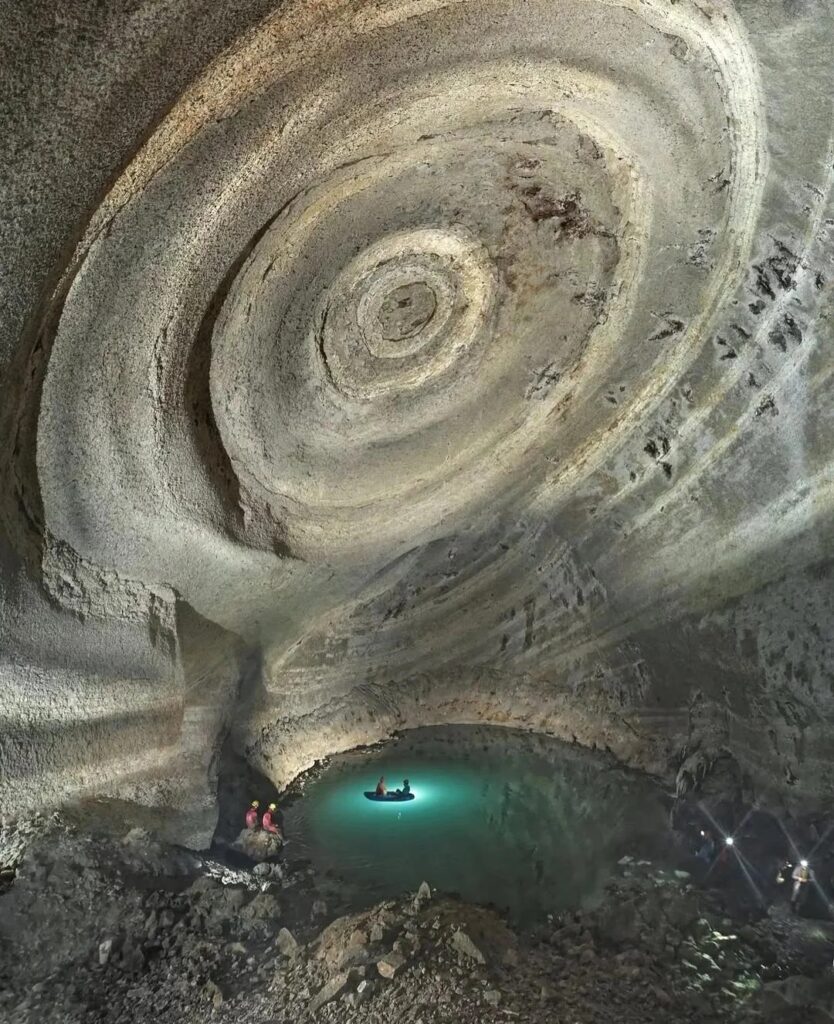
Czech scientists in Albania discover world’s largest underground thermal lake

A team of Czech scientists have discovered in southern Albania the world’s largest underground thermal lake, and have named it Lake Neuron, after the foundation that funded the expedition.
Within the valleys of the mountainous borderlands between Greece and Albania, Czech scientists have for several years been exploring the complex situation underground.
