
The 2027 Census of India will be the first fully digital census, utilizing mobile applications for enumerators and offering a self-enumeration web portal for citizens. This shift aims to modernize the process and provide faster, more accurate data for governance and policy formulation. India’s 2027 Census: First Digital and Caste-Based Count India’s 2027 Census brings digital tools, self-enumeration, GPS tracking, and caste data collection for the first time since 1931. Read more about India’s 2027 Census: First Digital and Caste-Based Count Uniform coding across the country to ensure fast, computerised processing.
Enhanced Data Quality and Timeliness With tech-enabled checks and uniform input methods, Census 2027 aims for higher accuracy and quicker data dissemination compared to the lengthy timelines of 2011.
Challenges in the 2027 Census and How They’re Being Addressed Digital Literacy Among Enumerators
Challenge: Many enumerators may lack experience with digital tools.
Solution: Extensive training modules, simulations, and multilingual interfaces have been introduced.
Connectivity Issues in Remote Areas Challenge: Poor internet access in rural or remote locations.
Solution: The app works offline and auto-syncs data once connectivity returns, ensuring uninterrupted data collection.
Technical Glitches and App Updates Challenge: Software bugs or technical failures during fieldwork.
Solution: Enumerators will be equipped with field support tools and real-time diagnostics to troubleshoot problems quickly.
GPS Drift and Location Errors Challenge: Inaccurate GPS tagging of households.
Solution: Supervisors will verify and manually adjust coordinates when needed to ensure accuracy.
Respondent Reluctance or Fear Challenge: Some individuals may resist or fear sharing personal information.
Solution: Enumerators are trained in soft skills and legal protocols. The system includes mobile alerts to log refusals or delays for supervisory review.
Quality Control and Error Detection Challenge: Risk of incorrect or duplicate data entries.
Solution: Supervisors will review flagged forms; automated checks identify errors like unrealistic ages or duplicate entries before final submission. Periodic audits ensure data reliability. How the 2027 Census Will Be Digital
The digital approach involves several key features:
Offline Capability: The mobile apps are designed to work offline in areas with poor internet connectivity and automatically sync the collected data once a connection is restored.
Mobile Apps for Data Collection: Over 34 lakh enumerators will use specialized mobile applications on their personal smartphones (Android and iOS) to collect household and individual data.
Online Self-Enumeration: For the first time, citizens can log in to a dedicated government web portal using their mobile number or Aadhaar to fill out their details online. A unique ID will be generated for verification by the enumerator.
Real-time Monitoring and Management: A Census Management and Monitoring System (CMMS) portal will track field operations in real-time, allowing for efficient supervision and faster issue resolution.
Geotagging and Digital Mapping: All residential and non-residential buildings will be geotagged using a Geographic Information System (GIS) to ensure comprehensive and accurate spatial mapping.
Automated Error Detection: The apps will have built-in validation checks (e.g., for unrealistic household sizes or age errors) to improve data quality at the source.
Offline Capability: The mobile apps are designed to work offline in areas with poor internet connectivity and automatically sync the collected data once a connection is restored. India’s First Digital Census 2027: Key Features, Dates, and New Changes Discover how the 2027 Indian Census will be the country’s first fully digital census. Learn about mobile app data collection, geotagging of buildings, real-time monitoring, census stages, and government support for this historic digital shift.
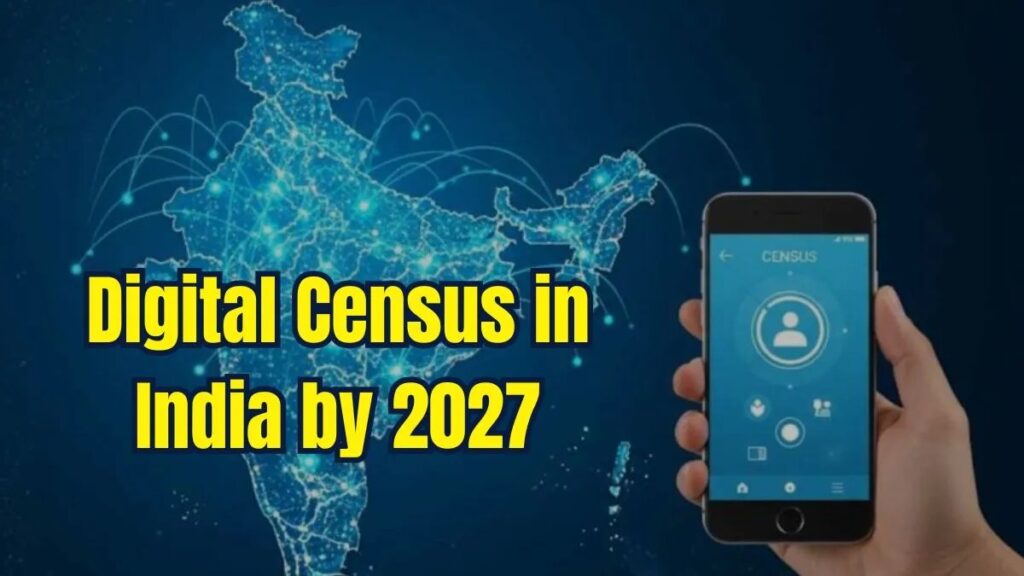
The 2027 Indian Census represents a shift from the conventional method. Nearly 34 lakh enumerators would use their personal devices to gather data. This will be the nation’s first entirely digital census. The mobile apps created for this purpose will function on both the iOS and Android operating systems and support a variety of languages. Direct uploading of the data to a central server will guarantee quicker and more precise processing.
Use of Digital Apps for Data Collection
Enumerators will record home data using specialized apps. Originally developed for the 2021 Census, these apps have been updated to reflect modern mobile technology. In the case of the use of personal devices, lesser need for additional hardware will be required. To prevent double data entry or scanning, any data gathered on paper must later be entered into a web portal. This method ensures that data gets digitized at the source.
Advantages and Disadvantages
| Type |
|---|
| Advantages | Disadvantages/Challenges | |
|---|---|---|
| Operational | * Speed and Efficiency: Real-time data submission and automated processing drastically reduce the time lag between collection and data availability. * Cost-Effectiveness: Reduces reliance on paper forms and physical storage, lowering operational costs. * Enhanced Accuracy: Minimizes manual entry errors and allows for real-time validation checks. * Better Monitoring: Centralized digital monitoring ensures smoother execution and progress tracking. | * Digital Divide: Uneven internet penetration and low digital literacy, especially in rural and remote areas, risk undercounting marginalized populations. * Training Needs: Over three million enumerators require intensive training on the new digital tools. |
| Data & Policy | * Improved Policy Formulation: Timely and accurate data enables better resource allocation, social welfare programs, and evidence-based decision-making. * Detailed Analysis: Geotagging and digital data allow for sophisticated geographical and demographic analysis. | * Data Security and Privacy Concerns: Handling sensitive data (e.g., caste, religion) digitally raises significant cybersecurity risks and concerns about potential data misuse or breaches. * Exclusion Risks: Reliance on Aadhaar-based authentication could exclude those without registered Aadhaar IDs. * Data Quality Issues: Self-enumeration in a diverse society might lead to inaccuracies without enumerator guidance. |
India’s 2027 ‘digital’ census brings new risks to privacy and equality
While India’s digital census aims to improve policymaking and tackle inequality with caste enumeration, it raises serious concerns around privacy, surveillance, and cyber threats that could undermine data security and trust.
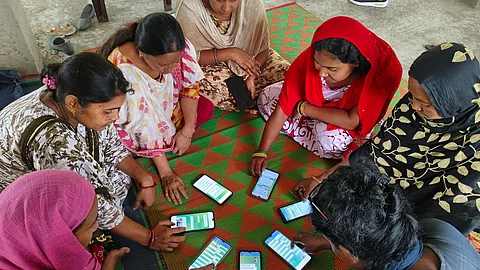
Women take part in a digital literacy session in rural India. As India prepares for a digital caste census, concerns remain about access, privacy, and data security.Digital Empowerment Foundation Web portal, apps to make Census data ‘available early’, says Registrar General of India
The first phase — Houselisting and Housing Census (HLO) — will start from April 2026, and Phase 2 i.e. Population Enumeration (PE) will be conducted in February 2027
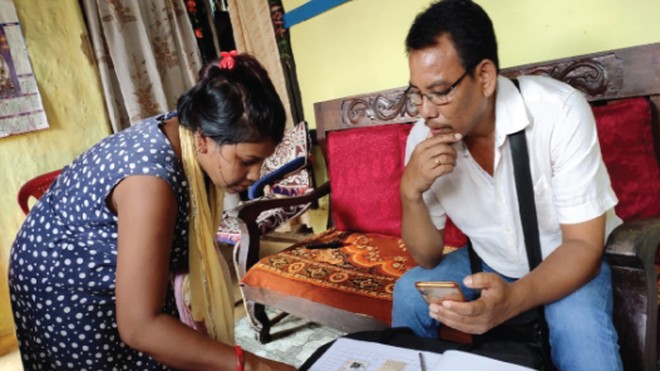
Preparatory work for Census 2027 begins with conference of Directors of Census Operations
Before the first phase begins, a pre-test exercise will be held where tentative questions will be asked by enumerators. The notification for pre-test is likely to be issued in August, a senior government official said.
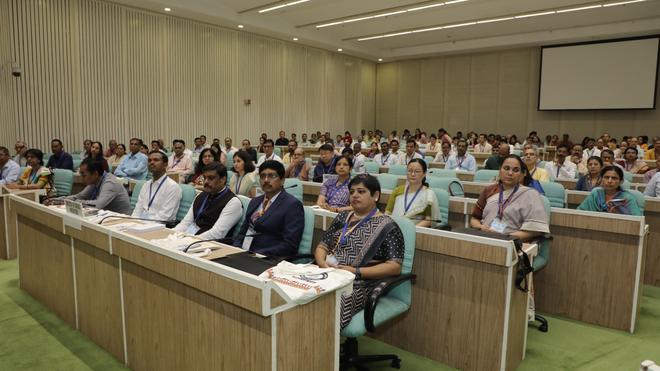
Participants at the conference of Directors of Census Operations in New Delhi on July 3, 2025. Photo: X/@CensusIndia2027 Population Census will be conducted in 2027, government notifies
In the coming days, separate notifications will be issued for the pre-test exercise, and the House Listing Operations, which will specify the dates of the first phase of the Census In the census, caste enumeration will also be done, a government statement said.
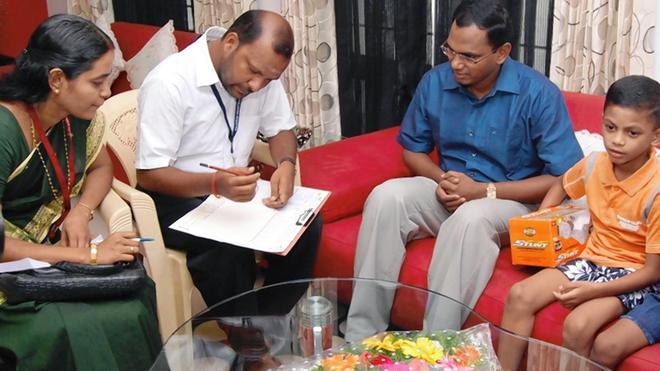
The next Census of India will be conducted during the year 2027, the Union Ministry of Home Affairs (MHA) notified on Monday. Census notification to be issued on June 16: Ministry of Home Affairs
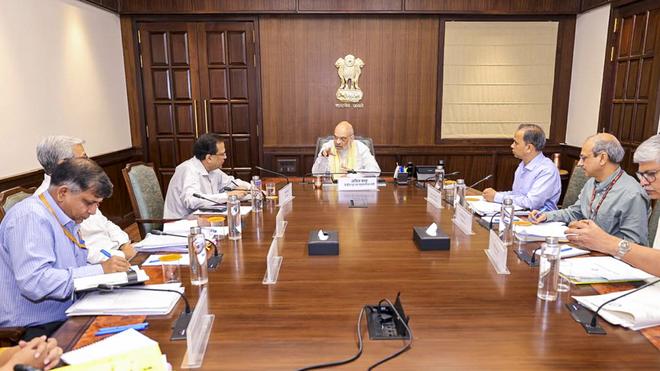
Union Home Minister Amit Shah reviews preparations for the two-phase exercise which will conclude by March 1, 2027 Ministry of Home Affairs (MHA) on June 15, 2025, Union Home Minister Amit Shah during a meeting with Home Secretary Govind Mohan and other senior officials to review the preparation for the forthcoming Census Injustice in the delay: On the next Census the announcement of the Census is welcome, but the delay is unjust next Census to conclude by March 2027, says government delayed population count will be India’s first digital Census and will include an enumeration of castes for the first time in Independent India; dates of the two phases to be notified on June 16
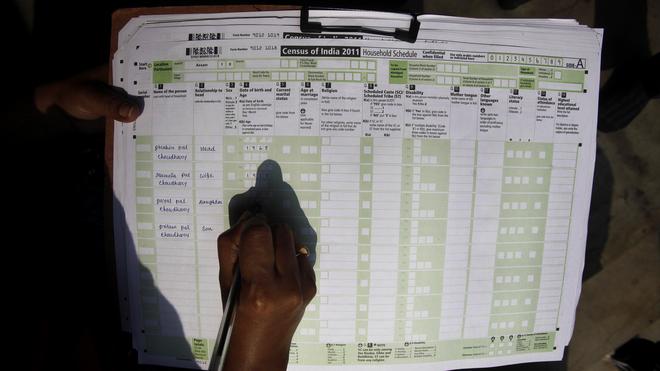
The last Census of India was conducted in 2011 in two phases. The 2027 exercise will be the first digital Census. Census. India will count its population by March 1, 2027, in a census to be held after an unprecedented 16-year gap, the Union Ministry of Home Affairs announced on Wednesday (June 4, 2025). This will be the country’s first digital census, and the first in independent India to include an enumeration of castes as well. The census will be conducted in two phases by February 28, 2027 and the data will have a reference date of 12 a.m. on March 1, 2027. However, the government has not yet notified the date of commencement of the exercise. The notification of the Centre’s intention to conduct the census, and the dates of the two phases will be “published in the official gazette tentatively on June 16 as per provision of section 3 of the Census Act 1948.” The Census in 2021 did not take place as planned, thus impacting different aspects of governance, especially social security schemes for vulnerable populations that rely heavily on updated demographic data for effective and efficient delivery. For the first time, the Census will be digitally administered, enabling faster data gathering and easier accessibility for analysis, thereby allowing population-level data to be more dynamic. However, this technological adoption also heightens concerns regarding data theft and privacy. While the nature of the Census will evolve, transparency at all levels will be crucial to building public trust in the exercise. Preparations for this massive operation, which will reach every household, are underway, with more logistical details anticipated in the weeks ahead. stands at a demographic crossroads, facing the challenges of growing populations of the young and the old alongside significant regional variations in key indicators. Fresh data from the Census can help address many issues. For the first time since 1931, caste categories will be enumerated. While more reliable data on the socio-economic standing of caste groups can inform development planning, the potential for further social segmentation makes caste enumeration a double-edged sword. The Constitution mandates that the next inter-State delimitation be based on population figures from the first Census after 2026. The current distribution of Lok Sabha seats is based on the 1971 population spread. With the reference date for the Census set as March 1, 2027, for most of the country, this can pave the way for the next delimitation exercise. States that have experienced lower population growth in recent decades, particularly in the peninsular region, have expressed concern that their parliamentary representation will diminish if population becomes the sole criterion for redistribution. The Centre has yet to clarify its stance on this matter. With the Census now in motion, it is imperative for the Centre to engage with all stakeholders and build consensus on the sensitive issue of delimitation. Otherwise, the delay in the announcement of the Census will be taken to mean as an attempt to ensure that the ruling BJP benefits from the increased representation for the Hindi-speaking States. While the move aims to capture accurate socio-economic data, including caste details, to inform better policy making and addressing structural inequalities, it also raises some critical concerns. Issues of privacy, data protection, and the potential for state-led surveillance loom large. Moreover, India’s vulnerability to cyberattacks amplifies these risks, threatening both the integrity of the census process and the security of citizens’ data.
There is an urgent need to critically evaluate the implications of a digital caste census, with particular attention to the challenges of self-enumeration, privacy risks, and the looming threat of cyberattacks.
The promise and perils of digital census and self-enumeration
The use of digital technologies and self-enumeration could modernise India’s decennial census by streamlining data collection across a diverse population of over 1.4 billion population. The Government of India claims the shift will not only improve the efficiency of data gathering, but also enhance inclusivity by empowering citizens, even in remote households, to participate in the caste census online.
Indeed, the caste census will involve the collection of sensitive information about social identities and household details, all of which will be stored as digital datasets. However, this new approach comes with serious challenges.
First, India suffers from low digital literacy and unequal internet access. According to the National Family Health Survey (2021–22), only 57% of rural households had internet access, compared to 80% in urban areas. This digital divide poses a major risk of excluding rural and marginalised communities — including lowered caste groups — whose participation is critical to the census’ objectives.
The self-enumeration model also assumes that people can accurately report their social identities. But caste identities are complex, contested, and vary by region. Without enumerators to provide guidance, the risk of inaccurate or deliberately falsified data increases, which could ultimately undermine the credibility of the caste census.
There is also concern about data quality. Unlike traditional enumerator-led surveys, self-enumeration is an untested method in India and lacks real-time verification. As the government plans to use Aadhaar-based authentication to validate respondents’ identities, individuals without registered Aadhaar IDs — estimated at 2–3% of the population, often from marginalised groups — could be excluded. This risks perpetuating the very inequalities the caste census seeks to redress.
Privacy and data protection concerns
The digital caste census raises pressing questions about privacy, as sensitive personal data — such as caste, religion, gender, and socio-economic status — will be stored and processed online. India currently lacks a robust enforcement mechanism for its data protection framework, laid out under the Digital Personal Data Protection (DPDP) Act, 2023.
The digital infrastructure for the census is expected to run on government servers, which are not immune to breaches. For instance, the 2023 data leak from the CoWIN vaccination portal revealed major vulnerabilities, exposing millions of citizens to identity theft. If similar breaches occur during the caste census, the fallout could include data manipulation, targeted phishing, discrimination, and the exploitation of vulnerable social groups.
Self-enumeration heightens these concerns. With no designated devices provided, citizens will upload personal information using their own phones and laptops, potentially over insecure networks and with outdated software. This opens up multiple entry points for cyberattacks. The absence of stringent guidelines on encryption and data protection during transmission increases the risk of profiling and the misuse of caste data in a deeply polarised society.
Surveillance and state overreach
Linking the digital census to Aadhaar also introduces the possibility of state surveillance. Aadhaar’s biometric and demographic database already enables broad tracking of citizens’ access to government services. The Election Commission of India has also linked Aadhaar to voter IDs. Now, the RGI’s move to integrate Aadhaar with caste census data could create a vast surveillance apparatus — mapping caste, religion, economic status, and place of residence.
This could be used not for social justice, but for voter profiling or even to suppress dissent, particularly in regions marked by caste-based political tensions. Instead of enabling targeted welfare for the marginalised, the digital caste census risks deepening surveillance and eroding democratic safeguards.
While the idea of digitally managing the caste census may appear innovative, it prioritises efficiency over ethics and accountability. The opaque process of sorting and sharing data with other government agencies has already drawn criticism. Past efforts — such as linking the National Population Register (NPR) with the census for citizenship verification, and Aadhaar with voter rolls — have been challenged by scholars and civil society groups, who fear the exclusion of minorities and lowered-caste communities.
The lack of an independent authority to monitor data use and resolve grievances further weakens public trust in the process.
Cyberattack risks in a digital census
India ranks second globally among targets for cyberattacks, revealing the scale of threats to its digital infrastructure. The Data Security Council of India (DSCI) reports that India detected an average of 761 cyberattack attempts per minute in 2024. According to a report by Prahar, a non-profit, more than 500 million cyberattacks occurred in the first quarter of that year alone.
These attacks often come from state-sponsored actors targeting critical infrastructure such as India’s power grid, which was compromised in 2020. A digital caste census, with its vast and sensitive datasets, would be a high-value target for hackers and hostile entities.
Cyberattacks could do more than breach data, they could manipulate it. Altered caste identities or income details could skew the census, distort policy decisions, or even influence electoral outcomes. Given the importance of caste demographics in governance, the implications of compromised data are far-reaching.
A calibrated approach to the digital caste census
If the government moves forward with a digital caste census, it must do so with caution and strong safeguards. First, the digital divide must be addressed by ensuring equitable access through mobile vans, community-level computer centres, and such. Second, the DPDP Act must be rigorously enforced, with regular security audits and compulsory encryption for census data.
Third, an independent regulatory body should be set up to oversee how census data is used. Finally, citizens must be educated about the process through awareness campaigns, demonstrations, and clear information about their rights under data protection laws.
The government’s ambition to use the caste census to address social inequality is commendable. But digital governance demands transparency, security, and accountability. Without these, the very communities meant to benefit from the census may end up harmed by it.
A transparent, secure, and inclusive approach is essential to ensure the census serves its intended purpose, without compromising citizens’ rights or national security.
Ashok Gurram is an assistant professor and MURTI Faculty Fellow at the Department of Political Science, GSHS, GITAM (deemed to be) University, Hyderabad. Email: gashok529@gmail.com
The views expressed are personal and do not reflect those of the university.

MX777 is my new playground! Great variety of games and the payouts seem pretty fair. Definitely recommend checking it out! Happy Gaming! mx777
Heard a lot about Plataformanovabet, and decided to try it. Not disappointed the design is cool, and they have the games that I like. Check it out plataformanovabet