
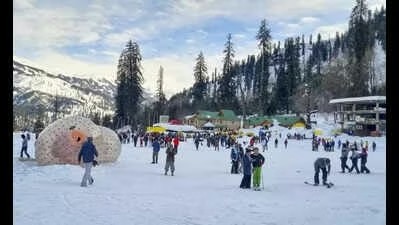
Kullu: The Meteorological Centre, Shimla, has forecast more snowfall and rain in the state’s mid- and high-altitude regions over the next few days, even as over 400 roads remain closed following recent heavy snowfall. Light rain and snow are expected in the hills from Jan 31 to Feb 2, while parts of the low hills may see light rainfall on Feb 1, the weather department said.The Met Centre also predicted the likelihood of thunderstorms and gusty winds at isolated places in the state on Feb 1.Meanwhile, a total 482 roads remained blocked in the mid and high hills of the state due to the recent two spells of heavy snowfall.According to the State Emergency Operation Centre (SEOC), a maximum 273 roads remained closed in the Lahaul-Spiti district, followed by 67 in Mandi, 57 in Kullu, 40 in Shimla, 35 in Chamba, 5 in Kinnaur, 3 in Una, 2 in Kangra and 1 in Sirmaur.Many parts of the state also faced power outages as 436 Distribution Transformer Regions (DTRs) remained disrupted, with the highest 187 in Kullu, 116 in Shimla, 57 in Mandi, 50 in Chamba, 13 in Sirmaur and 11 in Lahaul Spiti.As many as 62 water supply schemes also remained affected in the state, with the highest 50 in Shimla and 10 in Chamba.Tabo in Lahaul Spiti was the coldest place in Himachal Pradesh on Friday, with the lowest minimum temperature of -10.2°C. Kukumseri recorded a minimum temperature of -9.2°C, and Kalpa in Kinnaur recorded -2.4°C.Among the tourist destinations, Manali recorded the lowest minimum temperature of -0.1°C, Palampur 3.5°C, Kufri 3.8°C, Dharamshala 4.4°C, and Shimla 5.2°C.MSID:: 127802671 413 |
History and Geography
Himachal situated in the heart of the western Himalaya, identified as “Dev Bhumi” and is believed to be the abode of Gods and Goddesses. The entire State is punctuated with stone as well as wood temples. The rich culture and traditions have made Himachal unique in itself. The shadowy valleys, rugged crags, glaciers and gigantic pines and roaring rivers and exquisite flora and fauna compose the symphony that is for ever Himachal.
Himachal Pradesh came into being as a Union Territory in April 1948 as a result of integration of 30 princely States spread over 27,000 sq.km. In 1954, when another C”class state of Bilaspur merged in Himachal Pradesh, its area increased to 28,241 sq.km. The position remained unchanged till 1966. On re-organisation of the State, the hilly areas of Punjab were merged with the State, increasing its size to 55,673 sq.km. Himachal Pradesh today is quoted as a successful model of not only hill area development but also for having realised development in education, health and social services.
Agriculture
Agriculture being the main occupation of the people of Himachal Pradesh has an important role in the economy of the State. It provides direct employment to about 69 per cent of the main working population. Income from agriculture and allied sectors accounts for nearly 22.1 per cent of the total State Domestic Product. Out of the total geographical area of 55.673 sq. km., area of operational holding is about 9.79 lakh hectares owned by 9.14 lakh farmers. The marginal and small farmers possess 86.4 per cent of the total land holdings. The cultivated area in the state is only 10.4 percent.
Horticulture
Nature has endowed Himachal Pradesh with a wide range of agro-climatic conditions, which have helped the farmers to cultivate large varieties of fruits ranging from temperate to sub-tropical. The main fruits under cultivation are apple, pear, peach, plum, apricot nut and citrus fruits like mango, litchi, guava and strawberry.
The Horticulture Technology Mission for the integrated development of horticulture is being implemented with a total outlay of Rs.80 crore during the tenth five-year plan period. This Mission is based on the “end to end approach” taking into account the entire gamut of horticulture development with all backward and forward linkages in a holistic manner. Under this scheme, four centres of excellence are being created in different Agro-Climatic Zones with common facilities like water harvesting, vermicompost, greenhouses, organic farming and farm mechanisation.
Roads
Roads are the lifelines and major means of communication in the predominantly hill State of Himachal Pradesh. Out of its 55,673 sq. km area, 36,700 km is inhabited out which 16,807 inhabited villages are scattered over slopes of numerous hill ranges and valleys. Realising the importance of construction of roads for connecting production areas with market centres, Himachal Pradesh Government has decided to connect every panchayat with roads in the next two years. When the Himachal Pradesh came into existence in 1948 there were 288 km. of roads. This number had gone up to 33,171 km by 15 August 2010.
Hydro-power Generation
Himachal Pradesh has immense hydro-potential in its five river basins. Chenab, Rabi, Beas, Satluj and Yamuna which emanates from the western Himalayas pass through the State. The strategy of development in the power sector comprises expeditious actualisation of the Hydro Electric Potential and introduction of power sector reforms to bring efficiency in the sector and provide high quality power to the consumers at reasonable rates besides availability of abundant power to industrial and tourism sectors. The total identified potential in the State stands at 23,230 M.W which is one fourth of Indias total hydro-power potential. Presently out of this 6,480 M.W has already been harnessed by various agencies. Projects aggregating to 7,602 M.W are under execution.
There is no denying this fact in view of the way the Government has embarked upon an accelerated Power Development Programme. The State is speedily moving towards becoming a “Power State”of the Country. All the census villages in the State have been electrified and now left out hamlets are being covered.
Industrial Growth
Industrial development has been given big boost in the State. Pollution free environment, abundant availability of power and rapidly developing infrastructure, peaceful atmosphere, and responsive and transparent administration are some of the added attractions and advantages that the entrepreneurs get in Himachal Pradesh. 349 large and medium and about 33,284 small-scale industrial units with an investment of about Rs.4822.54 crore have been set up in the State generating employment for 2 lakh persons. The sector is contributing 17 per cent to the State Domestic Product and the annual turnover on this account is about Rs.6000 crore.
Information Technology
The Government of Himachal Pradesh has developed an IT Vision-2010 in collaboration with NASSCOM to make Himachal Pradesh an IT destination. Under the IT policy, it has been decided to accord the status of industry to all IT projects including IT related services and educational institutions. As such, all the incentives available for industrial units are also being given to all IT units, and IT related services.
Bio-Technology
Keeping in view the importance of bio-technology, special emphasis is being laid on exploiting the vast bio-technology potential available in the State. A separate Department of Bio-technology has been set up in the State. States own bio-technology policy has been formulated. All bio-technological units are entitled for incentives which have been allowed for industrial units. The State Government proposes to set up Bio-technology Park in Solan District.
Irrigation and Water Supply
Net sown area in the State was 5.83 lakh hectares till 2007.Villages have been provided with the facility of drinking water. Over 15,000 hand pumps have been installed in the State so far. For better reform in water supply and irrigation sector, the State Government has taken up a WASH project with the total cost of Rs.339 crore for irrigation as well as for drinking water supply schemes with Gesellschaft for Technische Zuoammeuorbeit (GTZ).
Forestry
The total geographical area of the state is 55,673 sq km. As per record, the total forest area is 37,033 sq. km. Out of this, 16,376 sq. km. area is not fit for tree growth comprising alpine pastures, area under permanent snow, etc. The cultivable recorded forest area is only 20,657 sq. km.
Efforts are being taken to bring maximum area under green cover by implementing States own projects, Government of Indias projects and also through external aided projects. The World Bank has also sanctioned a Rs.365 crore Integrated Watershed Development Project for the Mid Himalayas. 545 Panchayats of 42 developmental blocks in 10 districts would be covered during the next six years. There are 2 National Parks and 32 wild life sanctuaries in the State. Total area under wild life sanctuaries is 5562 km area under National Parks is 1440 Km and total area of Protected Area Network is 7002 sq. km.
Education
Himachal Pradesh has emerged as the third best State in terms of over-all development and performance. The state has been adjudged number one State in Primary Education and teacher-student ratio. Himachal Pradesh has witnessed literacy revolution as we are second only to Kerala in literacy. The State has about 17,000 educational institutes, including three Universities, two Medical Colleges, one Engineering College in the Government Sector and a number of technical, professional and other educational institutions. The literacy percentage of the State according to 2011 Census is 83.78. The State Governments emphasis now is to ensure qualitative improvement in the education besides need based expansion. Sarva Siksha Abhiyan an ambitious project worth Rs.532 crore is being evolved with the main objective of achieving universalisation of elementary education with the sole aim to spread the light of knowledge to every nook and corner of the State.
Tourism
Tourism Industry in Himachal Pradesh has been given very high priority and the Government has developed an appropriate infrastructure for its development which includes provision of public utility services, roads, communication network, airports, transport facilities, water supply and civic amenities, etc. The State Government is poised to transform the State into “A Destination for All Seasons and All Reasons”.
The State Tourism Development Corporation contributes 10 per cent to the State exchequer. The corporation contributes more than Rs.2.00 crore per annum by way of Sales tax, luxury tax and passenger tax. In the year-2007, tourist arrivals in the State were 8.3 million.
The State has a rich treasure of places of pilgrimage and of anthropological value. The State has also the pride of being the home to rishis like Vyas, Parashar,Vashist, Markandey and Lamas, etc. Hot water springs, historic forts, natural and man-made lakes, shepherds grazing their flock are sources of immense pleasure and joy to the tourist.
The State Government is aiming at promoting sustainable tourism, encouraging private sector to develop tourism related infrastructure in the State without disturbing the existing ecology and environment. The main thrust is on employment generation and promoting new concepts of tourism in the State. In order to increase the duration of the stay of the visitors/tourists, a special emphasis is being laid on the development of activities-based on tourism.
For the promotion and development of the State from the tourism point of view, the Government is focusing on the following areas:
- History related tourism
- Identification of new areas/tourist destinations and promotion of village tourism
- Improvement of infrastructure,
- Pilgrimage tourism
- Tribal tourism
- Ecotourism
- Health tourism
- Promotion of adventure tourism
- Wildlife tourism
- Cultural tourism.
The India Meteorological Department (IMD) has forecast another round of snow and rain across North India starting February 1.
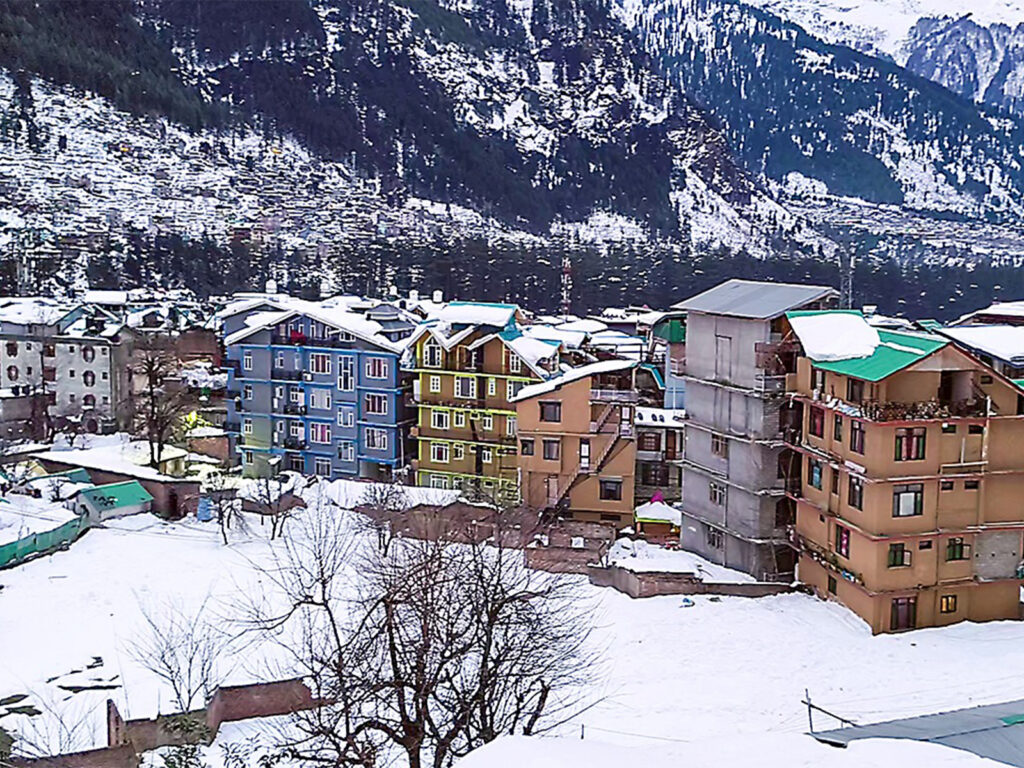
Snowfall disrupts public utilities across Himachal; 482 roads blocked, power and water supply hit Current Situation in Himachal Pradesh
Road Closures: A total of 482 roads are currently blocked in the mid and high hills.
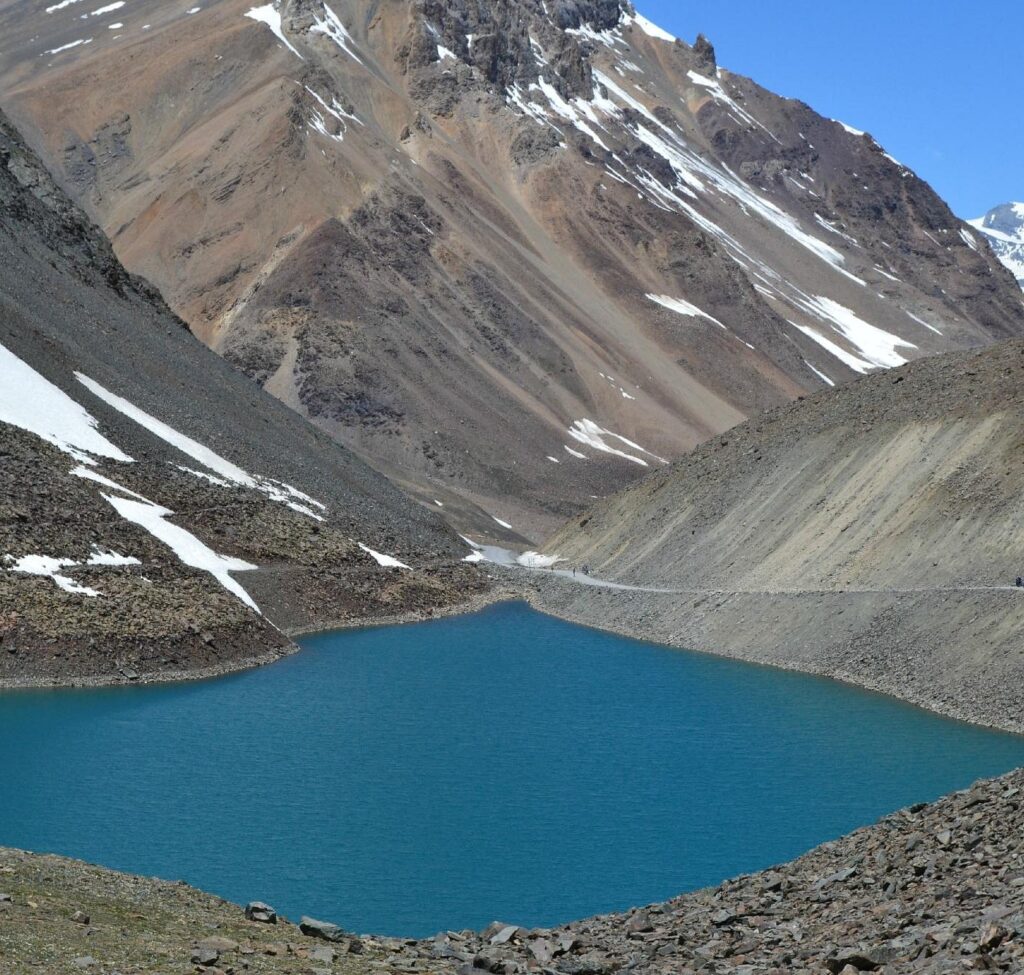
The Lahaul and Spiti district in the Indian state of Himachal Pradesh consists of the two formerly separate districts of Lahaul and Spiti. The present administrative centre is Keylong in Lahaul. Before the two districts were merged, Kardang was the capital of Lahaul, and Dhankar the capital of Spiti. The district was formed in 1960, and is the fourth least populous district in India.
Kunzum la or the Kunzum Pass (altitude 4,551 m (14,931 ft)) is the entrance pass to the Spiti Valley from Lahaul. It is 21 km (13 mi) from Chandra Tal. This district is connected to Manali through the Rohtang Pass. To the south, Spiti ends 24 km (15 mi) from Tabo, at the Sumdo where the road enters Kinnaur and joins with National Highway No. 5 .
The two valleys are quite different in character. Spiti is more barren and difficult to cross, with an average elevation of the valley floor of 4,270 m (14,010 ft). It is enclosed between lofty ranges, with the Spiti river rushing out of a gorge in the southeast to meet the Sutlej River. It is a typical mountain desert area with an average annual rainfall of only 170 mm (6.7 in) Mandi, also known as “Mandav Nagar” in the past, is a town with a rich history located in the Mandi district of Himachal Pradesh, India. The town holds significant historical and cultural importance, dating back several centuries. Here’s an overview of its history :
Ancient and Medieval Times : Mandi has ancient origins, with historical references dating back to the 6th century AD. It was founded by Raja Sahil Varman in the 6th century and was initially known as “Mandav Nagar” after the sage Mandav who is believed to have meditated here. Mandi served as an important center for trade and commerce, connecting the northern plains of India with Tibet and Ladakh.
The Kingdom of Mandi : Over the centuries, Mandi grew into a powerful kingdom under the rule of the princely state of Mandi. The rulers of Mandi were from the Katoch dynasty, who played a vital role in shaping the region’s history. The state of Mandi was one of the princely states of British India and was known for its administrative efficiency and stable governance.
Influence of British Raj : During the British colonial period, Mandi, like many other princely states, came under the influence of the British Raj. The rulers maintained a friendly relationship with the British and were allowed to continue their rule under British suzerainty.
Unification with India : After India gained independence in 1947, the princely states were given the option to join either India or Pakistan. In 1948, the ruler of Mandi, Raja Joginder Sen, decided to merge the state with the Republic of India, and Mandi became a part of the Indian union.
Post-Independence Era : After integration into India, Mandi continued to develop as a significant town in Himachal Pradesh. Over the years, it has witnessed growth in various sectors, including education, tourism, and trade.
Cultural Heritage : Mandi has a rich cultural heritage and is known for its traditional art, music, and festivals. The “International Shivratri Fair” held during the Hindu festival of Shivratri is a grand celebration that attracts people from different parts of India and abroad.
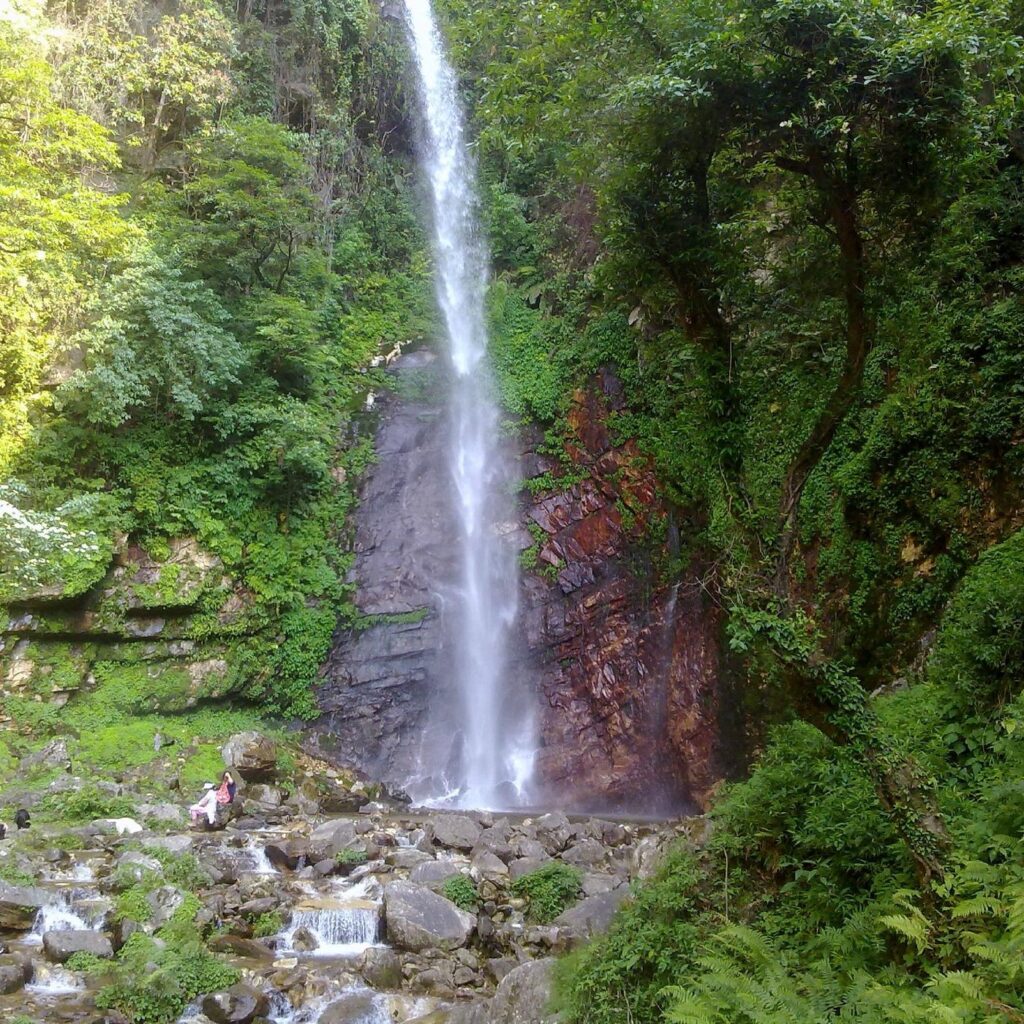
Kullu, India
Set in a valley whose original name meant “end of the habitable world,” this resort town in the lower Himalayas blossoms in summer and during its famous Dussehra festival in October. Don’t miss the Raghunath Temple, built in 1660 in honor of the valley’s patron deity, Lord Ram. Less than two miles away, a 90-minute climb to the Jagannathi Devi Temple provides a panoramic view of the alpine area. The town is also known for its locally woven wool shawls, blankets and slippers.
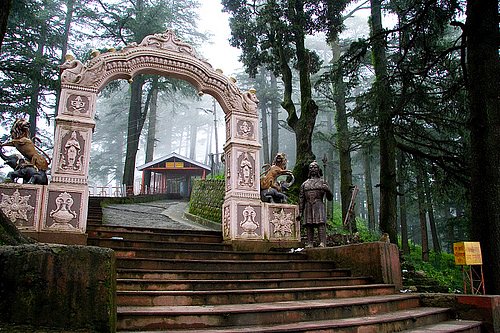
Shimla, India
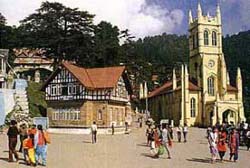
Snow-capped Himalayan peaks and green pastures surround Shimla, the capital of Himachal Pradesh. Enjoy a heritage walk through Shimla’s Victorian-era architecture, labyrinthine bazaars and lengthy pedestrian shopping mall. Don’t cause too much trouble taking in the town from Scandal Point, a large, open square; keep in mind that Shimla was a retreat destination for Mahatma Gandhi, who frequented a Georgian mansion in Shimla’s suburbs from the mid-1930s to ’40s. National Highways: Major routes like NH-03 (Leh-Manali), NH-505 (Kaza-Gramphu), and NH-305 (Jalori Pass) are currently obstructed.
Utility Disruptions: 436 power transformers (DTRs) are non-functional, mainly in Kullu and Shimla, while 62 water supply schemes are currently disrupted.
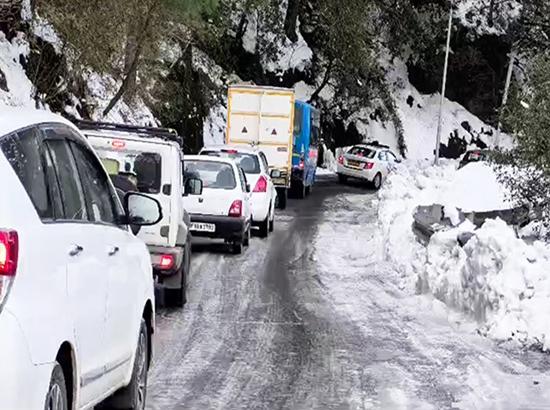
Heavy snowfall disrupts life across Himachal; 885 roads blocked, power and water supply hit
Shimla (Himachal Pradesh), January 29, 2026 (ANI): Fresh spells of snowfall and rainfall across Himachal Pradesh during the past 24 hours have severely disrupted normal life, with a sharp rise in the number of blocked roads, power outages, and water supply interruptions, according to the latest evening status report issued by the State Emergency Operation Centre (SEOC).
According to the SEOC’s public utility report compiled at 6 pm on Wednesday, a total of 885 roads, including four National Highways, remain blocked across the state due to snowfall, rain-triggered landslides, and icy conditions.
The number of disrupted distribution transformers (DTRs) stands at 3,237, while 121 water supply schemes have been affected, impacting thousands of households, particularly in the higher and interior regions.
Among the major routes affected, NH-03, NH-05, NH-305, and NH-505 remain closed at several stretches. In Kinnaur, NH-05 between Pooh and Samdu has been shut due to heavy snowfall, while in the Kullu district, NH-305 at Jalori Pass is blocked. In Lahaul-Spiti, strategic mountain routes, including NH-03 (Koksar-Rohtang Pass) and NH-505 (Gramphu-Batal), remain closed, cutting off several tribal pockets.
The impact has been most severe in Shimla, Kullu, Lahaul-Spiti, Mandi, Kinnaur, and Chamba districts. Shimla district alone reported 176 blocked roads, along with disruption of 1,082 DTRs and 91 water supply schemes, largely due to snow accumulation and snapped power lines. In Kullu district, 98 roads are blocked, and power supply has been severely affected, with over 1,000 DTRs affected due to faults in the main high-tension lines caused by snow and rain.
Lahaul-Spiti remains largely cut off, with 290 roads blocked and all major routes closed due to heavy snowfall. Chamba district reported 91 blocked roads and 200 DTRs disrupted, while Mandi district recorded 128 blocked roads and 369 DTRs out of service.
State authorities said restoration work is being carried out on a war footing wherever weather conditions permit. Snow-clearance machinery and road maintenance teams have been deployed, while the power and water supply departments are working to restore essential services as a priority, particularly in densely populated and critical areas.
The administration has advised residents and tourists to avoid unnecessary travel, especially in high-altitude regions, and to strictly follow advisories issued by local authorities until conditions improve.
With more cold and wintry weather expected in parts of the state, officials said close monitoring is being maintained through the 24×7 SEOC control room. (ANI) Weather Forecast (Feb 1–2, 2026) J&K: Meteorological Department warns of rain and snowfall on Feb 1-2
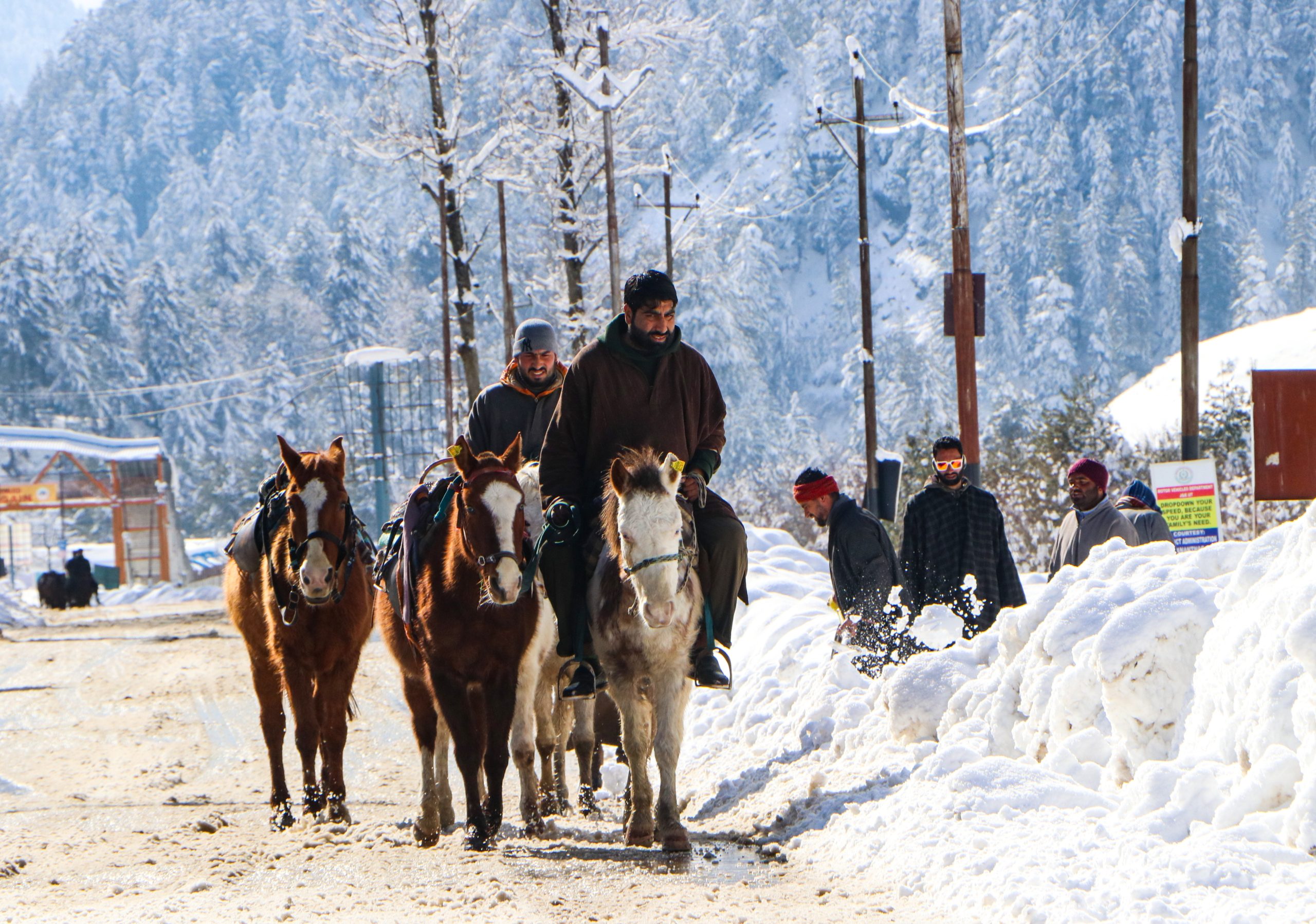
In Jammu and Kashmir, a fresh western disturbance is expected to affect the Union Territory on February 1 and 2. According to the Meteorological Department, the system will bring light to moderate rain and snowfall to scattered and fairly widespread areas.
The weather agency said that the higher reaches of Jammu and Kashmir are likely to receive moderate snowfall with fresh accumulation. The weather is expected to remain largely dry until January 31, with conditions turning cloudy by the evening.
In view of the forecast, authorities have issued an advisory urging travellers and transporters to exercise caution. They have been advised to check with traffic authorities regarding road and highway conditions before undertaking journeys, particularly on mountain routes and inter-district roads. Residents in snowbound and high-altitude areas have been cautioned against venturing into slippery and avalanche-prone zones during the snowfall period.
Continued Snowfall: A new Western Disturbance is expected to bring fresh snowfall to high-altitude areas and light to moderate rain in the plains of Jammu & Kashmir, Himachal Pradesh, and Uttarakhand. India Meteorological Department wishes all a Very
Happy & Prosperous New Year 2026
Subject: (i) Under the influence of Western Disturbance, light moderate rain/snow very likely over
Western Himalayan region during next 2 days.
(ii) Dense to Very dense fog conditions very likely to continue during night/morning hours at
many/some places over Punjab, Haryana Chandigarh & Delhi, Uttar Pradesh, Bihar and Odisha
during next 5-7 days and at isolated pockets over Jammu, Himachal Pradesh, Uttarakhand and
Rajasthan during next 3-4 days.
(iii) Cold day conditions very likely at isolated pockets over Himachal Pradesh and Uttarakhand on
1st; over Punjab and Haryana Chandigarh & Delhi on 1st & 2nd; Bihar during 1st -3rd January 2026.
(iv) Cold wave conditions very likely in isolated pockets of Himachal Pradesh during 1st- 4th; Punjab
and Haryana Chandigarh & Delhi during 2nd -5th; Rajasthan during 4th – 7th January 2026.
Realised weather during past 24 hours ending at 0830 hours IST of today, the 01st January, 2025:
❖ Dense to very Dense fog (visibility <50 m) conditions prevailed in isolated parts of Odisha, Bihar, Uttar Pradesh dense fog (visibility 50-199 m): prevailed in isolated pockets of Assam, Tripura, Manipur, Gangetic West Bengal, Uttarakhand, West Rajasthan, Madhya Pradesh
❖ Visibility in meter reported (≤200 m): Assam & Meghalaya: Dibrugarh (50), Tezpur (100), Jorhat (200), North lakhimpur (100); Nagaland, Manipur, Mizoram & Tripura : Agartala (50), Lengpui (100); Gangetic West
Bengal : Durgapur (100); Dum Dum (150); Odisha: Dhenkanal, Sambalpur (49); Hirakud, Bhubaneswar,
Keojhargarh (50-199m); Bihar: Bhagalpur (49); Purnea, Gaya (50-199m); Uttarakhand: Khatima(150); West Uttar Pradesh: Bareilly(IAF) & Agra(IAF)-00 Each, Shahjahanpur (25), AMS Aligarh, Ams Moradabad, Hamirpur, Jhansi & Orai-50 Each, Etawah-100; East Uttar Pradesh: Prayagraj(IAF), Gorakhpur(IAF), Azamgarh, Fursatganj & Kanpur(IAF)-00 Each, Prayagraj & Fatehppur-10 Each, Basti, Gorakhpur- & Ballia-20 Each, Hardoi-60, Fatehgarh- 80, Banda, Ams Kushinagar, Kanpur(City) & Varanasi(AP)-(100), Varanasi(BHU)-(150); West Rajasthan: Churu(50) / Jaisalmer (100); West Madhya Pradesh: Datiya(50); East Madhya Pradesh: Khajuraho(50)
❖ Cold day to severe cold day conditions prevailed at isolated parts over East Uttar Pradesh and Bihar; cold day conditions prevailed at isolated pockets West Uttar Pradesh.
Weather Systems, Forecast and Warnings (refer to ANNEXURE I & II):
❖ The Western disturbance as an upper air cyclonic circulation lies over north Pakistan & adjoining Punjab in lower tropospheric level with a trough aloft in middle roughly along Long. 71°E to the north of Lat. 27°N.
❖ An induced upper air cyclonic circulation lies over Punjab & neighbourhood in lower tropospheric levels.
❖ Subtropical westerly Jet Stream with core winds of the order of 120 knots at 12.6 km above mean sea level continues to prevail over north India.
❖ An upper air cyclonic circulation lies over southwest Bay of Bengal off Sri Lanka coasts in lower Under the influence of these systems, the following weather is likely:
❖ Scattered to fairly widespread light/moderate rainfall/snowfall very likely over Jammu-Kashmir-Ladakh- Gilgit-Baltistan-Muzaffarabad, Himachal Pradesh and Uttarakhand on 1st and light isolated rainfall/snowfall on 2nd January 2026.
❖ Isolated to scattered light rainfall likely over Punjab, Haryana & Chandigarh, north Rajasthan and West Uttar Pradesh on 1st January 2026.
❖ Isolated Thunderstorm and lightning likely over gusty wind speed (30-40kmph) likely to prevail over Andaman & Nicobar Islands 01st and Tamil Nadu on 01st & 02nd Jan 2026 and heavy rainfall likely over Tamilnadu on 01st January 2025.
Temperature Conditions during past 24 hours till 0830 hours IST of today:
❖ Minimum temperatures were below 4°C at many places over Jammu-Kashmir-Ladakh-Gilgit-Baltistan-Muzaffarabad; in the range of 4°-10°C at many places over Himachal Pradesh, Uttarakhand, Madhya Pradesh,
Uttar Pradesh at few places over Rajasthan, Odisha Bihar, Jharkhand at isolated places over Madhya Maharashtra
Chhattisgarh, Nagaland, Manipur, Mizoram & Tripura, Meghalaya, West Bengal & Sikkim
❖ Minimum Temperatures departures were appreciably below normal (-5.0°C to -3.1°C) at isolated places over Gangetic West Bengal and Odisha and were below normal (-3.0°C to -1.6°C) at isolated places over Uttar Pradesh,
Bihar, Madhya Maharashtra, Vidarbha, Telangana and Konkan & Goa. (refer to ANNEXURE IV)
❖ The lowest minimum temperature of 3.0°C was observed over Barabanki (East Uttar Pradesh) over the plains of India.
Forecast of minimum temperatures:
❖ No significant change in minimum temperature likely over northwest India for 24 hours, fall by 2-3°C during next 3 days and no significant change thereafter.
❖ Gradual rise in minimum temperature very likely over East India by 2-4°C during next 2 days, no significant
change for next 3 days and fall by 2-3°C for subsequent 2 days.
❖ No significant change in minimum temperature likely over Maharashtra during 24 hours, rise by 2-3°C for
next 4 days and no significant change thereafter.
❖ Gradual fall in minimum temperature likely over Gujarat by 2-4°C for next 4 days and rise by 2-3°C for
subsequent 3 days.
❖ No significant change in minimum temperature likely over northeast India during next 7days.
Dense Fog, Cold wave & Cold day Warnings:
❖ Dense to Very dense fog conditions very likely to continue during night/morning hours at many/some places over Punjab and Haryana Chandigarh & Delhi till 06th; over Odisha till 5th; over Bihar and East Uttar Pradesh till 2nd January at isolated pockets over Rajasthan till 3rd January 2026.
❖ Dense fog conditions also likely during night/morning hours at isolated pockets Jammu-Kashmir-Ladakh-Gilgit-Baltistan-Muzaffarabad till 4th ; over Himachal Pradesh during 2nd -5th ; over Uttarakhand till 5th ; over Punjab and Haryana Chandigarh & Delhi during 7th -8th ; over Bihar and Uttar Pradesh till 8th ; over Rajasthan on 4th ; overn Madhya Pradesh and Chhattisgarh during 3rd ; over Sub-Himalayan West Bengal & Sikkim during 2nd -5th ; over Gangetic West Bengal till 4th ; over Jharkhand on 1st & 2nd ; Odisha on 6th ; Arunachal Pradesh till 3rd and Assam & Meghalaya & Nagaland, Manipur, Mizoram & Tripura till 6th January 2026.
❖ Cold day conditions very likely at isolated pockets over Himachal Pradesh and Uttarakhand on 1st; over Punjab and Haryana Chandigarh & Delhi on 1st & 2nd; Bihar during 1st -3rd January 2026.
❖ Cold wave conditions very likely in isolated pockets of Himachal Pradesh during 1st – 4th; Punjab and Haryana Chandigarh & Delhi during 2nd -5th; Rajasthan during 4th – 7th January 2026.
Fisherman Warning:
Fishermen are advised not to venture into the following areas during 01st January to 06th January, 2026:
➢ Bay of Bengal:
Over Gulf of Mannar & adjoining, some parts of Comorin area during on 02nd to 6th January 2026; along and off north Oman coast and adjoining sea areas on 01st January; along and Somalia coast and adjoining
sea areas during 01st to 06th January 2026. Weather conditions and forecast over Delhi/NCR during 01st -04th January, 2025 (ANNEXURE III)
For more details, kindly refer National Weather Bulletin:
https://mausam.imd.gov.in/responsive/all_india_forcast_bulletin.php
For District wise warnings refer: https://mausam.imd.gov.in/responsive/districtWiseWarningGIS.php
For Fishermen warning refer https://rsmcnewdelhi.imd.gov.in/fishermen-warning.php
Significant amount of rainfall(in cm)
TAMILNADU, PUDUCHERRY & KARAIKAL AREA: Z 06 Perambur (W 67) (dist Chennai) 11, Z 01 Ennore (W03) (dist Chennai) 10, Ennore AWS (dist Tiruvallur) 9, Z 01 Kathivakkam (W 02) (dist Chennai) 7
ANNEXURE I
- As the lead period increases forecast accuracy decrease ANNEXURE II
- • Action may be taken based on ORANGE AND REDCOLOUR warnings.
South India: Coastal Andhra Pradesh & Yanam, Telangana, Rayalaseema, Coastal Karnataka, North
Interior Karnataka, South Interior Karnataka, Kerala & Mahe, Tamil Nadu, Puducherry & Karaikal and
Lakshadweep.
Vulnerable regions likely urban and hilly areas action may be initiated for heavy rainfall warning.
As the lead period increases forecast accuracy decreases.
DetaileddistrictwiseMultiHazardweatherwarningfornextfivedaysavailableat
https://mausam.imd.gov.in/responsive/districtWiseWarningGIS.php ANNEXURE III
Weather forecast over Delhi/NCR during 01st -04th January 2026
Past Weather:
There has been rise in minimum temperature by 2-4°C and the maximum temperature fell by 4-8°C during the past 24 hours over Delhi. The maximum and minimum temperatures over Delhi were around 13 to 14°C and 09 to 11°C respectively. The minimum temperatures are appreciably above normal (3.1 to 5.0°C) at many places and above normal (1.6 to 3.0°C) at a few places over Delhi. The maximum temperatures were markedly below normal (-5.1 or more) at most places over Delhi. Safdarjung reported lowest visibility 500m in shallow fog from 2230 IST of 31.12.2025 to 0830 IST which thereafter improved to 600m at 0900 IST of today 01.01.2025. Palam reported lowest visibility 500m in shallow fog from 2130 IST of 31.12.2025 to 0800 IST which thereafter improved to 600m at 0830 IST of today, 01.01.2026. Very light rain/drizzle occurred at isolated places during morning hours of 01.01.2026 over Delhi. Partly clear sky conditions with predominant surface wind from the
easterly directions with a wind speed up to 16 kmph prevailed during the past 24 hours. Generally cloudy sky conditions with possibility of very light rain at isolated places and wind reaching up to 10 kmph from the southeasterly direction prevailed over the region in the forenoon today.
Weather Forecast:
01.01.2026: Generally cloudy sky. Cold day conditions at a isolated places. Moderate fog during night. The maximum temperatures are likely to be in the range of 15 to 17°C. The maximum temperatures will be below normal (-3.3 to -5.3°C) over Delhi. The predominant surface wind is likely to be from the southeast direction with wind speed up to 10 kmph during the afternoon hours. The wind speed will decrease becoming less than 05 kmph from the northeast direction during evening and night.
02.01.2026: Partly cloudy sky. Moderate fog at many places with dense fog at a few places during morning hours. The maximum and minimum temperatures over Delhi are likely to be in the range of 16 to 18°C and 08 to my10°C respectively. The minimum temperatures will be above normal (2.1 to 4.1°C) and the maximum temperatures will be below normal (-1.3 to -3.3°C) over Delhi. The predominant surface wind is likely to be from the northwest direction associated with calm wind reaching upto 05 kmph during the morning hours. The wind speed will increase becoming up to 10 kmph from the northwest direction in the afternoon. The wind speed will decrease, becoming less than 06 kmph from the northwest direction during evening and night.
03.01.2026: Mainly clear sky. Moderate fog at many places with dense fog at a few places during morning hours. The maximum and minimum temperatures over Delhi are likely to be in the range of 16 to 18°C and 06 to 08°C respectively. The minimum temperatures will be above normal (0.1 to 2.1°C) and the maximum temperatures will be below normal (-1.3 to -3.3°C) over Delhi. The predominant surface wind is likely to be from the northwest direction with wind speed up to 10 kmph during morning hours. The wind speed is likely to be from the northwest direction with wind speed up to 15 kmph during afternoon. The wind speed will decrease,
becoming less than 06 kmph from the northwest direction during evening and night.
04.01.2026: Mainly clear sky. Moderate fog during morning hours. The maximum and minimum temperatures over Delhi are likely to be in the ranges of 17°C to 19°C and 06°C to 08°C respectively. The minimum temperatures will be near normal and the maximum temperatures will be below normal (-0.3 to -2.3°C) over Delhi. The predominant surface wind is likely to be from the northwest direction with wind speed up to 08 kmph during the morning hours. The wind speed will increase up to 16 kmph from the northwest direction in the afternoon. The wind speed will be less than 05 kmph from the west-northwest direction during evening and
night. ANNEXURE IV
Impact expected due to dense/very dense fog in the night/morning hours:
❖ Dense to Very dense fog conditions very likely to continue during night/morning hours at many/some places
over Punjab and Haryana Chandigarh & Delhi till 06th; over Odisha till 5th; over Bihar and East Uttar Pradesh till
2nd January at isolated pockets over Rajasthan till 3rd January 2026.
❖ Dense fog conditions also likely during night/morning hours at isolated pockets Jammu-Kashmir-Ladakh-Gilgit-Baltistan-Muzaffarabad till 4th ; over Himachal Pradesh during 2nd -5th ; over Uttarakhand till 5th ; over Punjab and Haryana Chandigarh & Delhi during 7th -8th ; over Bihar and Uttar Pradesh till 8th ; over Rajasthan on 4th ; over Madhya Pradesh and Chhattisgarh during 3rd ; over Sub-Himalayan West Bengal & Sikkim during 2nd -5th ; over Gangetic West Bengal till 4th ; over Jharkhand on 1st & 2nd ; Odisha on 6th ; Arunachal Pradesh till 3rd and Assam & Meghalaya & Nagaland, Manipur, Mizoram & Tripura till 6th January 2026.
❖ Transport and Aviation:
May affect some airports, highways and railway routes in the areas of met- sub-division.
Difficult driving conditions with slower journey times.
Unless taken precautionary measures, it may lead to some road traffic collisions.
❖ Power Sector:
Chances of Tripping of Power lines in the very dense fog routes.
❖ Human Health:
Lung related health impacts: Dense fog contains particulate matter and other pollutants and in case
exposed it gets lodged in the lungs, clogging them and decreasing their functional capacity which
increases episodes of wheezing, coughing and shortness of breath.
Impact on people having asthma bronchitis: Long time exposure to dense fog may cause respiratory
problem for people having asthma bronchitis and other lung related health problems.
Eye Irritation: Dense fog contains pollutions of various types and these Pollutants in the air if exposed
may tend to irritate the membranes of the eye causing various infections leading to redness or
swelling of the eye.
Action suggested:
❖ Transport and Aviation:
Be careful while driving or outing through any transport.
Use fog lights during driving.
Be in touch with airlines, railways and state transport for schedule of your journey.
❖ Power Sector:
To keep ready Maintenance Team.
Human Health: To avoid outing until unless emergency and to cover the face.
❖ Impact expected due to Cold Wave conditions: very likely in isolated pockets of Himachal Pradesh during 1st – 4th; Punjab and Haryana Chandigarh & Delhi during 2nd -5th; Rajasthan during 4th – 7th January 2026.
❖ An increased likelihood of various illnesses like flu, running/ stuffy nose or nosebleed, which usually set in or get aggravated due to prolonged exposure to cold.
❖ Do not ignore shivering. It is the first sign that the body is losing heat. Get Indoors.
❖ Frostbite can occur due to prolonged exposure to cold. The skin turns pale, hard and numb and
eventually black blisters appear on exposed body parts such as fingers, toes, nose and or earlobes. Severe frostbite needs immediate medical attention and treatment.
❖ Impact on agriculture, crop, livestock, water supply, transport and power sector at some places.
Action suggested:
❖ Wear several layers of loose fitting, light weight; warm woollen clothing.
❖ Cover your head, neck, hands and toes adequately as majority of heat loss occurs through these body parts. Wear several layers of loose fitting, light weight; warm woollen clothing rather than one layer ofheavy cloth.
❖ Eat vitamin-C rich fruits & vegetable and drink sufficient fluids preferably warm fluids to maintain
adequate immunity.
❖ Avoid or limit outdoor activities.
❖ Keep dry, if wet, change cloths immediately to prevent loss of body heat. Wear insulated/waterproof
shoes.
❖ Warm the affected area of the body slowly with lukewarm water; do not rub the skin vigorously.
❖ If the affected skin area turns black, immediately consult a doctor.
❖ Maintain ventilation while using Heaters to avoid inhaling toxic fumes.
❖ Take safety measures while using electrical and gas heating devices.
❖ Extreme care needed for vulnerable people.
❖ Seek medical attention as soon as possible for someone suffering from frostbite/ Hypothermia.
❖ Protect livestock from cold weather.
Impact expected due to Cold Day conditions:
❖ Cold day conditions very likely at isolated pockets over Himachal Pradesh and Uttarakhand on 1st; over Punjab and Haryana Chandigarh & Delhi on 1st & 2nd; Bihar during 1st -3rd January 2026.
❖ An increased likelihood of various illnesses like flu, running/ stuffy nose or nosebleed, which usually set in or get aggravated due to prolonged exposure to cold.
❖ Do not ignore shivering. It is the first sign that the body is losing heat. Get Indoors.
❖ Frostbite can occur due to prolonged exposure to cold. The skin turns pale, hard and numb and
eventually black blisters appear on exposed body parts such as fingers, toes, nose and or earlobes. Severe frostbite needs immediate medical attention and treatment.
❖ Impact on agriculture, crop, livestock, water supply, transport and power sector at some places.
Action suggested:
❖ Wear several layers of loose fitting, light weight; warm woollen clothing.
❖ Cover your head, neck, hands and toes adequately as majority of heat loss occurs through these body parts. Wear several layers of loose fitting, light weight; warm Woolen clothing rather than one layer of heavy cloth.
❖ Eat vitamin-C rich fruits & vegetable and drink sufficient fluids preferably warm fluids to maintain
adequate immunity.
❖ Avoid or limit outdoor activities.
❖ Keep dry, if wet, change cloths immediately to prevent loss of body heat. Wear insulated/waterproof
shoes.
❖ Warm the affected area of the body slowly with lukewarm water; do not rub the skin vigorously.
❖ If the affected skin area turns black, immediately consult a doctor.
❖ Maintain ventilation while using Heaters to avoid inhaling toxic fumes.
❖ Take safety measures while using electrical and gas heating devices.
❖ Extreme care needed for vulnerable people.
❖ Seek medical attention as soon as possible for someone suffering from frostbite/ Hypothermia.
❖ Protect livestock from cold weather.
Agromet advisories for likely impact of Cold Waves / Low Temperatures
➢ In Himachal Pradesh, Punjab and Haryana, apply light and frequent irrigation to the standing crops
in the evening to protect the crops from low temperature stress. Use mulching and cover vegetable
nurseries and young fruit plants with straw / polythene sheets to maintain optimum soil temperature.
Livestock / Poultry
➢ Keep cattle inside the sheds during night and provide dry bedding to protect them from cold.
➢ Keep the chicks warm by providing artificial light in the poultry sheds.
Agromet advisories for likely impact of Thunderstorm / Gusty Winds
➢ Provide mechanical support to horticultural crops and staking or support to vegetables and young fruit plants / fruit-bearing plants to avoid lodging due to strong winds.
Legends & abbreviations:
❖ Heavy Rain:64.5-115.5mm; Very Heavy Rain:115.6-204.4mm; Extremely Heavy Rain: >204.4mm.
❖ Obsy: Observatory; Automatic Weather Station; ARG: Automatic Rain Gauge; dist: District: NH: National Highway; KVK: Krishi Vigyan Kendra; DVC: Damodar Valley Corporation; PTO: Part Time Office, Aero: Aerodrome, IAF: Indian Air Force.
❖ Region wise classification of meteorological Sub-Divisions:
Northwest India: Western Himalayan Region (Jammu-Kashmir-Ladakh-Gilgit-Baltistan-Muzaffarabad,
Himachal Pradesh and Uttarakhand); Punjab, Haryana-Chandigarh-Delhi; West Uttar Pradesh, East
Uttar Pradesh, West Rajasthan and East Rajasthan.
Central India: West Madhya Pradesh, East Madhya Pradesh, Vidarbha and Chhattisgarh.
East India: Bihar, Jharkhand, Sub-Himalayan West Bengal & Sikkim; Gangetic West Bengal, Odisha and
Andaman & Nicobar Islands.
Northeast India: Arunachal Pradesh, Assam & Meghalaya and Nagaland, Manipur, Mizoram & Tripura.
West India: Gujarat Region, Saurashtra & Kutch, Konkan & Goa, Madhya Maharashtra and
Marathawada.
