
Cambodia is one of those rare destinations that completely redefines what you expect from a trip. It seamlessly shifts from mind-blowing, ancient stone temples swallowed by jungle roots to pristine, white-sand islands that rival any beach in Southeast Asia.
If you are mapping out an itinerary, balancing history, culture, and relaxation is key. These three distinct regions deserve a spot on your list.
1. Siem Reap & The Temples of Angkor
This is the heart of Cambodia’s tourism, and for good reason. It serves as the gateway to the Angkor Archaeological Park, a massive UNESCO World Heritage site containing the remains of the Khmer Empire from the 9th to 15th centuries.
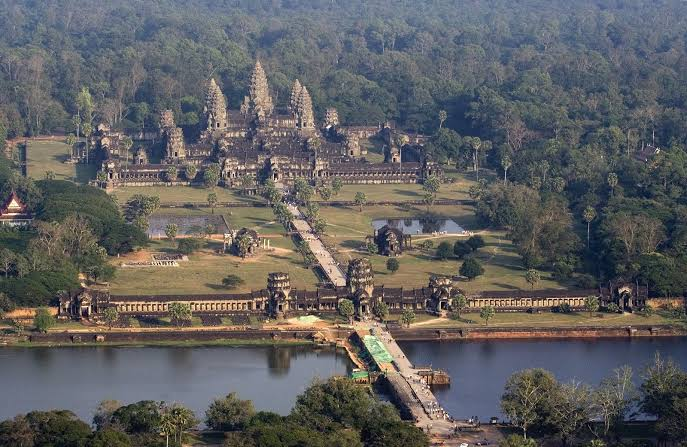
- Angkor Wat: The crown jewel. It is the largest religious structure in the world, built as a Hindu temple dedicated to Vishnu before gradually transforming into a Buddhist site. Watching the sunrise behind its iconic three prongs is a travel rite of passage.
- Ta Prohm: Often called the “Tomb Raider Temple,” this is where massive silk-cotton trees and strangler figs have grown directly out of the stone ruins, locking the architecture in a slow-motion battle with nature.
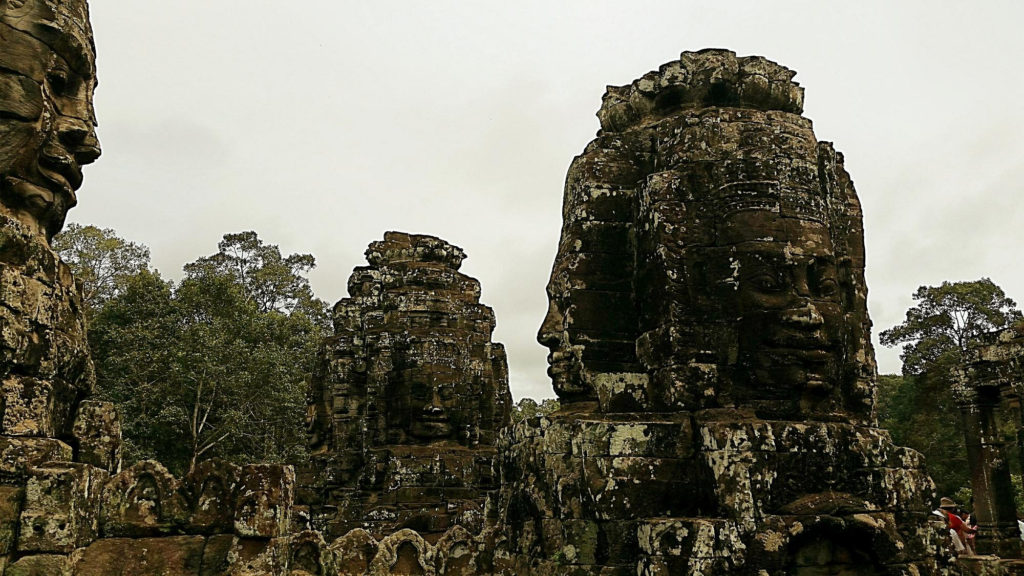
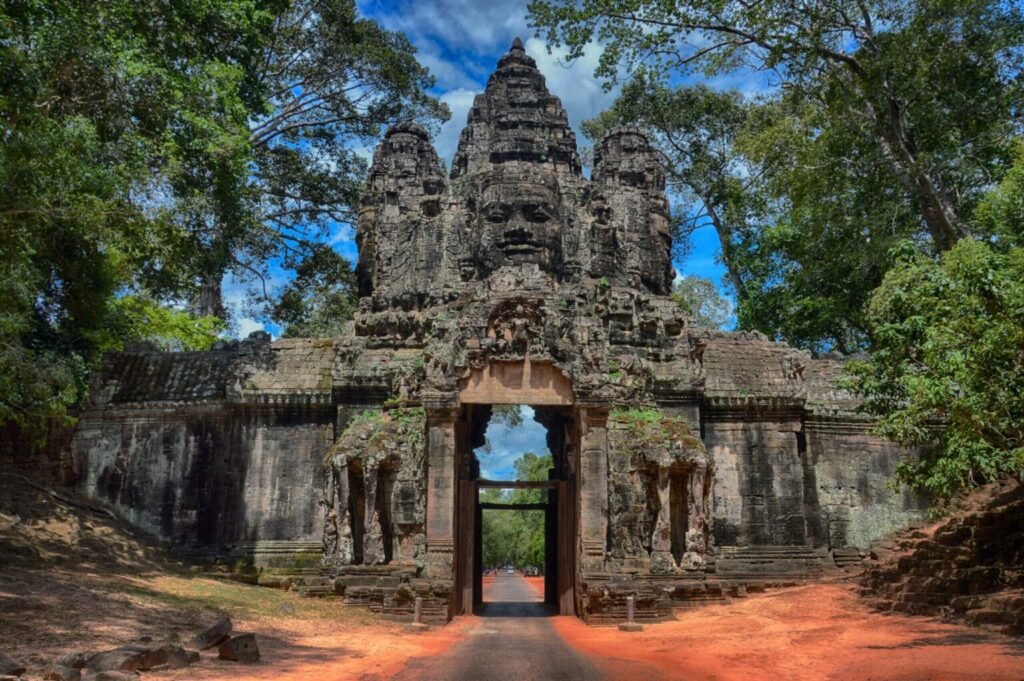
- Bayon Temple: Located at the center of Angkor Thom, this temple is famous for its 54 towers adorned with over 200 massive, smiling stone faces looking out in every direction.
2. Phnom Penh: The Bustling Capital
Phnom Penh is a city of intense contrasts. It is rapidly modernizing with trendy rooftop bars and a buzzing riverside promenade, yet it remains deeply anchored to its complex, sometimes tragic history.
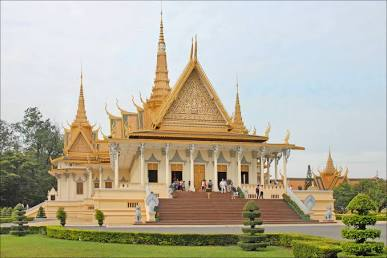
- The Royal Palace & Silver Pagoda: A stunning example of traditional Khmer architecture with a touch of French colonial influence. The floor of the adjacent pagoda is inlaid with over 5,000 solid silver tiles.
- Tuol Sleng Genocide Museum (S-21) & The Choeung Ek Killing Fields: While emotionally heavy, visiting these historical sites is crucial for understanding the resilience of the Cambodian people following the devastating Khmer Rouge regime in the late 1970s.
- The Riverside (Sisowath Quay): A lively strip along the Tonle Sap and Mekong rivers, perfect for an evening walk, street food snacking, or a sunset boat cruise.
3. The Southern Islands (Koh Rong & Koh Rong Sanloem)
When you are ready to slow down, head south to the coast. While Sihanoukville functions as the main transit port, the real magic lies a short speed-ferry ride away on the islands in the Gulf of Thailand.
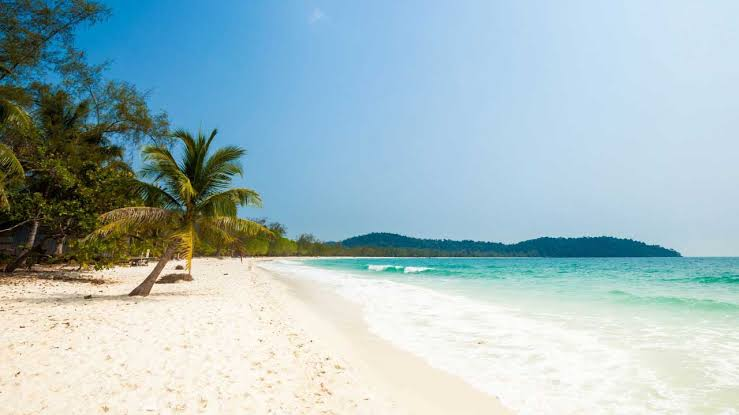
- Koh Rong: The larger of the two main islands, known for its expansive white-sand stretches like Long Beach (Sok San) and a lively backpacker/nightlife scene around Koh Touch.
- Koh Rong Sanloem: If you want absolute tranquility, this smaller neighbor is ideal. Saracen Bay features shallow, crystal-clear turquoise waters and a much quieter, eco-resort vibe.
- The Bioluminescent Plankton: On dark, cloudless nights away from light pollution, you can take a boat out or swim from quieter beaches to see the water light up with glowing blue neon sparkles as you move.
A Quick Packing/Etiquette Tip: When visiting temples like Angkor Wat or the Royal Palace, a strict dress code applies. Both men and women must cover their shoulders and knees. Carrying a light sarong or scarf in your bag is a lifesaver.
Siem Reap, Cambodia
Save
When the morning light washes over the overgrown temples and ruins of Angkor Wat, a simple Siem Reap sunrise becomes a profound event. The ancient structures are contained within one of the largest religious complexes in the world. The complex and the 12th century Angkor Thom royal city are considered the main reasons to visit Siem Reap. Get a lesson in national history at the Cambodian Cultural Village, and a lesson in bargaining at the Angkor Night Market, a bonanza of shopping stalls, food vendors, and bars.
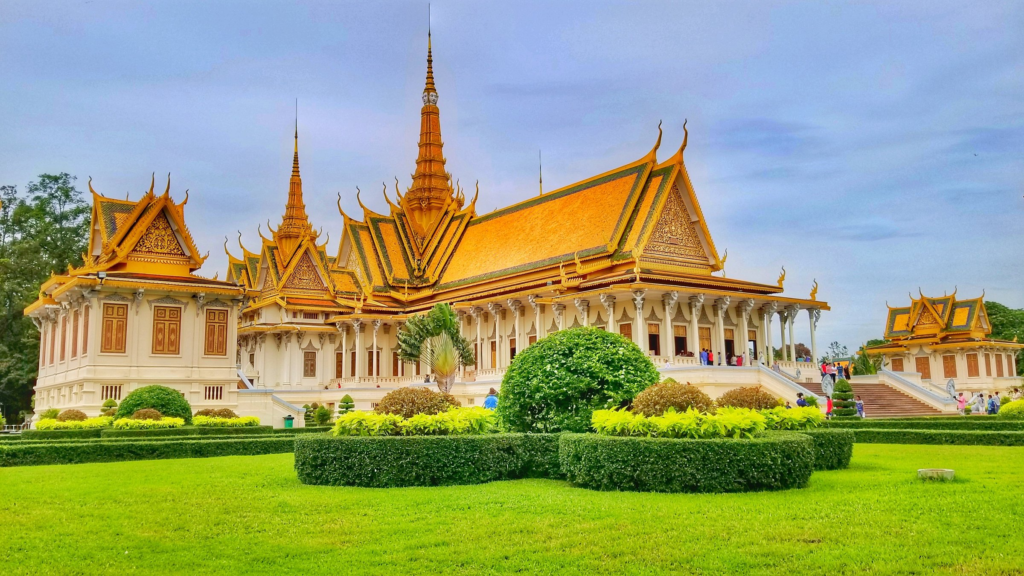
Phnom Penh, Cambodia
Budget-minded travellers will appreciate Phnom Penh’s reasonably priced hotel rooms. Explore the city’s temples, palaces, and the remnants of its French colonial history. Just outside the city, the The Killing Fields (Choeung Ek) are a reminder of Cambodia’s tragic past somber contrast to the booming city of today. For a well-rounded 7 to 10-day trip, you should also consider expanding your route south toward the country’s tranquil islands and scenic coastal towns. If you’ve got 7 days in Cambodia, you want to make them count. You’re probably aiming to see Angkor Wat, soak up the local culture, and squeeze in some beach time without turning your trip into a race. The good news? With the right Cambodia itinerary, you can absolutely do it all without feeling rushed.
Top Cambodia Destinations
Siem Reap is the absolute must-visit city.

Come and see three world heritage sites via balloon rides starting from Angkor Wat in Siem Reap, Cambodia, the Sea of Pagodas of Bagan, Myanmar and Cappadocia, Türkiye. Survey the world from a bird’s eye view perspective to gain a unique and magical experience second to none. Many travelers are known to have earmarked a bird’s eye view city tour in their travel plans – so let’s join in this unique scenic view of three world heritage destinations via a hot air balloon ride that will lift you to an altitude high enough to take in a panoramic view that covers the entire landscape – up close for the most unique and unforgettable experience.
“1”Floating over the ancient Khmer empire of Cambodia
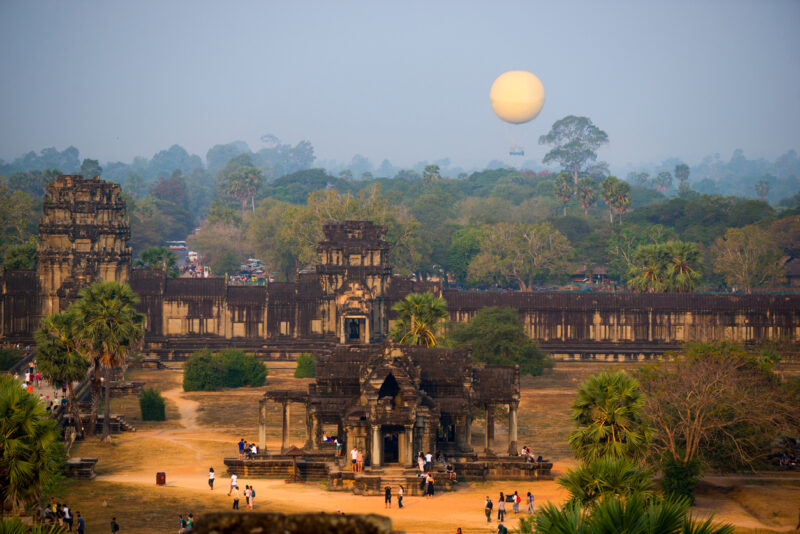
Though not the official capital, the province of Siem Reap, Cambodia, is by far considered a must-see destination. It happens to be the location of the famous Angkor Wat world heritage site dating back almost 1,000 years; a testament to the unrivaled magnificence of the great Khom civilization which flourished in an era long gone. The slogan “See Angkor Wat and Die” is a play on words that highlights its visual significance and architectural signature from a high altitude.
The balloons of Siem Reap are divided into two types: the yellow Angkor Balloon is a large helium balloon which provides a stationary 360-degree bird’s eye view of Angkor Wat and charges occupants 20-25 USD per person; the other type is the Angkor Hot Air Balloon which will take you on a scenic journey above Siem Reap including Angkor Wat, Angkor Thom, Bayon Temple and other places including Tonle Sap. If the weather is favorable, you will be surrounded by golden rays of the sun setting on the horizon. This type of balloon costs approximately 125-150 USD per person
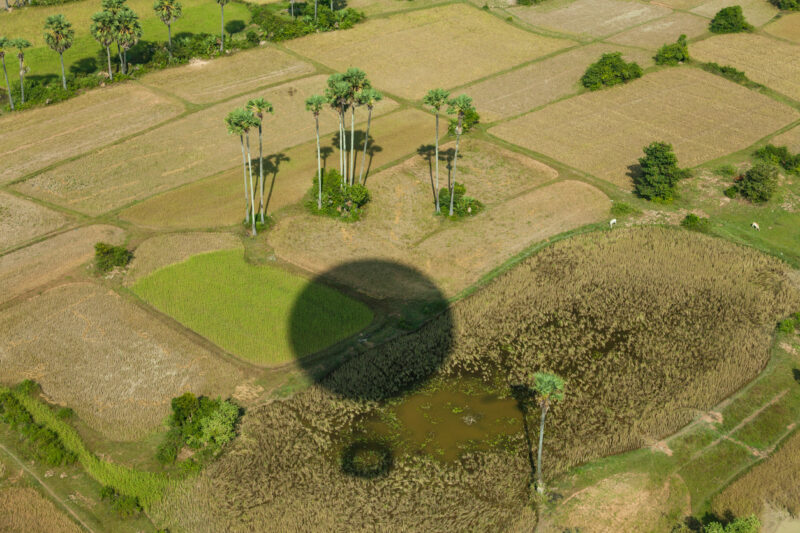
Service Time: Angkor Balloon is available all year round / Angkor Hot Air Balloon is available from December to March
Nearby attractions: In addition to the city of Angkor, the collective group of ancient sites and communities floating on water is called Kampong Phluk; offering tourists an eco-tourism route featuring daily lifestyles and local traditions of Cambodian people.
“2”Explore the sea of pagodas from the skies of Bagan, Myanmar

Bagan is known as the “City of the Sea of Stupas” where in the past there used to be as many as 10,000 pagodas as a testament to this land’s heritage. Bagan is also the birthplace of Theravada Buddhism. Buddhism’s golden era flourished and prospered through the construction of pagodas and sculptures representing Lord Buddha. However, several earthquakes damaged the pagoda population which is why there are only 2,000 remaining.
Travelers visiting Bagan are usually fixated on exploring pagodas via electric bicycle rentals or horse drawn carriages. There is another mode of transport used to explore Bagan and that is the hot air balloon ride costing about 350-400 USD per person – guaranteed that this will leave a lasting impression.
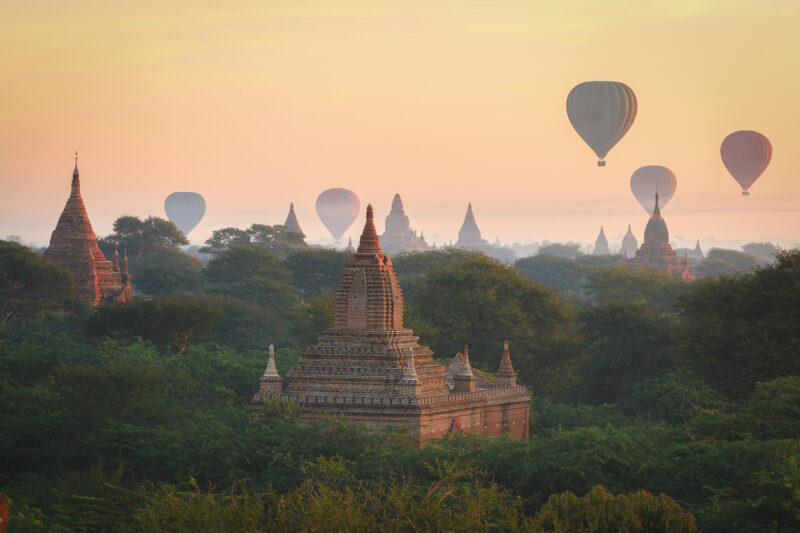
Service Time: October-April
Nearby attractions: Another fun activity to do while visiting Bagan is taking a cruise on the Irrawaddy River. There are short-distance boat trips for sightseeing and long-distance double decker cruises that sail to Mandalay city with top-notch accommodations and meals available.
“3”
Experience another planet in Cappadocia, Türkiye

An image of hundreds of hot air balloons floating over Türkiye airspace is now a dream destination for travelers. Cappadocia, located in the central part of Türkiye, fits the bill for such a visit. Landscapes are formed naturally by the deposition of sedimentary rocks and volcanic ashes over millions of years, eroded later by nature until it became a pointed shape. In the past, locals carved out actual homes into these rocks – some areas go so deep to the point that they became underground cities – a key attraction for tourists from around the world. The hot air balloon program enables visitors to see the complex Rocky Mountains from a bird’s eye view, on par to looking down from Mars.

The balloon flights are available all year long, pending weather conditions. The ideal time to launch balloons is from April to November, with a service fee of 100-185 USD per person.
Must-Visit Places
- Angkor Wat: Largest religious monument globally.
- Phnom Penh: The bustling capital city.
- Koh Rong: Pristine white-sand beaches.
- Kampot: Famous for riverside relaxation.
- Siem Reap: Gateway to ancient temples.
- Battambang: Known for colonial architecture.
Inside a 10-day, Hyper-Local Vietnam and Cambodia Itinerary With unique geography, cities both bustling and friendly, centuries of vibrant history and world-class food around every corner, there’s no shortage of reasons to visit Vietnam and Cambodia.
But planning a balanced itinerary that makes the most of a short time in both countries can be tricky. Is it too much to ask to get lost in the mystery of Angkor Wat and cruise the island-studded waters of Ha Long Bay in a timeframe that’s compatible with your busy life at home? (Spoiler: it’s not!)
Here we’ll take a look inside the 10-night Vietnam and Cambodia itinerary our experiential travel groups experience, which balances the very best sites, excursions and tastes of Vietnam and Cambodia – all with a focus on hyper-local experiences.
Why Visit Vietnam and Cambodia?
A visit to Vietnam and Cambodia is a must for any adventure-hearted traveler who loves mouth-watering food, ancient history, jaw-dropping scenery and genuinely friendly people without an overbearing tourist scene.
Let’s dive a little deeper into what you’ll experience when you visit these two neighboring countries in the heart of Southeast Asia – and why visiting Vietnam and Cambodia is a choice you won’t regret.
The Food
Trip in One Word: Mystical
What You’ll Experience In Cambodia and Vietnam
From the bustling capital of Hanoi to the ancient temples of Siem Reap, this yoga retreat in Cambodia and Vietnam shows you the bounty and diversity of life in these Asian countries. You’ll chant at sunrise with Buddhist monks, bike trails around the awe-inspiring Angkor Wat, set sail on the gorgeous waters of Bai Tu Long Bay, lunch in a traditional stilt-house en route to Hoi An and enjoy, daily, the best food of your life. This trip is the dream of any modern-day adventurer.
How You’ll Experience Cambodia and Vietnam
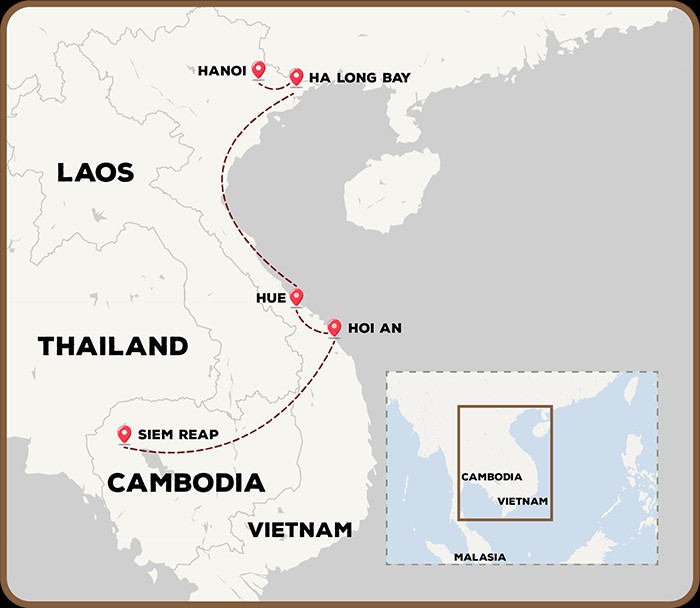
From private sailing to biking to exploring floating villages and ancient caves, your inner wanderer will be mystified on this yoga retreat in Cambodia and Vietnam. You’ll hop from one luxury boutique hotel to the next as you make your way from Hanoi to Hue to Hoi An to Siem Reap—with a cruise in the less-touristy Bai Tu Long Bay in between (did we mention sailing, swimming and cave exploring?). You’ll embark on tours of temples and ancient sites, like Angkor Thom, Bayon, Ta Prohm, and Banteay Srei, with local guides. You’ll explore the breathtaking Angkor Wat, the world’s largest religious monument, chant with monks, and receive a blessing (if desired). You’ll eat street food worthy of any Food Channel series, make friends, and integrate it all with daily yoga sessions on this yoga retreat in Cambodia and Vietnam.
How You’ll Feel When You Return Home
Brimming with new adventures and bursting with delicious food, your inner explorer will return home sated and laden with photo memories. On this yoga retreat in Cambodia and Vietnam, you’ll set the course for big dreams and return with a heart full of mystical stories to share.
What’s Included
- Eleven days location-specific English-speaking expert guides
- Flight from Hanoi to Hue
- Flight from Da Nang to Siem Reap
- Breakfast each morning at our hotels
- All lunches including local eateries and restaurants
- All dinners in a local restaurant or at our hotels
- Vietnam single-entry visa (traveler passport required)
- Morning and evening yoga on most days (please see the full itinerary for yoga schedule)
- Three nights luxury boutique hotel in Hanoi
- One night onboard our Bai Tu Long Bay cruise
- Two nights luxury boutique hotel in Hue
- One night luxury boutique hotel in Hoi An
- Three nights luxury boutique hotel in Siem Reap
- Full-day tours of cultural, historical and religious significance in Hanoi, Hue, Hoi An & Siem Reap
- Sailing, swimming and cave exploring in Bai Tu Long Bay
- Half-day bike tour through Hue along the Perfume River
- Cultural visits with locals in Hue & Hanoi
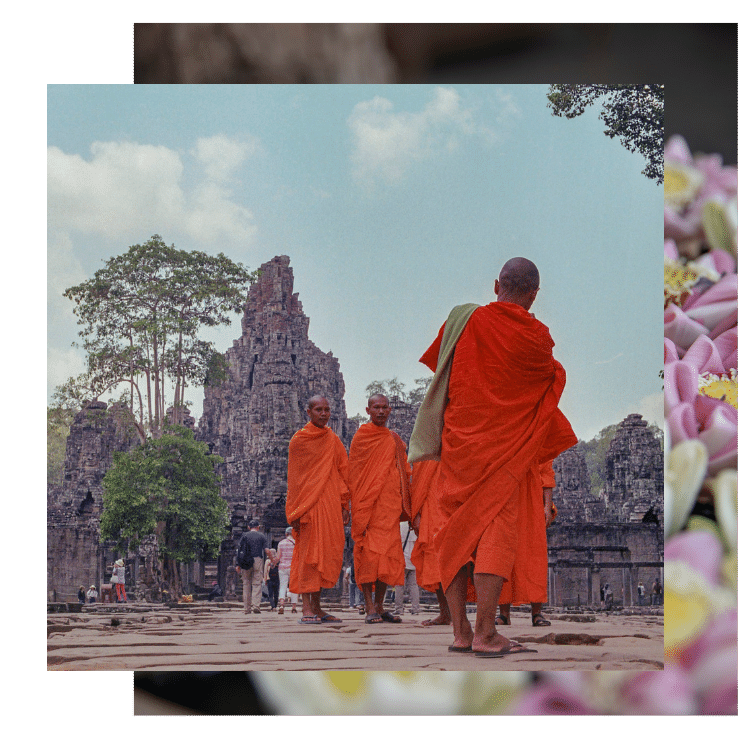
- Sunrise chanting with Buddhist monks and individual blessing (if desired) in Cambodia
- Exploration, with a guide, of Angkor Thom, Bayon, Ta Prohm & Banteay Srei
- Up close and personal with the world’s largest religious monument – Angkor Wat
- All entry fees for the above sights and additional activities as listed on the itinerary
What’s Not Included
- International flights into Hanoi, Vietnam (HAN) and out of Siem Reap, Cambodia (SAI)
- Any video or still camera fees assessed by the monuments or places of interest
- Cost of Cambodia entry visa
- Alcohol and drinks at meals
- Gratuities
- Items of a personal nature (phone calls, souvenirs, spa services, etc)
- Travel Insurance (required)
Accommodations
Hanoi
Centrally situated in the heart of Hanoi, we begin our yoga retreat in comfortable luxury. Each room has en suite bathroom facilities with all of the amenities, including AC. Wi-Fi is available in each room. Double occupancy rooms will always feature two beds and all rooms will have balconies overlooking the city streets below.
Bai Tu Long Bay
Cruise the less touristy and stunning Bai Tu Long Bay in style. Our onboard amenities include a large top deck for yoga and Tai Chi classes, private dining under the stars and boats or individual kayaks for inlet excursions and exploring. All rooms will have en suite bathroom facilities and amenities (please note wifi may not be available on Bai Tu Long Bay).
HUE
Situated on the banks of the Perfume River, our boutique eco-resort in Hue invites comfort luxury in a natural setting. All rooms will look out over the gardens to the river and will have en suite bathroom facilities and AC. Enjoy the calm of the greens and river around you and the views of the Van Thanh Temple just across the water.
Hoi An
Just outside of the ancient town of Hoi An we will find our quiet oasis on the banks of the Song Do River. Our accommodations will have beautiful balconies with views down to the river below as well as en suite bathroom facilities. We’ll take in the best of beautiful Hoi An and enjoy the tranquility of nature in the evening.
Siem Reap
While our days will be spent exploring the mysteries and beauty of Cambodia’s past, our Cambodian home will be an oasis of green and tranquility. Each room on your yoga retreat in Cambodia will have its own private veranda and en suite bathroom. Wifi and AC are available in each room.
Itinerary
Each of our amazing yoga retreat in Cambodia and Vietnam itineraries will be unique, with slight changes based on local holidays and/or events. Below is a sample of what can be expected as you explore these two amazing countries with The Travel Yogi:
1
DAY ONE
- Fly into Hanoi and get ready for adventure on your yoga retreat in Cambodia and Vietnam
- Our guide will meet you at the airport and escort you to our first hotel
- Opening airplane-twist-move-it-out yoga class
- Welcome dinner and a taste of the ‘local’ at a neighborhood restaurant
- Hoan nghênh to Vietnam!
2
DAY TWO
- Wake up like a local and head out to Hoan Kiem lake
- Join a local group in a tai chi session as they wake up mind and body before a busy day
- Journey to the middle of a lake to Ngoc Son Temple
- Head into Hanoi’s Old Quarter
- Tour the crazy mix of Vietnamese and French influence and sample cà phê su’a dá
- Sample some street food báhn mì
- Truck to the Hanoi railway tracks and walk the rails for some of the most beautiful pictures in the city
- Back at the hotel unwind with the evening yoga class before dinner at a local restaurant
3
DAY THREE
- Morning yoga centered on balance so that you can get your sea legs on!
- After breakfast we head out to the beautiful, amazing, Bai Tu Long Bay
- Cruise through the limestone karsts landscape
- Visit ancient caves & kayak by the limestone islands in the bay
- Visit the floating fishing village of Vung Vieng
- Sail to Thien Canh Son Cave to ooh and ahh at the stalagtites and folklore of this ancient site
- Spend the mid-afternoon swimming in the bay or chilling on deck
- As the sun goes down head to the top deck for a sunset-360-ocean-view yoga extravaganza
- Enjoy dinner on deck under the stars
4
DAY FOUR
- Rise and shine with the sun for either yoga or Tai Chi on top deck
- After a light breakfast we set sail for Sung Sot Cave
- A once-in-a-lifetime 100ft high cave experience
- Water filled grottos, stalagtites and stalagmites in a wonderland setting
- Disembark and transfer to Hanoi for our flight to Hue
- Welcome to Hue!
- Enjoy a dinner at our new ‘home’ and get ready to explore historic Hue
5
DAY FIVE
- Stretch out your hamstrings and get ready for a day of walking this ancient city
- Explore the Forbidden Purple City and the Citadel of Hue. Although badly damaged during the Tet Offensive of 1968, the Forbidden Purple City, the cultural, political and religious center, of a unified Vietnam in 1802
- Head to the royal tomb of Tu Duk or Khai Dinh
- Take in the fusion architecture and the “is he/isn’t he” buried here mystery…
- Head back for early evening yoga at our riverside hotel
- Enjoy the tastes of Hue with a local flavorful dinner in town
6
DAY SIX
- Early morning yoga and packing before breakfast
- Today we drive to Hoi An via Da Nang
- Take a ride on Vietnam Highway 1 over the soaring Hai Van Pass (Sea and Cloud Pass)
- Stop in Da Nang for lunch and exploring
- Head to the stone carving villages in the Marble Mountains that peak just south of Da Nang
- Explore the caves and Buddhist sanctuaries dotting the mountains
- Arrive in Hoi An and spend the afternoon strolling the centuries-old lanes
- Another UNESCO World Heritage Site, Hoi An reflects the centuries of cultures that have sailed through its port
- Walk the streets enjoying the mix of Chinese, Dutch, French and Japanese influence
- Stroll the 400 year old Japanese Bridge that used to divide the Japanese settlement from the locals
- Head to a local shop to get a custom made outfit – a Hoi An favorite!
- Walk or taxi back to the hotel for the evening yoga class
- Dinner together at the hotel
7
DAY SEVEN
- Rise and shine yoga and breakfast
- Time to get your bike on!
- Hop a local bike to explore back roads in Hoi An
- Zigzag through gorgeous farmland and scenic rice paddies with stops at the local villages for a crash course in mat weaving
- Cross the Thu Bon river and enjoy a local lunch with a family immersing in traditional customs
- Zooming back to our hotel we’ll take a moment to relax before late afternoon yoga
- This evening we’ll take a short stroll through ancient Hoi An to a local lantern making, family run, shop to learn how to craft your own (packable) lantern
- Enjoy a group dinner together out on the town tonight
8
DAY EIGHT
- Sleep in a bit today before relaxing morning yoga and breakfast
- It’s been a busy week so far so today is yours to rest or explore at your leisure
- Stroll into town and take advantage of the fast and amazing custom clothes of Hoi An
- Relax on property and chill, swim or book a massage
- Catch a ride to An Bang beach and enjoy a little coastal rejuvenation
- Lunch is included at our hotel today or you can head into town and enjoy a meal at a restaurant of your choice
- Come back together and head out for a group dinner at a local restaurant
9
DAY NINE
- Enjoy a morning sleep in before yoga
- Take a few hours this morning to wrap up your chill time in Hoi An
- Pick up any custom duds you bought the day before
- Enjoy a morning massage or swim before heading out for new adventures…
- Head to Da Nang and our flight to Cambodia
- Our early evening flight takes the place of yoga today but your adrenaline will still be pumping as you catch your first glimpse of Siem Reap
- Head to our final hotel and relax
- Group dinner at a local restaurant
10
DAY TEN
- Early morning yoga and breakfast
- Head out on a remork (tuk tuk) for a temple journey day
- Begin your journey to ancient Cambodia at the South Gate of Angkor Thom
- We will leave the tourist path as we take a 1km walk into the jungle to the hidden temple
- Walk on to Khmer King Jayavarman VII’s official state temple of Bayon in the heart of Angkor Thom
- Take a break to absorb this astounding morning with lunch at a local restaurant
- Dive back in to ancient times at the jungle temple of Ta Prohm
- Originally build in the 12th or 13th century as a Mahayana Buddhist monastery and university, little has been touched at Ta Prohm since it’s discovery; prepare your cameras for jungle/temple amazement
- The afternoon is for the splendor that is Angkor Wat
- As the largest religious monument in the world, you will have hours to explore the complex and absorb the artistry, emotion and history of this ancient site
- We will head back for a calm, restorative, absorb-it-all evening yoga class
- Head to a local restaurant for dinner followed by a traditional Cambodian dance performance
11
DAY ELEVEN
- This morning we’ll get up with the sun and head to a local pagoda
- Our morning will be a blessing of sounds as we sit and listen to the chanting of the pagoda’s monks
- After the chants we will each by blessed by a monk with holy water flicked from a jasmine flower for wishes of happiness and good health
- We’ll return to the hotel for breakfast and a quick relax before more ancient exploration
- Heading out we’ll journey to Banteay Srei temple, or, “Citadel of the Women”
- Off limits for many years due to it’s remote location and Khmer Rouge activity, we’ll spend the morning investigating this Hindu temple dedicated to Shiva
- Diminutive in its size, especially when compared to other Angkorian wonders, this temple is also known as the “precious gem” or the “jewel of Khmer art”
- Coming out of the deeper jungle we’ll take a break for lunch at a local restaurant
- Heading to the Old Market in town, this final afternoon is yours to wander and bargain the stalls and town-life
- Closing yoga class in the early evening back at the hotel
- Final group dinner at a local restaurant – email, phone number, photo exchanges and goodbyes!
12
DAY TWELVE
- Morning packing and breakfast prior to your flight home or onward
- A final “Choum reap lear” as you say goodbye to your new friends from your yoga retreat in Cambodia and Vietnam—and your amazing travels
Feed the Need: Five Typical Dishes in Vietnam and Cambodia
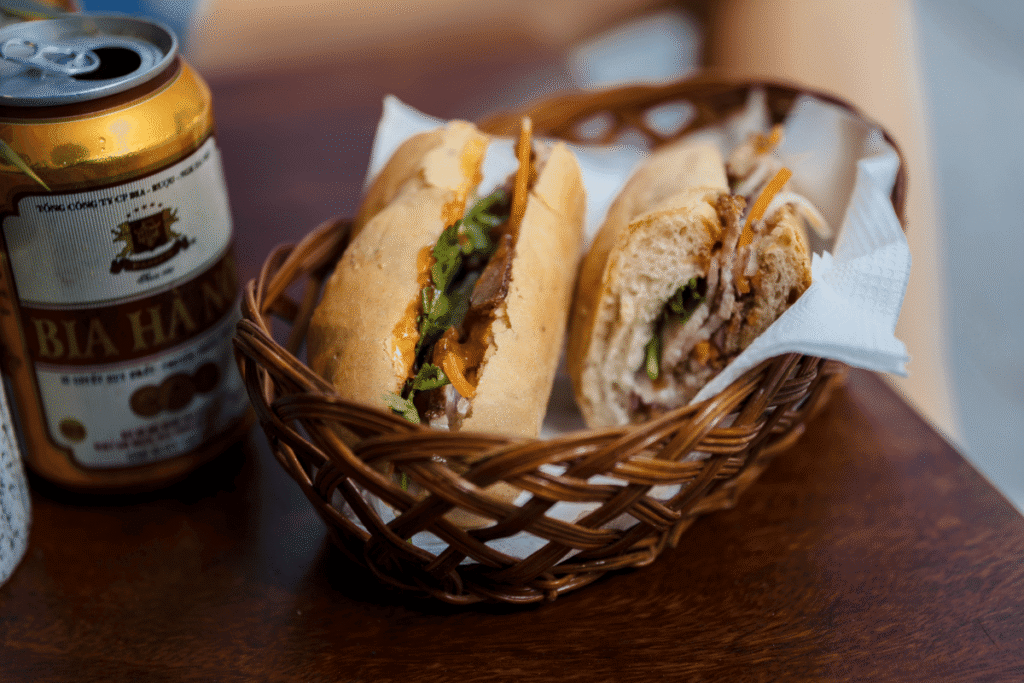
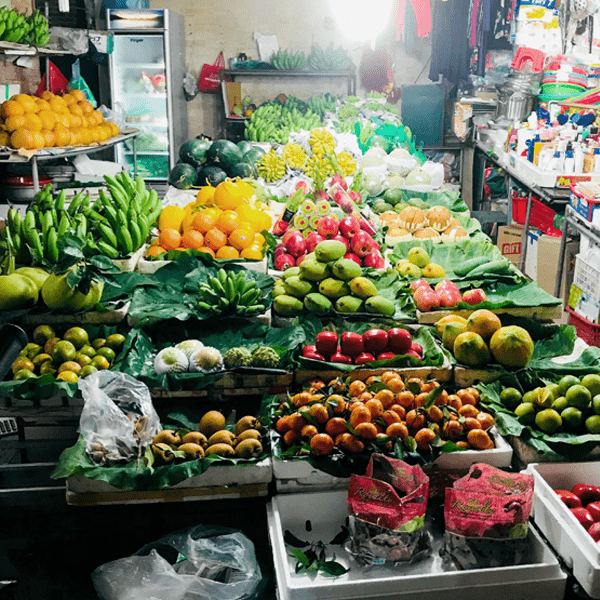
Alright, all you foodies out there: this one’s for you! When it comes to international cuisine, Vietnam and Cambodia are a must. With intense flavors, fresh ingredients, and vibrant colors, these two countries are a food lover’s paradise. Here are five typical dishes in Vietnam and Cambodia to try during your next adventure east.
1. Banh Mi
Step aside, pho! We must admit the banh mi is our most favorite of the typical dishes in Vietnam. Pronounced “bon mee,” the name literally means “bread” or “baguette,” from bánh (cake or pastry) + mì (wheat).
How did this little sandwich become one of the most typical dishes of Vietnam? Let’s start by answering the question: how did the baguette make it to Vietnam?
A Little History of the Banh Mi
The banh mi is an amazing symbol of national resilience. During the French colonization of Vietnam from 1887 to 1954, the French introduced specific crops and livestock into Vietnam that would supply them with their traditional foods of meat, cheese, coffee, and bread.
hili!” says the elderly Vietnamese lady, ushering me closer. She seems eager to help and apparently already knows what I want. Taking one of the pre-made sandwiches from the counter, she slips off its paper wrapping to reveal the short, golden bun inside. Its crackled crust is splayed to demonstrate its contents. After two years in Vietnam, and countless banh mi breakfasts like this one, it seems I still look like a tourist.
“Chili,” she repeats. “Chili okay?”
Several slices of fire smile up at me from between the folds of meat, paté, pickled vegetables, and cilantro.
“Ớt được,” I reply in my mangled Vietnamese. “Chili okay.”
I’m at Như Lan, a restaurant, bakery, delicatessen and Ho Chi Minh City institution, having served homemade banh mi, among other local specialties, from its busy downtown kitchen since 1968, when the city was still officially known as Saigon (a name still used today) and the war with the North was raging. Almost 50 years later, helped by the West’s growing infatuation with the Vietnamese sandwich, Như Lan remains one of the most popular spots in the city for foreigners and locals alike seeking that authentic banh mi taste.
I’d never tried a banh mi before visiting Saigon two years ago. But I fell in love with the city and the sandwich and never left. When a local magazine asked me to find the best in town, my bond with the ubiquitous street staple was forever sealed. For an entire week in 2015, it was pretty much all I ate, breakfast, lunch, and dinner. The floor of our apartment was covered in breadcrumbs, my notebook filled with flecks of coriander and errant tasting notes, the greasy smears of paté and mayonnaise still visible on its pages today.
Afterwards, I was contacted by a local food and beverage company to write the full history of the banh mi. Three months later, after contacting food historians in America and national libraries in France, after dragging Vietnamese friends to banh mi shops on the other side of Saigon with the promise of a free breakfast and the hope that their translation skills may solve one more piece of the puzzle, I filed a 10,000-word treatise on Vietnam’s sandwich of record. In the time since the manifesto, my appetite for banh mi shows no signs of waning.
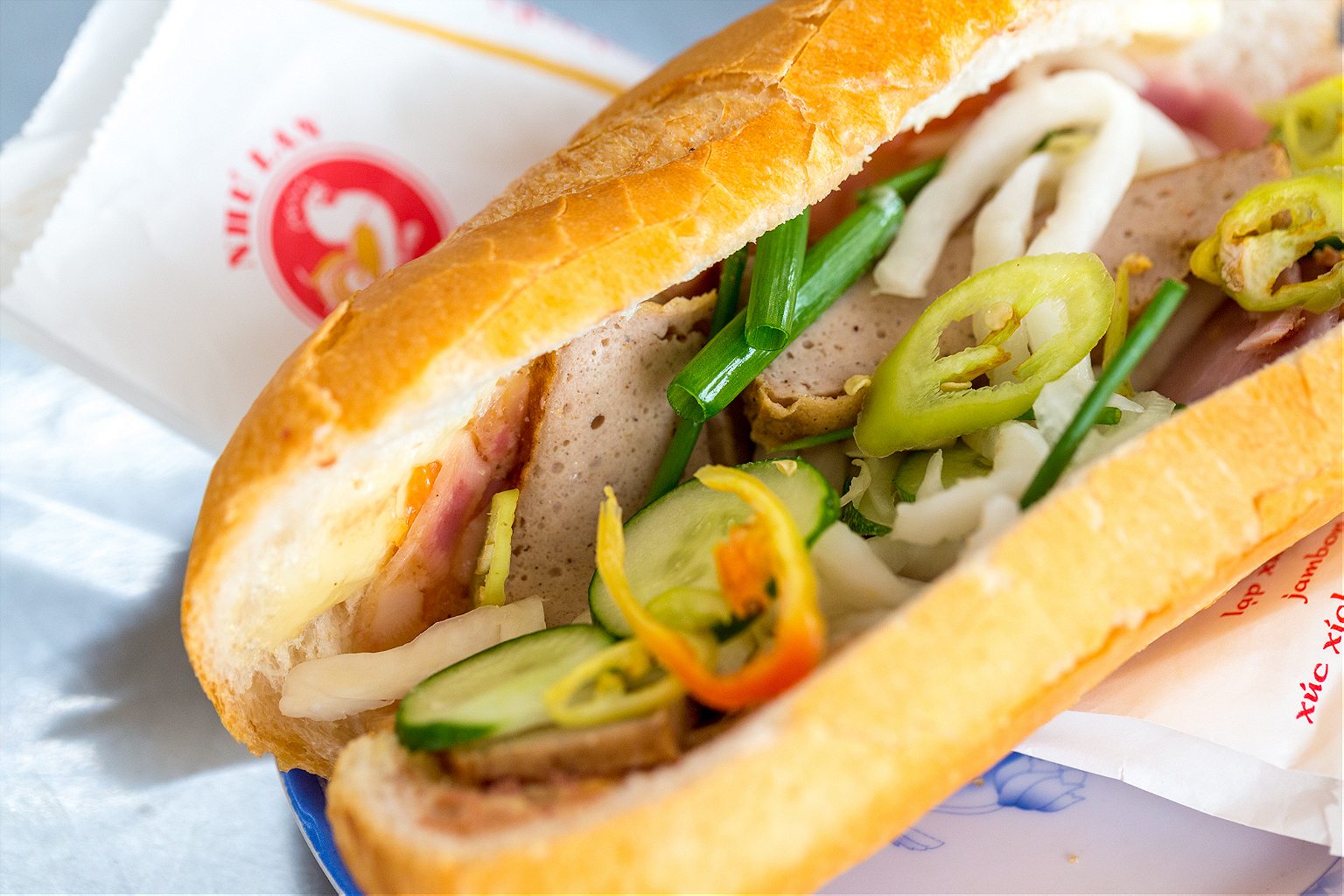
I take a seat in Như Lan’s large dining area. The breakfast crowd has dispersed but the unmistakable early-morning aromas of phở linger, another of Như Lan’s offerings. A group of Western tourists crashes in, each clutching a banh mi. Their tattered copy of Lonely Planet gets splayed on the table. I know that book well, though it offers no more insight into the banh mi’s story than the obvious comparison to a French baguette.
France brought all manner of new and exotic items to Vietnam during its colonization of the region, from beer to bread, carrots to coffee, but didn’t hand them over willingly. The story of how the modern banh mi came together, the sort of banh mi you can pick up today at a farmers’ market in London, or from a food truck in Los Angeles, recounts 160 years of Vietnam’s history in one single, fiery package.
In unison, the visitors bite down into the bread’s fragile outer shell. A few fire off selfies as the customary explosion of crumbs covers the table. This is how all banh mi experiences begin. The bread gives way to the paté, then homemade mayonnaise, tender ham and cold cuts of pork. Pickled carrot and daikon add sweetness, cucumber brings a cool crunch. Cilantro. Unmistakable. A dash of Maggi Sauce for depth. Every taste bud gets hit. Then comes the chili, like a short, sharp slap in the face. “Wake up sunshine,” it says. “You’re in Vietnam now.”
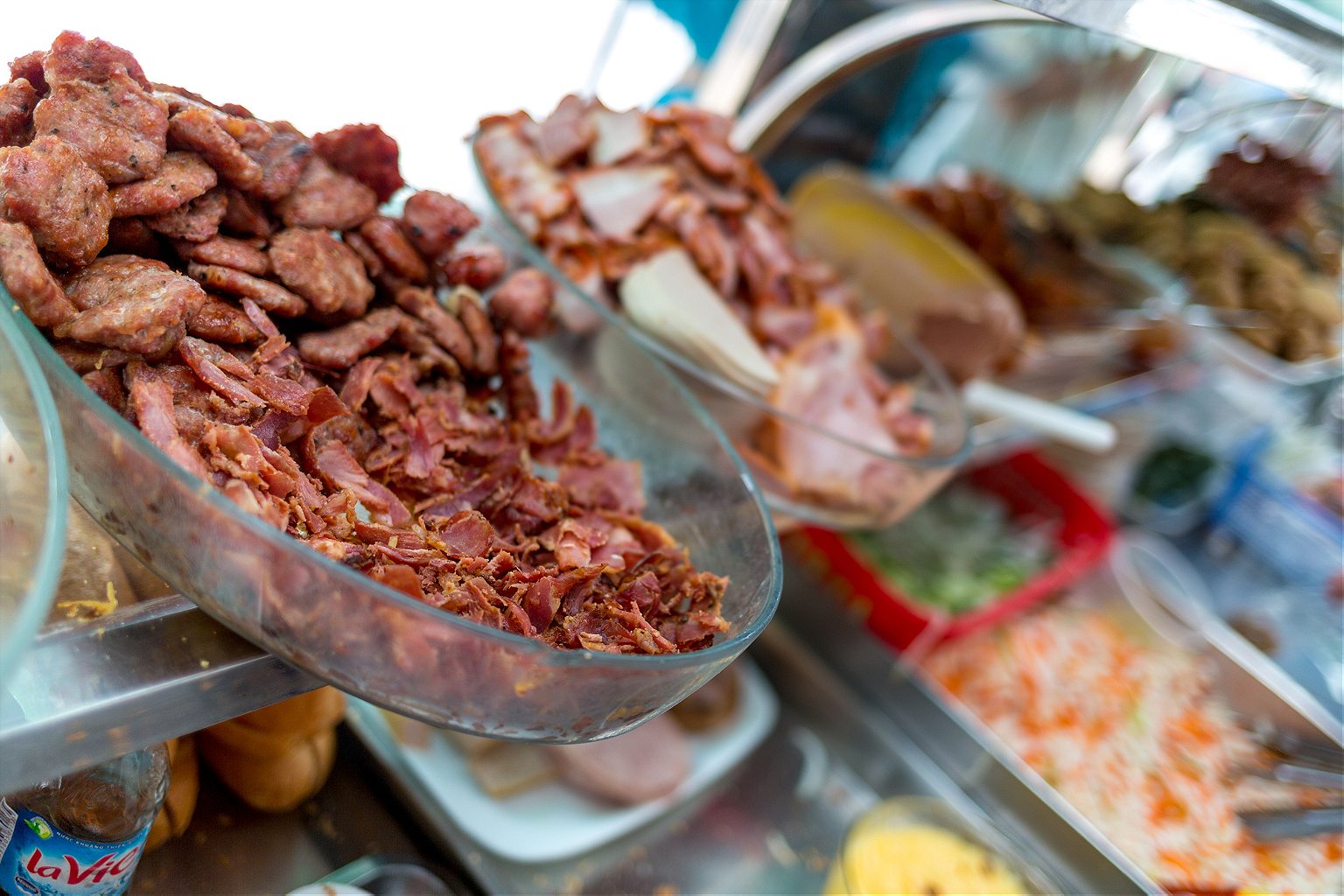
Recognized by the Oxford English Dictionary in 2011, and the American Heritage Dictionary in 2014, the term ‘banh mi’ has officially entered the lexicon of the English-speaking world. But in Vietnam, it refers only to ‘bread’, or ‘wheat cake’, when translated literally. The pork, paté, and pickles combination now familiar to the West is known as a bánh mì thịt ngoui, ‘bread, meat and cold cuts’, often referred to as the bánh mì đặc biệt, ‘the special’, the one with everything. This is what every meat-eating traveler comes to Vietnam craving.
Như Lan may be an institution in Saigon, but the banh mi’s tale neither starts nor ends here. Its journey to international fame began 250 yards down the street, on the banks of the Saigon River in 1859, when the first French gunships and troops arrived to storm the city and begin the 30-year conquest of Vietnam, Cambodia, and Laos, eventually forming the federation of Indochina in 1887. From here it would take another 70 years, two world wars, a long and bloody war with the French, the civil war that followed, and a young family fleeing the communist takeover in Hanoi to create the sandwich we know today.
When war broke out in Europe, the culinary boundaries separating French food from Vietnamese were shattered
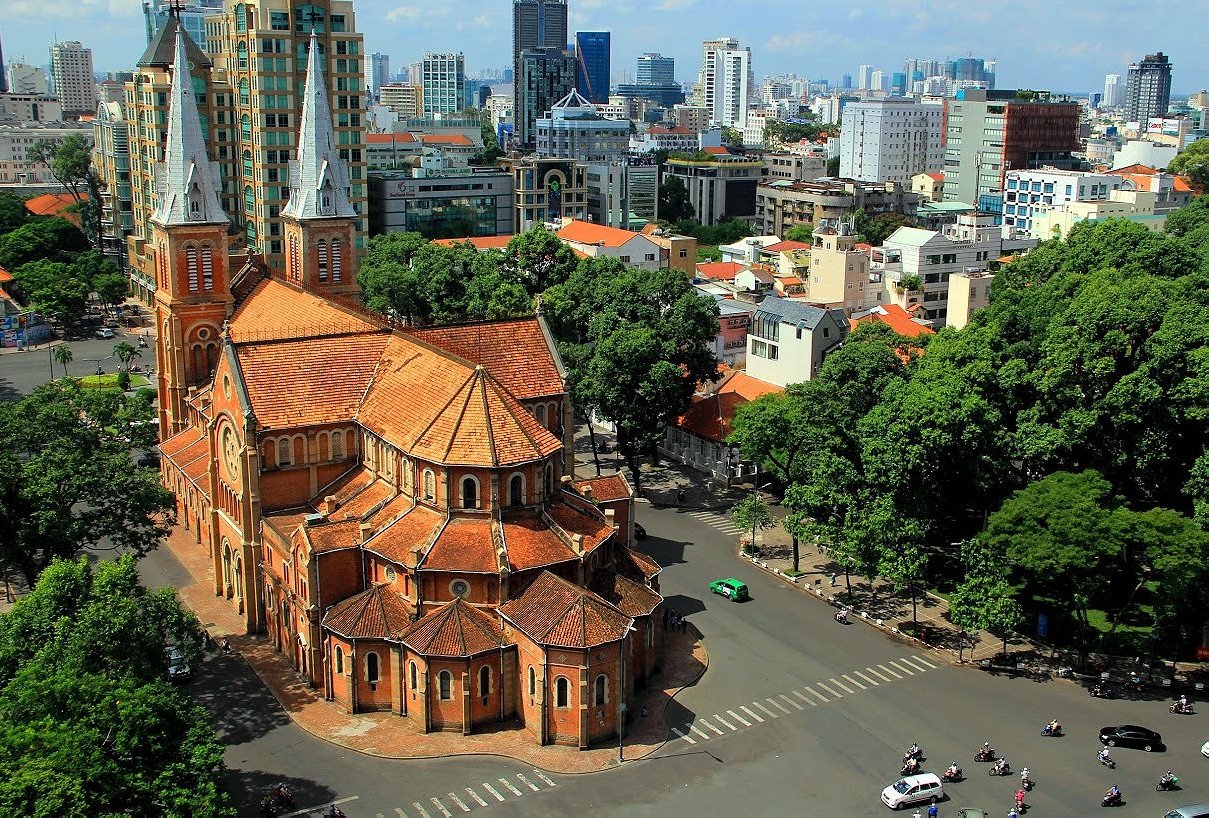
By the early 1900s, Saigon’s grand, tree-lined avenues carried all the hallmarks of a fledgling European city, boasting ostentatious, neo-classical architecture, Parisian-esque cafes, and luxurious restaurants and hotels to serve the expanding population of colonial elites.
Not only did France use its wealth and technology to reaffirm and justify the colonial hierarchy and its assumed superiority over the Vietnamese, food formed another important line between ‘us’ and ‘them’. “Bread and meat make us strong, rice and fish keep them weak,” was a common adage at the time, backed by centuries of absurd pseudo-science which suggested that the rice-centric diets of Southeast Asia made its people somehow predisposed to imperial subjugation. And for a time the colonists stuck to it, rigidly, maintaining a European diet while disapproving of any French who ate Vietnamese food, and any Vietnamese who ate French food.
As an almost sacred component of French cuisine, bread became the foundation on which this notion could stand. The Vietnamese called it bánh tày, ‘Western cake’, an expensive foodstuff reserved solely for the foreigners. Wheat simply won’t grow in Vietnam’s climate, and the cost of importing flour made bread prices far higher than the average citizen could afford.
Baked long and thin, like the French baguette we know today, bánh tày were served in the classic French style, alongside a plate of ham, cold cuts, paté, cheese, and butter—a ‘casse croute’, as they called it, meaning to break the crust.
When war broke out in Europe, however, the culinary boundaries separating French food from Vietnamese would be shattered forever.
An elderly bread seller rolls slowly past on his bicycle, a basket of fresh rolls stacked high on the back and a crackly cassette recording looping out his call. “Bánh mì nóng giòn! Bánh mì nóng giòn đây!” ‘Hot crispy bread! Hot crispy bread here!’
Bread doesn’t last long in Saigon’s heat and humidity. For the banh mi shops that don’t bake their own, it’s not uncommon to see two or three deliveries like this arrive in the space of a morning.
The basket wobbles as he rounds the corner and his recording tails off behind the roar of Saigon’s seven million motorbike engines now tearing up the street. I check the address again. 511, Nguyễn Đình Chiểu Street, District 3, Ho Chi Minh City. Now a modern residential block, it was on this plot, in 1958, that a small family-owned snack bar known as Hoà Mã first appeared. The family left the premises in 1960, moving to another location just a few blocks away—my next stop—but it was here that the modern banh mi was born.
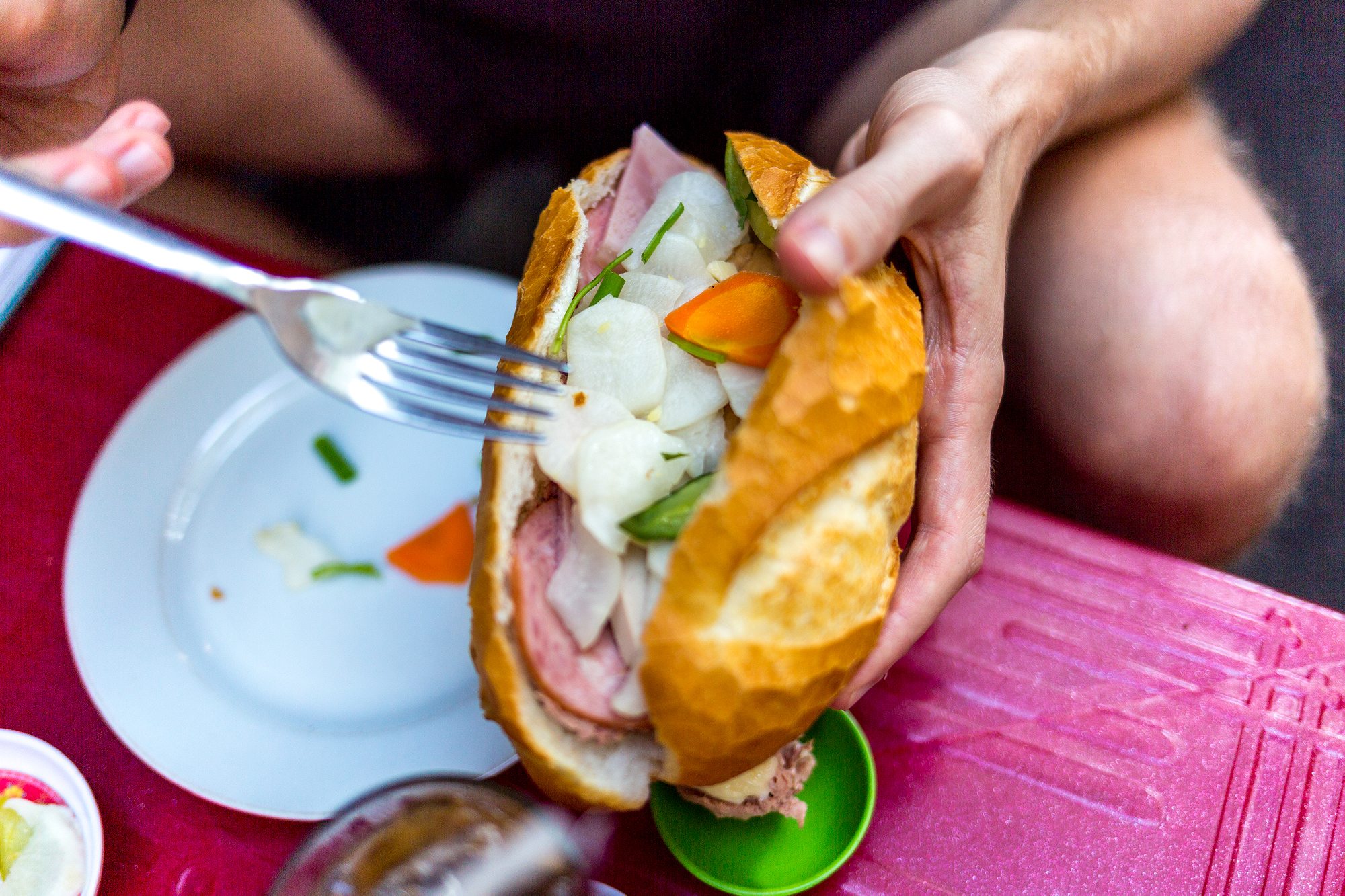
A few bridges had to be crossed before Hoà Mã’s owners could dish up the first truly Vietnamese sandwich. At the outbreak of the First World War in 1914, the two largest import companies in Indochina, being German-owned, were seized by the French colonial authorities—along with their warehouses piled high with European perishables. As thousands of French officials and soldiers stationed in Indochina set off to France to assist with the war effort, the Vietnamese market was suddenly flooded with a surplus of European products, all at discounted prices. The working classes were suddenly able to afford French beer, cheeses, meats, and bread, along with the now ubiquitous Southeast Asian staples of Maggi Sauce (a Swiss invention used as a savory flavor enhancer) and tinned condensed milk (destined to be a staple in Vietnam’s famously ferocious coffee).
For the 100,000 Vietnamese men sent to Europe to fight alongside the French, they too would get their first tastes of European food, much to the concern of some. Colonial authorities feared that having experienced ‘the good life’ in Europe, the repatriated Vietnamese would no longer respect the imperial machine. To some extent, they were right, and many returned to Vietnam with a newly acquired disdain for their French masters and a thirst for nationalism.
The First World War also ended the culinary xenophobia established by the first-generation colonists. As the global conflict disrupted shipping routes, a Vietnamese diet became unavoidable. Bread, however, was a hard habit to break.
With European wheat production in chaos, and the colony effectively cut off from the motherland, scientists Abel Lahille and Edouard Maurel convinced French authorities to approve the use of rice flour in the bread-making industry at home and abroad. Pain de riz was born. Rice bread didn’t last long—once the war was over, the substitution laws were quickly revoked—yet a modern-day banh mi myth survived: that its light and fluffy texture is a result of rice flour. Many 21st-century recipes outside of Vietnam continue to insist upon its inclusion to produce authentic banh mi bread.
“There are recipes that call for 50 percent rice flour, and they produce nunchucks that you could hurt someone with,” says Andrea Nguyen, a Vietnam-born food writer and chef, from her California home. “Rice flour does not rise due to a lack of gluten. Also, it will not brown beautifully. I have tried a couple of such recipes and they are terrible.”
In very small quantities, it is sometimes used to combat the effects of Vietnam’s humidity, but that trademark fluffiness comes from dough enhancers, commonly ascorbic acid, otherwise known as vitamin C, or pre-mixed industrial additives. Humidity and fluctuating temperatures are no allies when proofing bread. Enhancers have allowed Vietnam’s bakers to get consistent results from the very beginning while allowing for a little of that precious wheat flour to go a long way.
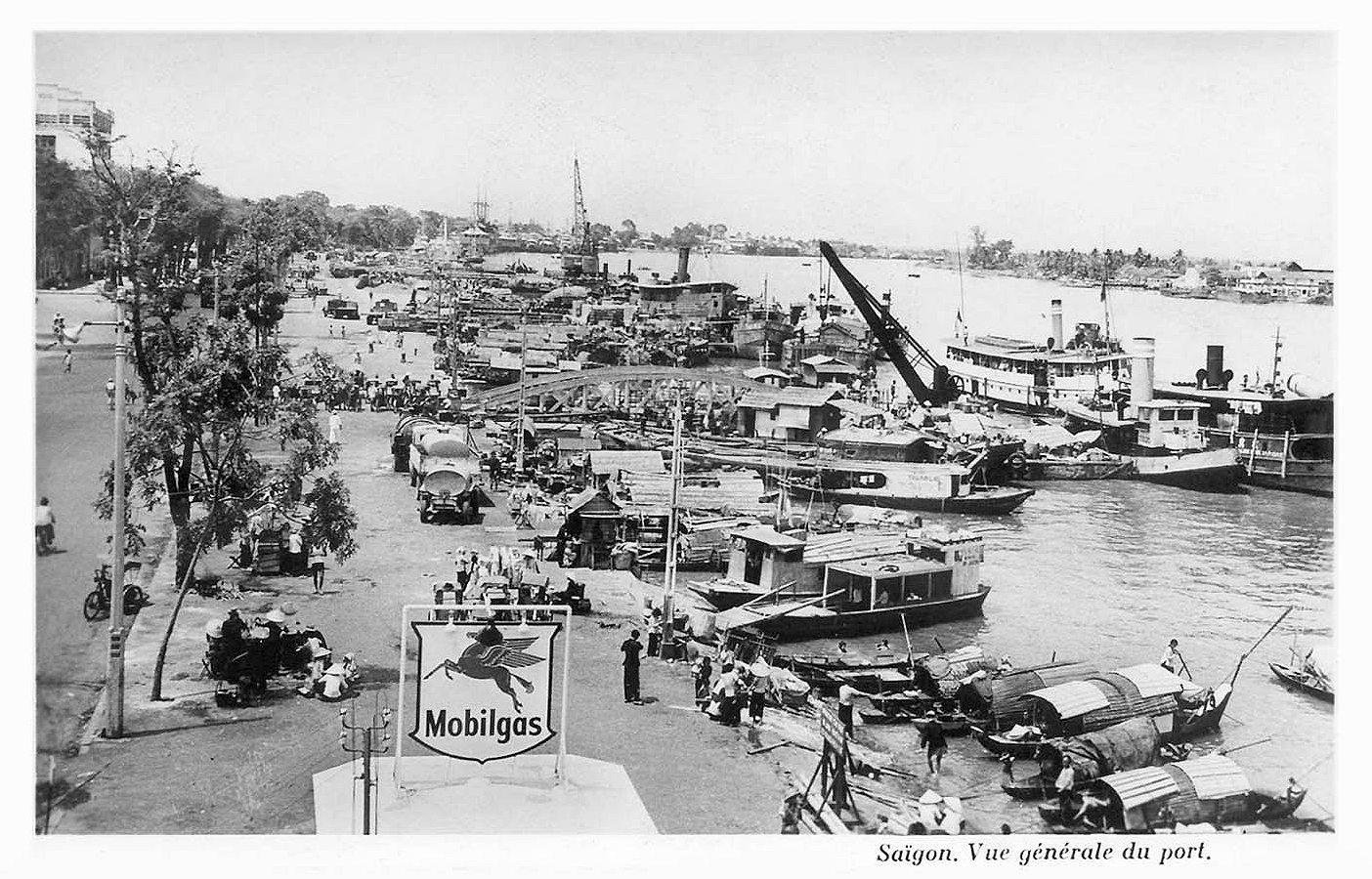
In the years between the First and Second World Wars, bread became more common in the Vietnamese diet. The French casse croute became the Vietnamese cát-cụt, as other food items associated with the meal adopted the Viet-Franco names still used today. Beurre became bơ (butter), fromage—phô mai (cheese), and jambon—giăm bông (ham).
Upon the invasion and occupation of Indochina by Japan during the Second World War, the Vietnamese were suddenly exposed to an efficient, modern, and emerging Asian empire that had, so far, defeated the major Western powers in the Pacific. The French military looked antiquated by comparison, fueling calls for independence as nationalist groups amassed throughout the country. In 1941, having returned from his sojourns in Europe, the Soviet Union, and China, the revolutionary leader Ho Chi Minh established the League for the Independence of Vietnam, the ‘Viet Minh’, an anti-imperialist movement aimed at unifying Vietnam’s various nationalist factions and expelling the French and Japanese.
With the wartime revival of pain de riz, the French-inspired ‘cát-cụt’ of baguettes and cold cuts continued to be sold on Saigon’s streets to an increasingly Vietnamese crowd. As anti-French sentiment increased, though, the sobriquet bánh tày was dropped in favor of bánh mì, and butter was replaced with mayonnaise, a cheaper and more stable ingredient in Vietnam’s searing heat.
After Japan’s surrender in 1945 came the renewal of French control in Indochina. Nationalism surged, and in August of that year Ho Chi Minh declared Vietnam’s independence, sparking a general uprising. By the end of 1946, the Viet Minh were at war with France.
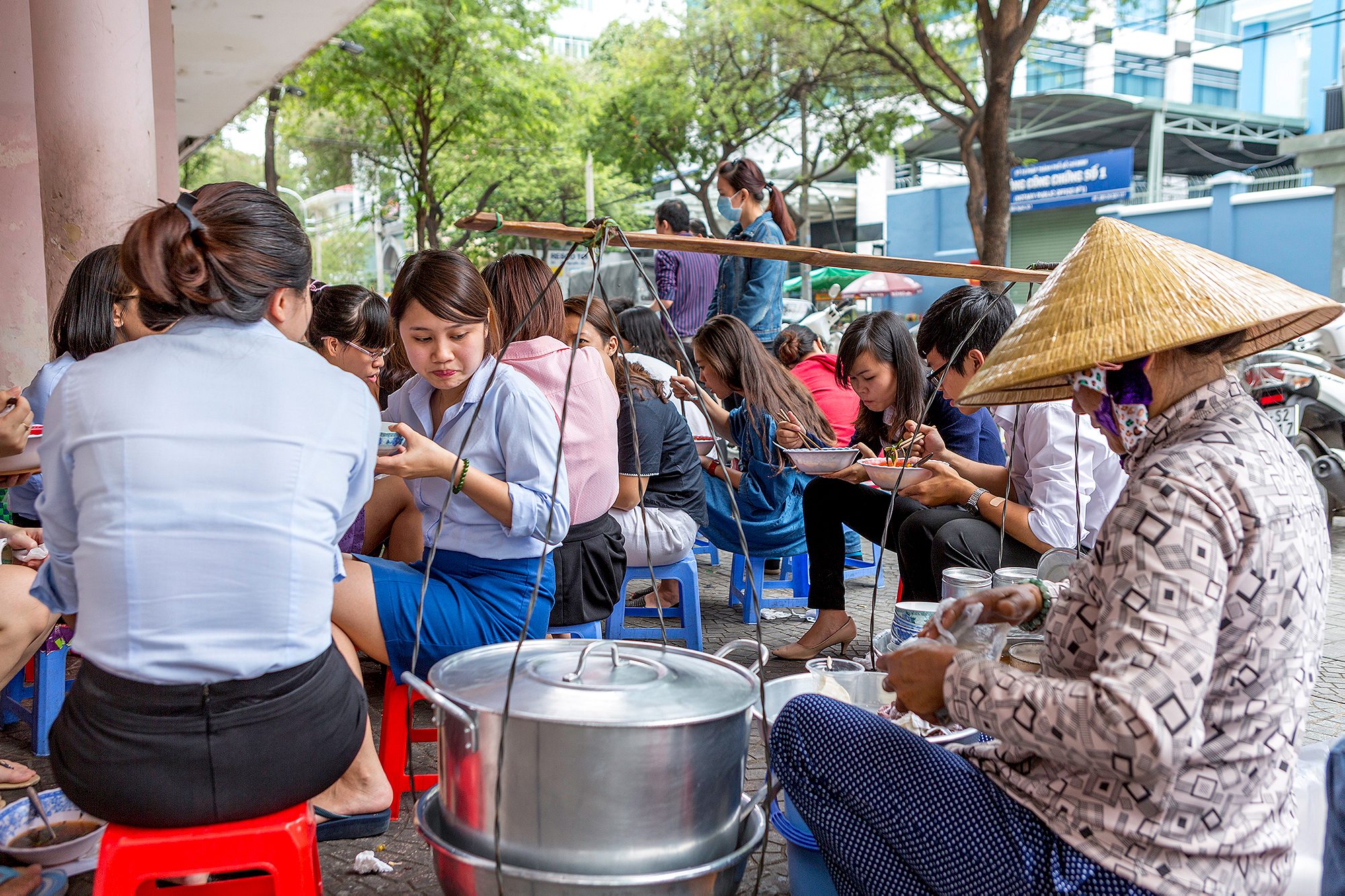
Days begin early in Vietnam. The sun isn’t up yet, but already the alley is buzzing. When Hoà Mã’s owners left the shop at 511, Nguyễn Đình Chiểu Street in 1960, they came here, to 53 Cao Thắng Street, also in District 3. Little has changed since then, it seems. A group of workmen in gumboots and hard hats arrive on scooters loaded three men deep, taking seats at the line of knee-high tables stretched out in the open air along the side of the passageway. Even at five-thirty in the morning it’s a busy spot. Red-eyed taxi drivers clocking off, red-eyed taxi drivers clocking on, street sweepers, a few keen office workers. Through the pools of light from the overhead lamps runs a back-and-forth relay of staff to serve them.
There’s a simple menu and everyone is here for the same two things: a glass of cà phê sữa đá—Vietnam’s famous iced coffee rocket fuel—and a sizzling skillet of ham, eggs, paté, fried tofu, and a few crescents of onion. Then, on side plates, comes a parade of freshly-baked banh mi rolls, still warm from the oven.
This is Hoà Mã, in its second home, in operation here since 1960 when the owners Mr. and Mrs. Le moved their family and their business from Nguyễn Đình Chiểu Street. This is the family that invented the modern banh mi.
While the classic ‘special’ is still available, their focus now is on these aromatic breakfast platters, served, ironically, back in the traditional open French style, with fried meats, vegetables and tofu arriving on a sizzling skillet, the bread, homemade paté, mayonnaise and pickles then served separately on individual saucers. I head inside and on a chair in the corner sits an 80-something Mrs. Le. She’s watching her daughter, the current manager, as she whips up a batch of ten sandwiches to-go for a soccer team that just rolled up. Clearly age has done little to slow Mrs. Le; from her perch in the corner, she calls out instructions to her staff. “More paté. Less mayonnaise. Clean that table. Bring me coffee.”
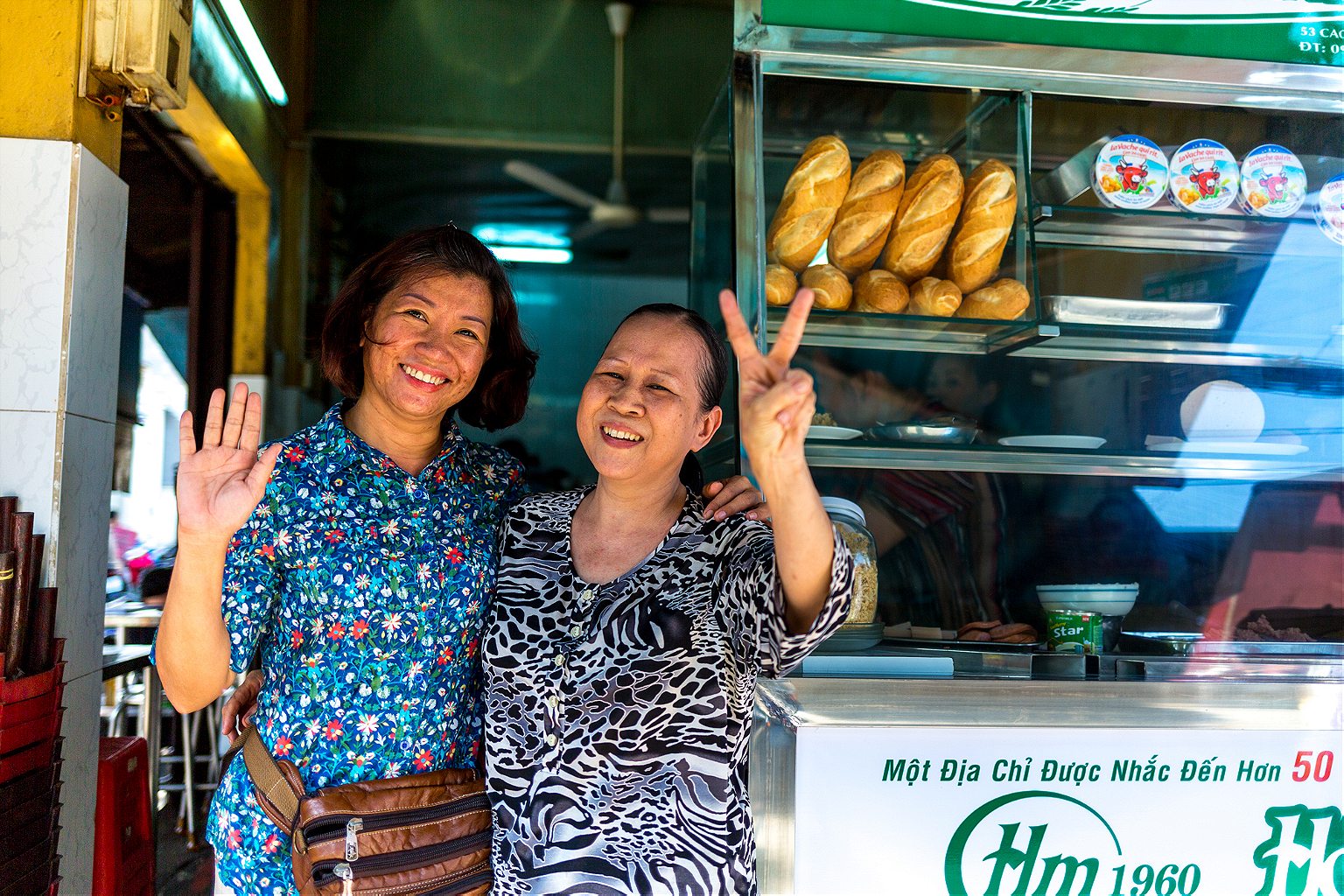
The Le family came from Hoà Mã, a village now swallowed up in the sprawl of Hanoi, Vietnam’s capital and Saigon’s northern counterpart. As Ho Chi Minh’s war with France continued in the countryside, Mrs. Le had worked for a French-owned company in Hanoi, supplying European-style hams and processed meats to French restaurants. In 1954, when France agreed to end hostilities and divide Vietnam in two, with Ho Chi Minh’s communist government taking power in North Vietnam and a US-backed capitalist Republic in the south, the Le family fled Hanoi and traveled to Saigon.
They called them the Bắc 54, ‘the Northerners of 1954’, the estimated one million Vietnamese who escaped the communist stronghold before the border was closed. Behind them, as communism took root, private enterprise was banned, French businesses seized, and ration cards distributed. Restaurants, cafes, even mobile street vendors, all disappeared, and the evolution of the banh mi was passed to Saigon.
Using the skills and recipes she’d learnt from the French, Mrs. Le began producing her own processed meats, eventually opening a cát-cụt shop in Saigon’s District 3, naming it, of course, after their village. The most popular banh mi shop in Saigon at the time was called Vinh Loi, located on present-day Le Loi Street, a tree-lined boulevard in the city center. But, like the street on which it sat, Vinh Loi was only for the wealthy.
Taking a brief moment to chat between orders, with Mrs. Le now resting upstairs, her daughter Hanh tells me how her father made the banh mi affordable to everyone. “He reduced the size of the traditional baguette to around 20 centimeters,” she says, through an interpreter. “He also reduced the amount of meat, adding vegetables instead.”
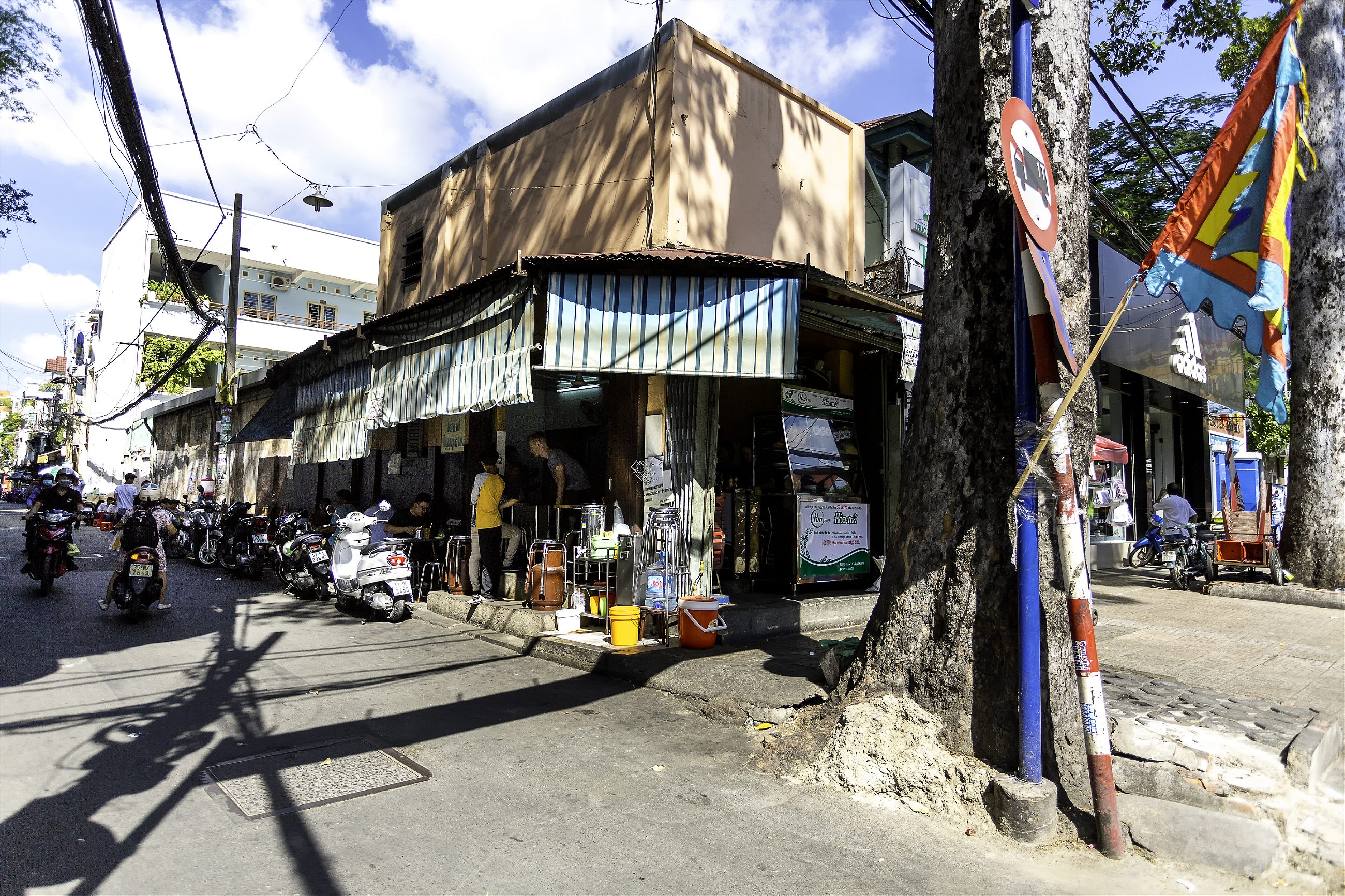
With a steady stream of students, laborers, and office workers visiting their new shop, Mr. Le noticed that many did not have time to sit down and eat. “So he began placing the cát-cụt ingredients inside the bread,” says Hanh, “so people could take it with them and eat on-the-go.”
Hoà Mã’s bread rolls sit in huge trays waiting to be cut and stuffed, and I put the rice flour theory to her as she begins preparing a fresh order.
“Duck eggs,” she says. “That’s what my parents used as their dough enhancer, although we use chicken eggs now.”
So do they use any rice flour at all?
“She won’t say,” says my interpreter. “Secret recipe.”
When the second Indochina War began in 1955—known to the West as the Vietnam War—life in Saigon continued more or less uninterrupted. Hoà Mã moved to its present home in 1960 and news of its sandwiches spread. Of course, it would be unfair to say that the Le family was solely responsible for the banh mi we know today. But Saigon’s oldest vendors, Như Lan’s owner included, still point in their direction when asked where ‘the special’ came from.
With Hoà Mã at the epicenter of the banh mi revolution, vendors all over Saigon began copying, borrowing, stealing, and improving on each other’s recipes. “In the south, they lived large,” says Andrea Nguyen, “so a lot of stuff was added, like fresh herbs, vegetables, and pickles.”
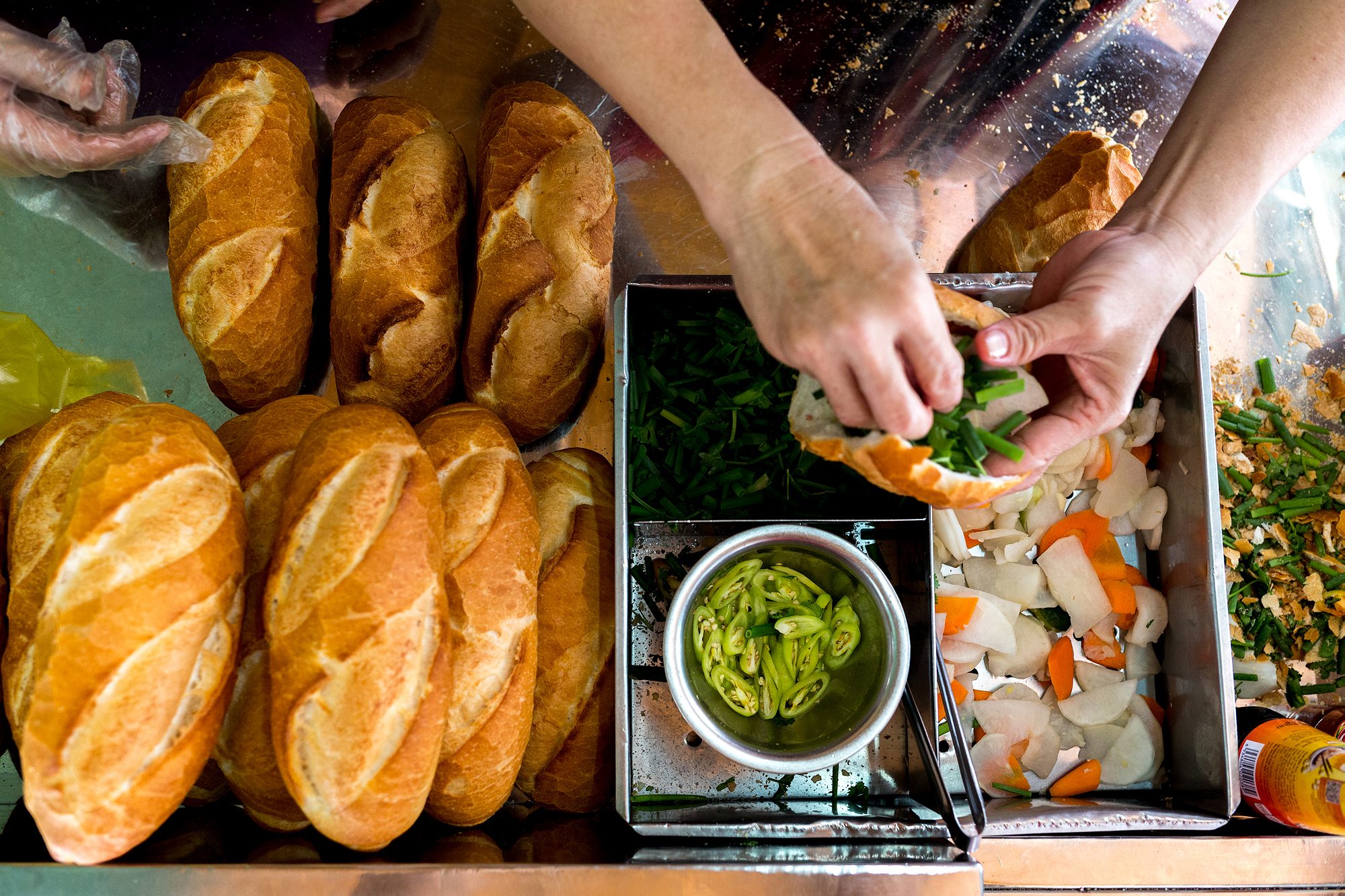
When Saigon fell to the North Vietnamese Army in 1975, a reunified, wholly communist Vietnam entered a decade of austerity, poverty, hunger, and hardship. Private businesses like Hoà Mã were temporarily closed and the banh mi torch handed to those who had fled Vietnam’s shores. Many, like Nguyen’s family, arrived in California.
From the West Coast, the banh mi—along with its cousin, phở—began a crusade across the States, and, with a little help from Western food writers, travel journalists, and a growing number of tourists returning from Vietnam with tales of its culinary delights, the banh mi became one of the world’s favorite sandwiches. These days, you can find banh mi on sale in strip malls and food trucks from Memphis to Munich.
In Ho Chi Minh City today, following the large-scale economic reforms of the late 1980s, the Đổi Mới, which brought a freshly modernized Vietnam out of the darkness of the post-war period, the banh mi has re-established itself as a centerpiece of the city’s culinary lineup.
Helped, in part, by the banh mi’s success abroad, the old-school curbside vendors are still thriving, especially those around the tourist hotspots of District 1. Bánh Mì Huỳnh Hoa is regularly touted as the best in the city by foreign guidebooks and food bloggers. It’s good, no doubt about that, but its reputation is built more on the sheer volume of meat piled into its rolls than the quality of the sandwich’s overall construction. A far more refined, far more ‘Vietnamese’ banh mi can be found nearby at Bánh Mì Hồng Hoa. Their bánh mì thịt nguội remains my favorite sandwich in Saigon.
Despite a large local following, tucked down an otherwise unassuming side street, the English menu pinned to the front of Hồng Hoa’s counter proves they know what the tourists want, offering the classic fillings alongside more modern creations such as the bánh mì chà bông, filled with pork floss (a dried pork ‘cotton candy’), or the bánh mì xiu mai—essentially a Vietnamese meatball sub. If the latter sounds like your kind of sandwich, try Bánh Mì 37 close by (forming a triangle of three of the city’s best banh mi sellers, all no more than five minutes on foot from each other). This simple food cart, wheeled out each day at 5 pm onto busy Nguyễn Trãi Street, serves a superlative banh mi filled with freshly barbecued pork patties smothered in a sticky barbecue-style sauce.
The banh mi is already considered one of the best sandwiches in the world. Why mess with that?
Vietnam’s street food is a cultural commodity that attracts thousands of hungry tourists each year, and it’s no surprise that the long lines of bodies forming at vendors like Bánh Mì 37 and Huỳnh Hoa are more frequently punctuated with foreign faces. But as Vietnam’s middle-class grows, as its increasingly cosmopolitan society looks to get off of the sidewalk and into clean, ‘Western-looking’ establishments, a new generation of banh mi outlets are beginning to emerge.
Having arrived in early 2016, Bánh Năm—năm meaning five for the number of different sandwiches on offer—is one example of the new guard. By retaining the best of what an authentic banh mi should look and taste like, while giving its preparation and presentation a 21st-century makeover, this clean and stylish concept looks set to become the start of the next generation of banh mi outlets in Vietnam.
With low prices, clean white walls, colorful signage, backlit menus and an open kitchen, Bánh Năm’s outlets have been a hit with the locals, a small but important taste of New Saigon, but there’s only one twist: it is by a European.
“Our idea is simple,” says Dutch co-founder Timen Swijtink. “Do not change what people love. The banh mi is already considered one of the best sandwiches in the world. Why mess with that? What we want to work on is bringing a hint of modernity, through cleanliness, convenience, and consistency.”
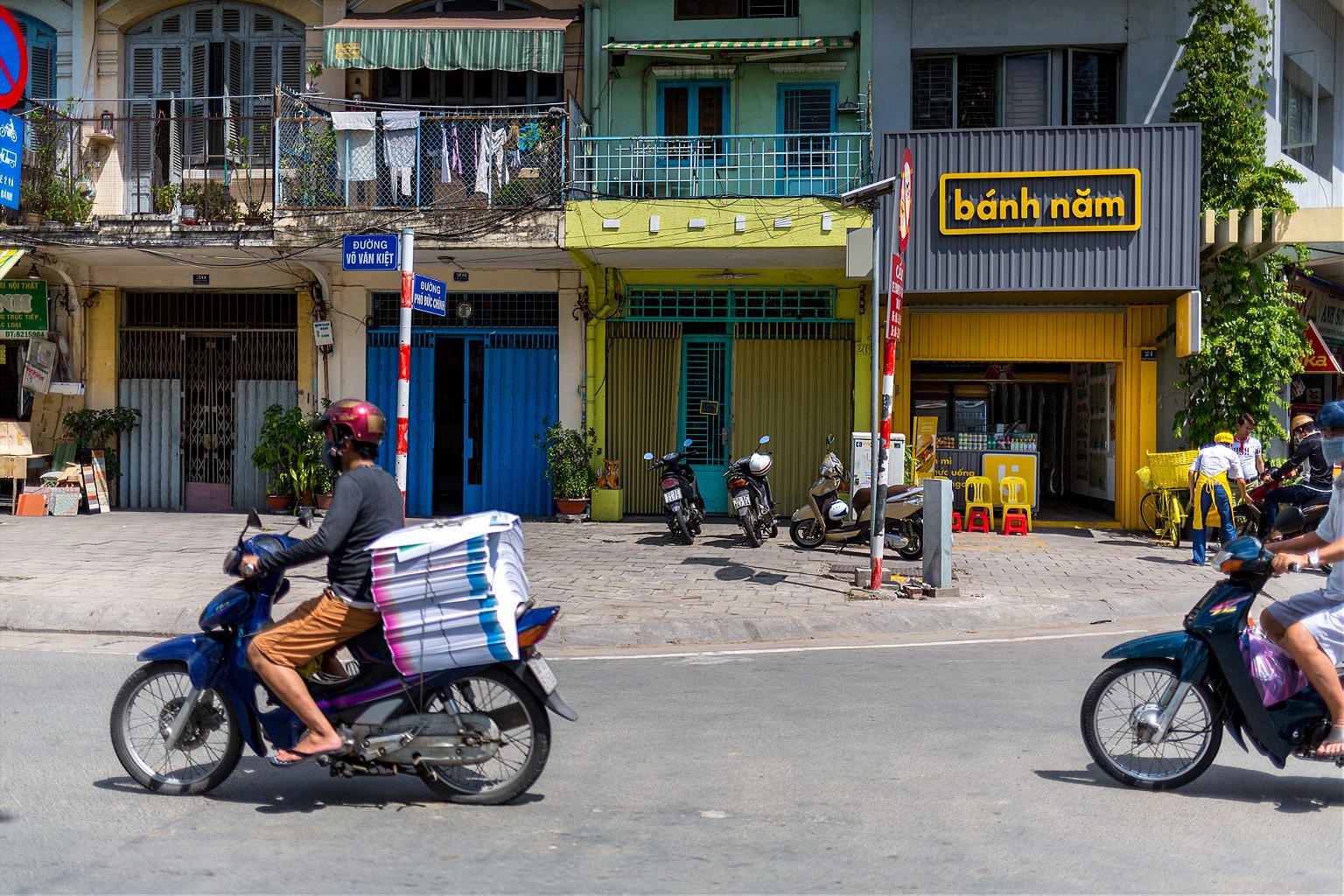
Like the Bangkok of the 1990s, Saigon is transforming into a connected, round-the-clock, ultra-modern metropolis. Bánh Năm’s social media presence, local delivery service, and 24/7 opening stand in stark contrast to the ‘mom and pop’ vendors like Hoà Mã, those that appear for just a few hours each morning or afternoon.
“We are the next, albeit small, headline in the story of the banh mi,” adds Swijtink. “We want to make it available cheaply, to the masses, in a clean way, so nobody has to worry about getting sick.”
Swijtink is referring to the frequent lack of refrigeration at the more traditional street outlets in Saigon, with cooked and uncooked meats often left in the open, or, at best, sealed away yet still exposed to the country’s tropical temperatures. While getting “sick” is rare, given the quick turnaround time and sheer freshness of the ingredients, the ever-present threat of food poisoning is something the Vietnamese authorities have been making attempts to address recently. They have banned street vendors in some areas altogether, while in others, they provide dedicated locations with refuse facilities, running water and waste, alongside a program of food hygiene training.
For the camera-wielding tourists, shops like Bánh Năm may represent too large a leap from the authentic street food experience, void of the motorbikes buzzing past an inch from your back, void of the toothy grin from the octogenarian owner as she makes your dinner in her pajamas, or the old men and their coffees shooting the breeze. But for the new generation of educated, middle-class Vietnamese, with the latest iPhone in their pockets and their eyes set on making a name for themselves, they offer something far more paramount: they offer the future. The future they’ve been watching on American TV for the past 20 years, the future they’ve heard about from their cousins overseas, and the future where buying your banh mi from this shop instead of that one can give you a small measure of status, and maybe even an edge over your competitors.
It’s early afternoon and I’m riding towards Bánh Năm’s outlet in Binh Thanh District, a short hop over the canal from District 1. The rainy season is here and the grey fists of storm clouds are tightening overhead, threatening a deluge that will turn this road into a river in seconds. There’s a tremble of energy that resonates through Saigon’s already frenetic two-wheeled traffic at times like these, everyone thinking, can I make it there before it starts? Can I make it there and back? And we all unconsciously pick up the pace.
The shop’s glowing yellow sign appears like a beacon in the falling light, the sky about to drop. You can already smell the rain.
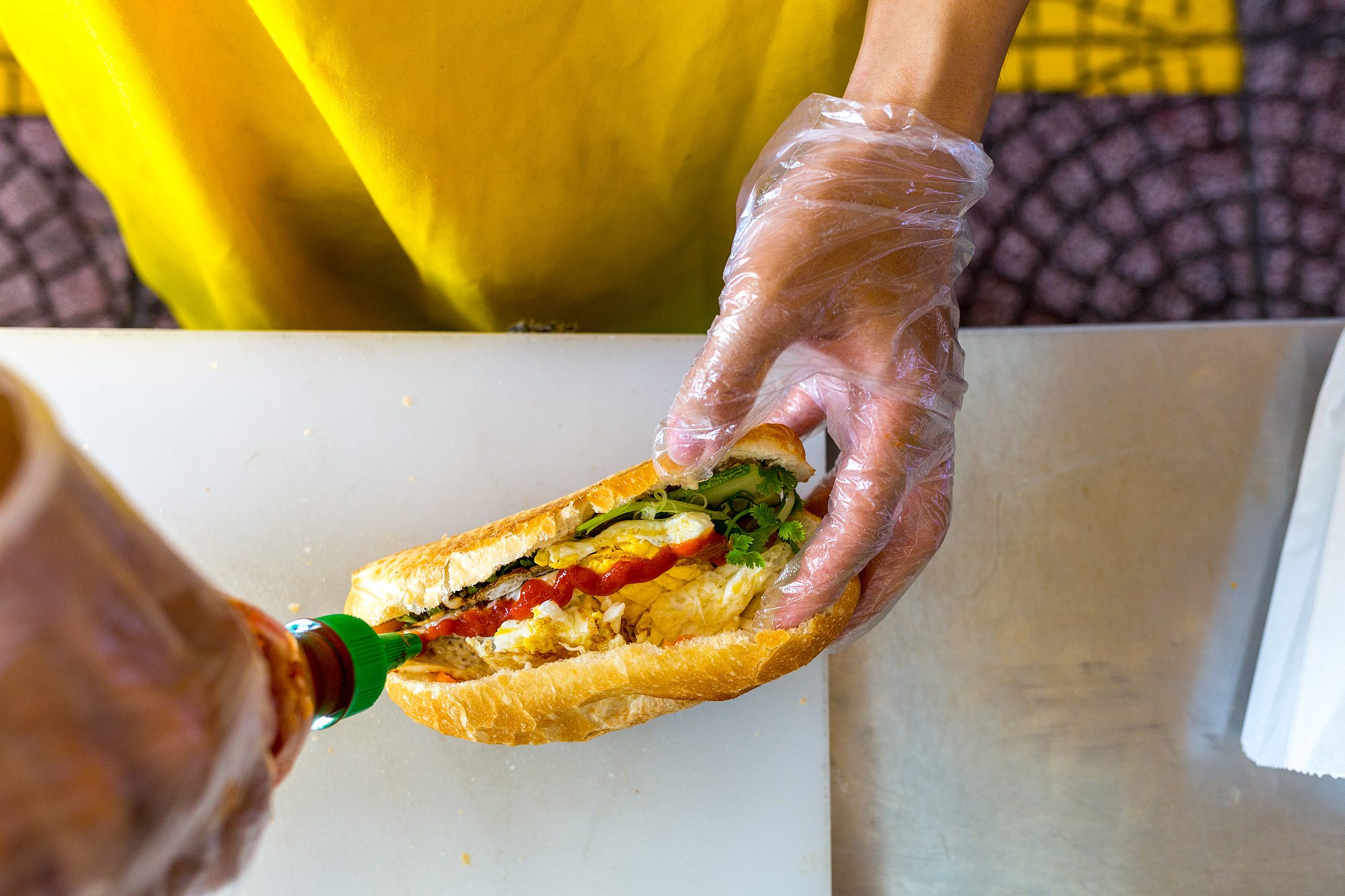
“Một bánh mì thịt,” I say, ordering their faithful rendition of ‘the special’. Homemade paté, a smear of mayo, a long ribbon of cucumber, then ham, pork roll, carrot and daikon. Despite the modern trappings, Bánh Năm offers a faithful rendition of the type of sandwiches Hoà Mã have been serving for 60 years. But there’s still room for the new, of course, with grilled chicken, grilled pork and even a vegan-friendly grilled tofu option (made with vegan paté, no less), finding equal space on their menu. After drawing a generous line of cilantro from one end to the other, the young girl stops, looks up, clocks the foreigner.
